Hydrogen generation in India: News & Updates

The plan, called the National Green Hydrogen Mission, aims at substituting all ammonia-based fertiliser imports with domestic fertilisers using green ammonia by 2034-35. The government wants India to produce 5 million tonnes of green hydrogen annually by 2030. Similarly, steel projects using 100 per cent green hydrogen will be set up,


Tata Motors unveils Hydrogen Fuel Cell truck at the auto expo 2023

 
EU planning to generate hydrogen using electricity from nuclear energy .


There were some recent news regarding allowing companies in india to invest in small scale nuclear power plants . Wonder if it can help regarding our hydrogen generation goals
 
 
3. Methanol

Advantages:

i. Can be produced from our domestic coal. We have a lot of coal & it is pretty cheap. No problems of import dependency or price.
ii. Cleanest liquid hydrocarbon. Easy to transport.
iii. Can be used to make Di-Methyl Ether (DME) that can wholly replace Diesel. Diesel engines need minor tweaks to their compression ratios to use DME. DME can thus be used in road, rail & marine transportation.

Disadvantages:
i. Globally available tech for producing Methanol from Coal doesn't work on Indian coal due to its high ash content. We have to develop our own tech.
ii. It the poorest carrier of hydrogen. Also has the lowest calorific value. You would have to burn 1.9 liters of Methanol to produce energy equivalent to 1 liter of Petrol. Not feasible to be used for producing electricity.

Future scope:
Recently BHEL had a breakthrough with Methanol production. In Sep 2021 BHEL announced that their R&D centre in Hyderabad set up a coal gasification plant that is now producing 0.25 ton per day (TPD) of Methanol from Indian high ash coal using a 1.2 TPD Fluidized bed gasifier. SO they used 1.2 ton Indian coal to produce 0.25 ton Methanol.

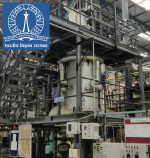
India's first Indigenously Designed High Ash Coal Gasification Based Methanol Production Plant at BHEL R&D Centre, Hyderabad

https://dst.gov.in/indias-first-pil...hanol-can-accelerate-countrys-journey-towards

India has 340+ billion metric tons of coal, at our current consumption levels we consume less than 1/350th of our reserves every year. The low conversion ratio of Indian coal to Methanol is not a problem. The fact that we can produce high purity Methanol from Indian coal is a big deal. Still BHEL needs to establish the scalability of their tech.

Some good reads on Methanol in India:

vikaspedia Domains

https://www.thehindubusinessline.co...t-methanol-for-clean-fuel/article34183663.ece

https://www.moneycontrol.com/news/i...ould-be-a-cheaper-fuel-for-india-7540761.html

Some updates on the Methanol fuel technology:

BHEL is providing Methanol produced in their Hyderabad based coal gasification plant to the Kerala based 350MWe Rajiv Gandhi Combined Cycle Power Project (RGCCPP) to produce power on an experimental basis:

NTPC Kayamkulam mulls using methanol as fuel when power crisis looms over Kerala

The project will be executed in 2 phases:

1. Phase I: With no modifications to the gas turbine and minimal modifications in overall plant. Test firing using methanol shall be carried out in GT at maximum possible loading. The maximum load expected to be 40-50%.

2. Phase II: Based on the test results of Phase-I, modifications for running on 100% load shall be planned in future.

Methanol Firing in Gas Turbine | NTPC Limited
 
NTPC's NETRA develops indigenous catalyst for CO2 conversion to methanol.

The process is seen as a critical solution to address CO2 mitigation challenges facing fossil-fuel-based power plants globally. NTPC's pilot program, utilizing this catalyst, aims to produce high-purity methanol, over 99%, by capturing and this catalyst, aims to produce high-purity methanol, over 99%, by capturing and processing 10 kg of CO2 per day.

ETEnergyWorld
Updated on October 30, 2024, 7:58AM IST.
1730470699361.png

New Delhi: In a key development for carbon capture and utilization, NTPC's research wing NETRA, in collaboration with the Indian Institute of Petroleum (IIP), Dehradun has developed an indigenous catalyst capable of converting carbon dioxide (CO2) emissions into methanol.

The process is seen as a critical solution to address CO2 mitigation challenges facing fossil-fuel-based power plants globally. NTPC's pilot program, utilizing this catalyst, aims to produce high-purity methanol, over 99%, by capturing and processing 10 kg of CO2 per day.

"CO2 mitigation is one of the critical challenges for fossil fuel fired plants, and capturing CO2 from flue gas to convert it into valuable fuel and chemicals is a global focus," the company said in a statement. At the pilot plant, one mole of CO2 and three moles of hydrogen (H2) pass through a fixed bed downflow reactor, demonstrating the catalyst’s potential in producing methanol on a sustainable basis.

This initiative aligns with NTPC’s broader environmental goals, where the organization has actively pursued carbon footprint reduction through NTPC Green Energy Limited, a wholly owned subsidiary. NTPC’s strategies reflect India’s commitment to achieving net-zero
emissions by 2070 and support global climate action targets.

NTPC's NETRA develops indigenous catalyst for CO2 conversion to methanol - ET EnergyWorld
 
At current prices extraction & transportation of green hydrogen is a far more expensive process than the amount of money that can be made by selling electricity generated by combustion of Hydrogen. So I don't see how thermal plants running on Hydrogen is going to work. Hydrogen has uses in powering many sectors: Industrial, Residential, Commercial, Transportation etc.

But electricity at your home from Hydrogen combustion isn't happening anytime soon.

Right now there are 2 viable processes of producing green Hydrogen:
1. Electrolysers
2. High Temperature Nuclear Reactors

We are working on reactors like the CHTR & the IHTR, but it is a future technology. Electrolysers are available right now but need large scale expansion. That's where companies like Reliance, GAIL, NTPC, TATA, Ohmium etc. come in. All of them are investing in building, acquiring & scaling up electrolysers. But electrolyser technology is not exactly a monolith, there are many types of electrolysers:

1. Alkaline Electrolysers (AE): They were first developed in India by BARC for some nuclear research work. ISRO acquired the tech from them & set up their own Hydrogen production capability. The hydrogen ISRO produced were mostly meant to power their cryogenic hydrolox engines.
2. Polymer Electrolyte Membrane (PEM): Recently developed & tested by CSIR-CERI. This is a spin-off of the R&D work done on the DRDO's PAFC AIP system. CSIR-CERI was involved with the NMRL in the development of the polymer membrane for the AIP. The CSIR is trying to commercialize the technology.
3. Solid Oxide Electrolyser (SOE), Electrochemical-Thermally Activated Chemical (E-TAC) & and Anion Exchange Membrane (AEM): Proprietary technologies developed by foreign companies. Don't know a lot about it.

AE is easily available but requires a lot of electricity. Comparatively PEM is much more energy efficient. The other processes mentioned above are even better then PEM but they use some rare earth minerals, thus scaling them up is a problem. The companies that are trying to get into Hydrogen production in India are largely looking to setup PEM electrolysers. But a lot of the companies want to import the tech rather than using the tech developed by CSIR-CERI. As such the lab is trying to convince these companies to adopt their tech. The govt. might announce a PLI for green hydrogen production too & they might link it to using CSIR-CERI developed PEM. Let's see how this goes.

Production is one thing, transportation is an additional headache. Hydrogen is the lightest element & it is a gas at room temp. Hydrogen gas has a density so low that it permeates out of most pipes. You need pipes made of very high density alloys that are ultra expensive to transport hydrogen gas safely & efficiently. The other way is to transport cryogenically cooled liquid hydrogen, which is no less problematic.

So what do you do? Find a easily transportable chemical that can act as a hydrogen carrier. The carrier chemical will preferable be a fuel itself. Hydrogen in gaseous form will be dissolved as solute into this gaseous or liquid carrier that will be the solvent. The solution will be used directly by end users as fuel.

Much to the great dismay of many environmental activists such a hydrogen carrier chemical is likely going to be a hydrocarbon. So which hydrocarbons are in consideration? 3 hydrocarbons each with its own advantages & disadvantages. Briefly we have the following:

1. Natural Gas(Methane):

Advantages:
i. Being a gas it can dissolve the highest volume of Hydrogen. Therefore it is the most efficient carrier of hydrogen.
ii. Natural gas has high calorific value which would be increased by the presence of Hydrogen.
iii. The technology needed to generate grid scale electricity from natural gas already exists at very competitive prices. The same technology is adaptable for hydrogen spiked natural gas.
iv. There is political will behind natural gas. Modi wants to increase the share of natural gas in our energy grid from the current 6% to 15% by 2030.

Disadvantages:
i. India doesn't have a lot of natural gas. 43% of our current gas consumption comes from domestic sources. If we rely on gas too much in the next few decades this is going to become another drain on our foreign reserves like oil is now.
ii. India's current pipeline infrastructure is inadequate. We have built just ~15,000 km of pipelines in the last 27 years prior to 2014. Since 2014 we have been building an additional 16,000+ km.
iii. We don't have a lot of gas fired power plants. So if we are going to use natural gas as the hydrogen carrier we will also have to set up new gas fired plants.

Future scope:
Our reserves of conventional gas is limited. But we have a lot of Methane hydrates. Extracting methane from hydrates is not something that has been commercially established anywhere yet. Many of our research establishments & companies are working on gas extraction technologies. We have also signed agreements with US, Japan & Canada for co-operation in development of the tech needed. All 3 of these nations have their own gas hydrates reserves, so they have a skin in the game. Some of these countries claim that commercial production of gas from hydrates can be done with in the next 5 years.

Recently we've made some breakthroughs of our own:

How to sequester carbon dioxide and produce natural gas

We have nearly ~2000 trillion cubic feet of natural gas in Methane hydrates. If we can tap even a small share of this it would greatly change the energy & geo-political scenario for us.

2. Ethanol

Advantages:

i. Of the 3 hydrocarbons mentioned here Ethanol is the 2nd most efficient Hydrogen carrier. Liquid fuel are easier to transport.
ii. Can be easily adopted into the transportation sector. Spark ignition engines can readily adopt Ethanol. Burn cleaner than petrol.
iii. Produced from food grains, sugar, agro waste etc. No long term import dependency concern. Can reduce problems of stubble burning.
iv. Can reduce our crude oil import bill. Has acquired govt. support in form of the Ethanol Blending Program (EBP). EBP seeks to achieve 20% ethanol blending from the current 8.5% by 2025.

Disadvantages:
i. Lower calorific value than petrol & natural gas. To produce as much energy as 1 liter of petrol you would need to burn 1.5 liters of Ethanol. Not feasible to use in oil fired electricity plants.
ii. Can have an adverse effect on food security. Requires a meticulously designed incentive scheme to ensure optimal production of Ethanol that doesn't cause an artificial scarcity of food items. We all know how good New Delhi is with incentive schemes.
iii. The EBP will cause short term import dependency on USA & Brazil.

Future scope:
The only way we will achieve 20% Ethanol blending by 2025 is if we import ethanol. Domestic ethanol production plants aren't coming up fast enough. Consumption is shooting through the roof. A program designed to reduce import dependence on crude oil will end up causing a temporary import dependence on ethanol. Brilliant. :ROFLMAO: :ROFLMAO:

3. Methanol

Advantages:

i. Can be produced from our domestic coal. We have a lot of coal & it is pretty cheap. No problems of import dependency or price.
ii. Cleanest liquid hydrocarbon. Easy to transport.
iii. Can be used to make Di-Methyl Ether (DME) that can wholly replace Diesel. Diesel engines need minor tweaks to their compression ratios to use DME. DME can thus be used in road, rail & marine transportation.

Disadvantages:
i. Globally available tech for producing Methanol from Coal doesn't work on Indian coal due to its high ash content. We have to develop our own tech.
ii. It the poorest carrier of hydrogen. Also has the lowest calorific value. You would have to burn 1.9 liters of Methanol to produce energy equivalent to 1 liter of Petrol. Not feasible to be used for producing electricity.

Future scope:
Recently BHEL had a breakthrough with Methanol production. In Sep 2021 BHEL announced that their R&D centre in Hyderabad set up a coal gasification plant that is now producing 0.25 ton per day (TPD) of Methanol from Indian high ash coal using a 1.2 TPD Fluidized bed gasifier. SO they used 1.2 ton Indian coal to produce 0.25 ton Methanol.

India's first Indigenously Designed High Ash Coal Gasification Based Methanol Production Plant at BHEL R&D Centre, Hyderabad

Indias first pilot plant to convert high ash coal to methanol can accelerate the countrys journey towards clean technology | Department Of Science & Technology | Department Of Science & Technology (DST)

India has 340+ billion metric tons of coal, at our current consumption levels we consume less than 1/350th of our reserves every year. The low conversion ratio of Indian coal to Methanol is not a problem. The fact that we can produce high purity Methanol from Indian coal is a big deal. Still BHEL needs to establish the scalability of their tech.

Some good reads on Methanol in India:

vikaspedia Domains

Government takes a hard look at methanol for clean fuel

https://www.moneycontrol.com/news/i...ould-be-a-cheaper-fuel-for-india-7540761.html

It is hard to say with certainty where we are headed in the energy scheme in say 30 years from now. But is seems clear that none of these carriers alone can cater to all of our needs. Thus we need to keep developing all of them. The good thing is that the govt. is investing in all 3 potential options.

Anyway I have rambled on for long enough. Let me know if I made any mistakes, I am half asleep right now. I am going to bed. Good night.

Some updates on the Methanol fuel technology:

BHEL is providing Methanol produced in their Hyderabad based coal gasification plant to the Kerala based 350MWe Rajiv Gandhi Combined Cycle Power Project (RGCCPP) to produce power on an experimental basis:

NTPC Kayamkulam mulls using methanol as fuel when power crisis looms over Kerala

The project will be executed in 2 phases:

1. Phase I: With no modifications to the gas turbine and minimal modifications in overall plant. Test firing using methanol shall be carried out in GT at maximum possible loading. The maximum load expected to be 40-50%.

2. Phase II: Based on the test results of Phase-I, modifications for running on 100% load shall be planned in future.

Methanol Firing in Gas Turbine | NTPC Limited

India just solved hydrogen's toughest challenge, and it came from a Pune lab

MIT-WPU researchers have achieved a world-leading hydrogen breakthrough, storing hydrogen in just two hours instead of the global norm of 18. Their new LOHC system makes hydrogen safer, cheaper, and easier to transport, placing India among the top innovators shaping the future of clean energy.

India Today Education Desk
New Delhi, UPDATED: Dec 12, 2025 19:20 IST
1765567326639.png
MIT-WPU researchers have achieved a world-leading hydrogen breakthrough, storing hydrogen in just two hours instead of the global norm of 18.

Pune may have just delivered the breakthrough India’s clean-energy mission was waiting for. A team of researchers at MIT World Peace University (MIT-WPU) has developed a safer, cheaper way to transport hydrogen — solving what experts have long called the biggest bottleneck in India’s hydrogen future.

Their innovation: a Liquid Organic Hydrogen Carrier (LOHC) system that can store and move hydrogen in a non-flammable, non-explosive liquid form, at normal temperature and pressure. No 253°C cryogenic cooling. No ultra-high-pressure cylinders. No massive logistical bill. Just a stable liquid that behaves like any other industrial fuel.

And that’s the game changer.

To understand how big this is: labs worldwide need 18 hours to fully store hydrogen. MIT-WPU did it in just two. That places India straight into the top tier of global hydrogen innovation — and rewrites what’s possible for clean-energy technology.

A BREAKTHROUGH NOBODY ELSE COULD CRACK


The challenge arrived at MIT-WPU through Ohm Cleantech (OCPL), part of the h2e Power Group. Even IITs and global labs had struggled to find a workable method. There was no documented process anywhere in the world — meaning the team had to build a new scientific pathway from scratch.

“The first fifty days showed no reaction at all, but we refused to step back,” said Prof. (Dr.) Rajib Kumar Sinharay, the project’s Principal Investigator. “Nearly ten months and close to a hundred trials later, we crossed a milestone that had never been achieved anywhere.”

For OCPL, this was the exact breakthrough India needed. Founder Siddharth Mayur said the innovation supports the National Green Hydrogen Mission, while reinforcing India’s aim for technological self-reliance. Patent filings are already underway.

WHY HYDROGEN TRANSPORT IS SUCH A NIGHTMARE


Hydrogen is one of the cleanest fuels available — but also one of the hardest to handle. Today, it’s either:
  • compressed into cylinders at hundreds of bars of pressure, or
  • liquefied at –253°C, requiring expensive cryogenic infrastructure.
Both processes are risky, costly, and infrastructure-heavy — a major reason India’s hydrogen rollout has been slow.

MIT-WPU’s LOHC method sidesteps all of this.

So how does LOHC make hydrogen “behave” like a normal liquid?

The team engineered a two-stage chemical pathway:
  • Hydrogenation: Hydrogen bonds into a specially designed organic liquid, becoming part of a stable, easy-to-handle fluid.
  • Dehydrogenation: At the destination, hydrogen is released, and the carrier liquid can be reused.
This means hydrogen can now be moved using existing petrol/diesel tankers, standard storage containers, and potentially even pipelines — dramatically cutting both cost and risk.

“Being able to transport hydrogen like any other industrial liquid removes long-standing safety and regulatory barriers,” said Prof. Datta Dandge, Research Advisor.

INDIA JUMPS AHEAD WITH WORLD-LEADING RESULTS

The MIT-WPU team didn’t just solve the problem — they outperformed existing global benchmarks.

Key achievements:
  • 2-hour hydrogen storage, compared to the global average of 18 hours
  • Lower operating temperature: 130°C (vs 170°C typical)
  • Lower pressure: 56 bar (vs higher global norms)
  • Storage efficiency: 11,000 litres of hydrogen in just 15.6 litres of carrier liquid
  • Recovery efficiency: 86% hydrogen successfully released
These results place India at the forefront of LOHC research globally — a milestone for both clean-energy science and industrial practicality.

BUILT IN PUNE, AIMED AT NATIONAL IMPACT


The research was carried out in MIT-WPU’s advanced hydrogen lab, equipped to operate at up to 350°C and 200 bar. Scaling up for industrial deployment is already the next step.

For Project Fellow Nishant Patil, the experience has been transformative: “Working on a breakthrough with national impact has been a defining experience,” he said, adding that it strengthened his resolve to contribute to India’s clean-energy future.

WHY THIS MATTERS FOR INDIA

If adopted at scale, this technology could reshape:
  • hydrogen transport and storage
  • clean mobility and heavy transport fuels
  • industrial decarbonisation
  • national hydrogen infrastructure
It directly supports the National Green Hydrogen Mission and boosts India’s chances of becoming a global hydrogen hub.

In simple terms: India may have just solved hydrogen’s biggest barrier — and the solution came from a lab in Pune.

India just solved hydrogen’s toughest challenge, and it came from a Pune lab
 

Been a good year for India's Hydrogen story —advancement in higher-density, safer H₂ storage, leveraging metal hydrides & cryogenic systems; +2 hour LOHC storage innovation in Pune' MIT-WPU.

IISc announced a 2-stage Biomass-to-H₂ reactor producing ~5 kg/hour of 99% Green H₂ from agri-waste. A carbon-negative process, capturing carbon as solids or reusable CO₂ — is being scaled up with Indian Oil to a 0.25-tonne/day plant for fuel-cell buses.
1766777863471.png
 
  • Like
Reactions: Subgradewalker
Ministry of New and Renewable Energy

India–UK Conference on Green Hydrogen Standards and Safety Protocols Advances Cooperation for Safe Green Hydrogen Scale-Up

High-Level Conference Convenes Policymakers, Industry Leaders, and Technical Experts in New Delhi to Shape a Safer Green Hydrogen Future

Posted On: 07 MAR 2026 11:01AM by PIB Delhi

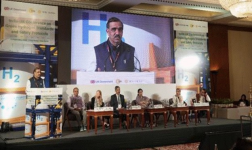
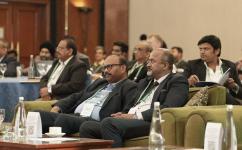
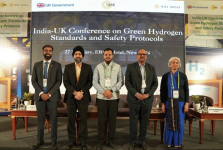
The India–UK Conference on Green Hydrogen Standards and Safety Protocols was convened on 27 February 2026 in New Delhi, bringing together representatives from India and the UK across government, industry, academia, standards bodies, testing institutions, research organizations, and regulatory agencies to strengthen cooperation on the safe deployment of green hydrogen under India’s National Green Hydrogen Mission.

1773253105982.png

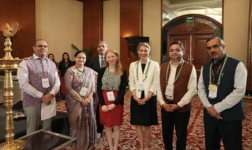
The conference was organized by the National Centre for Hydrogen Safety (NCHS), established under the Ministry of New and Renewable Energy (MNRE) to support the National Green Hydrogen Mission, in collaboration with the British High Commission in India and WRI India, and featured key discussions on regulatory frameworks, international standards, and safety protocols across the green hydrogen value chain, including production, storage, transportation, and end-use applications.

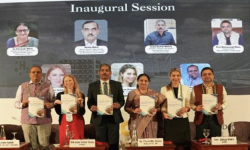
The inaugural session commenced with context-setting remarks by Mohammad Rihan, Director General, National Institute of Solar Energy. This was followed by special addresses by Abhay Bakre, Mission Director, National Green Hydrogen Mission, Ministry of New and Renewable Energy; Jinoos Shariati, First Secretary (Trade), British High Commission in India; Anjan Kumar Mishra, Secretary, Petroleum and Natural Gas Regulatory Board; and Laura Aylett, First Secretary (Climate & Energy), British High Commission in India.

1773253067914.png

Delivering the keynote address, Parvinder Maini, Scientific Secretary, Office of the Principal Scientific Adviser to the Government of India, emphasized the importance of strong safety frameworks, standards development, and international collaboration to enable the large-scale deployment of green hydrogen technologies.

1773253037302.png

A key highlight of the conference was the participation of national regulators responsible for hydrogen safety and standards. The Petroleum and Explosives Safety Organisation (PESO) shared regulatory perspectives on safety compliance, risk assessment, and hazard management for hydrogen systems. The Bureau of Indian Standards (BIS) presented insights on the evolving standards framework and ongoing efforts to align Indian hydrogen standards with international best practices.

1773253003747.png

Technical sessions during the conference featured presentations and discussions by eminent experts from industry, academia, and research institutions on safety practices across the hydrogen value chain. Speakers included representatives from Society of Indian Automobile Manufacturers, NTPC Limited, Automotive Research Association of India, Cochin Shipyard Limited, Arup, Petroleum and Natural Gas Regulatory Board, CSIR-National Metallurgical Laboratory, Cochin University of Science and Technology, and Indian Institute of Technology Madras. The sessions covered safety practices in hydrogen end-use applications, safe design and operation of hydrogen production, storage and transportation systems, risk assessment methodologies, incident case studies, and emerging innovations such as advanced sensor technologies and AI-enabled monitoring for hydrogen safety. The conference concluded with a shared commitment from India and the UK to strengthen collaboration on standards development, regulatory capacity building, and safety frameworks to support the reliable and large-scale deployment of green hydrogen technologies.

1773252980650.png

The conference concluded with a shared commitment to strengthen collaboration between India and the UK on developing robust standards, regulatory frameworks, and safety protocols to support the safe and large-scale deployment of green hydrogen technologies. The deliberations are expected to contribute to ongoing efforts under the National Green Hydrogen Mission to build a comprehensive safety ecosystem and facilitate the growth of a reliable and globally competitive green hydrogen sector in India.

https://www.pib.gov.in/PressReleasePage.aspx?PRID=2236256&reg=3&lang=1
 
  • Like
Reactions: babablacksheep
A small re-cap of where this is going:

We have massive coal reserves & we have recently developed the tech needed for making Methanol from locally available coal. BHEL has a pilot project running:
Some updates on the Methanol fuel technology:

BHEL is providing Methanol produced in their Hyderabad based coal gasification plant to the Kerala based 350MWe Rajiv Gandhi Combined Cycle Power Project (RGCCPP) to produce power on an experimental basis:

NTPC Kayamkulam mulls using methanol as fuel when power crisis looms over Kerala

The project will be executed in 2 phases:

1. Phase I: With no modifications to the gas turbine and minimal modifications in overall plant. Test firing using methanol shall be carried out in GT at maximum possible loading. The maximum load expected to be 40-50%.

2. Phase II: Based on the test results of Phase-I, modifications for running on 100% load shall be planned in future.

Methanol Firing in Gas Turbine | NTPC Limited

There is also a pilot project running on Methanol production from captured CO2:
NTPC's NETRA develops indigenous catalyst for CO2 conversion to methanol.

The process is seen as a critical solution to address CO2 mitigation challenges facing fossil-fuel-based power plants globally. NTPC's pilot program, utilizing this catalyst, aims to produce high-purity methanol, over 99%, by capturing and this catalyst, aims to produce high-purity methanol, over 99%, by capturing and processing 10 kg of CO2 per day.

ETEnergyWorld
Updated on October 30, 2024, 7:58AM IST.
View attachment 37670

New Delhi: In a key development for carbon capture and utilization, NTPC's research wing NETRA, in collaboration with the Indian Institute of Petroleum (IIP), Dehradun has developed an indigenous catalyst capable of converting carbon dioxide (CO2) emissions into methanol.

The process is seen as a critical solution to address CO2 mitigation challenges facing fossil-fuel-based power plants globally. NTPC's pilot program, utilizing this catalyst, aims to produce high-purity methanol, over 99%, by capturing and processing 10 kg of CO2 per day.

"CO2 mitigation is one of the critical challenges for fossil fuel fired plants, and capturing CO2 from flue gas to convert it into valuable fuel and chemicals is a global focus," the company said in a statement. At the pilot plant, one mole of CO2 and three moles of hydrogen (H2) pass through a fixed bed downflow reactor, demonstrating the catalyst’s potential in producing methanol on a sustainable basis.

This initiative aligns with NTPC’s broader environmental goals, where the organization has actively pursued carbon footprint reduction through NTPC Green Energy Limited, a wholly owned subsidiary. NTPC’s strategies reflect India’s commitment to achieving net-zero
emissions by 2070 and support global climate action targets.

NTPC's NETRA develops indigenous catalyst for CO2 conversion to methanol - ET EnergyWorld

Eventually we plan to use Hydrogen spiked LPG/LNG etc. for our domestic & industrial needs. Experiments on spiking natural gas with Hydrogen has already started:

Over the next 2-3 decades we plan to switch the baseload non-renewable energy needs from oil to gas (LPG/LNG/Hydrogen). But we don't want to have as big an import dependence on gas as we have for oil. I've written about Hydrogen economy a while back:
At current prices extraction & transportation of green hydrogen is a far more expensive process than the amount of money that can be made by selling electricity generated by combustion of Hydrogen. So I don't see how thermal plants running on Hydrogen is going to work. Hydrogen has uses in powering many sectors: Industrial, Residential, Commercial, Transportation etc.

But electricity at your home from Hydrogen combustion isn't happening anytime soon.

Right now there are 2 viable processes of producing green Hydrogen:
1. Electrolysers
2. High Temperature Nuclear Reactors

We are working on reactors like the CHTR & the IHTR, but it is a future technology. Electrolysers are available right now but need large scale expansion. That's where companies like Reliance, GAIL, NTPC, TATA, Ohmium etc. come in. All of them are investing in building, acquiring & scaling up electrolysers. But electrolyser technology is not exactly a monolith, there are many types of electrolysers:

1. Alkaline Electrolysers (AE): They were first developed in India by BARC for some nuclear research work. ISRO acquired the tech from them & set up their own Hydrogen production capability. The hydrogen ISRO produced were mostly meant to power their cryogenic hydrolox engines.
2. Polymer Electrolyte Membrane (PEM): Recently developed & tested by CSIR-CERI. This is a spin-off of the R&D work done on the DRDO's PAFC AIP system. CSIR-CERI was involved with the NMRL in the development of the polymer membrane for the AIP. The CSIR is trying to commercialize the technology.
3. Solid Oxide Electrolyser (SOE), Electrochemical-Thermally Activated Chemical (E-TAC) & and Anion Exchange Membrane (AEM): Proprietary technologies developed by foreign companies. Don't know a lot about it.

AE is easily available but requires a lot of electricity. Comparatively PEM is much more energy efficient. The other processes mentioned above are even better then PEM but they use some rare earth minerals, thus scaling them up is a problem. The companies that are trying to get into Hydrogen production in India are largely looking to setup PEM electrolysers. But a lot of the companies want to import the tech rather than using the tech developed by CSIR-CERI. As such the lab is trying to convince these companies to adopt their tech. The govt. might announce a PLI for green hydrogen production too & they might link it to using CSIR-CERI developed PEM. Let's see how this goes.

Production is one thing, transportation is an additional headache. Hydrogen is the lightest element & it is a gas at room temp. Hydrogen gas has a density so low that it permeates out of most pipes. You need pipes made of very high density alloys that are ultra expensive to transport hydrogen gas safely & efficiently. The other way is to transport cryogenically cooled liquid hydrogen, which is no less problematic.

So what do you do? Find a easily transportable chemical that can act as a hydrogen carrier. The carrier chemical will preferable be a fuel itself. Hydrogen in gaseous form will be dissolved as solute into this gaseous or liquid carrier that will be the solvent. The solution will be used directly by end users as fuel.

Much to the great dismay of many environmental activists such a hydrogen carrier chemical is likely going to be a hydrocarbon. So which hydrocarbons are in consideration? 3 hydrocarbons each with its own advantages & disadvantages. Briefly we have the following:

1. Natural Gas(Methane):

Advantages:
i. Being a gas it can dissolve the highest volume of Hydrogen. Therefore it is the most efficient carrier of hydrogen.
ii. Natural gas has high calorific value which would be increased by the presence of Hydrogen.
iii. The technology needed to generate grid scale electricity from natural gas already exists at very competitive prices. The same technology is adaptable for hydrogen spiked natural gas.
iv. There is political will behind natural gas. Modi wants to increase the share of natural gas in our energy grid from the current 6% to 15% by 2030.

Disadvantages:
i. India doesn't have a lot of natural gas. 43% of our current gas consumption comes from domestic sources. If we rely on gas too much in the next few decades this is going to become another drain on our foreign reserves like oil is now.
ii. India's current pipeline infrastructure is inadequate. We have built just ~15,000 km of pipelines in the last 27 years prior to 2014. Since 2014 we have been building an additional 16,000+ km.
iii. We don't have a lot of gas fired power plants. So if we are going to use natural gas as the hydrogen carrier we will also have to set up new gas fired plants.

Future scope:
Our reserves of conventional gas is limited. But we have a lot of Methane hydrates. Extracting methane from hydrates is not something that has been commercially established anywhere yet. Many of our research establishments & companies are working on gas extraction technologies. We have also signed agreements with US, Japan & Canada for co-operation in development of the tech needed. All 3 of these nations have their own gas hydrates reserves, so they have a skin in the game. Some of these countries claim that commercial production of gas from hydrates can be done with in the next 5 years.

Recently we've made some breakthroughs of our own:

How to sequester carbon dioxide and produce natural gas

We have nearly ~2000 trillion cubic feet of natural gas in Methane hydrates. If we can tap even a small share of this it would greatly change the energy & geo-political scenario for us.

2. Ethanol

Advantages:

i. Of the 3 hydrocarbons mentioned here Ethanol is the 2nd most efficient Hydrogen carrier. Liquid fuel are easier to transport.
ii. Can be easily adopted into the transportation sector. Spark ignition engines can readily adopt Ethanol. Burn cleaner than petrol.
iii. Produced from food grains, sugar, agro waste etc. No long term import dependency concern. Can reduce problems of stubble burning.
iv. Can reduce our crude oil import bill. Has acquired govt. support in form of the Ethanol Blending Program (EBP). EBP seeks to achieve 20% ethanol blending from the current 8.5% by 2025.

Disadvantages:
i. Lower calorific value than petrol & natural gas. To produce as much energy as 1 liter of petrol you would need to burn 1.5 liters of Ethanol. Not feasible to use in oil fired electricity plants.
ii. Can have an adverse effect on food security. Requires a meticulously designed incentive scheme to ensure optimal production of Ethanol that doesn't cause an artificial scarcity of food items. We all know how good New Delhi is with incentive schemes.
iii. The EBP will cause short term import dependency on USA & Brazil.

Future scope:
The only way we will achieve 20% Ethanol blending by 2025 is if we import ethanol. Domestic ethanol production plants aren't coming up fast enough. Consumption is shooting through the roof. A program designed to reduce import dependence on crude oil will end up causing a temporary import dependence on ethanol. Brilliant. :ROFLMAO: :ROFLMAO:

3. Methanol

Advantages:

i. Can be produced from our domestic coal. We have a lot of coal & it is pretty cheap. No problems of import dependency or price.
ii. Cleanest liquid hydrocarbon. Easy to transport.
iii. Can be used to make Di-Methyl Ether (DME) that can wholly replace Diesel. Diesel engines need minor tweaks to their compression ratios to use DME. DME can thus be used in road, rail & marine transportation.

Disadvantages:
i. Globally available tech for producing Methanol from Coal doesn't work on Indian coal due to its high ash content. We have to develop our own tech.
ii. It the poorest carrier of hydrogen. Also has the lowest calorific value. You would have to burn 1.9 liters of Methanol to produce energy equivalent to 1 liter of Petrol. Not feasible to be used for producing electricity.

Future scope:
Recently BHEL had a breakthrough with Methanol production. In Sep 2021 BHEL announced that their R&D centre in Hyderabad set up a coal gasification plant that is now producing 0.25 ton per day (TPD) of Methanol from Indian high ash coal using a 1.2 TPD Fluidized bed gasifier. SO they used 1.2 ton Indian coal to produce 0.25 ton Methanol.

India's first Indigenously Designed High Ash Coal Gasification Based Methanol Production Plant at BHEL R&D Centre, Hyderabad

Indias first pilot plant to convert high ash coal to methanol can accelerate the countrys journey towards clean technology | Department Of Science & Technology | Department Of Science & Technology (DST)

India has 340+ billion metric tons of coal, at our current consumption levels we consume less than 1/350th of our reserves every year. The low conversion ratio of Indian coal to Methanol is not a problem. The fact that we can produce high purity Methanol from Indian coal is a big deal. Still BHEL needs to establish the scalability of their tech.

Some good reads on Methanol in India:

vikaspedia Domains

Government takes a hard look at methanol for clean fuel

https://www.moneycontrol.com/news/i...ould-be-a-cheaper-fuel-for-india-7540761.html

It is hard to say with certainty where we are headed in the energy scheme in say 30 years from now. But is seems clear that none of these carriers alone can cater to all of our needs. Thus we need to keep developing all of them. The good thing is that the govt. is investing in all 3 potential options.

Anyway I have rambled on for long enough. Let me know if I made any mistakes, I am half asleep right now. I am going to bed. Good night.

We've also had some breakthroughs in Hydrogen storage tech:
India just solved hydrogen's toughest challenge, and it came from a Pune lab

MIT-WPU researchers have achieved a world-leading hydrogen breakthrough, storing hydrogen in just two hours instead of the global norm of 18. Their new LOHC system makes hydrogen safer, cheaper, and easier to transport, placing India among the top innovators shaping the future of clean energy.

India Today Education Desk
New Delhi, UPDATED: Dec 12, 2025 19:20 IST
View attachment 48358
MIT-WPU researchers have achieved a world-leading hydrogen breakthrough, storing hydrogen in just two hours instead of the global norm of 18.

Pune may have just delivered the breakthrough India’s clean-energy mission was waiting for. A team of researchers at MIT World Peace University (MIT-WPU) has developed a safer, cheaper way to transport hydrogen — solving what experts have long called the biggest bottleneck in India’s hydrogen future.

Their innovation: a Liquid Organic Hydrogen Carrier (LOHC) system that can store and move hydrogen in a non-flammable, non-explosive liquid form, at normal temperature and pressure. No 253°C cryogenic cooling. No ultra-high-pressure cylinders. No massive logistical bill. Just a stable liquid that behaves like any other industrial fuel.

And that’s the game changer.

To understand how big this is: labs worldwide need 18 hours to fully store hydrogen. MIT-WPU did it in just two. That places India straight into the top tier of global hydrogen innovation — and rewrites what’s possible for clean-energy technology.

A BREAKTHROUGH NOBODY ELSE COULD CRACK


The challenge arrived at MIT-WPU through Ohm Cleantech (OCPL), part of the h2e Power Group. Even IITs and global labs had struggled to find a workable method. There was no documented process anywhere in the world — meaning the team had to build a new scientific pathway from scratch.

“The first fifty days showed no reaction at all, but we refused to step back,” said Prof. (Dr.) Rajib Kumar Sinharay, the project’s Principal Investigator. “Nearly ten months and close to a hundred trials later, we crossed a milestone that had never been achieved anywhere.”

For OCPL, this was the exact breakthrough India needed. Founder Siddharth Mayur said the innovation supports the National Green Hydrogen Mission, while reinforcing India’s aim for technological self-reliance. Patent filings are already underway.

WHY HYDROGEN TRANSPORT IS SUCH A NIGHTMARE


Hydrogen is one of the cleanest fuels available — but also one of the hardest to handle. Today, it’s either:
  • compressed into cylinders at hundreds of bars of pressure, or
  • liquefied at –253°C, requiring expensive cryogenic infrastructure.
Both processes are risky, costly, and infrastructure-heavy — a major reason India’s hydrogen rollout has been slow.

MIT-WPU’s LOHC method sidesteps all of this.

So how does LOHC make hydrogen “behave” like a normal liquid?

The team engineered a two-stage chemical pathway:
  • Hydrogenation: Hydrogen bonds into a specially designed organic liquid, becoming part of a stable, easy-to-handle fluid.
  • Dehydrogenation: At the destination, hydrogen is released, and the carrier liquid can be reused.
This means hydrogen can now be moved using existing petrol/diesel tankers, standard storage containers, and potentially even pipelines — dramatically cutting both cost and risk.

“Being able to transport hydrogen like any other industrial liquid removes long-standing safety and regulatory barriers,” said Prof. Datta Dandge, Research Advisor.

INDIA JUMPS AHEAD WITH WORLD-LEADING RESULTS

The MIT-WPU team didn’t just solve the problem — they outperformed existing global benchmarks.

Key achievements:
  • 2-hour hydrogen storage, compared to the global average of 18 hours
  • Lower operating temperature: 130°C (vs 170°C typical)
  • Lower pressure: 56 bar (vs higher global norms)
  • Storage efficiency: 11,000 litres of hydrogen in just 15.6 litres of carrier liquid
  • Recovery efficiency: 86% hydrogen successfully released
These results place India at the forefront of LOHC research globally — a milestone for both clean-energy science and industrial practicality.

BUILT IN PUNE, AIMED AT NATIONAL IMPACT


The research was carried out in MIT-WPU’s advanced hydrogen lab, equipped to operate at up to 350°C and 200 bar. Scaling up for industrial deployment is already the next step.

For Project Fellow Nishant Patil, the experience has been transformative: “Working on a breakthrough with national impact has been a defining experience,” he said, adding that it strengthened his resolve to contribute to India’s clean-energy future.

WHY THIS MATTERS FOR INDIA

If adopted at scale, this technology could reshape:
  • hydrogen transport and storage
  • clean mobility and heavy transport fuels
  • industrial decarbonisation
  • national hydrogen infrastructure
It directly supports the National Green Hydrogen Mission and boosts India’s chances of becoming a global hydrogen hub.

In simple terms: India may have just solved hydrogen’s biggest barrier — and the solution came from a lab in Pune.

India just solved hydrogen’s toughest challenge, and it came from a Pune lab


Been a good year for India's Hydrogen story —advancement in higher-density, safer H₂ storage, leveraging metal hydrides & cryogenic systems; +2 hour LOHC storage innovation in Pune' MIT-WPU.

IISc announced a 2-stage Biomass-to-H₂ reactor producing ~5 kg/hour of 99% Green H₂ from agri-waste. A carbon-negative process, capturing carbon as solids or reusable CO₂ — is being scaled up with Indian Oil to a 0.25-tonne/day plant for fuel-cell buses.
View attachment 48618

Now we seem to have developed tech needed to produce gaseous DME as an alternative to LNG. So, we now have a tech chain that can produce gaseous DME from domestic Indian Coal. The next challenge is scaling, if we can overcome that we could see a big reduction in gas imports in a decade from now:

Pune-based scientists develop synthetic gas that can become an alternative to LPG

By Trending Desk, ET Online
Last Updated: Mar 16, 2026, 04:25:00 PM IST
1773681955091.png

Synopsis
CSIR-NCL scientists have developed an indigenous technology to produce Dimethyl Ether (DME), a clean-burning fuel that can be blended with LPG. This innovation aims to reduce India's reliance on imported cooking fuel and bolster energy self-reliance. The technology offers a cost-effective way to produce DME, with potential for significant foreign exchange savings.

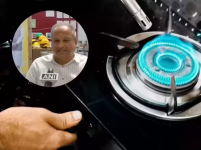
India’s heavy dependence on imported cooking fuel may soon get a small but significant breather. Scientists at the CSIR-National Chemical Laboratory (CSIR-NCL) in Pune have developed an indigenous technology to produce Dimethyl Ether (DME), a clean-burning fuel that can be used as an alternative to Liquefied Petroleum Gas (LPG). According to a press release issued by the institute, the technology could help reduce the country’s reliance on imported LPG while supporting India’s push for energy self-reliance.

A cleaner fuel option emerges

The research team at CSIR-NCL has developed a patent-protected technology to produce Dimethyl Ether, a synthetic fuel known for burning cleanly. Scientists say DME can serve as a sustainable alternative to LPG and support the government’s broader Atmanirbhar Bharat goal of strengthening domestic energy capabilities.

Energy security remains a pressing concern for India, which imports more than 80 per cent of its fossil energy needs. Global supply disruptions have also pushed LPG prices higher in recent years, affecting many households, especially those using subsidised cylinders under the Pradhan Mantri Ujjwala Yojana.

Why DME is getting attention

Dimethyl Ether is considered a cleaner fuel because it releases much lower amounts of soot, nitrogen oxides (NOx), sulfur oxides (SOx) and particulate matter compared with many conventional fuels. At the same time, scientists say it offers thermal efficiency comparable to LPG.

The Bureau of Indian Standards has already laid down rules for its use. Under the standard IS 18698:2024, up to 20 per cent DME can be blended with LPG for domestic, commercial and industrial use.

Experts note that blending up to 8 per cent DME with LPG can be done without modifying existing LPG infrastructure such as cylinders, regulators, hoses or burners. That means households could potentially use the blended fuel without changing their current kitchen setups.

Big import bill, bigger savings potential

India imported nearly 21 million tonnes of LPG in 2024. Scientists estimate that replacing just 8 per cent of that with DME could save around ₹9,500 crore in foreign exchange every year.

For households under the Ujjwala scheme, the scale of demand is significant. Substituting part of LPG supply for the scheme’s 10.5 crore connections would require DME production capacity of about 1,300 tonnes per day.

Beyond kitchens: Other uses for DME
Apart from cooking fuel, DME has several industrial and commercial uses. It can work as an automotive fuel and also as a propellant in aerosol products, where it can replace ozone-depleting chlorofluorocarbons (CFCs).

The compound also acts as a chemical intermediate in the production of lower olefins, dimethyl sulfate and methyl acetate.

How the technology works

The technology developed at CSIR-NCL converts methanol into Dimethyl Ether using a highly active and cost-effective catalyst. The research team was led by Thirumalaiswamy Raja, who combined catalyst chemistry with reactor engineering to build an efficient production process.

According to the institute’s release, the system allows DME production at about 10 bar pressure. This makes it possible to directly fill the fuel into LPG cylinders while keeping operational costs relatively low.

The process has already been scaled up to a pilot capacity of 250 kg per day.

Burner prototype tested

To make the technology more practical for everyday use, CSIR-NCL scientists have also designed a patented burner prototype. The burner can operate in a flexible mode — from 100 per cent LPG to 100 per cent DME, as well as any mixture in between.

The prototype has been tested for efficiency at the LPG Equipment Research Centre in Bengaluru.

Next step: Moving toward industrial scale

The institute is now preparing to build an industrial demonstration plant capable of producing 2.5 tonnes of DME per day. Scientists aim to set it up within the next six to nine months in collaboration with a process engineering partner.

If the demonstration succeeds, it could lead to commercial plants producing between 50 and 100 tonnes per day.

CSIR-NCL has also expressed interest in partnering with major oil public sector undertakings and bioenergy companies to scale up the technology.

Scientists say widespread adoption of DME could help India cut LPG imports, improve energy security and move towards a cleaner energy mix.

Pune-based scientists develop synthetic gas that can become an alternative to LPG