

Indian Space Industry : Updates & Discussions
- Thread starter Ashwin
- Start date
You are using an out of date browser. It may not display this or other websites correctly.
You should upgrade or use an alternative browser.
You should upgrade or use an alternative browser.


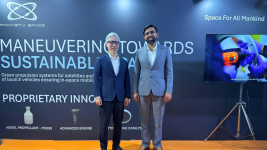
TDB-DST signs agreement with Manastu Space for ₹116 crore RDI support to advance indigenous green propulsion technology
Project to develop scalable, high-performance and cost-effective propulsion systems for satellites and launch vehicles, advancing technology from TRL-6 to TRL-9
Posted On: 26 OCT 2026 1:46PM by PIB DelhiIn a significant step towards strengthening India’s indigenous space technology capabilities and promoting sustainable access to space, the Technology Development Board (TDB), Department of Science & Technology (DST), Government of India, has signed an agreement with M/s Manastu Space Technologies Private Limited, Navi Mumbai, Maharashtra for financial support of ₹116 crore under the Research Development and Innovation (RDI) Fund.
The project, with a total project cost of ₹277.63 crore, focuses on developing a scalable, integrated green propulsion system for satellites and launch vehicles across the 5 mN to 300 N thrust class. The programme aims to advance the technology from Technology Readiness Level (TRL)-6 to TRL-9, supporting further development, validation and deployment of the propulsion system. The financial support will be provided through Optionally Convertible Debt (OCD).
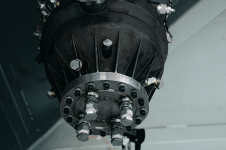
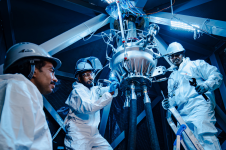
Manastu Space is developing an indigenous green propulsion system designed to provide a complete propulsion solution for satellites and launch vehicles. The technology uses a hydrogen peroxide-based green propellant with additives, supported by an integrated engine and catalyst system. The system offers improved performance and cost efficiency while reducing the operational challenges associated with conventional propellants.
A key feature of the technology is its scalable architecture, serving propulsion requirements ranging from small satellite applications to higher-thrust systems. The project encompasses the development of propulsion engines and propellant feed systems, including an ultra-high-temperature ceramic catalyst designed for reliable operation under demanding conditions.
The propulsion system has already been demonstrated in space. The programme will build on this technology base through further engineering, system integration, testing and validation, advancing its performance, reliability and readiness for wider deployment across satellite and launch vehicle applications. The project addresses an important requirement in the evolving space economy: propulsion systems that can support more efficient satellite operations while improving the safety and economics of space missions.
The project falls under the Deep Technology sector, with Space Technology as the sub-sector. By supporting indigenous propulsion development, the initiative aims to strengthen domestic capabilities in a critical component of the space value chain and reduce reliance on externally sourced technologies.
Shri Rajesh Kumar Pathak, Secretary, TDB, said, “Indigenous propulsion technologies are important for strengthening India’s capabilities across the space value chain. As the country’s space ecosystem continues to expand, there is a growing need for propulsion systems that combine performance, reliability, operational safety and cost efficiency. Through the RDI Fund, TDB is supporting technology-intensive programmes that require sustained investment to progress from advanced development towards deployment. The project with Manastu Space reflects this commitment to advancing indigenous space technologies and enabling more sustainable approaches to access to space.”
Co-Founder & CTO, Manastu Space Technologies Private Limited, said, “The support from TDB under the RDI Fund will help us advance our green propulsion technology through further development, integration and validation. Our objective is to develop a scalable propulsion platform that combines performance, reliability and cost efficiency while addressing the need for safer and more sustainable propellant systems. This partnership will support our efforts to take the technology towards TRL-9 and strengthen India’s indigenous space propulsion capabilities.”
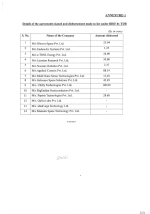
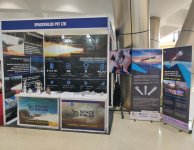
IN-SPACe selects four more Indian Space Companies under Technology Adoption Fund
MumbaiSemi, ₹11 cr: Dual-constellation chip reading both GPS & NavIC
VyomIC, ₹12 cr: Atomic clock ensemble for sat navigation
Manastu, ₹22 cr: Small sat engine using solid iodine, eliminating heavy high-pressure tanks.
Inspecity Labs, ₹21 cr: Refillable engine for tiny sats & fuel port, in-orbit refueling.

Don't know if this was posted already. It is important in the context of IRNSS' limited availability:
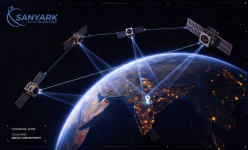
Sanyark Space is developing a constellation of NAV-COM (navigation + communication) satellites to provide Positioning, Navigation & Timing services at centimeter-level accuracy, acting as a more advanced version of NavIC and GPS, while also offering communication (IoT/M2M) services!
They plan on building a constellation of initially 40 satellites in Low Earth Orbit to secure coverage in India, South Asia and the Middle East, and in the future, expand it to 240 satellites for global coverage.
In today's age, satellite navigation forms the basis of countless technologies and services we use daily that we usually take as granted.
However, all modern day GNSS constellations are situated either in Geostationary or Medium Earth Orbits very high above Earth. This causes the signals arriving from those satellites to become extremely weak by the time they reach the Earth's surface.
As a result, PNT services offered by these constellations have the following shortcomings:
• Jamming and spoofing: The weak signals can easily jammed or spoofed, even by using small and cheap jammers or spoofers. Between Nov 2023 to Nov 2025, India's DGCA recorded 1,951 incidents of GPS interferences affecting major airports and aviation hubs across India.
• Urban "canyon effects": Buildings and infrastructure block weak signals in cities where navigation services are often most needed and precision is most critical.
• Inability to meet today's demands: Modern applications such as autonomous vehicles (ADAS 2+), advanced drones and defence systems, resilient maritime/aviation operations etc. require centimeter-level positioning accuracy which current systems cannot consistently deliver.
These are the problems that Sanyark Space has set out to solve with their NAV-COM constellation.
As their satellites will operate in Low Earth Orbit between 500-1,000 km above Earth, it will result in more than 100x stronger signal strength on Earth compared to others such as NavIC located at 36,000 km altitude, making it dramatically more resistant to jamming and spoofing. The stronger signal strength also means the signals can penetrate through buildings in urban landscapes and constrained environments where traditional GNSS systems struggle. Additionally, the shorter distance from Earth means faster signal travel, reducing latency and allowing for better real-time positioning.
The most important part of any navigation satellite is the on-board atomic clock which provides extremely precise measurements of time crucial for determining the position of users through radio signals travelling at the speed of light.
Instead of using heavy and expensive atomic clocks used on NavIC and others, Sanyark will be using a hybrid approach using compact and inexpensive chip-scale atomic clocks on board their satellites and synchronize them using timing information received from atomic clocks at ground stations as well as existing NavIC or other GNSS satellites.
Although these chip-scale atomic clocks will be sourced from foreign vendors, Sanyark Space is also collaborating with IIT Tirupati who are developing their own chip-scale atomic clocks, and eventually they plan to use indigenously manufactured ones when they become available.
The use of timing information from ground and existing GNSS sats will allow their satellites to remain functional even in the case of their on-board clocks experiencing any issues.
Sanyark's critical focus remains on making this architecture interoperable with others, meaning hardware designed to receive signals from NavIC and other GNSS satellites can also be used to seamlessly receive signals from their constellation.
Additionally, given the fact that in order to receive PNT information user terminals will have a communication link with their satellites, Sanyark plans to leverage this same link to offer communication services. Initially, they will support M2M or IoT communication but later on they plan to provide cellular services as well.
To provide all of these, Sanyark Space will develop the necessary payloads and will fly them as hosted payloads with the help of satellite bus platform providers.
Their first set of payloads have been realized and are slated to begin testing in September, and their first orbital satellite mission 'Dhrona-1' is expected to be ready near January, followed by launch on ISRO's SSLV rocket around March 2027!
The goals for their Dhrona-1 mission include:
• Testing out chip-scale atomic clocks from multiple vendors
• Validate end-to-end performance of their communication and PNT payloads (as much as possible with one satellite)
• Prove interoperability with existing GNSS systems
- Raghava Kundrapu, Sanyark Space CEO to ISRO Spaceflight
𝗛𝘆𝗱𝗲𝗿𝗮𝗯𝗮𝗱-𝗯𝗮𝘀𝗲𝗱 𝗦𝗮𝗻𝘆𝗮𝗿𝗸 𝗦𝗽𝗮𝗰𝗲 𝗶𝘀 𝗯𝘂𝗶𝗹𝗱𝗶𝗻𝗴 𝗜𝗻𝗱𝗶𝗮'𝘀 𝗻𝗲𝘅𝘁-𝗴𝗲𝗻 𝗡𝗮𝘃𝗜𝗖, 𝗹𝗮𝘂𝗻𝗰𝗵𝗶𝗻𝗴 𝗤𝟭, 𝟮𝟬𝟮𝟳!
Sanyark Space is developing a constellation of NAV-COM (navigation + communication) satellites to provide Positioning, Navigation & Timing services at centimeter-level accuracy, acting as a more advanced version of NavIC and GPS, while also offering communication (IoT/M2M) services!
They plan on building a constellation of initially 40 satellites in Low Earth Orbit to secure coverage in India, South Asia and the Middle East, and in the future, expand it to 240 satellites for global coverage.
In today's age, satellite navigation forms the basis of countless technologies and services we use daily that we usually take as granted.
However, all modern day GNSS constellations are situated either in Geostationary or Medium Earth Orbits very high above Earth. This causes the signals arriving from those satellites to become extremely weak by the time they reach the Earth's surface.
As a result, PNT services offered by these constellations have the following shortcomings:
• Jamming and spoofing: The weak signals can easily jammed or spoofed, even by using small and cheap jammers or spoofers. Between Nov 2023 to Nov 2025, India's DGCA recorded 1,951 incidents of GPS interferences affecting major airports and aviation hubs across India.
• Urban "canyon effects": Buildings and infrastructure block weak signals in cities where navigation services are often most needed and precision is most critical.
• Inability to meet today's demands: Modern applications such as autonomous vehicles (ADAS 2+), advanced drones and defence systems, resilient maritime/aviation operations etc. require centimeter-level positioning accuracy which current systems cannot consistently deliver.
These are the problems that Sanyark Space has set out to solve with their NAV-COM constellation.
As their satellites will operate in Low Earth Orbit between 500-1,000 km above Earth, it will result in more than 100x stronger signal strength on Earth compared to others such as NavIC located at 36,000 km altitude, making it dramatically more resistant to jamming and spoofing. The stronger signal strength also means the signals can penetrate through buildings in urban landscapes and constrained environments where traditional GNSS systems struggle. Additionally, the shorter distance from Earth means faster signal travel, reducing latency and allowing for better real-time positioning.
The most important part of any navigation satellite is the on-board atomic clock which provides extremely precise measurements of time crucial for determining the position of users through radio signals travelling at the speed of light.
Instead of using heavy and expensive atomic clocks used on NavIC and others, Sanyark will be using a hybrid approach using compact and inexpensive chip-scale atomic clocks on board their satellites and synchronize them using timing information received from atomic clocks at ground stations as well as existing NavIC or other GNSS satellites.
Although these chip-scale atomic clocks will be sourced from foreign vendors, Sanyark Space is also collaborating with IIT Tirupati who are developing their own chip-scale atomic clocks, and eventually they plan to use indigenously manufactured ones when they become available.
The use of timing information from ground and existing GNSS sats will allow their satellites to remain functional even in the case of their on-board clocks experiencing any issues.
Sanyark's critical focus remains on making this architecture interoperable with others, meaning hardware designed to receive signals from NavIC and other GNSS satellites can also be used to seamlessly receive signals from their constellation.
Additionally, given the fact that in order to receive PNT information user terminals will have a communication link with their satellites, Sanyark plans to leverage this same link to offer communication services. Initially, they will support M2M or IoT communication but later on they plan to provide cellular services as well.
To provide all of these, Sanyark Space will develop the necessary payloads and will fly them as hosted payloads with the help of satellite bus platform providers.
Their first set of payloads have been realized and are slated to begin testing in September, and their first orbital satellite mission 'Dhrona-1' is expected to be ready near January, followed by launch on ISRO's SSLV rocket around March 2027!
The goals for their Dhrona-1 mission include:
• Testing out chip-scale atomic clocks from multiple vendors
• Validate end-to-end performance of their communication and PNT payloads (as much as possible with one satellite)
• Prove interoperability with existing GNSS systems
- Raghava Kundrapu, Sanyark Space CEO to ISRO Spaceflight

Trishul Space is developing a 30kN (vacuum) LOX/LNG fuel rich staged combustion engine named HARPY-1:
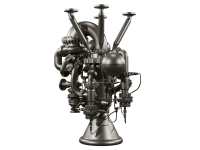
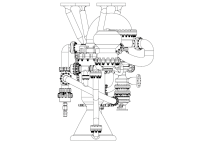
The design is said to be scalable. But unlike Skyroot's Raman & Dhawan engines or Agnikul's Agnite engine or Astrobase's FFSC engine which are all designed to be 3D printed, this engine looks to be built using traditional machining.
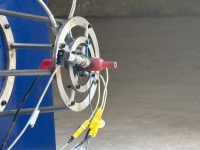
They have hot-tested their torch ignitor:
The design is said to be scalable. But unlike Skyroot's Raman & Dhawan engines or Agnikul's Agnite engine or Astrobase's FFSC engine which are all designed to be 3D printed, this engine looks to be built using traditional machining.
They have hot-tested their torch ignitor:

Doubts regarding Agnibaan.
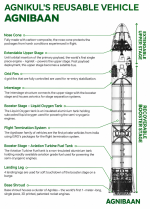
This is Agnikul Cosmos's promotional material for Agnibaan at Bengaluru Space Expo back in September 2026, (Scanned by a Document OCR app, not AI)
Here's my doubts:
Is reusablity viable for a Small Orbital Launch Vehicle?
Agnikul has never really hidden this, but it's easy to miss if you're not comparing numbers side by side. Agnibaan is about 18 meters tall, 1.3 meters in diameter, and weighs around 14,000 kilograms fully fueled at liftoff. It's designed to carry somewhere between 100 and 300 kilograms to a 700 kilometer orbit, depending on configuration.Now compare that to Rocket Lab's Electron, the rocket most people think of when they think "small satellite launcher." Electron is about 18 meters tall, 1.2 meters in diameter, roughly 13,000 kilograms at liftoff, carrying up to 300 kilograms to orbit.
Those are similar rockets. Agnikul isn't hiding some secretly bigger vehicle behind the diagram, waiting to be revealed once the funding round closes. This is an Electron-class rocket and even Agnibaan's own Wikipedia entry lists Electron as a directly comparable vehicle. Keep that in mind, because it's the reason the reusability plan is so interesting, and so questionable.
The engine cluster is electric, and that would be a world's first if landing succeeded.
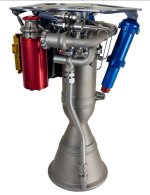
This is not a doubt per se. But electric pump fed engines haven't been use for this use case anywhere, this will be a genuine first.Agnibaan's engines, called Agnilet and Agnite, use something called an electric pump-fed cycle.
To understand why that's notable, you need to know what it's replacing. Most liquid rocket engines need some way to force propellant into the combustion chamber at very high pressure, and traditionally that job is done either by pressurizing the tanks directly (Pressure fed), or by a gas generator, a small secondary combustion process that burns a bit of propellant just to spin a turbine that drives the pumps. Gas generators work, but they're mechanically complicated and they aren't great at throttling smoothly, because you're trying to control a second, smaller combustion process just to control the first one.
Electric pump feed skips that. Instead, batteries and motors spin the pumps directly, the same way a cordless power tool works, just scaled up enormously and pointed at rocket-grade turbopumps. Rocket Lab pioneered this with Electron's Rutherford engine, and Agnikul uses the same basic idea for Agnilet.
Here's why this matters for landing specifically:
To land a rocket propulsively, meaning using its own engines to slow down and touch down gently instead of using a parachute.
You need to throttle the engine, often quite deeply and quite precisely, because you're constantly adjusting thrust to match your changing weight and altitude on the way down. Gas generator engines are notoriously complex about this. Electric motors are not. You can spool an electric pump down smoothly just by reducing the current going to it, almost like dimming a light with a dial instead of flipping a switch on and off. So on paper, electric pump feed is actually a genuinely good architecture for the throttling problem specific to landing.
But throttling is only one ingredient in a much longer recipe. You also need the engine to reliably relight in freefall after being shut down, a guidance system that can steer a falling booster back to a moving barge with pinpoint accuracy, a radar or equivalent sensor package to judge altitude and velocity in the final seconds, and enough stored battery power to run the pumps through an entire extra ignition cycle after they've already worked hard through the ascent. None of that is solved by having a nice throttle knob. Nobody, anywhere, has closed that full loop on an electric pump-fed engine before. If Agnikul pulls this off, it will be a genuine first, not an incremental step.
The uncomfortable math: is this even worth it on a rocket this small?
This is the part that should really make you raise an eyebrow, and it's the same conclusion Rocket Lab already reached and acted on.Every rocket has something engineers call a mass fraction, which is just the split between how much of the vehicle's liftoff weight is propellant versus how much is dead structure, the tanks, the engines, the airframe, all the stuff that isn't fuel. The more of your rocket that's propellant relative to structure, the more efficiently you can accelerate payload to orbit.
Now think about what recovering a first stage actually costs you in this accounting.
- You need grid fins for aerodynamic control on the way down.
- You need landing legs, which are pure dead weight for the entire ascent, they do nothing to help you reach orbit, they just sit there as extra mass you have to drag upward.
- You need reinforced structure to survive the heating and buffeting of a reentry the vehicle was never originally built to withstand.
- And critically, you need to hold back propellant that you would otherwise have burned to gain more altitude and speed, so you can use it later for the landing burn instead.
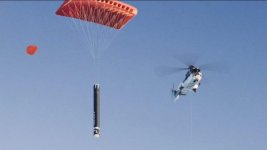
That's the actual reason Electron's recovery plan became a parachute descent and a helicopter mid-air catch, and later a simpler ocean splashdown and boat recovery, rather than a SpaceX-style powered landing.
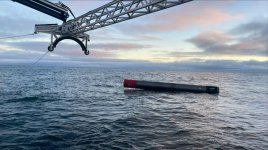
So when Agnikul says they're going to do a powered barge landing on a vehicle in the exact same size class where a well-funded, flight-proven competitor already ran this calculation and said no, that's not a small detail.
Where are the hop tests?
This is where my skepticism about the timeline really sharpened. Every single propulsive landing program that has actually succeeded, without exception, ran low altitude hop tests first. SpaceX had Grasshopper before Falcon 9 ever attempted a landing after a real orbital launch.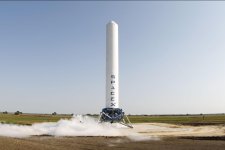
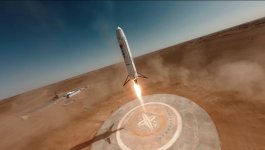
Blue Origin flew New Shepard on short test hops before trusting it with people. SpaceX's Starship program built an entire ugly, squat little vehicle called Starhopper specifically to practice hovering and controlled descent before risking a full-size prototype.
The reason is simple: a hop test lets you validate the guidance, throttle control, and relight sequence in a low-stakes, low-altitude environment, where a mistake costs you a test article, not an entire mission.
As of the most recent public reporting, Agnikul has done ground test firings of clustered engines and some ground validation of recovery hardware like the landing legs, including apparently some parachute-assisted testing. They also just opened new stage-testing facilities in Chennai in early September 2026, explicitly described as groundwork for inspecting and requalifying stages after recovery. That's useful, necessary infrastructure.
But, I found no mention anywhere of an actual free or tethered hop test. Given how central that step has been to every program that has actually landed a rocket, its apparent absence here is a real gap, and that "launching soon" is doing a lot of heavy lifting in their messaging.
And the barge itself, whatever happened to that?
Here's the thing that surprised me most while digging into this: I could not find a single piece of public information about who is actually building the recovery barge, where it's being constructed, or what state it's in. A landing barge isn't a minor accessory, it's a real piece of maritime infrastructure that needs its own design, construction, and testing timeline, the way SpaceX's drone ships were a genuine engineering project in their own right, not just a floating parking lot. If a company were genuinely close to attempting a barge landing, you'd expect at least some visibility into this by now, sea trials, a shipyard contract, something.Or maybe they'll lease an existing flatbed barge and do minor modifications, just like how SpaceX did initially.
SpaceX didn't build its early drone ships from scratch. They leased used flatbed barges, specifically Marmac hulls from Sun-class barge builder McDonough Marine, then had them retrofitted with the diesel-electric thrusters, positioning systems, and blast deck needed to hold station and take a landing.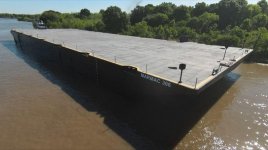
Marmac 300 became "Just Read the Instructions," Marmac 304 became "Of Course I Still Love You."
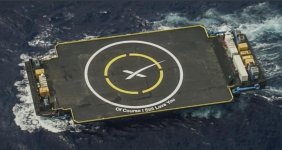
That whole approach exists precisely because building a custom hull from the keel up is slow and expensive, while leasing a generic flatbed barge that already exists and just modifying its deck and adding station-keeping thrusters is fast and comparatively cheap.
If Agnikul is doing the same thing, leasing an existing flatbed barge rather than commissioning a purpose-built one, that actually explains why there's no public trail. A shipyard contract to build a new hull tends to generate press, permits, and sightings, because it's a multi-year industrial project. Leasing an existing barge and quietly fitting it out with a landing deck and some positioning equipment is the kind of thing that can happen with almost no public footprint until it shows up in a harbor near SDSC SHAR a few weeks before a launch attempt.
Source: Indianspaceflight.in

While i think the questionability of small sat launchers being viably re used is true, it still in one way or another a way to perfect the basics of actually lifting off the pad without blowing up and reaching orbit, and the re-usability in this rocket's case can also be a good way to get the tech and expertise down first, all the resuable vehicle companies first definitely had their flights with a smaller rocket before their larger re usable LVs came in ( like falcon 1 , new sheperd, and electron itself is a stepping stone for neutron), i kinda think agnikul maybe going in a incremental path and looks to gain expertise in the basics of rocketry with this one, and they may have gone for the approach of may as well adding booster recovery in this itself, as it would not be optimal to start working on reusability later with the speed the industry is moving, obviously there are no public plans revealed from them of any larger rockets, but still the case of companies using smaller rockets initially and going to larger rockets are the norm and while for now even if assuming they dont have any active plans for a larger cousin for agnibaan, at the end the rocket is still going to give them the experience of building and reusing rockets if successful, and it will be always there to be leveraged by them in future development anyway, now this is fully my own personal opinion and thought, myself have no idea how this will pan out in actuality , the hopper test tho, i agree with that fully, idk whether they are trying to bypass it fully to speed the process or have any other idea is not clear, since the rocket itself is not really large maybe they are looking to use the thing itself as a hopper test or something like that? not sure about that. just hope whatever they have planned works out at least decently and they can find enough commercial and technical success to sustain themselves in business.Doubts regarding Agnibaan.
View attachment 54856
This is Agnikul Cosmos's promotional material for Agnibaan at Bengaluru Space Expo back in September 2026, (Scanned by a Document OCR app, not AI)
Here's my doubts:
Is reusablity viable for a Small Orbital Launch Vehicle?
Agnikul has never really hidden this, but it's easy to miss if you're not comparing numbers side by side. Agnibaan is about 18 meters tall, 1.3 meters in diameter, and weighs around 14,000 kilograms fully fueled at liftoff. It's designed to carry somewhere between 100 and 300 kilograms to a 700 kilometer orbit, depending on configuration.
Now compare that to Rocket Lab's Electron, the rocket most people think of when they think "small satellite launcher." Electron is about 18 meters tall, 1.2 meters in diameter, roughly 13,000 kilograms at liftoff, carrying up to 300 kilograms to orbit.
Those are similar rockets. Agnikul isn't hiding some secretly bigger vehicle behind the diagram, waiting to be revealed once the funding round closes. This is an Electron-class rocket and even Agnibaan's own Wikipedia entry lists Electron as a directly comparable vehicle. Keep that in mind, because it's the reason the reusability plan is so interesting, and so questionable.
The engine cluster is electric, and that would be a world's first if landing succeeded.
This is not a doubt per se. But electric pump fed engines haven't been use for this use case anywhere, this will be a genuine first.
Agnibaan's engines, called Agnilet and Agnite, use something called an electric pump-fed cycle.
To understand why that's notable, you need to know what it's replacing. Most liquid rocket engines need some way to force propellant into the combustion chamber at very high pressure, and traditionally that job is done either by pressurizing the tanks directly (Pressure fed), or by a gas generator, a small secondary combustion process that burns a bit of propellant just to spin a turbine that drives the pumps. Gas generators work, but they're mechanically complicated and they aren't great at throttling smoothly, because you're trying to control a second, smaller combustion process just to control the first one.
Electric pump feed skips that. Instead, batteries and motors spin the pumps directly, the same way a cordless power tool works, just scaled up enormously and pointed at rocket-grade turbopumps. Rocket Lab pioneered this with Electron's Rutherford engine, and Agnikul uses the same basic idea for Agnilet.
View attachment 54857
Here's why this matters for landing specifically:
To land a rocket propulsively, meaning using its own engines to slow down and touch down gently instead of using a parachute.
You need to throttle the engine, often quite deeply and quite precisely, because you're constantly adjusting thrust to match your changing weight and altitude on the way down. Gas generator engines are notoriously complex about this. Electric motors are not. You can spool an electric pump down smoothly just by reducing the current going to it, almost like dimming a light with a dial instead of flipping a switch on and off. So on paper, electric pump feed is actually a genuinely good architecture for the throttling problem specific to landing.
But throttling is only one ingredient in a much longer recipe. You also need the engine to reliably relight in freefall after being shut down, a guidance system that can steer a falling booster back to a moving barge with pinpoint accuracy, a radar or equivalent sensor package to judge altitude and velocity in the final seconds, and enough stored battery power to run the pumps through an entire extra ignition cycle after they've already worked hard through the ascent. None of that is solved by having a nice throttle knob. Nobody, anywhere, has closed that full loop on an electric pump-fed engine before. If Agnikul pulls this off, it will be a genuine first, not an incremental step.
The uncomfortable math: is this even worth it on a rocket this small?
This is the part that should really make you raise an eyebrow, and it's the same conclusion Rocket Lab already reached and acted on.
Every rocket has something engineers call a mass fraction, which is just the split between how much of the vehicle's liftoff weight is propellant versus how much is dead structure, the tanks, the engines, the airframe, all the stuff that isn't fuel. The more of your rocket that's propellant relative to structure, the more efficiently you can accelerate payload to orbit.
Now think about what recovering a first stage actually costs you in this accounting.
On a rocket the size of Falcon 9, this tax is absorbable, because the vehicle has a lot of margin to spare and the first stage is a large fraction of the whole rocket's economics. On something the size of Electron or Agnibaan, the payload margin is already wafer thin, we're talking a couple hundred kilograms to orbit at most. Rocket Lab actually studied propulsive landing for Electron seriously, and walked away from it, concluding that the performance penalty ate too far into an already tiny payload capacity to be worth it.
- You need grid fins for aerodynamic control on the way down.
- You need landing legs, which are pure dead weight for the entire ascent, they do nothing to help you reach orbit, they just sit there as extra mass you have to drag upward.
- You need reinforced structure to survive the heating and buffeting of a reentry the vehicle was never originally built to withstand.
- And critically, you need to hold back propellant that you would otherwise have burned to gain more altitude and speed, so you can use it later for the landing burn instead.
That's the actual reason Electron's recovery plan became a parachute descent and a helicopter mid-air catch, and later a simpler ocean splashdown and boat recovery, rather than a SpaceX-style powered landing.
View attachment 54858View attachment 54859
So when Agnikul says they're going to do a powered barge landing on a vehicle in the exact same size class where a well-funded, flight-proven competitor already ran this calculation and said no, that's not a small detail.
Where are the hop tests?
This is where my skepticism about the timeline really sharpened. Every single propulsive landing program that has actually succeeded, without exception, ran low altitude hop tests first. SpaceX had Grasshopper before Falcon 9 ever attempted a landing after a real orbital launch.
View attachment 54860
View attachment 54861
Blue Origin flew New Shepard on short test hops before trusting it with people. SpaceX's Starship program built an entire ugly, squat little vehicle called Starhopper specifically to practice hovering and controlled descent before risking a full-size prototype.
The reason is simple: a hop test lets you validate the guidance, throttle control, and relight sequence in a low-stakes, low-altitude environment, where a mistake costs you a test article, not an entire mission.
As of the most recent public reporting, Agnikul has done ground test firings of clustered engines and some ground validation of recovery hardware like the landing legs, including apparently some parachute-assisted testing. They also just opened new stage-testing facilities in Chennai in early September 2026, explicitly described as groundwork for inspecting and requalifying stages after recovery. That's useful, necessary infrastructure.
But, I found no mention anywhere of an actual free or tethered hop test. Given how central that step has been to every program that has actually landed a rocket, its apparent absence here is a real gap, and that "launching soon" is doing a lot of heavy lifting in their messaging.
And the barge itself, whatever happened to that?
Here's the thing that surprised me most while digging into this: I could not find a single piece of public information about who is actually building the recovery barge, where it's being constructed, or what state it's in. A landing barge isn't a minor accessory, it's a real piece of maritime infrastructure that needs its own design, construction, and testing timeline, the way SpaceX's drone ships were a genuine engineering project in their own right, not just a floating parking lot. If a company were genuinely close to attempting a barge landing, you'd expect at least some visibility into this by now, sea trials, a shipyard contract, something.
Or maybe they'll lease an existing flatbed barge and do minor modifications, just like how SpaceX did initially.
SpaceX didn't build its early drone ships from scratch. They leased used flatbed barges, specifically Marmac hulls from Sun-class barge builder McDonough Marine, then had them retrofitted with the diesel-electric thrusters, positioning systems, and blast deck needed to hold station and take a landing.
View attachment 54862
Marmac 300 became "Just Read the Instructions," Marmac 304 became "Of Course I Still Love You."
View attachment 54863
That whole approach exists precisely because building a custom hull from the keel up is slow and expensive, while leasing a generic flatbed barge that already exists and just modifying its deck and adding station-keeping thrusters is fast and comparatively cheap.
If Agnikul is doing the same thing, leasing an existing flatbed barge rather than commissioning a purpose-built one, that actually explains why there's no public trail. A shipyard contract to build a new hull tends to generate press, permits, and sightings, because it's a multi-year industrial project. Leasing an existing barge and quietly fitting it out with a landing deck and some positioning equipment is the kind of thing that can happen with almost no public footprint until it shows up in a harbor near SDSC SHAR a few weeks before a launch attempt.
Source: Indianspaceflight.in

Unlikely first attempt will succeed. Will need 3-4 imo.Doubts regarding Agnibaan.
View attachment 54856
This is Agnikul Cosmos's promotional material for Agnibaan at Bengaluru Space Expo back in September 2026, (Scanned by a Document OCR app, not AI)
Here's my doubts:
Is reusablity viable for a Small Orbital Launch Vehicle?
Agnikul has never really hidden this, but it's easy to miss if you're not comparing numbers side by side. Agnibaan is about 18 meters tall, 1.3 meters in diameter, and weighs around 14,000 kilograms fully fueled at liftoff. It's designed to carry somewhere between 100 and 300 kilograms to a 700 kilometer orbit, depending on configuration.
Now compare that to Rocket Lab's Electron, the rocket most people think of when they think "small satellite launcher." Electron is about 18 meters tall, 1.2 meters in diameter, roughly 13,000 kilograms at liftoff, carrying up to 300 kilograms to orbit.
Those are similar rockets. Agnikul isn't hiding some secretly bigger vehicle behind the diagram, waiting to be revealed once the funding round closes. This is an Electron-class rocket and even Agnibaan's own Wikipedia entry lists Electron as a directly comparable vehicle. Keep that in mind, because it's the reason the reusability plan is so interesting, and so questionable.
The engine cluster is electric, and that would be a world's first if landing succeeded.
This is not a doubt per se. But electric pump fed engines haven't been use for this use case anywhere, this will be a genuine first.
Agnibaan's engines, called Agnilet and Agnite, use something called an electric pump-fed cycle.
To understand why that's notable, you need to know what it's replacing. Most liquid rocket engines need some way to force propellant into the combustion chamber at very high pressure, and traditionally that job is done either by pressurizing the tanks directly (Pressure fed), or by a gas generator, a small secondary combustion process that burns a bit of propellant just to spin a turbine that drives the pumps. Gas generators work, but they're mechanically complicated and they aren't great at throttling smoothly, because you're trying to control a second, smaller combustion process just to control the first one.
Electric pump feed skips that. Instead, batteries and motors spin the pumps directly, the same way a cordless power tool works, just scaled up enormously and pointed at rocket-grade turbopumps. Rocket Lab pioneered this with Electron's Rutherford engine, and Agnikul uses the same basic idea for Agnilet.
View attachment 54857
Here's why this matters for landing specifically:
To land a rocket propulsively, meaning using its own engines to slow down and touch down gently instead of using a parachute.
You need to throttle the engine, often quite deeply and quite precisely, because you're constantly adjusting thrust to match your changing weight and altitude on the way down. Gas generator engines are notoriously complex about this. Electric motors are not. You can spool an electric pump down smoothly just by reducing the current going to it, almost like dimming a light with a dial instead of flipping a switch on and off. So on paper, electric pump feed is actually a genuinely good architecture for the throttling problem specific to landing.
But throttling is only one ingredient in a much longer recipe. You also need the engine to reliably relight in freefall after being shut down, a guidance system that can steer a falling booster back to a moving barge with pinpoint accuracy, a radar or equivalent sensor package to judge altitude and velocity in the final seconds, and enough stored battery power to run the pumps through an entire extra ignition cycle after they've already worked hard through the ascent. None of that is solved by having a nice throttle knob. Nobody, anywhere, has closed that full loop on an electric pump-fed engine before. If Agnikul pulls this off, it will be a genuine first, not an incremental step.
The uncomfortable math: is this even worth it on a rocket this small?
This is the part that should really make you raise an eyebrow, and it's the same conclusion Rocket Lab already reached and acted on.
Every rocket has something engineers call a mass fraction, which is just the split between how much of the vehicle's liftoff weight is propellant versus how much is dead structure, the tanks, the engines, the airframe, all the stuff that isn't fuel. The more of your rocket that's propellant relative to structure, the more efficiently you can accelerate payload to orbit.
Now think about what recovering a first stage actually costs you in this accounting.
On a rocket the size of Falcon 9, this tax is absorbable, because the vehicle has a lot of margin to spare and the first stage is a large fraction of the whole rocket's economics. On something the size of Electron or Agnibaan, the payload margin is already wafer thin, we're talking a couple hundred kilograms to orbit at most. Rocket Lab actually studied propulsive landing for Electron seriously, and walked away from it, concluding that the performance penalty ate too far into an already tiny payload capacity to be worth it.
- You need grid fins for aerodynamic control on the way down.
- You need landing legs, which are pure dead weight for the entire ascent, they do nothing to help you reach orbit, they just sit there as extra mass you have to drag upward.
- You need reinforced structure to survive the heating and buffeting of a reentry the vehicle was never originally built to withstand.
- And critically, you need to hold back propellant that you would otherwise have burned to gain more altitude and speed, so you can use it later for the landing burn instead.
That's the actual reason Electron's recovery plan became a parachute descent and a helicopter mid-air catch, and later a simpler ocean splashdown and boat recovery, rather than a SpaceX-style powered landing.
View attachment 54858View attachment 54859
So when Agnikul says they're going to do a powered barge landing on a vehicle in the exact same size class where a well-funded, flight-proven competitor already ran this calculation and said no, that's not a small detail.
Where are the hop tests?
This is where my skepticism about the timeline really sharpened. Every single propulsive landing program that has actually succeeded, without exception, ran low altitude hop tests first. SpaceX had Grasshopper before Falcon 9 ever attempted a landing after a real orbital launch.
View attachment 54860
View attachment 54861
Blue Origin flew New Shepard on short test hops before trusting it with people. SpaceX's Starship program built an entire ugly, squat little vehicle called Starhopper specifically to practice hovering and controlled descent before risking a full-size prototype.
The reason is simple: a hop test lets you validate the guidance, throttle control, and relight sequence in a low-stakes, low-altitude environment, where a mistake costs you a test article, not an entire mission.
As of the most recent public reporting, Agnikul has done ground test firings of clustered engines and some ground validation of recovery hardware like the landing legs, including apparently some parachute-assisted testing. They also just opened new stage-testing facilities in Chennai in early September 2026, explicitly described as groundwork for inspecting and requalifying stages after recovery. That's useful, necessary infrastructure.
But, I found no mention anywhere of an actual free or tethered hop test. Given how central that step has been to every program that has actually landed a rocket, its apparent absence here is a real gap, and that "launching soon" is doing a lot of heavy lifting in their messaging.
And the barge itself, whatever happened to that?
Here's the thing that surprised me most while digging into this: I could not find a single piece of public information about who is actually building the recovery barge, where it's being constructed, or what state it's in. A landing barge isn't a minor accessory, it's a real piece of maritime infrastructure that needs its own design, construction, and testing timeline, the way SpaceX's drone ships were a genuine engineering project in their own right, not just a floating parking lot. If a company were genuinely close to attempting a barge landing, you'd expect at least some visibility into this by now, sea trials, a shipyard contract, something.
Or maybe they'll lease an existing flatbed barge and do minor modifications, just like how SpaceX did initially.
SpaceX didn't build its early drone ships from scratch. They leased used flatbed barges, specifically Marmac hulls from Sun-class barge builder McDonough Marine, then had them retrofitted with the diesel-electric thrusters, positioning systems, and blast deck needed to hold station and take a landing.
View attachment 54862
Marmac 300 became "Just Read the Instructions," Marmac 304 became "Of Course I Still Love You."
View attachment 54863
That whole approach exists precisely because building a custom hull from the keel up is slow and expensive, while leasing a generic flatbed barge that already exists and just modifying its deck and adding station-keeping thrusters is fast and comparatively cheap.
If Agnikul is doing the same thing, leasing an existing flatbed barge rather than commissioning a purpose-built one, that actually explains why there's no public trail. A shipyard contract to build a new hull tends to generate press, permits, and sightings, because it's a multi-year industrial project. Leasing an existing barge and quietly fitting it out with a landing deck and some positioning equipment is the kind of thing that can happen with almost no public footprint until it shows up in a harbor near SDSC SHAR a few weeks before a launch attempt.
Source: Indianspaceflight.in
Space tech Astrobase to invest ₹500 crore in Karnataka rocket engine facility
Bayer plans ₹200 crore Global Capability Centre in Bengaluru; both investments expected to create over 1,470 jobs
By BL Bengaluru Bureau
Updated - November 03, 2026 at 09:02 PM.
Space-tech company Astrobase plans to invest ₹500 crore in Karnataka to establish a rocket engine manufacturing facility at Adinarayana Hosahalli Industrial Area, with an annual production capacity of 40 rocket engines.
Karnataka Industries Minister MB Patil said the proposed facility would come up on 10 acres and generate more than 1,250 jobs. The company is developing medium-lift launch vehicles, reusable launch systems and indigenous rocket propulsion technologies.
Astrobase aims to scale up its annual payload delivery capacity to 100 tonnes by 2032 and 1,000 tonnes by 2040. Given the growing global demand for launch vehicles, the proposed investment is a welcome development, Patil said.
The company is led by professionals with extensive experience in India’s space programme, including former ISRO scientists, he added.
Separately, Bayer, the Netherlands-based agricultural and life sciences company, plans to invest ₹200 crore to establish a Global Capability Centre (GCC) in Bengaluru. The proposed centre is expected to create 220 jobs, Patil said.
Patil recalled meeting Bayer’s leadership in Amsterdam during his recent visit to the Netherlands to attract investments. The company is keen to hold the groundbreaking ceremony before the Global Investors Meet scheduled for April 2027 and begin operations at the earliest, he said.
Bayer already operates a service and innovation hub in Bengaluru and a crop research centre in Chamarajanagar. The company has been operating in India for 125 years and employs around 11,000 people. Its Indian operations include seven manufacturing plants and three Global Engineering Centres (GECs), Patil said.
Astrobase Co-Founder Neeraj Khandelwal, Chief Financial Officer Nishant Jain and Head of Business and Strategy Puneet Balasubramanian, along with Bayer’s Himanshu Patel, participated in the discussions.
Space tech Astrobase to invest ₹500 crore in Karnataka rocket engine facility

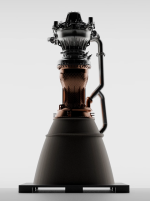
Astrobase updated their website. Now we have more data about their EVEREST engine & their launch vehicles:
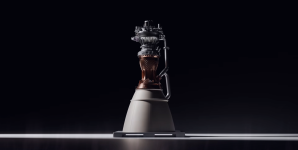
This is what the engine will finally look like. Notice the plumbing goes on the nozzle. That's the Methane line that will be used to cool the nozzle.
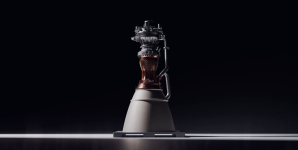
The engine has a design life of 60+ flights.
View attachment Astrobase EVEREST engine.webm
The engine head is divided into 3 large assemblies:
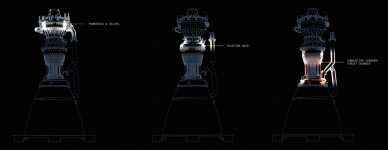
Powerhead & valves:
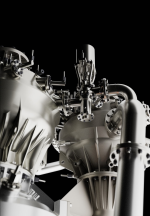
Injector head:
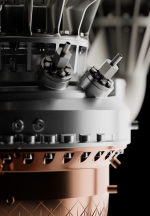
Combustion/Thrust chamber:

Astrobase is going to build medium to heavy class of launch vehicles:
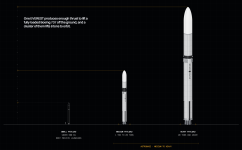
This is the configuration of the medium class of launch vehicles:

This is the only Indian launcher with a 2 stage to orbit configuration. The medium class rocket will be equivalent to SpaceX's Falcon 9 FT in terms of payload.
This is what the engine will finally look like. Notice the plumbing goes on the nozzle. That's the Methane line that will be used to cool the nozzle.
The engine has a design life of 60+ flights.
View attachment Astrobase EVEREST engine.webm
The engine head is divided into 3 large assemblies:
Powerhead & valves:
Injector head:
Combustion/Thrust chamber:
Astrobase is going to build medium to heavy class of launch vehicles:
This is the configuration of the medium class of launch vehicles:
This is the only Indian launcher with a 2 stage to orbit configuration. The medium class rocket will be equivalent to SpaceX's Falcon 9 FT in terms of payload.

India Pioneers Space Debris Removal; Union Minister Dr. Jitendra Singh Announces Vision of Debris-Free Space by 2030
India is emerging among the early global pioneers in Space debris removal, with an Indian Startup advancing technologies to make outer space safer and more sustainable, Union Minister of State (Independent Charge) for Science & Technology and Earth Sciences and MoS PMO, Personnel, Public Grievances, Pensions, Atomic Energy and Space, Dr. Jitendra Singh said today.
Announcing a vision of achieving debris-free Space by 2030, the Minister said India's emerging capabilities in active space debris removal reflect the country's growing global leadership in space technology and its commitment to ensuring a safe space environment for the entire humanity.
Dr. Jitendra Singh was speaking virtually from Kartavya Bhawan, New Delhi, at the inauguration of Cosmoserve Space's Base 1 facility in Hyderabad.
Congratulating Cosmoserve Space on the inauguration, Dr. Jitendra Singh said Base 1 is a comprehensive, state-of-the-art facility spread across approximately 14,800 square feet, where space robots are designed, built, tested under space conditions and operated through mission control. The facility houses specialised capabilities including orbital rendezvous and capture labs, space robotics innovation labs, microgravity simulation platforms and satellite integration clean rooms, marking a significant advancement in India's private space capabilities.
The Minister congratulated Dr. Chiranjeevi Phanindra and his team for pioneering work in active debris removal (ADR) and in-orbit servicing. Mission EMBRACE, which conducted an in-space test of soft robotic petals in July 2026 within a year of the company's formation, reflects the rapid progress and growing technological maturity of India's private space startups. He appreciated the team's experience in ISRO and the Gaganyaan programme being translated into a collaborative model in the private sector.
Dr. Jitendra Singh said Cosmoserve Space's partnerships with Pixel for satellite systems, Dhruv Aerospace Netherlands for propulsion systems and Skyroot Aerospace for launch services demonstrate an emerging culture of end-to-end collaboration in space technology. The initiative showcases how Indian startups are combining indigenous payloads, battery technologies, satellite systems and private launch capabilities to build integrated space missions and establish global benchmarks.
"debris - free by 2030"... its not possible isn't it? or am i missing something -_-
India Pioneers Space Debris Removal; Union Minister Dr. Jitendra Singh Announces Vision of Debris-Free Space by 2030
India is emerging among the early global pioneers in Space debris removal, with an Indian Startup advancing technologies to make outer space safer and more sustainable, Union Minister of State (Independent Charge) for Science & Technology and Earth Sciences and MoS PMO, Personnel, Public Grievances, Pensions, Atomic Energy and Space, Dr. Jitendra Singh said today.
Announcing a vision of achieving debris-free Space by 2030, the Minister said India's emerging capabilities in active space debris removal reflect the country's growing global leadership in space technology and its commitment to ensuring a safe space environment for the entire humanity.
Dr. Jitendra Singh was speaking virtually from Kartavya Bhawan, New Delhi, at the inauguration of Cosmoserve Space's Base 1 facility in Hyderabad.
Congratulating Cosmoserve Space on the inauguration, Dr. Jitendra Singh said Base 1 is a comprehensive, state-of-the-art facility spread across approximately 14,800 square feet, where space robots are designed, built, tested under space conditions and operated through mission control. The facility houses specialised capabilities including orbital rendezvous and capture labs, space robotics innovation labs, microgravity simulation platforms and satellite integration clean rooms, marking a significant advancement in India's private space capabilities.
The Minister congratulated Dr. Chiranjeevi Phanindra and his team for pioneering work in active debris removal (ADR) and in-orbit servicing. Mission EMBRACE, which conducted an in-space test of soft robotic petals in July 2026 within a year of the company's formation, reflects the rapid progress and growing technological maturity of India's private space startups. He appreciated the team's experience in ISRO and the Gaganyaan programme being translated into a collaborative model in the private sector.
Dr. Jitendra Singh said Cosmoserve Space's partnerships with Pixel for satellite systems, Dhruv Aerospace Netherlands for propulsion systems and Skyroot Aerospace for launch services demonstrate an emerging culture of end-to-end collaboration in space technology. The initiative showcases how Indian startups are combining indigenous payloads, battery technologies, satellite systems and private launch capabilities to build integrated space missions and establish global benchmarks.