

Japan : News, Updates & Discussions.
- Thread starter _Anonymous_
- Start date
You are using an out of date browser. It may not display this or other websites correctly.
You should upgrade or use an alternative browser.
You should upgrade or use an alternative browser.


Japan's next-generation H3 rocket fails again, destruct command issued - Times of India
Rest of World News: "It seems that the velocity is coming down," announcers on the JAXA live feed said, with the command centre then announcing: "The second stage engine
 timesofindia.indiatimes.com


'New era of crisis' prompts Japan' biggest defense budget ever: $59B for 2025 - Breaking Defense
Japan seeks to buy another 11 F-35 joint strike fighters, develop a new military small satellite constellation and invest in new signals intelligence aircraft.
Pakistan Prime Minister Shehbaz Sharif will visit Japan during the first week of October, according to Pakistani news channel Dunya News. This will be the first visit by a sitting prime minister of Pakistan in the last 20 years.
According to the report, the visit is being planned following a 'special invitation' from the Japanese government. During his visit, Sharif is likely to meet his Japanese counterpart and other senior leadership.
The Japanese are starting to take their defence forces seriously. This is a signal to both the Chinese and the Russians. Both have stepped up their activities in the Pacific.

 www.navalnews.com
On August 29, the Japanese Ministry of Defense submitted a record defense budget request of $60.2 billion (8.8 trillion yen) for fiscal year 2026, which begins in April.
Plans include the establishment of the national multi-layered coastal defense system and the construction of one New FFM.
The defense budget request, which will be sent to the finance ministry to consider before making a decision in late December, calls for strengthening the nation’s Integrated Air and Missile Defense (IAMD) system and stand-off defense capabilities to counter rising military threats posed by China, North Korea, and Russia.
Japan requests largest-ever defense budget for fiscal year 2026 - Naval News
On August 29, the Japanese Ministry of Defense submitted a record defense budget request of $60.2 billion (8.8 trillion yen) for fiscal year 2026, which begins in April.
www.navalnews.com
On August 29, the Japanese Ministry of Defense submitted a record defense budget request of $60.2 billion (8.8 trillion yen) for fiscal year 2026, which begins in April.
Plans include the establishment of the national multi-layered coastal defense system and the construction of one New FFM.
The defense budget request, which will be sent to the finance ministry to consider before making a decision in late December, calls for strengthening the nation’s Integrated Air and Missile Defense (IAMD) system and stand-off defense capabilities to counter rising military threats posed by China, North Korea, and Russia.
Good opportunity for India. Not in exporting as japanese are good at tech and have USA as hawk..The Japanese are starting to take their defence forces seriously. This is a signal to both the Chinese and the Russians. Both have stepped up their activities in the Pacific.
Japan requests largest-ever defense budget for fiscal year 2026 - Naval News
On August 29, the Japanese Ministry of Defense submitted a record defense budget request of $60.2 billion (8.8 trillion yen) for fiscal year 2026, which begins in April.
On August 29, the Japanese Ministry of Defense submitted a record defense budget request of $60.2 billion (8.8 trillion yen) for fiscal year 2026, which begins in April.
Plans include the establishment of the national multi-layered coastal defense system and the construction of one New FFM.
The defense budget request, which will be sent to the finance ministry to consider before making a decision in late December, calls for strengthening the nation’s Integrated Air and Missile Defense (IAMD) system and stand-off defense capabilities to counter rising military threats posed by China, North Korea, and Russia.
But to develop next-gen military tech and systems around naval warfare. Can also discuss co-operatibility or leveraging IACCS and IAMD experiences from each sides..
US isnt the only country with potential. It's just been super rich for more than a century, allowing it to invest money. Japan bridges that crucial gap for us.. Technology+ naval warfare needs and same adversary. And both can invest to overcome finances too.. india gives market too.

With eye on China, Japan to deploy longer-range missiles for first time
Japan will send its extended-range Type-12 missiles to a GSDF base in Kumamoto Prefecture from next March and to another base in Shizuoka Prefecture in fiscal 2027.
Japan plans to deploy for the first time longer-range missiles to a military base in Kumamoto Prefecture starting next March and to another base in Shizuoka Prefecture in fiscal 2027 as part of its “counterstrike capability” to deter enemies and strike targets.

Half of the things about buying and investing will turn out to be soft worded/suggestions language in actual pact. It's not like govt is gonna buy and sell them.
Tariffs have been put on Japan. The order has come into effect.
With the kind of anti US sentiment trump is cultivating all over the world by his rhetorics, even better products will find it harder to battle with indigineous ones, let alone Japanese automakers which are the best in the game. Japanese firms already invest so much in America.. I am waiting to see if already in line investments will be counted or something different.
America asking for capital.. what days we have come to.

Japan PM Ishiba resigns after bruising election losses
Ishiba's Liberal Democratic Party (LDP)-led coalition lost its upper house majority in an election in July.
Japanese Prime Minister Shigeru Ishiba has decided to resign to avoid a split within the ruling LDP, public broadcaster NHK said on Sunday.
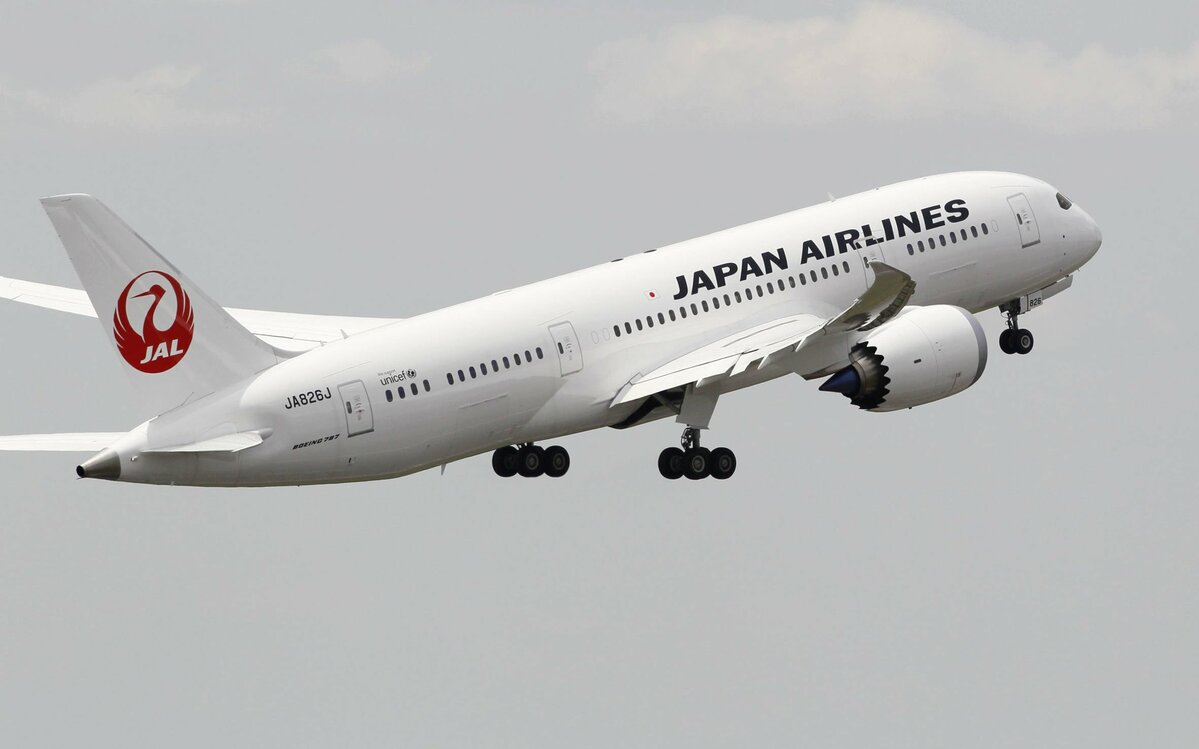
JAL pilot tampered with testing kit to avoid getting caught with alcohol
A Japan Airlines employee who admitted to drinking alcohol in Hawaii before his scheduled piloting duty last month, causing delays as the airline found a replacement, had on multiple occasions tampered with his testing kit to avoid detection under similar circumstances, the operator said Thursday.
A Japan Airlines employee who admitted to drinking alcohol in Hawaii before his scheduled piloting duty last month, causing delays as the airline found a replacement, had on multiple occasions tampered with his testing kit to avoid detection under similar circumstances, the operator said Thursday.
The 64-year-old captain had been flagged by the airline as someone who needed close monitoring after he was found with a below-threshold level of alcohol seven years ago. He had vowed to quit drinking, according to JAL.
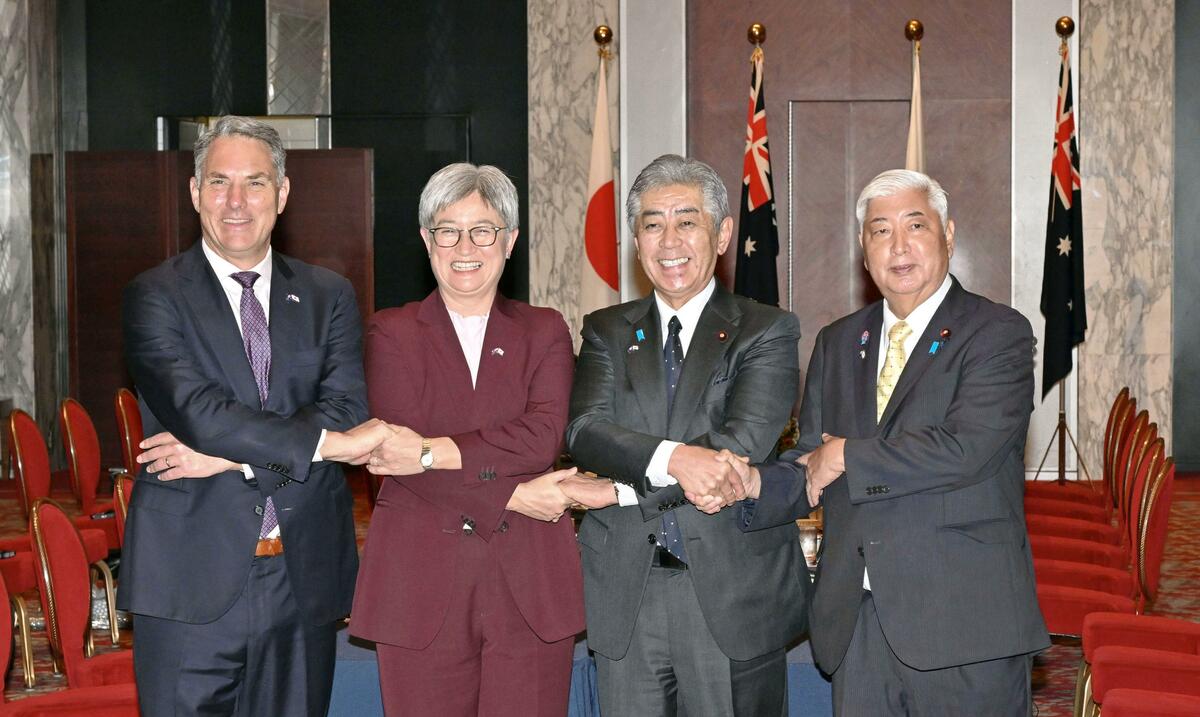
Japan, Australia agree to expand security cooperation amid China concerns
Japan and Australia agreed Friday in Tokyo to bolster security cooperation in areas such as defense equipment and cybersecurity during talks between their foreign and defense ministers, while expressing strong concern over China's military assertiveness in the region.
Japan and Australia agreed Friday in Tokyo to bolster security cooperation in areas such as defense equipment and cybersecurity during talks between their foreign and defense ministers, while expressing strong concern over China's military assertiveness in the region.
Vowing to elevate what they call a "special strategic partnership," the ministers welcomed Australia's recent choice of a Japanese design for its future frigate fleet and pledged to strengthen collective deterrence in a joint statement released after their so-called two-plus-two talks.

Japan braces for shift to right under 'Iron Lady' fan Takaichi | Fortune
For investors, the main concern will be her reputation for wanting spending to achieve growth and her penchant for central bank stimulus to goose the economy.
Sanae Takaichi, the pro-stimulus conservative poised to become Japan’s first female prime minister, is an energetic nationalist with a soft spot for the hard-nosed politics of Iron Lady Margaret Thatcher and the heavy metal music of Iron Maiden.
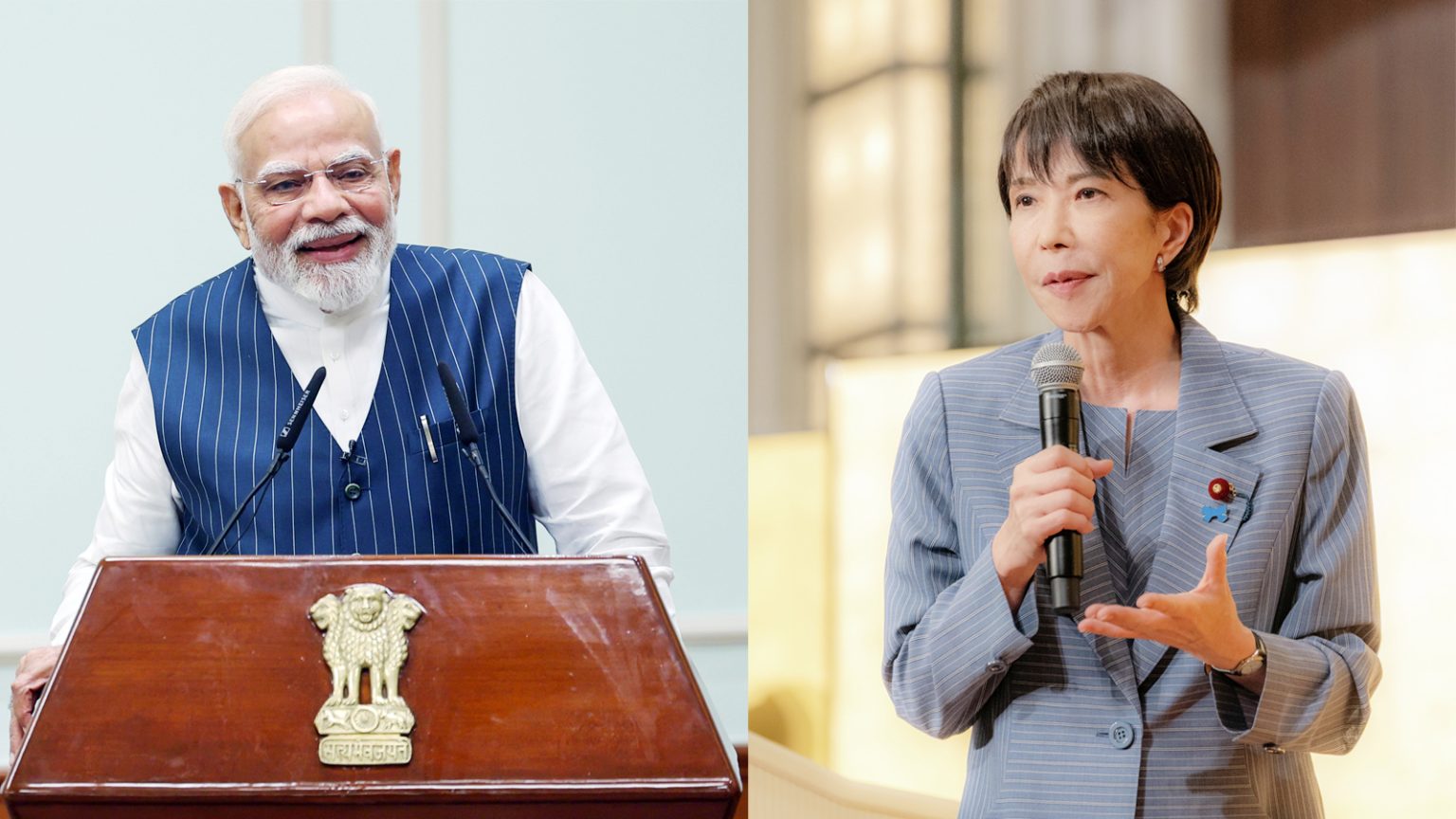
PM Modi congratulates Japan’s newly-elected Prime Minister Sanae Takaichi - NKTV
Prime Minister Narendra Modi on Tuesday extended congratulations to Sanae Takaichi, Japan’s newly-elected and first woman Prime Minister. He emphasi
 www.nktv.in
Prime Minister Narendra Modi on Tuesday extended congratulations to Sanae Takaichi, Japan’s newly-elected and first woman Prime Minister. He emphasized that the ever-strengthening partnership between India and Japan plays a vital role in ensuring peace, stability, and prosperity across the Indo-Pacific region and beyond.
In a post on X, PM Modi said, “Heartiest congratulations, Sanae Takaichi, on your election as the Prime Minister of Japan. I look forward to working closely with you to further strengthen the India–Japan Special Strategic and Global Partnership. Our deepening ties are vital for peace, stability, and prosperity across the Indo-Pacific and beyond.”
Sanae Takaichi, chief of Japan’s Liberal Democratic Party (LDP), was elected Prime Minister by Parliament on Tuesday, becoming the first woman to hold the post in the country’s history.
According to Kyodo News, the 64-year-old leader secured 237 of 465 votes in the Lower House, defeating Yoshihiko Noda, leader of the Constitutional Democratic Party of Japan (CDPJ), who received 149 votes. Her decisive victory in the first round of voting allowed her to avoid a runoff.
In her address to LDP members following her election, Takaichi outlined her vision for rebuilding Japan through unity and relentless effort across generations.

‘New golden age’ of US-Japan alliance: Trump signs trade, rare earths deal with Japan’s first woman PM Sanae Takaichi
The White House earlier said that the US and Japan will address non-market policies and unfair trade practices to secure their critical minerals and rare earths supply chains.
 upstox.com
US President Donald Trump, on Tuesday, October 28, signed trade and rare earths agreements with Japan’s Prime Minister Sanae Takaichi during his visit to Tokyo on an Asia trip.
Calling for a ‘new golden age’, the US lowered tariffs on Japanese exports to 15%, from 24% before. In exchange, Japan will invest $550 billion in the US to ‘advance economic and security interests’.
President Trump and Japan’s newly elected Prime Minister, the country’s first female PM, also signed a framework to secure the supply of rare earth minerals.
The White House earlier said that the US and Japan will address non-market policies and unfair trade practices to secure their critical minerals and rare earths supply chains.
This comes after China recently placed export licensing restrictions on seven strategic rare earths that are crucial to technology and defence supply chains. Trump and Chinese President Xi Jinping are due to meet on Thursday in South Korea at the APEC summit to discuss key matters, including rare earths and tariffs.

China Japan embroil in major diplomatic row over Taiwan
A Chinese diplomat’s aggressive comments threatening Japanese Prime Minister Sanae Takaichi for her remarks about Tokyo’s potential involvement in any Chinese action over Taiwan have stirred up a major diplomatic row between the two countries. Japan on Monday lodged a stern protest with China
 www.dailypioneer.com
A Chinese diplomat’s aggressive comments threatening Japanese Prime Minister Sanae Takaichi for her remarks about Tokyo’s potential involvement in any Chinese action over Taiwan have stirred up a major diplomatic row between the two countries. Japan on Monday lodged a stern protest with China over Chinese Consul General in Osaka Xue Jian’s social media post in which he threatened to “cut off dirty neck without a moment of hesitation” while citing a news article on Takaichi’s remarks in parliament. “We must say that the post is extremely inappropriate for a Chinese diplomatic mission head,” Japan’s government spokesman Minoru Kihara was quoted as saying by the Japanese news agency, Kyodo.
The post, however, had been deleted, he said. The flare-up occurred after Takaichi told a parliamentary committee on Friday that a Chinese military attack on Taiwan could be a “survival-threatening situation” for Japan, which could exercise its right to collective self-defence. Responding to the Chinese diplomat’s comments,
China’s Foreign Ministry spokesperson Lin Jiao told the media here Monday that Takaichi’s remarks are “a gross interference in China’s internal affairs” and Beijing has lodged a protest with Tokyo. Declining to comment on the Chinese diplomat’s comments, Lin said it was in response to Takaichi’s remarks on Taiwan, a “red line” for China. “I hope Japan will stop creating confusion and shifting blame,” he said.
Since she took over power in Japan last month, becoming the first woman Prime Minister of the country, Takaichi, who is regarded as a hawk in China, is stirring up the Taiwan pot, riling Beijing. “The situation regarding Taiwan has become serious. We must assume the worst-case scenario,” Takaichi told the parliamentary session, highlighting recent aggressive actions by China, which has deployed warships and fighter aircraft in defence drills around Taiwan, closely located near Japan. Lin said Takaichi’s remarks are “seriously damaging bilateral ties and challenging post-war international order” Lin continued.