Indian Electronics Manufacturing Developments : News and Discussions


1000003630.jpg

"...The company said the funding will support the commercial rollout of its light-based wireless communication technology. The systems use Free Space Optics (FSOs) and Light Fidelity (Li-Fi) for network connectivity.

Founder and CEO Deepak Solanki said, “We aim to capture a sweet spot where fibre is too slow to deploy, radio frequency is too interference-prone to trust and licensed-band communication is too expensive,” Solanki said.

He added, “With an all-weather tested design, we offer 10Gbps+ connectivity across ranges of 1–25 km.”

The company said it has completed multiple proof-of-concept projects and more than 50 deployments across India, Southeast Asia and operators in the United States.

Velmenni also deployed a carrier-grade FSO backhaul link for a private 5G network at a power plant in Odisha operated by GMR Group.
The system maintained network availability for over 18 months, according to the company.

The firm said it has received support from the Department of Telecommunications and the Ministry of Defence through the Innovations for Defence Excellence (iDEX) programme."


1000003629.jpg

@Gautam @Ashwin
 

Most people think 6G is a 2030 goal. As of March 2026, India has already contributed over 4K+ patents to the global 6G ecosystem.

Unlike 4G, where India paid billions in royalties to foreign patent holders, India now aims to own 10% of the entire 6G IP pool. The Bharat 6G Alliance has expanded from 14 to 85 institutions in just 2 yrs. India is no longer just using the network; it is the landlord of the code. In 6G, every time a device connects in Europe/the US using these specific made in India protocols, royalties will flow into Bengaluru & Delhi.

Also, there is a hardly documented technical victory that India just won at the ITU (International Telecommunication Union). India’s proposal for Ubiquitous Connectivity was officially accepted as a core 6G requirement in late 2025.

Global 6G was initially being designed for Smart Cities. India fought to pivot the global standard toward Rural Coverage. India is an influential player in the Space Terrestrial Integration in 6G. India is ensuring that 6G works in a Himalayan village as well as it does in Manhattan.

By controlling the rural standard, India becomes the default technology provider for the entire Global South.
 

Government approves 29 more proposals under the Electronics Component Manufacturing Scheme (ECMS)​

With projected investment of Rs 7,104 crore, these approvals expected to generate 14,246 direct employment opportunities​

Union Minister Shri Ashwini Vaishnaw stresses on the need for strong in-house design capabilities and robust domestic supply chain​

In continuation to the approvals of 46 applications for Rs 54,567 crore announced earlier, Ministry of Electronics and Information Technology (MeitY) has further approved 29 proposals under the Electronics Components Manufacturing Scheme (ECMS) with projected investment of Rs 7,104 crore, projected production of Rs 84,515 crore. These approvals are expected to generate 14,246 direct employment opportunities.

The current approvals include manufacturing 16 products, which have cross sectoral application such as mobile manufacturing, telecom, consumer electronics, strategic electronics, automotive and IT hardware products. The details of 16 products are as follows:
  • 1 sub-assemblies: Display Modules
  • 11 bare components: Antennas, Capacitors, Connectors, Heat Sinks, Li-ion Cells, Relays, Resistors, Transducers, SMD Passives, Flexible PCB and Inductors
  • 3 supply chain items: Laminates, Metallized films for Capacitors and Rare Earth Permanent Magnets
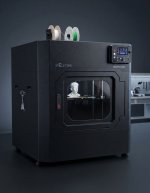
  • Capital Goods and their parts
These approvals include country’s 1st SMD passive plant for Tantlum based capacitors, 1st Flexible PCB plant and 1st Rare Earth Permanent Magnet facility.
In the sub-assembly category, approvals for manufacturing of Display Modules have been granted to Dixon Display Technologies Pvt. Ltd. and Wangda Technologies Pvt. Ltd.
In the components category, approvals for manufacturing have been granted as below:
  • Antenna and Heat Sink to VVDN Technologies Pvt. Ltd.
  • Connectors to Molex (India) Pvt. Ltd., a global leader in electronic and fiber optic connectivity systems; Terminal Technologies; SFO Technologies India Pvt. Ltd.; and Amphenol FCI India Pvt. Ltd., one of the world's largest designers and manufacturers of high-technology interconnect.
  • Relays to O/E/N India Ltd.; Permanent Magnets Ltd; BG Electrical and Electronics India Ltd.; and SFO Technologies India Pvt. Ltd.
  • Non-SMD & SMD Passive capacitors to Vishay Components India Pvt. Ltd., a premier global manufacturer of discrete semiconductors and passive electronic components.
  • Li-ion cell for digital applications to Munoth Lithium Battery Pvt. Ltd.
  • Resistors and Transducers to Vishay Precision Transducers India Pvt. Ltd.
  • Inductors to TDK India Pvt. Ltd., a major global manufacturer of electronic components and systems.
  • Flexible PCBs to Syrma Strategic Electronics Pvt. Ltd.
Further, to deepen the electronics manufacturing supply chain, approvals have also been given for manufacturing of various supply chain products as below:
  • Laminate (Copper Clad) to Syrma Components Pvt. Ltd. and Ratnaveer Precision Engineering Ltd. Laminate is base material for PCB manufacturing and constitutes a significant part (~30%) of the bill of materials of PCB manufacturing.
  • Metallised film for capacitors to Dhruv Industries Ltd.
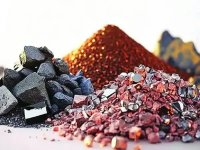
  • Rare Earth Permanent Magnets to Lohum Cleantech Pvt. Ltd. This is the 1st project for manufacturing of Rare Earth Permanent Magnets from Rare Earth Oxide, marking a significant step towards developing indigenous capabilities in advanced materials.
Furthermore, today’s approvals witnessed special emphasis on developing manufacturing capability in capital equipment. Approvals were granted to 6 entities as below:
  • Titan Engineering & Automation Ltd.; NeST Advanced Technology Development Centre Pvt. Ltd.; ASM Technologies Ltd.; Indo-MIM Ltd.; Bharat FIH Ltd.; and IFB Industries Ltd.
These approvals are expected to enhance domestic value addition by strengthening local supply chains, reducing dependence on imports of critical electronic components, and enabling the development of advanced manufacturing capabilities within India. With these approvals, overall, 75 applications have been approved under ECMS amounting to expected investment of Rs 61,671 crores and expected direct employment for 65,040 persons.
 
HEta_Ujb0AAa1Np
 
BEL Concall

Data center business, already there are so many players. So, we wanted to give some unique solution. So, uniqueness comes from 2 fronts. One is from security point of view to give a more cyber safe solution that we have taken a few leads where we are adding cybersecurity components of ours.

But otherwise, the server and other components are COTS. So that is one set of target customers for us, where we have got some few hundred crores projects only right now. But a big chunk is waiting for us where we wanted to give totally indigenous total data center solution with hardware and software stake also and cybersecurity components, all are homegrown, a few from our own company and a few from our Indian development partner, C-DAC.

So, we are in a very, very advanced stages of discussions with them to provide end-to-end totally homegrown data center solutions for a large number of customers.
So, once we click on that, that orders we are expecting of the tune of INR2,000 crores to INR10,000 crores, somewhere in between.

The first order will be from the -- right now, maybe a few hundred crores we already have, but if good leads are there, we may expect around INR1,000 crores to INR5,000 crores type of business from the first segment of business. But the larger segment of business is through this total homegrown solution of data center, which we are eyeing at little bit more. So, we are in advanced stage of discussions with C-DAC and then their Tier 1, Tier 2 suppliers.​
 
  • Like
Reactions: BoredBear

Reliance, Vedanta, Adani join India's drive to cut China rare earth dependence, sources say​


Indian industrial groups Reliance, Vedanta and Adani have shown interest in developing facilities ‌to process Andhra Pradesh state's significant reserves of increasingly important rare-earth minerals, according to two sources with knowledge of the matter.

With New Delhi seeking to cut India's dependence on China for rare earths, the three companies are among about 10 who have expressed interest in setting up rare earth facilities in the southern state, one of the sources said.

The sources declined to be identified as they were ⁠not authorised to speak to the media.

Andhra Pradesh holds 211 million metric tons of beach sand mineral resources, including rare earths, across 16 identified coastal deposits, according to a draft document. India has 482.6 million tons of rare earth ore resources, according to the Geological Survey of India.

RARE EARTH AMBITIONS​

The interest comes as New Delhi steps up efforts to build domestic rare earth mining, processing and magnet manufacturing capacity, while Andhra Pradesh aims to attract 500 billion rupees ($5.2 billion) in rare earth and titanium investments over the next decade.

The plans were set out in a draft government document.

Andhra Pradesh was among four states identified in February's federal budget for the development of rare earth "corridors" covering mining, processing and magnet production.

The initiative followed New Delhi's approval in November of a 73 billion rupee programme to support rare earth magnet manufacturing.

Rare earth elements are essential for permanent magnets used in ⁠applications such as electric vehicle motors. While India holds substantial rare earth reserves, it lacks industrial-scale facilities capable of processing the minerals to high purity levels.

CAPITAL INCENTIVES AND OTHER MEASURES​

Andhra Pradesh plans to issue tenders for rare earth facilities after ⁠securing cabinet approval for its rare earth corridor policy, which is expected within a month, the sources said.

The state also plans to offer capital-linked incentives and additional benefits for projects with investments of 10 billion ⁠rupees or more, the sources said.

Andhra Pradesh has been courting large-scale investments, attracting companies including Google and ArcelorMittal Nippon Steel, and aims to secure $1 trillion in investment commitments by 2029, a state minister told Reuters last November.
 

Japan's Proterial, a global leader in advanced materials, will set up a rare earth permanent magnet manufacturing facility in Andhra Pradesh with an investment of ₹2,250 crore, marking a key step toward building India's local rare earth value chain and reducing its reliance on Chinese sources, said people with knowledge of the matter.

The project, to be located at Achutapuram in Anakapalli district, will manufacture 1.2 kilo tonnes per annum (ktpa) of sintered neodymium-iron-boron (NdFeB) permanent magnets, among the most critical components used in electric vehicles, wind turbines, industrial motors, electronics, aerospace and defence systems. The State Investment Promotion Committee approved the project at its meeting last week.

The proposed investment comes at a time when India is actively seeking to reduce dependence on imported rare earth magnets and build indigenous manufacturing capabilities in strategic sectors.

The Centre recently approved a dedicated incentive programme to encourage domestic production of sintered rare earth permanent magnets, underscoring the national importance of the sector.

The company didn't respond to queries.

Proterial, formerly Hitachi Metals, is regarded as one of the global pioneers of NdFeB magnet technology and remains a leading supplier of advanced magnetic materials worldwide. The Japanese company posted consolidated revenue of ₹45,000 crore last year and operates in North America, Europe, China and Asia."
 

Japan's Proterial, a global leader in advanced materials, will set up a rare earth permanent magnet manufacturing facility in Andhra Pradesh with an investment of ₹2,250 crore, marking a key step toward building India's local rare earth value chain and reducing its reliance on Chinese sources, said people with knowledge of the matter.

The project, to be located at Achutapuram in Anakapalli district, will manufacture 1.2 kilo tonnes per annum (ktpa) of sintered neodymium-iron-boron (NdFeB) permanent magnets, among the most critical components used in electric vehicles, wind turbines, industrial motors, electronics, aerospace and defence systems. The State Investment Promotion Committee approved the project at its meeting last week.

The proposed investment comes at a time when India is actively seeking to reduce dependence on imported rare earth magnets and build indigenous manufacturing capabilities in strategic sectors.

The Centre recently approved a dedicated incentive programme to encourage domestic production of sintered rare earth permanent magnets, underscoring the national importance of the sector.

The company didn't respond to queries.

Proterial, formerly Hitachi Metals, is regarded as one of the global pioneers of NdFeB magnet technology and remains a leading supplier of advanced magnetic materials worldwide. The Japanese company posted consolidated revenue of ₹45,000 crore last year and operates in North America, Europe, China and Asia."
India has been exporting neodymium raw material for a long period to japan. Japanese in turn processed it and gave India a pittance. Good thing about this investment is that it will be now refined and processed in India but by a foreign company.
Long time back US created MTCR , one of items on the sanctioned list was neodymium magnets, used in gyroscopes. Guess what, US was importing neodymium magnets from japan which were processed from Indian exported raw material.