

Indian Agriculture, Dairy , Food Processing & Horticulture Sector : News, Updates, Analysis & Discussions.
- Thread starter _Anonymous_
- Start date
You are using an out of date browser. It may not display this or other websites correctly.
You should upgrade or use an alternative browser.
You should upgrade or use an alternative browser.


PepsiCo bullish on India, increases investment at snacks plant in UP to Rs 814 crore
By PTI
Last Updated: Oct 11, 2020, 12:04 PM IST

PepsiCo India President Ahmed El Sheikh
Synopsis
The company is committed to double its business from snacks business in India and also increasing the capacity of existing food plants in West Bengal and Maharashtra, and it has additionally proposed to set up a greenfield manufacturing facility in Assam.
The company is committed to double its business from snacks business in India and also increasing the capacity of existing food plants in West Bengal and Maharashtra, and it has additionally proposed to set up a greenfield manufacturing facility in Assam.
NEW DELHI: Food and beverages major PepsiCo is "extremely optimistic" about the future of the Indian market despite short-term headwinds due to pandemic-related disruptions and increasing investment at its new greenfield snacks plant in Uttar Pradesh to Rs 814 crore to meet increasing demand, according to its India President Ahmed El Sheikh.
The company is committed to double its business from snacks business in India and also increasing the capacity of existing food plants in West Bengal and Maharashtra, and it has additionally proposed to set up a greenfield manufacturing facility in Assam.
"While there have been some short-term headwinds due to COVID-19, we at PepsiCo are extremely optimistic about the future and are committed to provide consumers the right portfolio of products across food and beverages," El Sheikh told PTI.
PepsiCo India has emerged as one of the largest food and beverage companies in the country in 30 years of its establishment in India and is looking to build further, he added.
"Looking ahead, we are committed to double our snacks business in India. In fact, we have increased our investment in our new greenfield snacks plant in Uttar Pradesh from Rs 500 crore to nearly Rs 814 crore, generating 1,500 direct/indirect jobs and enabling a local sourcing ecosystem," El Sheikh said.
India consumption story has just started and according to industry reports, India will be the third-largest consumption market by 2025, he said.
As the festive season begins, the company expects an enhanced demand from categories like snacks, juices and other carbonated beverages led by the sentiment of celebration.
"From an FMCG point of view, the industry is seeing consumption revival, which we expect will only get better with further unlocking and the upcoming festive season," El Sheikh said.
Commenting on consumer trends, El Sheikh said 'in-home consumption' is witnessing a significant uptake and consumers are seeking convenience along with the value.
"As people adjust to the 'new normal', in-home consumption is witnessing a significant uptake. There is a growing demand for our larger packs as in-home occasions of togetherness have increased manifold. While the consumers are looking at in-home experiences and seeking convenience, they are also looking at value," El Sheikh said.
He, however, said, "Affordability is key today."
PepsiCo has introduced 1.25-litre PET pack in its beverage portfolio at a very affordable price of Rs 50 targeting the 'in-home consumption' and introduced various combo packs in food portfolio.
While, in the smaller packs, it has also strategised price points to meet both rural and urban demand.
"With the Indian FMCG industry slowly showing signs of revival in COVID impacted world, we have adapted quickly and re-strategised our price-pack programmes, enhanced consumer engagement initiatives and doubled down attention on both B2C and B2B distribution models to meet consumer demand," he said.
According to a recent RoC (registrar of companies) filing by PepsiCo India, its profit after tax in FY 2019-20 increased to Rs 329 crore from Rs 36 crore in FY 2018-19.
Though its revenue was down 15.87 per cent to Rs 5,264 crore compared to Rs 6,257 crore in FY 2018-19 on account of refranchising the remaining bottling operations in south and west India to its bottling partner Varun Beverages Ltd.
"PepsiCo India's transformation journey remains on track -- third successive year of profit in FY 2019-20 which has been all about building 'a faster, stronger, better company' in India," he said.
Though its overall beverage volume grew during the FY 2019-20, its beverage revenue was lower on account of refranchising and impact of COVID-19 in the last fortnight of March 2020. Its food revenue grew due to strong growth in Lays, Kurkure portfolio and Doritos.
"Focus on the core brands yielded results with growth across the portfolio namely Lay's & Kurkure portfolio, Lay's Maxx and Doritos. Similarly, Core brands drove beverage growth, led by Pepsi, Mountain Dew & Slice," El Sheikh said.
Last week, in its global Q3 results, PepsiCo had reported organic revenue growth in some international markets including India.
"Within our international markets, developed market organic revenue growth increased 8 per cent and outpaced developing and emerging markets which increased 2 per cent," PepsiCo's chairman and CEO Ramon Laguarta had said on October 1, 2020.
Some notable highlights include double-digit organic revenue growth in France, Australia, and Brazil, high-single-digit growth in India and mid-single digit growth in the UK, China and Russia, he said.

PepsiCo bullish on India, increases investment at snacks plant in UP to Rs 814 crore
The company is committed to double its business from snacks business in India and also increasing the capacity of existing food plants in West Bengal and Maharashtra, and it has additionally proposed to set up a greenfield manufacturing facility in Assam.

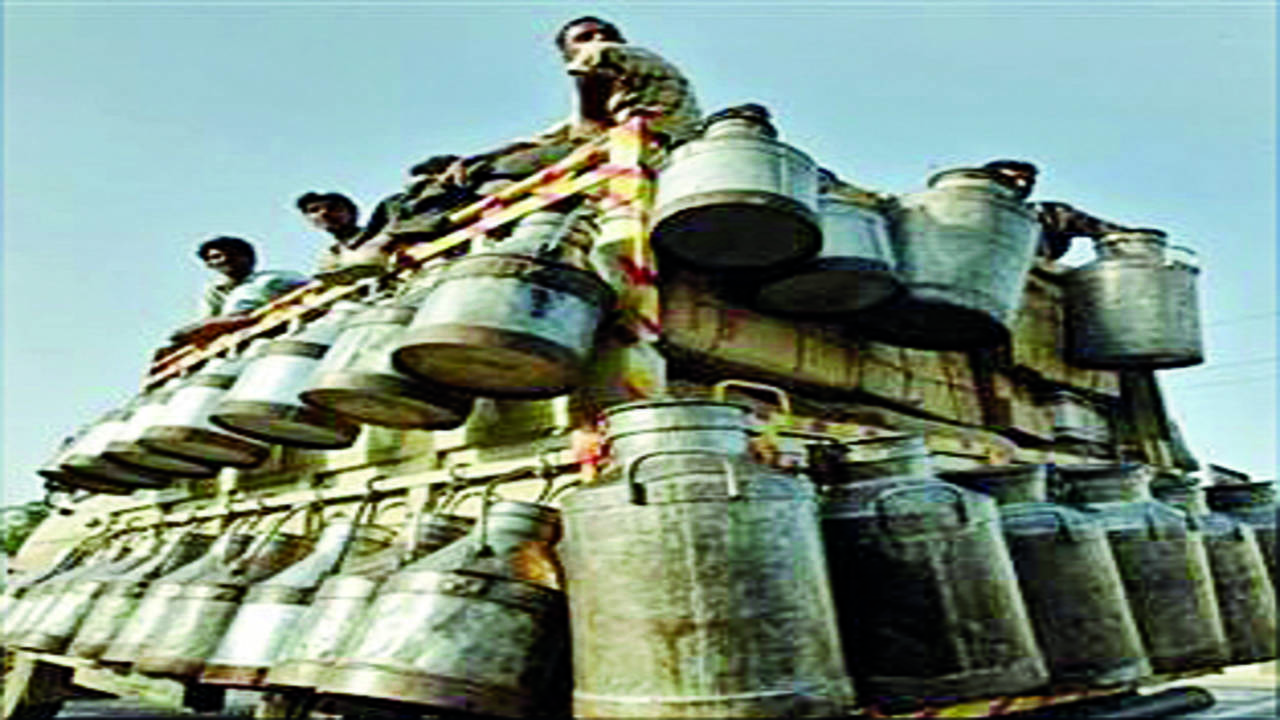
In 3 years, each panchayat to have primary dairy: Government - Times of India
Times of India brings the Latest & Top Breaking News on Politics and Current Affairs in India & around the World, Cricket, Sports, Business, Bollywood News and Entertainment, Science, Technology, Health & Fitness news & opinions from leading columnists.
 m.timesofindia.com

parshottam rupala: India not to import butter, other dairy products; to tap domestic sector to improve supplies: Parshottam Rupala - The Economic Times
"The demand has increased. We have huge untapped area, we will try to tap that...We will manage it properly and there is no need to worry," he said and urged farmers and consumers not to worry about it. On rise in retail prices of dairy products, the minister said there is no need to worry about...

Looks like this conflict is beginning to have ripple effects on global agriculture. I've been following stories like this since Iran began targeting GCC facilities.
The Qatar Fertiliser Company alone makes up about 14% of the world's urea trade. But it's more than that: Saudi Arabia's Ma'aden/SABIC complex at Ras al-Khair is the biggest phosphate export hub globally, and Oman's OMIFCO urea plant ships almost all its products through routes near Hormuz. When you add these three up, you're talking about almost 25-30% of the world's nitrogen and phosphate fertilizers that either go directly through Hormuz or come from places that rely on it for their shipping.
Bulk carrier diversions from Ras al-Khair and Mesaieed are already happening. If more ships from these terminals start rerouting around the Cape or sitting idle, I think a major global food crisis will become inevitable.
The biggest problem is timing. Right now, spring planting is happening in the northern hemisphere. Fertilizer isn't something you can just swap out quickly. There are narrow windows for applying it and if farmers miss them, they don't get a small harvest, they get nothing. It will take one growing cycle for this Hormuz disruption to cause food prices to spike, so the real impact won't hit grocery stores until later in the year or early 2027.
The Qatar Fertiliser Company alone makes up about 14% of the world's urea trade. But it's more than that: Saudi Arabia's Ma'aden/SABIC complex at Ras al-Khair is the biggest phosphate export hub globally, and Oman's OMIFCO urea plant ships almost all its products through routes near Hormuz. When you add these three up, you're talking about almost 25-30% of the world's nitrogen and phosphate fertilizers that either go directly through Hormuz or come from places that rely on it for their shipping.
Bulk carrier diversions from Ras al-Khair and Mesaieed are already happening. If more ships from these terminals start rerouting around the Cape or sitting idle, I think a major global food crisis will become inevitable.
The biggest problem is timing. Right now, spring planting is happening in the northern hemisphere. Fertilizer isn't something you can just swap out quickly. There are narrow windows for applying it and if farmers miss them, they don't get a small harvest, they get nothing. It will take one growing cycle for this Hormuz disruption to cause food prices to spike, so the real impact won't hit grocery stores until later in the year or early 2027.
I guess it's only natural to see b@stards at NPR find huge problems only with India's supply chain vis a vis fertilizers. BD & especially Paxtan which is actually in dire straits gets little to no mention whatsoever.Looks like this conflict is beginning to have ripple effects on global agriculture. I've been following stories like this since Iran began targeting GCC facilities.
The Qatar Fertiliser Company alone makes up about 14% of the world's urea trade. But it's more than that: Saudi Arabia's Ma'aden/SABIC complex at Ras al-Khair is the biggest phosphate export hub globally, and Oman's OMIFCO urea plant ships almost all its products through routes near Hormuz. When you add these three up, you're talking about almost 25-30% of the world's nitrogen and phosphate fertilizers that either go directly through Hormuz or come from places that rely on it for their shipping.
Bulk carrier diversions from Ras al-Khair and Mesaieed are already happening. If more ships from these terminals start rerouting around the Cape or sitting idle, I think a major global food crisis will become inevitable.
The biggest problem is timing. Right now, spring planting is happening in the northern hemisphere. Fertilizer isn't something you can just swap out quickly. There are narrow windows for applying it and if farmers miss them, they don't get a small harvest, they get nothing. It will take one growing cycle for this Hormuz disruption to cause food prices to spike, so the real impact won't hit grocery stores until later in the year or early 2027.
Here's what Gemini has to say about the current situation in India & the steps GoI has been undertaking to remedy the problem.

in fairness to NPR they do callout BD, Pakistan as facing the same risk in the report, but yknow India in the headlines will get more clicks.I guess it's only natural to see b@stards at NPR find huge problems only with India's supply chain vis a vis fertilizers. BD & especially Paxtan which is actually in dire straits gets little to no mention whatsoever.
Here's what Gemini has to say about the current situation in India & the steps GoI has been undertaking to remedy the problem.
The effects will definitely be global since fertilzers are a fungible commodity. Some countries will face increased prices but others will probably see small famines and/or spikes in malnourition.
it's not 100% guaranteed but unless the strait reopens soon and ships, ports and terminals operate as efficiently as physically possible, it'll get a bit hairy next year.
In case you haven't noticed , NPR & various western media make a cursory reference to BD & Paxtan as part of their coverage on common topics in South Asia & then proceed to do The Full Monty on India. That's been their MO since 2014 , accelerated considerably since Irish Joe took office.in fairness to NPR they do callout BD, Pakistan as facing the same risk in the report, but yknow India in the headlines will get more clicks.
There's a reason this coverage has been muted off late. Hint - the latest occupant of the WH is taking up all their time & attention now
Yes it will & while we'd face a lot of problems if the situation persists in the Gulf the fallout is going to be nothing less than catastrophic in our neighborhood especially Paxtan & to a great extent in BD .The effects will definitely be global since fertilzers are a fungible commodity. Some countries will face increased prices but others will probably see small famines and/or spikes in malnourition.
it's not 100% guaranteed but unless the strait reopens soon and ships, ports and terminals operate as efficiently as physically possible, it'll get a bit hairy next year.
However up until the time this catastrophe unfolds you're not going to see much coverage about the aforementioned countries with the spotlight exclusively on India.
W e saw the same script in play during the Wuhan Virus Pandemic , later during the Farmer's agitation & before during the CAB protests.
Whatever my misgivings about Modi & there are quite a few , let me go on record to state , his handling of all those crises including the current one till date has been masterful . I shudder to think what we'd have faced under the UPA .
Last edited: