Bangladesh AirForce : Updates

Himanshu

Senior member
Dec 3, 2017
909
1,514
New Delhi
indopacfront.blogspot.com

China Offering J-10 Fighters To Laos, Bangladesh As Rival To Russian Yak-130 Aircraft​


China has started hard-selling its J-10 fighter jet to Laos and Bangladesh to wean them off Russian aircraft such as the Yak-130 trainer/light fighter which both countries are considering.

The country has been trying to get Pakistan interested in the J-10 but Islamabad has shown little interest despite several photo-ops of Pakistani military leaders in the cockpit of the J-10 fighter jet.

When Laos purchased the Yakovlev Yak-130, it was believed that it would become the primary fighter jet in the air force. However, it seems like importing the Yakovlev Yak-130 was just a move to prepare for the purchase of new main fighter jets, which is likely to be China’s J-10C.

Laos is bordered by Thailand towards the west and Vietnam towards the east. Thailand currently has US F-16 fighter jets and Swedish JAS 39 Gripen fighter jets in the air force fleet; while Vietnamese Air Force is equipped with Su-27 and Su-30 fighter jets from Russia and is reported to purchase the latest Su-57 fighter jets. Royal Lao Air Force's main combat aircraft is the MiG-21. Considering the firepower of its neighbors the country, it can therefore choose the J-10 fourth generation aircraft to update its fleet

One of the two squadrons of 36 Rafale fighters that India has purchased will be deployed near India's border with Bangladesh which has influenced China to sell its J-10 to Bangladesh, since the nation also lacks a strong backing from any other county. In 2018, the Bangladeshi Air Force sent a delegation to conduct a field survey of the performance of the J-10C cementing its intentions to acquire the aircraft.

Even if Laos and Bangladesh sign contracts to purchase China's J-10 fighter jets, their purchased volumes will be enough to equip only 1-2 squadrons (namely, 12-24 units of aircraft) considering the limited sizes of their air forces.

Also, it is unlikely for the two countries to build assembly lines or major overhauling facilities. Nevertheless, the export orders for J-10 fighter jets from the two countries are still very significant, which are worth seizing for China through certain compromises over price and technology.

Performance of the J-10 in the two countries will be crucial for the Chinese fighter jets to expand exports to foreign countries including Pakistan.

Chinese J-10 has an edge over other popular aircraft in the international market. Europe’s Typhoon and Rafale fighters are expensive and have high maintenance costs (with a unit price of nearly US$100 million). Russian fighters lag behind in performance, and US fighter jets face high export barriers.

The J-10 is a lightweight multirole fighter aircraft capable of all-weather operation manufactured by the Chengdu Aircraft Corporation (CAC). Its latest version, the J-10B is it is equipped with an indigenous active electronically scanned array fire-control radar and an infrared-homing PL-10 and new long range PL-15 air-to-air missile (AAM). A J-10B aircraft equipped with a thrust-vectoring engine was demonstrated at the Air Show China in November 2018.

China Offering J-10 Fighters to Laos, Bangladesh as Rival to Russian Yak-130 Aircraft
 
China's hard-selling of the J-10 fighter jets to Laos and Bangladesh is a strategic move to expand its influence in the global arms market. The J-10 offers a competitive edge with its advanced features like the active electronically scanned array radar, PL-10 and PL-15 missiles, and thrust-vectoring capabilities. For countries like Laos and Bangladesh, which are seeking to modernize their air force fleets amidst regional competition, the J-10 presents itself as a cost-effective yet capable alternative to pricier European or US options and underperforming Russian jets.

It will be interesting to see how well the J-10 performs if Laos and Bangladesh proceed with their acquisitions, as this could significantly influence future export deals for China, especially with nations like Pakistan.

On another note, does anyone here have recommendations for mobile or PC apps that simulate flying fighter jets or offer realistic air combat experiences? It’d be great to dive into some aviation-themed games while exploring more about aircraft like the J-10! 😊
 

Bangladesh air force gets nod to spend billions on multirole fighters


New Zealand — Two air forces fly the Chinese-manufactured J-10 fighter – China and Pakistan – but a third nation could soon become an operator of this 4.5-generation jet.

Air Chief Marshal Hasan Mahmood Khan, Bangladesh’s top air force officer, announced last month that his country’s interim government had given an in-principle approval for the purchase of “multirole combat and attack aircraft” plus new surface-to-air missiles and long-range radars.

Khan did not specify what type of aircraft the Bangladesh Air Force – the BAF – would procure, but there is a strong likelihood it will be the J-10CE fighter from China.

Such an ambition had already been aired when Muhammad Yumus, Bangladesh’s interim Chief Adviser and head of the caretaker government, met Chinese President Xi Jinping in Beijing in March.

According to the government, the BAF could buy up to 20 J-10CE jets by 2027. However, an inter-ministerial committee led by Khan still needs to approve the purchase and to conduct negotiations with Chinese officials.

The Chief Adviser’s office estimates the aircraft would cost $1.2 billion, while other costs such as training and spares would bring the price tag to $2.2 billion. Payments would be spread over a ten-year period until the mid-2030s.

Sandwiched by India, and to a lesser extent Myanmar, Bangladesh must defend its constrained airspace and protect littoral territory in the Bay of Bengal.

The need for new fighters is urgent because the BAF possesses a largely obsolete fighter fleet of Chinese-built and accident-prone F-7s, plus MiG-29s from Russia. One F-7, a Chinese version of the MiG-21, crashed into a Dhaka college campus in July. The accident caused an estimated 36 fatalities.

Besides the Chinese J-10, the BAF has been exploring Western fighter options. For example, Khan and air force personnel were in Italy for Eurofighter Typhoon demonstration flights in May.

A Chinese option could end up winning out, however, because Bangladesh is already an ardent user of Chinese equipment, with recent purchases including Type 15 light tanks and Type 035G submarines.

Despite the geopolitical risk of upsetting Western countries like the United States, if the J-10CE purchase proceeds under Bangladesh’s Forces Goal 2030 modernization plan, it would see J-10s flying on India’s western, northern and eastern borders.

Bangladesh’s predilection for the J-10 also predates the sharp aerial conflict between India and Pakistan in May. On that occasion, Pakistani J-10CEs received significant publicity for their alleged performance against Indian fighters.

Brendan Mulvaney, director of the China Aerospace Studies Institute affiliated with the U.S. Air Force, told Defense News that the J-10C is “a modern and fairly capable aircraft, the best one that China exports.”

He assessed that the Indo-Pakistan conflict “clearly proves that Chinese-made equipment, even the export versions, are modern and capable, and are going to be a force to be contended with in the future, beyond just the borders of China”.

All told, The J-10CE, with its active electronically scanned array radar, data links and beyond-visual-range missiles like the PL-15E, would effectively revolutionize the BAF’s combat capabilities.
 
  • Informative
Reactions: Shan
BDmilitary, a BD defense website had tweeted the following items could be procured (tweet has been deleted)

10 Eurofighter Tranche from Italy. Meloni could visit Dhaka in december for signing

20 J-10CE

16 JF-17 Block 3

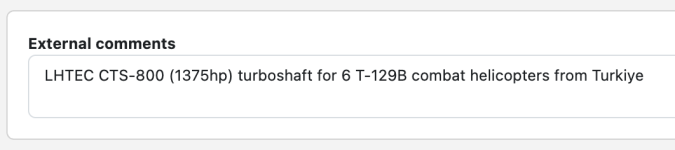
6 T-129 ATAK light attack helicopters from TAI

Other Turkish and Italian equipment such as GBADS, long range radar, VVIP helicopters, tactical transport are also in pipeline

They said the source was BD newspaper Amardesh
 
  • Informative
Reactions: Shan

Air Force signs LOI with Italy's Leonardo for Eurofighter Typhoon procurement

The Bangladesh Air Force (BAF) has signed a Letter of Intent (LOI) with Leonardo S.p.A of Italy to procure Eurofighter Typhoon multi-role combat aircraft, marking a major step in the modernisation of the force.

The LOI was signed today (9 December) at the Air Force Headquarters in Dhaka, according to Bangladesh Air Force's verified facebook page.

The Chief of Air Staff of Bangladesh Air Force, Air Chief Marshal Hasan Mahmood Khan, and Italy's Ambassador to Bangladesh Antonio Alessandro were present at the event.
 
Pakistan set to strike deal with Bangladesh on sale of JF-17 amid strengthening ties

It would be insane for India to allow squadrons to be tied up with this sh*t. Has the time come for "harder" grey zone tactics inside Bang?

BTW look at this sentence from Reuters:
The talks in Islamabad come as Pakistan looks to capitalise on the success of its air force in the conflict with arch-foe India in May last year


Pak leveraging their infowar game with the assets they seeded into Reuters.
 
Last edited:
G_v6BDUWEAA2mBA

Turkish Bayraktar Operator, Chinese Clone Producer: Bangladesh’s Drone Paradox​

Bangladesh expands its drone fleet with China’s CETC XY-I UAS while already operating the Turkish Bayraktar TB2. This procurement of a blatant imitation through technology transfer deals signals a controversial shift in Dhaka’s strategic defense integrity.
 
G_v6BDUWEAA2mBA

Turkish Bayraktar Operator, Chinese Clone Producer: Bangladesh’s Drone Paradox​

Bangladesh expands its drone fleet with China’s CETC XY-I UAS while already operating the Turkish Bayraktar TB2. This procurement of a blatant imitation through technology transfer deals signals a controversial shift in Dhaka’s strategic defense integrity.
This is hilarious.

CETC_from_China_develops_its_XY-I_drone_using_Turkish_Bayraktar_TB2_design_925_001.jpg

 
  • Like
Reactions: babablacksheep

A major security breach has emerged within the Bangladesh Air Force (BAF) after intelligence agencies uncovered alleged links between serving personnel and the Pakistan-based militant outfit Tehrik-e-Taliban Pakistan (TTP). The development follows the tracing and arrest of a BAF Warrant Officer who had gone absent without leave (AWOL) two months ago.

According to intelligence sources, the Warrant Officer, previously posted at the Zahurul Haque Airbase near Chittagong, was located at a TTP hideout in Pakistan’s northwest region and subsequently detained by Pakistani authorities. During interrogation, he reportedly divulged critical information regarding TTP recruitment efforts targeting BAF personnel, as well as alleged links involving other officers.

The disclosures prompted Pakistani officials to alert Bangladeshi authorities, triggering a sweeping internal investigation. Sources indicate that at least six other Warrant Officers, believed to have been recruited by the TTP, fled to countries including Turkey, Pakistan, New Zealand, and Portugal before the crackdown intensified.

Bangladeshi intelligence agencies have identified Abdus Sukur, an imam at the Zahurul Haque airbase mosque, as a key suspect in the recruitment network. He was reportedly detained during coordinated raids conducted over the past ten days. Investigators believe Sukur had been recruited by TTP operatives several months earlier and acted as a conduit for identifying and influencing potential recruits within the force.

The investigation has expanded across multiple installations, including the A K Khandakar Airbase in Dhaka and the Matiur Rahman Airbase in Jessore. These operations have led to the arrest of at least two Squadron Leaders, nearly ten Junior Commissioned Officers (JCOs) and airmen, and the detention of around a dozen others for questioning. Several personnel are also reported to have absconded.

Among those under scrutiny are personnel linked to sensitive units, including radar operations and training facilities. Some suspects were reportedly attached to BAF’s Cox’s Bazar unit, raising additional concerns about potential plans to establish a TTP training facility in the Ukhia region of Cox’s Bazar district.

The raids, conducted in secrecy since April 20, coincided with an official overseas visit by Bangladesh Army Chief Waker-uz-Zaman. While the BAF Headquarters has not publicly acknowledged the operation, internal measures have intensified. Leave for civilian staff at affected bases has reportedly been suspended, mobile phones of lower-ranking personnel confiscated, and strict monitoring protocols enforced.

Security advisories issued earlier had already flagged concerns about possible extremist links within sections of the force. Officials now suggest that further arrests may follow as investigations continue.

Unconfirmed reports also indicate that two Army officers may be in custody, though authorities have not officially commented. The unfolding situation has raised serious concerns about the extent of militant infiltration within Bangladesh’s armed forces and the broader regional security implications.


“We have no base, no presence, no networks or groups in Bangladesh. These claims are incorrect.”

TTP functionaries further said that if any militant linkage is eventually established, it could possibly involve groups such as Al-Qaeda in the Indian Subcontinent or Islamic State-linked networks, while reiterating that TTP has no role or presence in Bangladesh.
 
  • Like
Reactions: _Anonymous_

A major security breach has emerged within the Bangladesh Air Force (BAF) after intelligence agencies uncovered alleged links between serving personnel and the Pakistan-based militant outfit Tehrik-e-Taliban Pakistan (TTP). The development follows the tracing and arrest of a BAF Warrant Officer who had gone absent without leave (AWOL) two months ago.

According to intelligence sources, the Warrant Officer, previously posted at the Zahurul Haque Airbase near Chittagong, was located at a TTP hideout in Pakistan’s northwest region and subsequently detained by Pakistani authorities. During interrogation, he reportedly divulged critical information regarding TTP recruitment efforts targeting BAF personnel, as well as alleged links involving other officers.

The disclosures prompted Pakistani officials to alert Bangladeshi authorities, triggering a sweeping internal investigation. Sources indicate that at least six other Warrant Officers, believed to have been recruited by the TTP, fled to countries including Turkey, Pakistan, New Zealand, and Portugal before the crackdown intensified.

Bangladeshi intelligence agencies have identified Abdus Sukur, an imam at the Zahurul Haque airbase mosque, as a key suspect in the recruitment network. He was reportedly detained during coordinated raids conducted over the past ten days. Investigators believe Sukur had been recruited by TTP operatives several months earlier and acted as a conduit for identifying and influencing potential recruits within the force.

The investigation has expanded across multiple installations, including the A K Khandakar Airbase in Dhaka and the Matiur Rahman Airbase in Jessore. These operations have led to the arrest of at least two Squadron Leaders, nearly ten Junior Commissioned Officers (JCOs) and airmen, and the detention of around a dozen others for questioning. Several personnel are also reported to have absconded.

Among those under scrutiny are personnel linked to sensitive units, including radar operations and training facilities. Some suspects were reportedly attached to BAF’s Cox’s Bazar unit, raising additional concerns about potential plans to establish a TTP training facility in the Ukhia region of Cox’s Bazar district.

The raids, conducted in secrecy since April 20, coincided with an official overseas visit by Bangladesh Army Chief Waker-uz-Zaman. While the BAF Headquarters has not publicly acknowledged the operation, internal measures have intensified. Leave for civilian staff at affected bases has reportedly been suspended, mobile phones of lower-ranking personnel confiscated, and strict monitoring protocols enforced.

Security advisories issued earlier had already flagged concerns about possible extremist links within sections of the force. Officials now suggest that further arrests may follow as investigations continue.

Unconfirmed reports also indicate that two Army officers may be in custody, though authorities have not officially commented. The unfolding situation has raised serious concerns about the extent of militant infiltration within Bangladesh’s armed forces and the broader regional security implications.


“We have no base, no presence, no networks or groups in Bangladesh. These claims are incorrect.”

TTP functionaries further said that if any militant linkage is eventually established, it could possibly involve groups such as Al-Qaeda in the Indian Subcontinent or Islamic State-linked networks, while reiterating that TTP has no role or presence in Bangladesh.
Out on X I've seen handles claiming the BD NSA was tipped off by India when we was here last month on a visit & that this has nothing to do with the TTP but is an ISI / Fauji Foundation backed project.

Hence Murtad Shi'a Munira & his associates issued a statement in the immediate aftermath of Operation Sindoor that the next time the war against India would begin in the East.
 
  • Like
Reactions: spice