
Rafale DH/EH of Indian Air Force : News and Discussions
- Thread starter Herciv
- Start date
-
- Tags
- indian defence forum
You are using an out of date browser. It may not display this or other websites correctly.
You should upgrade or use an alternative browser.
You should upgrade or use an alternative browser.

Silicon Carbide(SiC) and Silicon(Si) are both subtracts on which Gallium Nitride TRMs are often placed. GaN-on-Si is low end as its thermal efficiency and bandgap isn't as great as cutting edge GaN-on-SiC based AESA radars. GaN-on-Diamond is the next logical upgrade which thanks to diamond's insane thermal conductivity/efficiency can generate and operate at much higher power for much longer with far less cooling needs(which is limited due to airframe constraints). This translates to far more range and much better resolution in a smaller/tighter package. So a 1000 GaN-on-Diamond AESA radar can generate same/higher power, range and resolution than GaN-on-SiC radar constituting of 2000 GaN-on-SiC TRMs.What is SiC & Si Diamond radar? I mean difference and advantage?
Rest I am also tagging in @randomradio, @Picdelamirand-oil & @Stealthflanker, to delve more deeply in this topic as they are the three most knowledgeable people on this topic.


10 years ago this article
The combination of Silicon Carbide (SiC), Silicon (Si), and Diamond is at the forefront of next-generation radar technology, primarily aiming to maximize power, efficiency, and heat management.
Key advancements involve using Diamond as a substrate or heat spreader for SiC-based devices (often GaN-on-SiC) to handle extreme power densities, with SiC replacing traditional Silicon (Si) for superior electrical performance.
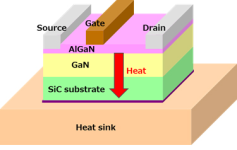
The combination of Silicon Carbide (SiC), Silicon (Si), and Diamond is at the forefront of next-generation radar technology, primarily aiming to maximize power, efficiency, and heat management.
Key advancements involve using Diamond as a substrate or heat spreader for SiC-based devices (often GaN-on-SiC) to handle extreme power densities, with SiC replacing traditional Silicon (Si) for superior electrical performance.


India issues Letter of Request to France for Rs 3.25 lakh crore 114 Rafale jet deal, 94 jets to be Made in India
Read more At:
Read more At:
If the naval Rafale order comes, then TEDBF stands cancelledIndia issues Letter of Request to France for Rs 3.25 lakh crore 114 Rafale jet deal, 94 jets to be Made in India
Read more At:
Its Redundant anyway. Why would you designe a naval fighter when you are operating only two skie jump ACs.If the naval Rafale order comes, then TEDBF stands cancelled
I think TEDBF is first meant to replace Mig29k, and later on will be used for additional carriers. I believe another carrier will construction will start post 2030.Its Redundant anyway. Why would you designe a naval fighter when you are operating only two skie jump ACs.

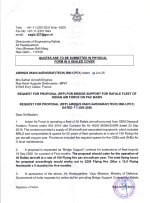
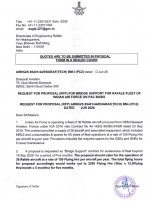

This proves that you still have 36 Rafales and not 35!!!

Officially GOI or IAF won't accept any Rafale loss as it gives strength to traitor Indian Opposition parties to oppose the upcoming 114 Rafale mega deal( plus 31 more for IN); but by now it is an open secret that we indeed have lost BS001. Our official plan to upgrade the remaining 35 jets to F4* standard is a direct proof of that:This proves that you still have 36 Rafales and not 35!!!

Le "super contrat" Rafale F4/F5 signé avec l'Inde le mois prochain. — avionslegendaires.net
Le 11 janvier 2026, par Arnaud. Il y a cinq semaines nous vous révélions que les Indiens se tournaient vers la version la plus évoluée du chasseur français. Aujourd'hui nous sommes en Aéronefs Militaires
 www.avionslegendaires.net
"Avions Légendaires" is not a reputable website. In France, people ridicule those who cite Avions Légendaires to support their arguments because the site's author doesn't verify anything and simply believes their opinion is the truth. For example, in the article you cite, they claim the contract for 114 Rafales will be signed in mid-February (the article is dated January 11th), but there is no official statement or document indicating that 35 Rafales will be upgraded to the F4 version. However, there is an official document requesting a proposal for the maintenance, repair, and overhaul (MRO) of 36 Rafales, and 36 Rafales are flying, since the calculation of flight hours over five months, which determines the MRO price, is based on 36 Rafales. If an official Indian organization is willing to pay for 36, it means there are 36.

TEDBF has a too norrow market, and once Rafale M already ordered, it has no chance.I think TEDBF is first meant to replace Mig29k, and later on will be used for additional carriers. I believe another carrier will construction will start post 2030.
I was always suprised to see India not merging AMCA and TEDBF, as France with Rafale.
What's the Real Story Behind IAF's Rafale 'Bridge Support' Contract
Chandigarh: The Indian Air Force’s (IAF) recent tender issued to France’s Dassault Aviation and Safran Aircraft Engines for a five-month-long “bridge support” contract to provide spares, repairs, maintenance, technical assistance and logistics support for its fleet of 36 twin-engine Rafale fighters, marks an important transition in the combat aircraft’s long-term sustainment architecture.At first glance, the five-month duration of the Request for Proposal (RfP), issued earlier this month, appears unusual, particularly since such sustenance contracts for sophisticated fighter fleets are typically structured over several years to ensure continuity.
But industry officials said the seemingly arbitrary timeframe is closely linked to the transition towards a new sustainment ecosystem, largely centred on a dedicated Safran Maintenance, Repair and Overhaul (MRO) facility for the Rafale’s M88 engine, currently being established in Hyderabad.
Scheduled for completion sometime around February 2027 – some five months after the expiry on September 18, 2026, of the 10-year support package agreed under the original 2016 Rafale acquisition contract – this facility will be the first overhaul centre for the M88 turbofan engine outside France, and is expected to be a key pillar of the fighter’s future support infrastructure in India.
Industry sources said the proposed “bridge contract” is intended to sustain the Rafale fleet through this interim period, while the Ministry of Defence (MoD) and French manufacturers Dassault Aviation and Safran Aircraft Engines – maker of the fighter’s M88 power plant- finalise a far more ambitious long-term Performance-Based Logistics (PBL) arrangement.
Widely regarded as one of the most advanced methods of supporting modern combat aircraft, the PBL structure is expected to fundamentally transform how the Rafale fleet is maintained and supported throughout its service life with the IAF for several decades.
Under the proposed bridging arrangement, the IAF’s two Rafale squadrons at Ambala and Hashimara would continue to be supported, for now, at an annual utilisation rate of around 150 flying hours per aircraft, reflecting planned employment for training, exercises, operational tasking, and routine mission requirements.
Across the 36-aircraft fleet, this equates to approximately 5,400 flying hours annually. Therefore, over the five-month bridging period for which the RfP has been issued, the arrangement would cover roughly 2,250 aggregate flying hours for the fleet, sufficient to maintain pilot proficiency, operational readiness and routine commitments, while negotiations continued on the reportedly forthcoming PBL framework that would eventually succeed it.
Traditional fighter-aircraft support arrangements require air forces to procure spares, repairs and technical services separately and consequently bear most of the financial and operational risk when components fail or supply chains are disrupted. For original equipment manufacturers (OEMs), revenues are largely tied to the sale of spare parts and repair services.
In contrast, long-term sustainment arrangements like PBL deals, replace this transaction-based model with one centred on performance. Instead of purchasing individual maintenance activities and replacement components, they provide the customer an agreed operational outcome, measured typically in terms of aircraft readiness and mission capability, better known in military aviation parlance as operational platform availability.
Accordingly, under the proposed PBL arrangement, Dassault Aviation, Safran Aircraft Engines and associated suppliers would assume contractual responsibility for maintaining a specified proportion of the Rafale fleet in mission-ready condition, with financial penalties for failing to meet agreed targets and incentive payments for exceeding them. In effect, the arrangement would shift the emphasis from selling spare parts and conducting repairs to ensuring combat-ready aircraft.
No official availability target for the IAF’s Rafales has yet been disclosed publicly, and it is unlikely that the final figure will ever be revealed. However, based on comparable Rafale support arrangements elsewhere, and similar fighter sustainment contracts, industry officials estimate that the target is likely to fall within the 75-85 per cent range, with around 80 per cent fleet availability widely regarded as the most realistic benchmark.
For the IAF’s inventory of 36 Rafales, this would translate into approximately 29 aircraft being available for operations at any given time. Even at the lower end of the projected range, around 27 aircraft would remain mission-capable, while an 85 per cent availability rate would raise that figure to roughly 31 of 36 aircraft.
Such readiness levels would, if achieved, compare favourably not only with many fighter fleets worldwide, but also with the operational experience of the IAF’s diverse combat inventory of five different combat aircraft types, whose operational availability has mostly remained in the 50-60% range.
These fighters include Russian-origin Su-30MKIs and MiG-29s, Anglo-French SEPECAT Jaguars, French Mirage-2000Hs and, at various stages of their induction, the indigenous Tejas light combat aircraft variants. Against this backdrop, sustaining Rafale availability at around 80 per cent would represent a significant enhancement in combat readiness and force-generation capability.
Industry officials said a central feature of the intended PBL framework for the Rafale fleet would be anticipatory maintenance, whereby aircraft systems are continuously monitored to detect emerging faults before they develop into failures. By analysing data generated by onboard sensors, diagnostic software can identify components approaching the limits of their service lives and schedule repairs or replacements before breakdowns occur, thereby minimising aircraft downtime and improving fleet availability.
Experts noted that the Rafale’s highly digitised construction is particularly well suited to this approach, enabling near real-time monitoring of the fighter’s engine, avionics, radar and other critical subsystems.
Achieving such availability targets will also depend heavily on the Hyderabad-based M88 MRO unit. Until now, following the completion of Rafale deliveries to the IAF in 2022, major overhauls and deep-level maintenance of the fighter’s engines have had to be carried out in France, requiring modules and major assemblies to be transported overseas. This, in turn, had increased logistical complexity, lengthened repair cycles and reduced aircraft availability in addition to enhanced costs.
Designed to handle more than 600 engine modules annually, the facility is expected to become a key enabler of the Rafale’s long-term sustainment architecture in India. Besides reducing dependence on overseas support, it will also create a specialised military aerospace-maintenance capability within the country, dovetailing with the government’s Atmanirbhar Bharat initiative aimed at strengthening indigenous defence-industrial capabilities.
Its significance, however, extends well beyond the current fleet of 36 Rafales. Besides supporting the 26 Rafale-M carrier-borne fighters ordered last year for the Indian Navy, deliveries of which are expected to be completed by 2030, the Hyderabad facility has also been designed to underpin future expansion of the IAFs Rafale inventory with the acquisition of 114 additional such fighters, under the long-pending Multi-Role Fighter Aircraft (MRFA) programme.
This planned acquisition envisages around 90 Rafales being licence-built or assembled locally, with an initial tranche delivered in fly-away condition. With an estimated value of US$35-40 billion, the MRFA programme ranks amongst the world’s largest and most consequential fighter-aircraft procurement efforts currently under process.
The sheer scale of the prospective fighter fleet expansion underscores the importance of establishing a robust long-term sustainment and support architecture capable of maintaining high operational readiness across a much larger Rafale fleet. Viewed in its entirety, the proposed PBL framework – which the IAF is seeking to adopt for the first time for a frontline combat fleet – offers a potential solution to one of the service’s most enduring weaknesses: low aircraft availability. This assumes particular significance in the case of the Rafale, which will, in years to come, constitute the backbone of the IAFs fighter force.
Meanwhile, the IAF’s RfP to the Rafale’s French OEMs has generated considerable interest in defence and media circles, with several news reports and commentaries on Tuesday noting that the bridge-support requirement has been structured around the continued sustainment of 36 Rafales. These reports maintained that this effectively undermined Pakistan’s repeated claims that one or more Rafales were shot down during Operation Sindoor last year.
The IAF has never formally addressed these assertions in detail, though the chief of defence staff did acknowledge last year in an interview that there had been aircraft “losses” – without specifying the platforms or numbers involved.
If a maintenance and logistics package calculated around the support of the original 36-aircraft fleet constitutes indirect evidence that all Rafales remain on strength and in operational service, then an otherwise unremarkable tender may have conveyed what the absence of a formal denial did not: that the IAF’s Rafale fleet remains intact.
Of course, while the tender for 36 aircraft is a semi-public document, the actual contract signed would be confidential.
While it is true that the Rafale doesn't presently deploy a DIRCM system (contrary to what I stated below), what I see here by a few posters (some on anonymous handles) is a repetitive & sophisticated effort to rundown the Rafale. Why?
 Whose interest does this suit? Certainly not the IAF's which picked the Rafale to fill a capability gap.
It does, however, work entirely in favour of Pakistani disinformation campaigns, designed to add doubts to an acquisition process by pushing swadeshi platforms which have not even been rolled out.
Would urge a handful of defence handles (assuming they are authentic) to be careful.
On Rafale and DIRCM - the sensor prerequisite (DDM-NG or Détecteur de Départ Missile Nouvelle Génération) is flight-proven and explicitly DIRCM-compatible.
SPECTRA gives an architecture to fuse a laser jammer but this hasn't been done yet — and its not known publicly if F4 and F5 will have this as a feature
Whose interest does this suit? Certainly not the IAF's which picked the Rafale to fill a capability gap.It does, however, work entirely in favour of Pakistani disinformation campaigns, designed to add doubts to an acquisition process by pushing swadeshi platforms which have not even been rolled out. Would urge a handful of defence handles (assuming they are authentic) to be careful.On Rafale and DIRCM - the sensor prerequisite (DDM-NG or Détecteur de Départ Missile Nouvelle Génération) is flight-proven and explicitly DIRCM-compatible.SPECTRA gives an architecture to fuse a laser jammer but this hasn't been done yet — and its not known publicly if F4 and F5 will have this as a feature
I saw this in a Spanish interview with Dassault/Trapper, F5 is pushed out to 2033
I don't know how this affects the Indian specific requirements that could be still outstanding
"The French government has also decided to postpone the delivery of 20 Rafale fighter jets, initially scheduled for 2031 and 2032, until 2033 and 2034. According to Trappier, this measure will allow France to receive aircraft configured to the F5 standard directly, avoiding the delivery of F4 aircraft that would subsequently require costly modernization."

 defensayseguridad.es
I don't know how this affects the Indian specific requirements that could be still outstanding
"The French government has also decided to postpone the delivery of 20 Rafale fighter jets, initially scheduled for 2031 and 2032, until 2033 and 2034. According to Trappier, this measure will allow France to receive aircraft configured to the F5 standard directly, avoiding the delivery of F4 aircraft that would subsequently require costly modernization."
Trappier cierra el FCAS y exige iniciar ya el futuro caza francés: "Se acabó. Lo hemos dejado atrás." - Defensa y Seguridad
Dassault Aviation: ruptura contractual FCAS, descarta volver a desarrollar un caza con Airbus y propone demostrador con requisitos franceses
defensayseguridad.es