
Nuclear Energy in India : Updates
- Thread starter Himanshu
- Start date
You are using an out of date browser. It may not display this or other websites correctly.
You should upgrade or use an alternative browser.
You should upgrade or use an alternative browser.


Report on this from NEI:

India licences NFC-Kota fuel plant - Nuclear Engineering International
India’s AERB has granted NFC-Kota an operating licence to produce fuel for 700 MWe PHWRs, strengthening the country’s nuclear fuel cycle.
 www.neimagazine.com
India’s Atomic Energy Regulatory Board (AERB) has granted an operating licence to the Nuclear Fuel Complex-Kota (NFC-Kota), which will provide fuel for 700 MWe pressurised heavy water reactors (PHWRs). The facility in Rajasthan’s Rawatbhata has a licensed annual capacity of 500 tonnes of natural uranium dioxide (UO2) fuel assemblies.
The licence was granted after AERB conducted a detailed safety assessment under its regulatory framework. “The activities at NFC-Kota are of low hazard category. The systems required for radioactive waste management and prevention of spread of contamination during operation are available,” AERB noted. “The application, the subsequent submissions and the review carried out have shown that the associated safety aspects have been adequately addressed.”
The licence is non-transferable and subject to modification, suspension, or revocation, as considered necessary by the AERB. It includes conditions such as adherence to reporting of safety-significant events and submission of periodic health physics reports.
The Nuclear Fuel Complex (NFC) headquarters in Hyderabad submitted its application for an operating licence for the Kota facility in March 2026. The authorisation also covers the safe handling, disposal, and transfer of radioactive waste, and is valid until 30 April 2031. The approval follows the Consent for Hot Commissioning issued in November 2025 after NFC-Kota’s satisfactory demonstration of fuel bundle assembly production in April 2023.
The Department of Atomic Energy (DAE) said operational clearance for NFC-Kota “marks a decisive step in strengthening the nation’s nuclear fuel cycle”, meaning NFC is now “fully geared” to supply nuclear fuel for Nuclear Power Corporation of India Ltd’s 700 MWe indigenous PHWRs.
India is constructing 10 indigenous 700 MWe PHWRs in “fleet mode” to boost nuclear capacity. These include: the Kaiga Atomic Power Project (KAPP-5&6) in Karnataka; Gorakhpur Haryana Anu Vidyut Pariyojana (GHAVP-3&4) in Haryana; Chutka Madhya Pradesh Atomic Power Project (CMPAPP-1&2) in Madhya Pradesh; and Mahi Banswara Rajasthan Atomic Power Project (MBRAPP-1-4) in Rajasthan. The 700 MWe PHWRs already in operation include units 3&4 at the Kakrapar Atomic Power Station (KAPS-3&4) and unit 7 at the Rajasthan Atomic Power Station (RAPS-7) where RAPS-8 is undergoing commissioning.
NFC was established in late 1960s as a pivotal industrial arm of the Department of Atomic Energy with the mandate to fuel India’s nuclear power programme. It is the only facility worldwide to have a comprehensive manufacturing cycle from ore to core, involving processing of both uranium and zirconium streams under the same roof. NFC manufactures assemblies for existing PHWRs (mostly 200 MWe), boiling water reactors (BWRs) and fast breeder reactors as well as many reactor core components, various tubes, and high purity special materials.
It has developed state-of-art facilities and process technologies with several innovations in the field of nuclear fuel production and fabrication. The complex also symbolises the strong emphasis on self-reliance in the Indian nuclear power programme.

From BARC Newsletter from 2023:
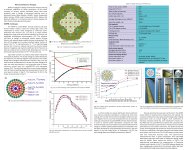
Information on AHWR:
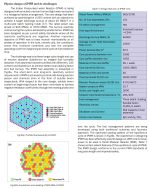
Information on IPWR:
Information on IMSBR:

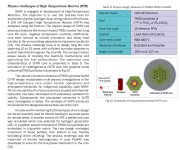
Information about IHTR/CHTR:
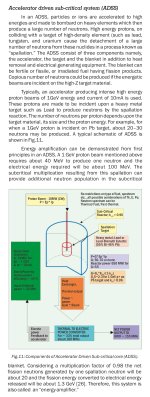
Information on IADS:
Other "New Energy" Systems:
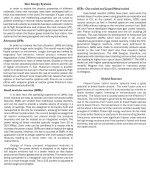
Information on AHWR:
Information on IPWR:
Information on IMSBR:
Information about IHTR/CHTR:
Information on IADS:
Other "New Energy" Systems:


Name a country that does not use nuke power for energy needs, asks Supreme Court
Supreme Court questions nuclear energy reliance, as petitioner challenges SHANTI Act's liability limits for private nuclear operators in India.

azad engineering concall
Question: Got it. Just a follow-up. In terms of the new theme which is emerging on energy side, which is nuclear. Do we have any scope or any opportunity which can -- we can participate or play in the nuclear opportunity?
Question: Got it. Just a follow-up. In terms of the new theme which is emerging on energy side, which is nuclear. Do we have any scope or any opportunity which can -- we can participate or play in the nuclear opportunity?
So we are already a player that is working in the nuclear space. In fact, our energy segment, when we talk about it, we cater to gas turbines, nuclear turbines and thermal turbines as well. So we make critical rotating components for even nuclear turbines, and we make it for the world's largest customer, which is based out of France. It is a government-owned entity called EDF, Arabelle -- and a fully owned subsidiary of EDF, which is Arabelle Solutions. So they audited Azad for a few years.
We cleared all our qualifications. We cleared all our entry barriers, and we've been supplying nuclear for the last couple of years. So today, in fact, we are one of the most -- one of the only qualified partners in the country to be producing nuclear turbine airfoils. So we are ready and geared up for the opportunity that we are seeing, whether in India or globally.

World's oldest operating nuclear units back on India's grid
Friday, 19 June 2026
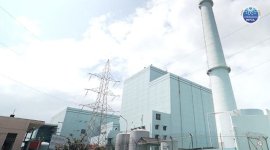
Tarapur Atomic Power Station (TAPS), image from a NPCIL video
Tarapur Atomic Power Station (TAPS), image from a NPCIL video
Tarapur 1 and 2 are BWR units commissioned at the site in Maharashtra in 1969 as India's first commercial nuclear power plant. Built by GE on a turnkey contract, the units were originally rated at 200 MWe but were subsequently downrated to 160 MWe (gross). They underwent six months' refurbishment in 2005-06, and have both been offline since 2020 for major refurbishment work.
The Atomic Energy Regulatory Board (AERB) announced last month that it had approved the restart and continued operation of unit 2 at the Tarapur power plant in Maharashtra on 7 May following the completion of the refurbishment undertaken by Nuclear Power Corporation of India Limited (NPCIL).
The refurbishment included the complete replacement of reactor coolant recirculation piping with forged piping and fittings made of advanced corrosion-resistant stainless steel, the regulator said, as well as safety upgrades including the commissioning of the reactor containment filtered venting system and the alternate cooling water system. During the extended outage, inspections of critical reactor components such as reactor pressure vessel welds were carried out as part of the assessment of the unit's ageing status and residual operating life. "The evaluations have shown that the reactor can continue safe operation with the normal maintenance and surveillance programme," the AERB said.
The regulator has given permission for the unit - known as TAPS (for Tarapur Atomic Power Station) unit 2 - to operate for a further 10 years. It issued a permit for TAPS unit 1 to restart after its refurbishment last December: that unit is now operating at its rated power of 160 MWe.
NPCIL said, in a post on social media site X, that the reconnection of both units was "a major milestone in India's nuclear power programme … this achievement reaffirms the enduring legacy of India's first nuclear power station and reflects the dedication, technical expertise and unwavering commitment of Team NPCIL. For over five decades, TAPS-1 & 2 have contributed to the nation's energy security and development while providing clean, reliable and low-carbon electricity. The successful operation of both units marks another significant milestone in India's nuclear energy journey and demonstrates the strength of indigenous capabilities, engineering excellence and a robust safety culture. As India advances towards a cleaner and more secure energy future, Tarapur continues to stand as a symbol of innovation, resilience and technological excellence".
As well as the BWR units, the Tarapur Atomic Power Station site is home to two operating Indian-designed pressurised heavy water reactors, Tarapur 3 and 4, connected to the grid in 2005 and 2006, respectively. It has also been proposed as the site for the construction of the lead units of two Indian-designed small modular reactors: the BSMR-200, a 200 MWe reactor based on pressurised water reactor technology, and the 55 MWe SMR-55.
World's oldest operating nuclear units back on India's grid
Nuclear Power Corporation of India Limited says that following extensive modernisation and refurbishment the first two units at India's oldest nuclear power plant, Tarapur Atomic Power Station, are now back delivering power. ;
www.world-nuclear-news.org
====
50+ years of safe operation, and another decade to go! TAPS is a global testament to the reliability of nuclear power.
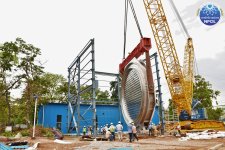
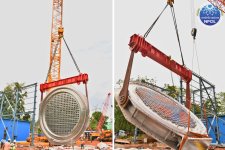

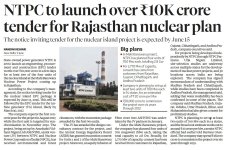
Anushakti Vidhyut Nigam Limited (ASHVINI) - a subsidiary of NPCIL and a Joint Venture of NPCIL and NTPC Limited, is set to release the tender inviting bids for the Nuclear Island Mega EPC Package (NIMEP) for Mahi Banswara Rajasthan Atomic Power Project (MBRAPP) Units 1–4 (4 x 700 MWe).
Estimated at over ₹28,000 crore, this is the largest Nuclear Island EPC packages ever floated for India’s indigenous Pressurised Heavy Water Reactor (PHWR) programme. The comprehensive package covers engineering, manufacturing, supply, civil construction, installation, testing and commissioning assistance of critical nuclear island systems for four PHWR units of 700 MWe capacity each.
Estimated at over ₹28,000 crore, this is the largest Nuclear Island EPC packages ever floated for India’s indigenous Pressurised Heavy Water Reactor (PHWR) programme. The comprehensive package covers engineering, manufacturing, supply, civil construction, installation, testing and commissioning assistance of critical nuclear island systems for four PHWR units of 700 MWe capacity each.
Files relating to India’s largest nuclear power plant Kudankulam exposed in data breach
- Purported blueprints of parts of the plant's facilities, supplier details exposed in leak
- Nearly 19,000 files relating to the plant are online, researcher says
- Plant contractor Reliance Group confirms 'partial breach', says incident reported to the government
The Kudankulam Nuclear Power Plant, located in the southern state of Tamil Nadu, is the largest of India's seven nuclear plants and central to Prime Minister Narendra Modi's ambitious plans to expand the country's atomic energy capacity.
Indian businessman Anil Ambani's Reliance Group, one of the plant's contractors, told Reuters in a statement that there had been a "partial breach" of its data on a server hosted by third-party Indian data centre service provider Yotta, and that the government has been informed about the incident.
Reliance did not disclose what data had been breached.
The data breach could pose a "serious" risk to the safety of the plant, says Nickolas Roth, a senior director at the Nuclear Threat Initiative, which advises governments and benchmarks countries' preparedness on nuclear security. The breach also underscores how hacks have become more common in India, where many companies are ill-equipped to deal with such threats.
Nearly 19,000 files totalling 14.3 gigabytes that appear for the search term "KKNP" - an acronym for the nuclear plant - in the data have been online since June 11, according to independent cybersecurity researcher Rakesh Krishnan, who first alerted Reuters to the leak.
Reuters reviewed the documents, which were dated from 2016 to mid-2025, but could not verify their authenticity. In addition to some blueprints and supplier details, they purportedly show meeting and inspection records, equipment reviews and insurance policies.
The 19,000 files appeared to be the most sensitive of a total 858,000 Reliance files on the World Leaks website.
One of the conglomerate's subsidiaries, Reliance Infrastructure (RLIN.NS), opens new tab, won a contract in 2018 to design and build infrastructure for the plant's Unit 3 and Unit 4. Both units, still under construction, are due to be operational by 2027 and are slated to provide a combined 2,000 megawatts of capacity.
World Leaks, a well-known ransomware group that has previously targeted Nike (NKE.N), opens new tab and India's Tata Group, did not respond to Reuters queries on the Reliance data breach. The group typically posts stolen corporate data on its website after companies decline to pay the ransom demanded. Its website can only be accessed with a specialised browser.
In June, World Leaks told Reuters it had sought $1.5 million in ransom for Tata Group files that contained confidential component designs of clients Apple (AAPL.O), opens new tab and Tesla (TSLA.O), opens new tab, adding that it posted the data after Tata "ignored" its demand.
SUSPICIOUS ACTIVITY ON SERVER IN MAY
The Nuclear Power Corporation of India, which commissions and operates the country's nuclear power plants, has been communicating with Reliance about the breach and India's main cybersecurity agency — the Indian Computer Emergency Response Team (CERT-In) — is looking into the incident, according to a source familiar with the matter. The source declined to be identified due to the sensitivity of the issue.Nuclear Power Corporation Chairman Rajesh Veeraraghavan, CERT-In and the government's main press office did not respond to repeated requests for comment.
Yotta said in a statement it had noted suspicious activity on May 29 on a server it hosts that belongs to Reliance Infrastructure. It said the activity was immediately terminated and that the suspected ransomware execution was prevented, but Reliance Infrastructure informed it at the end of June that there had been claims of a data breach made by "external threat actors."
Yotta said it has not been able to verify the claims of the "threat actor", but added that it has shared its detailed technical investigation with Reliance Infrastructure and supports an ongoing investigation.
India's Department of Atomic Energy declined to comment, while Modi's office did not respond to Reuters queries.
BLUEPRINTS AND INSURANCE POLICIES
The documents posted on World Leaks do not appear to relate to the nuclear reactors' core systems, which are supplied by Russia's state-owned Rosatom.They did contain purported blueprints for the ventilation and cooling systems used in Unit 3 and Unit 4, as well as what appeared to be the complete floor layout of a "common control room".
The files also included what appeared to be vendor proposals, a list of approved suppliers, and a record of a 2024 meeting about a joint inspection by the Nuclear Power Corporation and Reliance, with photos of equipment.
Another document purports to show that Reliance Infrastructure and the Nuclear Power Corporation had taken out an insurance policy that would entitle them to $112 million if either Unit 3 or Unit 4 were to suffer an act of terrorism.
The files, in the hands of bad actors, could in theory be exploited to map the plant's support systems, identify its suppliers and pinpoint weaknesses in its security chain, according to researchers.
They could "show an adversary not just who has access to the project but which systems that access reaches," said Nuclear Threat Initiative's Roth.
India ranks third among a list of countries suffering the most data breaches, with 28.9 million accounts compromised last year, lagging only the United States and France, according to cybersecurity company Surfshark.
A report last year by the Data Security Council of India and cybersecurity firm Seqrite said that of 204 organisations surveyed across India, some 73% were "unaware if they have ever been attacked" while 57% lack cyber hygiene practices.
It is also the second time that the Kudankulam plant has been linked to a cyber incident, with malware tied to a North Korean hacker group found on the plant's administrative network in 2019. At the time, the Nuclear Power Corporation said the matter was investigated immediately and plant systems were not affected.


PARLIAMENT QUESTION: NUCLEAR FUEL PROGRAMME
Posted on: 23 JULY 2026 3:59PM by PIB Delhi
*****
Posted on: 23 JULY 2026 3:59PM by PIB Delhi
*****
Department of Atomic Energy (DAE) is promoting the indigenous thorium-based technologies to ensure long-term energy security, and to achieve self-reliance in the nuclear fuel cycle.
India has limited resources of uranium and vast reserves of thorium. To optimally utilise the limited uranium resources and exploiting the large thorium reserves for achieving long term energy security in a sustainable manner, DAE is pursuing Three Stage Nuclear Power Programme. The programme is based on closed fuel cycle, wherein the spent fuel from one stage is utilised for extracting the fissile material, to be used as fuel in the next stage.
DAE has developed expertise in reactor design, manufacturing, construction and front-end and back-end fuel cycle technologies of Pressurised Heavy Water Reactors (PHWRs) deployed in the first stage of the nuclear power programme.
The fissile material, plutonium, extracted from the spent fuel from domestic PHWRs is used as fuel for the second stage of nuclear power programme. Bhabha Atomic Research Centre (BARC) has successfully developed indigenous capabilities and implemented the back-end fuel cycle technologies including fuel fabrication. The back-end fuel cycle plants are operational at Tarapur and Kalpakkam. In addition, Integrated Nuclear Recycle Plant (INRP) at Tarapur and the Fast Reactor Fuel Cycle Facility (FRFCF) at Kalpakkam are under construction for reprocessing, waste management of spent fuel from PHWRs and Fast Breeder Reactors (FBRs) respectively. The PFBR attained its first criticality in 6th April 2026, marking India's entry into the second stage of the programme.
The third stage envisages use of U-233 bred from Th-232 as fuel. In this regard, the Department has undertaken sustained research and development for thorium utilisation. Thorium Oxide (Thoria) pellets have been used in the initial cores of operating PHWRs, and Thoria-based fuels have been irradiated in BARC research reactors. The irradiated Thoria pins have been reprocessed to obtain uranium-233, which has been fabricated as fuel for Kalpakkam Mini Reactor (KAMINI) at Indira Gandhi Centre for Atomic Research (IGCAR), Kalpakkam.
The Government is undertaking sustained initiatives for long-term utilisation of thorium resources under the Three-Stage Nuclear Power Programme. The programme aims to multiply the domestically available fissile resource through the use of natural uranium in PHWRs, followed by use of plutonium, obtained from the spent fuel of PHWRs, in FBRs. Large scale utilisation of thorium will subsequently follow, making use of fissile uranium-233 bred from thorium in a breeder reactor fuelled using plutonium, only after adequate installed capacity of FBRs has been achieved. R&D efforts are underway for development of technologies for thorium utilisation. Molten Salt Reactor (MSR) is envisaged as one of suitable technologies for thorium utilisation for the long-term in a sustainable manner. The DAE is in the process of development of MSR aimed to demonstrate the technologies required for the efficient utilisation of thorium. R&D on development and qualification of special materials, molten fluoride salt chemistry, component development is in progress for molten salt demonstration reactor. These efforts are aimed at ensuring that mature thorium technologies are available before large-scale deployment, thereby strengthening India's long-term energy security, fuel sustainability and self-reliance in nuclear energy.
This information was given by Union Minister of State for Prime Minister’s office and Personnel, Public Grievances and Pensions, Atomic Energy and Space, Dr. Jitendra Singh, in a written reply in the Rajya Sabha today.
====
So work on alternatives to AHWR is still progressing. I'm actually surprised that they mentioned the MSR (I'm assuming it's the IMSBR) but not AHWR. Could it be possible that Molten-Salt Reactor has now become the favoured approach for Stage-3 instead of AHWR?
@Gautam
They are prototyping a 5MWth IMSBR. This R&D work is mostly meant for that test bed.Could it be possible that Molten-Salt Reactor has now become the favoured approach for Stage-3 instead of AHWR?
There are multiple types of reactors BARC/IGCAR are working on for thorium fuel utilization. AHWR, ADS, IMSBR, IHTGCR etc. AHWR is the conventional design, this is likely our fallback option. ADS would be the safest but is the most unproven. IMSBR & IHTGCR are proven physics wise but come with their own complications, namely in handling molten fluoride salt, corrosion etc.
Both the IMSBR & IHTGCR would produce high heat which can be used to Hydrogen production using the Cu-Cl thermo-chemical process. Recently we saw the FBTR get a hydrogen production plant using the Cu-Cl process.
Hydrogen seems to be our preferred way to reduce carbon-intensity of hard-to-abate sectors like steel production.

Startup company making tokamaks. What a time to be alive.
Transformers and Rectifiers (India) Limited (TARIL) has secured an order for the supply of generator transformers for Nuclear Power Corporation of India Limited’s (NPCIL’s) Kaiga Units 5 and 6 nuclear power project in Karnataka.
The order, received from Megha Engineering and Infrastructures Ltd (MEIL), is the company's first in the nuclear power sector. Kaiga Units 5 and 6 comprise two indigenous 700 megawatt electrical (MWe) Pressurised Heavy Water Reactors (PHWRs) being developed by NPCIL.
The order, received from Megha Engineering and Infrastructures Ltd (MEIL), is the company's first in the nuclear power sector. Kaiga Units 5 and 6 comprise two indigenous 700 megawatt electrical (MWe) Pressurised Heavy Water Reactors (PHWRs) being developed by NPCIL.