
India - Pakistan Diplomatic Ties
- Thread starter _Anonymous_
- Start date
You are using an out of date browser. It may not display this or other websites correctly.
You should upgrade or use an alternative browser.
You should upgrade or use an alternative browser.


Important hydro projects are now back on the priority list.


In Colombo, Bangkok this week, India and Pakistan met again for track 2 talks
Indian and Pakistani delegates held fresh Track 2 talks in Colombo and Bangkok, discussing crisis-management mechanisms, terrorism and water issues. The backchannel engagements come despite frozen official dialogue
 www.wionews.com


In Colombo, Bangkok this week, India and Pakistan met again for track 2 talks
Indian and Pakistani delegates held fresh Track 2 talks in Colombo and Bangkok, discussing crisis-management mechanisms, terrorism and water issues. The backchannel engagements come despite frozen official dialogue
This isn't government to government level formal talk. How can be these people consider delegates of respective countries when they haven't been selected by the government formally?
Last edited:
Siddhant explained it in his previous article and current article.This isn't government to government level formal talk. How can be these people consider delegates of respective countries when they haven't been selected by the government formally?
Current article:
The two sides also explored ways to feed insights from the current discussions into formal Track One channels. Track One dialogue involves direct engagement between serving government officials from both countries.
Previous article:

Track 2 channels active between India and Pakistan even as official relations remain in freeze
After the deadly 2020 Galwan Valley clash, India and China froze much official contact. But Track 2 exchanges helped keep lines open. High-level signals of thaw followed: Prime Minister Narendra Modi met President Xi Jinping on the sidelines of the SCO summit in Tianjin in 2025.
www.wionews.com
For India and Pakistan, the backchannel track 2 has been continuing for decades. At one point, nearly 20 such dialogues ran simultaneously.
Inputs from these help make an assessment when ties remain snapped, as they are currently. No breakthrough is expected from such engagement, but it is seen as a channel of informal communication away from public glare. No press releases are issued, no statements are made after these meetings, and above all, no one will confirm or deny them.
The Neemrana Dialogue has been, in the past, one of the longest-running dialogues, bringing together voices from both sides.
Track 2 is not new. The term, coined in 1981 by American diplomat Joseph Montville, describes informal, non-structured talks between non-officials, often former officials, journalists, business leaders, and civil society voices. The goal is to build trust, test ideas, and create space for understanding, away from the glare of politics and media.
Unlike Track 1, formal government-to-government negotiations like the Camp David Accords, Track 2 offers deniability and flexibility. A hybrid version, Track 1.5, mixes serving officials (acting unofficially) with outsiders. This pattern repeats globally when relations sour. For example, the Oslo Accords, the initial phase (1993), when unofficial meetings in Norway between Israeli academics and PLO representatives took place.
PS There are more examples in the article
Bonus:
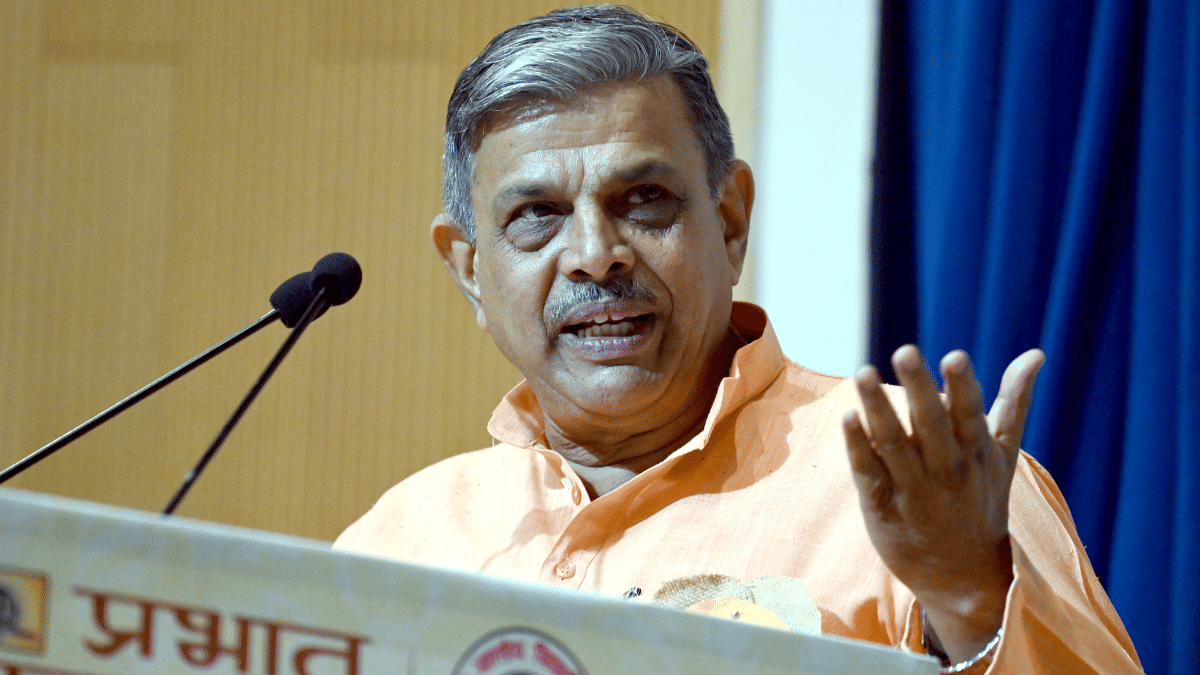
Pakistan welcomes 'positive' call by RSS's Hosabale for dialogue between Delhi & Islamabad
Earlier this week, the RSS general secretary had said India should keep channels of communication open with Pakistan without compromising on ‘security, self-respect’.
 theprint.in
In an interview with news agency PTI on 12 May, Rashtriya Swayamsevak Sangh General Secretary Hosabale said India should keep channels of communication open with Pakistan without compromising on “security and self-respect”.
An Indian Express report earlier revealed that in recent months, former Indian military and intelligence officials met their Pakistan counterparts in at least two unofficial gatherings, including one in Qatar and another in an undisclosed Asian capital.
During the Pahalgam attack and the subsequent military confrontation, officials said, the only functioning channel between the two countries was the hotline connecting their Directors General of Military Operations, who now speak weekly.
Former Indian Army chief Gen Manoj Naravane Thursday endorsed Hosabale’s comments, stressing on the importance of “people-to-people connections” and track-II diplomacy.
“Ordinary people live on both sides of the border, and common people everywhere have the same concerns,” Naravane said in a PTI interview. “When friendship develops between the people of two countries, it naturally helps improve relations between the countries themselves.”
At the same time, Naravane reiterated that India would continue to respond militarily if necessary, pointing to the dual-track thinking now emerging in parts of the Indian establishment: deterrence coupled with controlled engagement.

This is what I posted on the other forum -Siddhant explained it in his previous article and current article.
Current article:
Previous article:
Track 2 channels active between India and Pakistan even as official relations remain in freeze
After the deadly 2020 Galwan Valley clash, India and China froze much official contact. But Track 2 exchanges helped keep lines open. High-level signals of thaw followed: Prime Minister Narendra Modi met President Xi Jinping on the sidelines of the SCO summit in Tianjin in 2025.
For India and Pakistan, the backchannel track 2 has been continuing for decades. At one point, nearly 20 such dialogues ran simultaneously.
Inputs from these help make an assessment when ties remain snapped, as they are currently. No breakthrough is expected from such engagement, but it is seen as a channel of informal communication away from public glare. No press releases are issued, no statements are made after these meetings, and above all, no one will confirm or deny them.
The Neemrana Dialogue has been, in the past, one of the longest-running dialogues, bringing together voices from both sides.
Track 2 is not new. The term, coined in 1981 by American diplomat Joseph Montville, describes informal, non-structured talks between non-officials, often former officials, journalists, business leaders, and civil society voices. The goal is to build trust, test ideas, and create space for understanding, away from the glare of politics and media.
Unlike Track 1, formal government-to-government negotiations like the Camp David Accords, Track 2 offers deniability and flexibility. A hybrid version, Track 1.5, mixes serving officials (acting unofficially) with outsiders. This pattern repeats globally when relations sour. For example, the Oslo Accords, the initial phase (1993), when unofficial meetings in Norway between Israeli academics and PLO representatives took place.
PS There are more examples in the article
Bonus:
Pakistan welcomes 'positive' call by RSS's Hosabale for dialogue between Delhi & Islamabad
Earlier this week, the RSS general secretary had said India should keep channels of communication open with Pakistan without compromising on ‘security, self-respect’.
In an interview with news agency PTI on 12 May, Rashtriya Swayamsevak Sangh General Secretary Hosabale said India should keep channels of communication open with Pakistan without compromising on “security and self-respect”.
An Indian Express report earlier revealed that in recent months, former Indian military and intelligence officials met their Pakistan counterparts in at least two unofficial gatherings, including one in Qatar and another in an undisclosed Asian capital.
During the Pahalgam attack and the subsequent military confrontation, officials said, the only functioning channel between the two countries was the hotline connecting their Directors General of Military Operations, who now speak weekly.
Former Indian Army chief Gen Manoj Naravane Thursday endorsed Hosabale’s comments, stressing on the importance of “people-to-people connections” and track-II diplomacy.
“Ordinary people live on both sides of the border, and common people everywhere have the same concerns,” Naravane said in a PTI interview. “When friendship develops between the people of two countries, it naturally helps improve relations between the countries themselves.”
At the same time, Naravane reiterated that India would continue to respond militarily if necessary, pointing to the dual-track thinking now emerging in parts of the Indian establishment: deterrence coupled with controlled engagement.
@JaymaxThere was always a significant section within the MEA babooos who favoured peace with Paxtan , some of them did so at any & all costs. You can deduce as much given the various statements you see on SM & MSM from ex FS , Ambassadors , NSA etc especially with a Paxtan connect.
In the 12 years Modi had been at the helm this section has been weakened not vanquished. Not sure where does Jaishankar stand vis a vis this section as Jaishankar has never ever served in Paxtan in any capacity nor has he served in the South Asia bureau of the MEA in any capacity.
This is important as the best of the best among our IFS babooos mandatorily serve in Paxtan &/or China & in some rare cases both.
All other relationships however critical viz with the US , Russia , EU , Japan etc come next in the list of priorities. In any case most of our babooos who serve in the aforementioned places are drawn from the cadre who've field & desk experience in China & Paxtan.
If you check the list of our FS , practically all of them have served , in some cases multiple tenures , in either Paxtan or China & in some rare cases both.
What I'm endeavouring here is to draw your attention to the fact that the Paxtan lobby amongst this lot is a particularly powerful one & nearly all of them follow the Satinder Lamba / MSA line of thought of peace with Paxtan at all or any cost or at the very least continue talking to them to maintain the facade .
Also helps the Congress line of thought of engagement for the sake of it ( as it burnishes their secular credentials as well as image among the muslims here which hopefully translates into votes) from where this doctrine was essentially derived before it became the creed with this section of baboodumb.
I suspect given the massive changes in our policies towards Paxtan what with the revocation of Art 370 & everything that followed in Kashmir apart from the withholding of the IWT & the success of Operation Sindoor , GoI is keeping channels of communication open to get a sense of how these changes are perceived in Paxtan.
Since we've resolved official exchanges cannot happen as long as Paxtan continues its support for terror & Fauji Foundation has done nothing to change the situation on the ground this is the best medium to conduct such exchanges.
Also provides the GoI with a fig leaf to tide over pressure from the meddlesome west especially the US .
Anyway this is my reading of the situation though why are the chaddis jumping into this is beyond me unless of course Leaderji is preparing to unleash some huge surprise of the nasty kind on us which would cause grave resentment among his core base , hence the ground is being prepared or at any rate trial balloons are being sent up to gauge initial responses.
Just my 2 cents !
Alhamdulillah !
Hopefully some sense prevails and GoI don't end up repeating the age old mistakes that our policymakers have been making for decades. All we can do is hope. Expecting to have a peaceful relationship with Pakistan is epitome of insanity. All it has ever led is this expression by GoI when they inevitable has happened..

Mr. Madhav gave clarification on this
"Totally wrong portrayal. It was not any track 2 dialogue. It was IISS annual South Asia Dialogue which was attended by scholars from India, Sri Lanka, US, UK, Afghanistan n Pakistan. Even officials attended this annual dialogue in d past. No track 2 is held with so many countries. I did not attend d 2-day dialogue. I was invited to speak at one session which I did n left. Complete spin to a non-story."
The reports on the so-called India-Pakistan Track II dialogues since last year at three different places—Muscat, Bangkok and Colombo—are cleverly projected as new initiatives exclusively designed as direct contact between Indian and Pakistani interlocutors.
In reality, members of Indian and Pakistani strategic community (retired military veterans, former diplomats and some think tankers) have been participating in these long existing conferences organised by Western think tanks where several other participants.
One of them is a South Asia security conference annually organised normally in Baharain but shifted to Colombo earlier this month because of security situation in the Gulf. Another conference that the same think tank (London-based IISS) has been hosting for long, was held in November last year in Muscat as usual. Researchers, analysts from US, UK and a slew of countries from the Indian sub-continent attend both the conferences.
The Bangkok meeting is different. It is hosted by a Canadian University with long history of attempting to bring India snd Pakistan on one platform.
While people in the Indian establishment are surely in the picture, to dub the initiative, as Pakistanis have done, as some new initiative to achieve quid pro quo and some false equivalence (you revive IWT, we open up our air space) is beyond exaggeration.
Some years ago, when I had an opportunity to participate in one of the IISS conferences, almost the same set of Pakistanis or at least a couple of them, now mentioned in a report, were also present. Simply put, it is an annual talk shop, not some direct bilateral track II as is being made out to be.
While people in the Indian establishment are surely in the picture, to dub the initiative, as Pakistanis have done, as some new initiative to achieve quid pro quo and some false equivalence (you revive IWT, we open up our air space) is beyond exaggeration.

India, Pakistan hold fresh round of Track 2 talks
Indian and Pakistani delegations held informal talks in Colombo on regional security issues amid ongoing back-channel engagements post-2025 conflict. | India News
 www.hindustantimes.com
and Maj Gen (retired) Isfandiyar Ali Khan Pataudi, who served in the Inter-Services Intelligence (ISI) and commanded a mechanised division.
The people said Sherry Rahman and Isfandiyar Ali Khan Pataudi, who is the uncle of Bollywood star Saif Ali Khan, have been part of many of the back channel engagements held since last year.
Last edited:
I am going to stick to my old theory - backchannel talks are primarily water focussed. Colombo didnt have Scotch and Kebab craving Aman ki Asha peeps. Ram Madhav and a retired Army Chief - who are calmly laying the Indian position clear.
Pakistan's airspace for water play was a test. They are probing.
I am going to stick to my old theory - backchannel talks are primarily water focussed. Colombo didnt have Scotch and Kebab craving Aman ki Asha peeps. Ram Madhav and a retired Army Chief - who are calmly laying the Indian position clear.
I mean how do you even begin to characterize this kind of trade ? Our air space is shut for them too . How dumb can they be ?Pakistan's airspace for water play was a test. They are probing.
But I think it goes beyond that . Just as they're probing us , we're probing them to see where their "new" red lines lie ?
Both Operation Sindoor & the suspension of the IWT has rattled them . I've written earlier on the real reason the IWT was suspended . It wasn't entirely about our rhetoric that blood & water can't flow together.
N India is just a few notches behind Paxtan as far as water scarcity goes especially Punjab. If we didn't do what we did , what we'd likely see in Paxtan towards the end of this decade or early next decade will be seen on the streets of N India namely - No Water , anarchy - resulting in all kinds , dimensions & degrees of violence .
The thing is how would we divert that water into north India without flooding ourselves? The terrain of those areas make it very hard to build large dams. Maybe river-linking can be done.N India is just a few notches behind Paxtan as far as water scarcity goes especially Punjab. If we didn't do what we did , what we'd likely see in Paxtan towards the end of this decade or early next decade will be seen on the streets of N India namely - No Water , anarchy - resulting in all kinds , dimensions & degrees of violence
Cohen bhaiya you Launched Sindoor for punishment last year but got only more of your brethren killed in combat.Even back in Feb 2019 , beechare abinandon ko pitwa dia.We have 5 years to punish them
If Congress comes next time , they will simply undo everything
You are welcome to try the luck again.
great , should have no talks with them. After every big attack , India makes some noise , no action and every thing returns to normal. This cycle keeps repeating. This should stop. There should be a price to pay. Next time an attack takes place we should seize their outbound ships as reparations.
The reports on the so-called India-Pakistan Track II dialogues since last year at three different places—Muscat, Bangkok and Colombo—are cleverly projected as new initiatives exclusively designed as direct contact between Indian and Pakistani interlocutors.
In reality, members of Indian and Pakistani strategic community (retired military veterans, former diplomats and some think tankers) have been participating in these long existing conferences organised by Western think tanks where several other participants.
One of them is a South Asia security conference annually organised normally in Baharain but shifted to Colombo earlier this month because of security situation in the Gulf. Another conference that the same think tank (London-based IISS) has been hosting for long, was held in November last year in Muscat as usual. Researchers, analysts from US, UK and a slew of countries from the Indian sub-continent attend both the conferences.
The Bangkok meeting is different. It is hosted by a Canadian University with long history of attempting to bring India snd Pakistan on one platform.
While people in the Indian establishment are surely in the picture, to dub the initiative, as Pakistanis have done, as some new initiative to achieve quid pro quo and some false equivalence (you revive IWT, we open up our air space) is beyond exaggeration.
Some years ago, when I had an opportunity to participate in one of the IISS conferences, almost the same set of Pakistanis or at least a couple of them, now mentioned in a report, were also present. Simply put, it is an annual talk shop, not some direct bilateral track II as is being made out to be.
we dont have a solution now but we can start planning and in future we might be able to harness at atleast some part of it.The thing is how would we divert that water into north India without flooding ourselves? The terrain of those areas make it very hard to build large dams. Maybe river-linking can be done.

I was testing with gemini, apparently pakees lost 20% of over flight revenue due to the airspace ban on Indian flights, while India can't ban any foreign airlines from using pakistan airspace to enter India, we can adapt chinese way of randomly declaring the western border areas as 3-4hr military exercises etc to shift most of flights to over arabian sea, while this strategy might hurt jammu bound flights mostly, it can be timed to be night time avoiding domestic flights and disrupting the ASEAN airlines flying from europe to SEA routes overnight.Pakistan's airspace for water play was a test. They are probing.
Since this is Indian airspace, India can legally restrict flight paths dynamically making the foreingn airlines prefer the longer arabian sea route.
Saftain, Sindoor achieved its objective of detering you to do terror attacks unless you pull more frequent attacks like the pahalgam terror attack with brainwashed pakees to show Op Sindoor failed,Cohen bhaiya you Launched Sindoor for punishment last year but got only more of your brethren killed in combat.Even back in Feb 2019 , beechare abinandon ko pitwa dia.
You are welcome to try the luck again.
there should be a reason why the jalandhari mistri sayed munira is deep throating trump and not trying another repeat of pahalgam even though quantum of attacks by baloch ( called fitna al hindustan or whatever) after Op Sindoor have increased (jaffer repeat with VBIED happened during marka-e-¢uk celebration iiirc, which is top kek) while he is playing peace maker in gazaz, iran etc and not looking to tango with us unlike last year where screeched in high pitched voice after jaffer express attacks.
Indian Military casualties though unfortunate will happen in any operation or even peace time, same as pakee ones what matters is bundjabi brainwashed terrorists are not safe under atami takat pak mil cover.