Indian Machine Tools Industry : Updates & Discussions

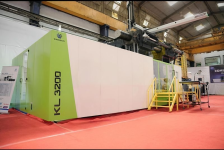
Windsor Machines is an Indian company that makes injection moulding machines.
Windsor Machines Limited is one of the select few companies in the world, which serves and supports the varied needs of plastic processing industry across 65 countries (an impressive installation base of over 30000 machines) with cutting edge product design and latest technology, wherein we are engaged in manufacturing Injection Moulding, Pipe Extrusion and Blown Films machineries, all under one roof.

Windsor Machines continued association with Kuhne GmbH (Germany) has enabled us to build technological excellence and rise rapidly against competition. And our acquisition of Italtech, Italy enabled us introduce superior quality Two Platen Injection Moulding Machines.

As a top corporate player, Windsor Machines has always advanced with the mission of creating happy customers around the globe. People are our greatest assets as they understand the value of delivering best performances to create trailblazing solutions for our customers. We foster a highly productive work environment that enables new ideas, optimizes the existing and upgrades past ones.

As a leading machinery supplier with the lowest running cost (per kilo of polymer processed), Windsor Machines core philosophy of working for our customers’ profits remains our success mantra.


Quoting member 'Kakaliam2' on another forum:

Silcarb is an Indian company that produces end-to-end machinery for carbon fibre production. Their latest machinery can produce T-800 equivalent carbon fibre for various industrial usages, including defence.

They also make molybdenum disilicide and silicon carbide heating elements, which are a core aspect of many industrial processes and precursors that eventually find their way into defence applications.

article from 2022 and other sources say construction wrapped up structural phase in 2025. ig theyre in tooling or pre commercial phase right now.
 
  • Informative
Reactions: Parthu
YIL's Metal and Steel Factory (MSF) Ishapore has installed 2 units of 3000-ton hydraulic open-die forging press for gun barrels, ammo & other defence forgings:
HQf72MxaYAA0j1V.jpeg
1792259132042.png

MM Forgings is installing a new forging press. India's largest 16500-ton hot forging press with investment of ₹230cr manufactured in Russia commissioning by the end of the year.
1792259302937.png

Isgec Heavy Engineering Ltd has Hydraulic Presses, Mechanical Presses, tandem pressline, blanking presslines, die spotting presses:
1792259355808.png
1792259369706.png
1792259385425.png
1792259394842.png

Sidharth Heavy Industries Aluminium Extrusion Press manufacturer
360 MT to 10000 MT Capacity.
1792259465272.png
1792259472858.png
1792259480526.png
 
  • Like
Reactions: Gosu
5000ton to 16000ton forging presses in India:

Bharat Forge Limited
Ramkrishna Forgings Ltd
Happy Forgings Ltd
L&T Heavy forging
MM Forgings
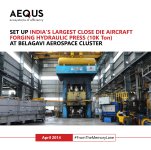
Aequs Forging
MIDHANI
PTC Industries
BHEL
CHW Forge Pvt Ltd
HAL Engine Division- Koraput
Yantra India Ltd
Nuclear Fuel Complex
Hindustan Forging & Steel
Prakash Yantra Udyog Pvt Ltd
1792259750490.png
1792259765755.png
1792259775594.png
1792259785796.png
1792259808096.png
1792259825486.png
1792259882536.png
1792259899298.png
 
  • Like
Reactions: Gosu
Furnace technology/machines:

Electrotherm:

Manufacturer of Induction Melting Furnaces, Electric Arc Furnaces, Continuous Casting Machine, Furnace Transformers for steel plant up to 1 million ton per year capacity. 65% market share in India 72+countries.
1792260052885.png
1792260074346.png
1792260085902.png
1792260093223.png
1792260107866.png

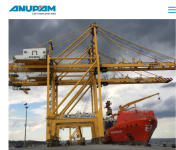
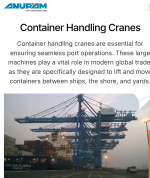
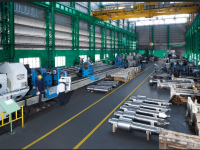
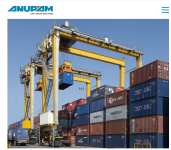
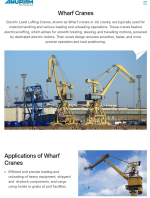
Anupam Industries Limited:
Only indian company to manufacture &Commission 550Ton Capacity hot metal ladle handling cranes to JSW Steel. India largest supplier of overhead cranes, with a manufacturing capacity exceeding 45,000 TPA
4 Manufacturing unit in Gujarat.
1792260171248.png
1792260181080.png
 
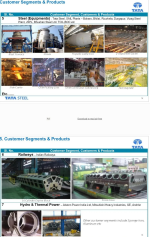
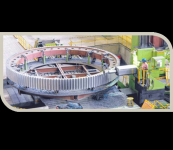
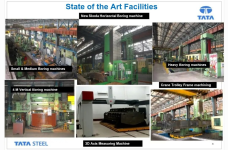
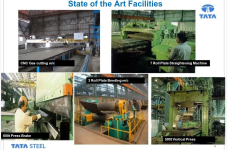
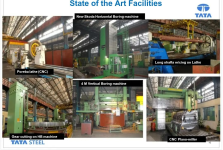
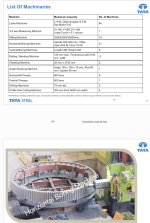
Tata Growth Shop (TGS) division of Tata Steel does precision machining & large-scale industrial fabrication used for strategic national projects. Customers include ISRO, BARC, DRDO, Indian Railways, NTPC and so on:
1793473973332.png
1793473989122.png
1793474017805.png
1793474027145.png
1793474036123.png
1793474045850.png
 
1794053467304.png
1794053497909.png
1794053512542.png

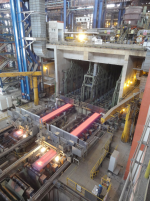
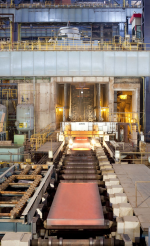
Tata Steel and SMS group successfully commission third two-strand slab caster in Kalinganagar

05 Nov 2026
1794053621002.png

Summary
  • The plant is designed for an annual production of 3.1 million tons and can produce a wide range of sophisticated steel grades
  • High-performance casting and automation technologies support uniform solidification, high slab quality, and comprehensive process monitoring
  • A stable ramp-up phase and a record sequence of 560 heats in 17 days demonstrate the plant’s high availability and process stability
  • The caster has achieved a maximum casting speed of 1.9 meters per minute at a slab thickness of 230 millimeters on both strands

Tata Steel and SMS group have commissioned the third two-strand slab caster (Caster No. 3) in Steel Melting Shop #1 at Tata Steel Kalinganagar. Following the first heat, the caster quickly reached its designed production capacity, operating at high casting speeds under stable conditions.

Rakesh Singh, Tata Steel Ltd: “I am delighted to share my sincere appreciation to the SMS group team for successful commissioning of Caster No. 3. This achievement is a testament of your team’s dedication, expertise and commitment to excellence.”

The vertical bending plant is designed to produce slabs 230 millimeters thick (210/250) and between 1,000 and 2,150 millimeters wide. It can operate at a maximum casting speed of 1.9 meters per minute and achieve an annual production capacity of 3.1 million tons. Tata Steel produces sophisticated grades such as IF steel, low carbon, microalloyed peritectic grades, and medium-carbon steel.

1794053646520.png

The slab caster is equipped with a high-performance copper mold with hydraulically controlled oscillation, precise mold-level control, and hydraulically adjustable strand guidance. Dynamic Soft Reduction® and a zone-controlled air-mist secondary cooling system ensure uniform solidification and high internal slab quality. The caster also features level 1 and level 2 models of the X-Pact® automation system, including breakout prevention and comprehensive online process monitoring.

The caster’s ramp-up was exceptionally stable and efficient. Just a few months after the first heat, it reached its target production capacity and consistently delivered high casting performance. A key factor in this success was the reliable tundish change-on-the-fly process, which enables tundish exchanges without tail-out and facilitates long casting sequences. The record sequence of 560 heats over 17 consecutive days underscores the plant’s high availability and process stability.

Caster No. 3 is the third caster SMS has delivered to Tata Steel’s Kalinganagar facility, with the first two casters starting operation in 2016 and 2024, respectively. Caster 3 builds on this success and further expands the production capacity of Steel Melting Shop No. 1.

The project’s successful execution is the result of Tata Steel and SMS’s close and collaborative partnership.

https://www.sms-group.com/press-and...-third-two-strand-slab-caster-in-kalinganagar
 
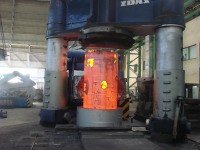
Bharat Forge plans 100,000-tonne Baramati capacity addition

Reviewed by Multibagg AI Research Desk
Nov 06, 2026, 04:44 PM IST
1794054057733.png

Key highlights:

  • Bharat Forge is implementing an about Rs 1,300 crore brownfield expansion at Baramati.
  • The Baramati project will add about 100,000 tonnes of forging capacity and four forging facilities.
  • Management expects the project to more than double Baramati output over two to three years.
  • Bharat Forge reported Q2 FY27 standalone revenue of Rs 2,526 crore, up nearly 30% year on year.

In Q2 FY27, Bharat Forge Limited said it was implementing an about Rs 1,300 crore brownfield expansion at Baramati that will add 100,000 tonnes of forging capacity and is intended to more than double the location's output in two to three years. Management said the first two assets should begin production trials in January, February and March.

What is Bharat Forge adding at Baramati?

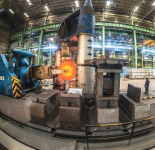
Bharat Forge is adding about 100,000 tonnes of forging capacity, four forging facilities and a large machining capacity at Baramati through an about Rs 1,300 crore brownfield project. Management said the programme has entered implementation, meaning the capacity is being developed at an existing location rather than through a new greenfield site.
1794054107626.png

The company expects the combined forging and machining investment to more than double Baramati output over two to three years. Management said the expansion would start contributing from the first quarter of the next year, with production trials for the first two assets planned across January, February and March, the third asset around the middle of the year and the last asset towards year-end.

The inclusion of machining capacity is central to the project rather than an addition to forging tonnes alone. Bharat Forge said it plans to undertake full machining on semiconductor products, a step management expects to raise value addition once the new machining facilities are online.

Why is Bharat Forge expanding Baramati capacity?

Bharat Forge is expanding Baramati because its existing facilities have operated close to full utilisation for the last few quarters, according to management. The 100,000-tonne addition is intended to create capacity headroom in non-automotive applications, particularly aerospace, semiconductor and industrial products.

Management said the company has been making some large, high-value parts for aerospace, semiconductors and industrial customers, but not at the scale it wanted. A new forging facility is planned to serve these three sectors, allowing parts to be produced more efficiently at greater scale over at least the next two to three years.
1794054116929.png

In semiconductors, management said Bharat Forge was already at a double-digit-million-dollar annual run rate and aims to grow that business by two to three times over the next two years. The company linked that target to a new forging facility and subsequent machining capacity, without disclosing a rupee revenue target or individual customer commitments.

The aerospace opportunity also supports the additional capacity. Management said it had won new engine-side and landing-gear business across multiple products and customers, while a separate manufacturing facility dedicated to aerospace was about 60% sold out and was expected to start from the middle of the next year.

How does the Baramati project fit Bharat Forge's current performance?

Bharat Forge began the Baramati implementation phase after reporting its highest quarterly domestic and export sales in Q2 FY27. Standalone revenue rose nearly 30% year on year to Rs 2,526 crore, while earnings before interest, tax, depreciation and amortisation, or EBITDA, rose 20% to Rs 655 crore, producing a 25.9% EBITDA margin.

Consolidated growth was lower than the standalone increase in Q2 FY27. Consolidated revenue increased 21% year on year to Rs 4,870 crore and EBITDA rose about 9% to Rs 778 crore, for a margin of about 16%, compared with standalone revenue of Rs 2,526 crore and EBITDA of Rs 655 crore.
1794054129421.png

The overseas businesses illustrate part of that difference. Europe reported Q2 FY27 revenue of Rs 931 crore and EBITDA of Rs 29 crore, or a 3.1% margin, while the US business reported revenue of Rs 476 crore and a negative EBITDA of Rs 6.7 crore.

Management said standalone profitability was affected by higher freight, energy and other input costs that are being recovered from customers with a lag. It also cited an approximately 0.4 percentage-point optical inflation effect on margins and an exceptional Rs 20 crore Q2 FY27 charge for legal and consultancy work related to restructuring the European steel business.

Bharat Forge reported about Rs 4,158 crore of consolidated cash following its qualified institutional placement fundraise and a net debt-to-equity ratio of 0.45 times. In H1 FY27, it received Rs 2,100 crore of new orders across India manufacturing businesses, including Rs 1,000 crore in forgings, while the unexecuted defence order book was Rs 10,950 crore at the end of September.

When will Bharat Forge commission the Baramati assets?

Bharat Forge expects trials for the first two Baramati assets in January, February and March, followed by a third asset around the middle of the year and the final asset towards year-end. This sequence is the disclosed timetable for bringing the Rs 1,300 crore project into operation, although management did not provide individual commissioning dates or production volumes for each asset.

Management expects the second half of FY27 to be stronger than the first half, citing aerospace, industrial exports, semiconductors, commercial vehicles, passenger-vehicle exports, marine products, JSA and K-Drive. Those businesses are separate from the Baramati timetable, but their ramp-up will influence demand for the new forging and machining capacity.

For India manufacturing, management said quarterly sales were running at about Rs 3,000 crore to Rs 3,400 crore and could exceed Rs 5,000 crore by the end of the next year. It also said margins could rise by at least 200 to 250 basis points depending on product mix, which is management's outlook rather than reported guidance.
Defence deliveries provide another scheduled programme to monitor. Management said Advanced Towed Artillery Gun System shipments should begin in Q1 FY28 after bulk production clearance, with 184 guns expected to be delivered over about four years as production moves from ramp-up to steadier output.

Conclusion

The Baramati project gives Bharat Forge an about Rs 1,300 crore route to add 100,000 tonnes of forging capacity and large-scale machining capability while addressing facilities that management said have been close to full for several quarters. The stated purpose is to support larger, higher-value aerospace, semiconductor and industrial components and to more than double Baramati output within two to three years.

The next points to watch are the January-to-March trials for the first two assets, the planned mid-year and year-end trials for the remaining assets, and the aerospace facility's expected start from the middle of the next year. Management's expectation of India manufacturing sales above Rs 5,000 crore by the end of the next year depends on those capacity additions, new-programme execution and product mix.

Bharat Forge plans 100,000-tonne Baramati capacity addition | Market News & Analysis