
You are using an out of date browser. It may not display this or other websites correctly.
You should upgrade or use an alternative browser.
You should upgrade or use an alternative browser.


Not so bad.Is it possible to compare all these with indegenous avialability and manufaturing?
Yes, it is possible to compare them directly. India has achieved near-complete parity with the metallurgical chemistry used in engines like the Safran M88, though gaps remain in large-scale commercial manufacturing capacity.
But M88 is based on >30 years old tech. The turbine entry temperature now targeted for a french next gen jet engine is 150 to 250°K more than M88 one (only the US are better).
So long is the road !


We need to find that committee and prosecute them for the decision to close Kaveri (and of course 404 not found error)


3D printing company "Objectify" showcases turbine/turbo-machinery parts:

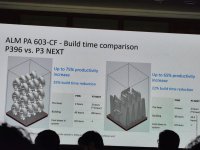
why do Indians keeping showing off their bits & pieces every now & then ? countries like china work under the radar until they have completely achieved the objective. Indians on the other hand boastfully invite attention & end up sabotaging their own progress.3D printing company "Objectify" showcases turbine/turbo-machinery parts:
View attachment 53309
View attachment 53310
At this rate India deserves more sanctions, India needs to be sanctioned to such an extent that they shouldnt even disclose anything.
These photos are from an industry conclave where an Indian company is trying to showcase their capability in order to gain some interest from potential customers. Industry conclaves are held for this exact reason. Why would you participate in an event like this as an exhibitor & then not exhibit your products/capabilities?why do Indians keeping showing off their bits & pieces every now & then ? countries like china work under the radar until they have completely achieved the objective. Indians on the other hand boastfully invite attention & end up sabotaging their own progress.
At this rate India deserves more sanctions, India needs to be sanctioned to such an extent that they shouldnt even disclose anything.
If you want to rant about some general subject/dis-satisfaction, feel free to do so. Must you tag me on to your rants?
Yeah, I have no idea what an exhibition is, thanks for the info. Nothing prevents you from choosing to ignore it.These photos are from an industry conclave where an Indian company is trying to showcase their capability in order to gain some interest from potential customers. Industry conclaves are held for this exact reason. Why would you participate in an event like this as an exhibitor & then not exhibit your products/capabilities?
If you want to rant about some general subject/dis-satisfaction, feel free to do so. Must you tag me on to your rants?
I just replied to the post and if the almighty takes it personally there is nothing much I can do .

Looks like you have never seen beyond chinese firewallYeah, I have no idea what an exhibition is, thanks for the info. Nothing prevents you from choosing to ignore it.
I just replied to the post and if the almighty takes it personally there is nothing much I can do .

To be frank, no one can understand that where hese parts are used and what for. Posting with some captions would have given some insight.why do Indians keeping showing off their bits & pieces every now & then ? countries like china work under the radar until they have completely achieved the objective. Indians on the other hand boastfully invite attention & end up sabotaging their own progress.
At this rate India deserves more sanctions, India needs to be sanctioned to such an extent that they shouldnt even disclose anything.
Regarding the comparison to Chinese, may be it suits them but each civilisation has their own traits and Indians have their own. We are more intruding, louder and little bostful. You are correct,
at times it hurts our own progress.
"Looks like you have never seen beyond chinese firewall" I think this sentence is not necessary.
Last edited:
Tejas Mk1A upgrade: DRDO plans 90kN Kaveri 2.0 core overhaul to replace GE engines
Facing persistent global supply chain bottlenecks that delayed deliveries of foreign powerplants and stalled local aircraft production, DRDO's Gas Turbine Research Establishment has uncoupled the revived Kaveri 2.0 from heavier stealth-fighter engine plans.
Business Today Desk
Aug 9, 2026,
Updated Aug 9, 2026, 6:08 PM IST
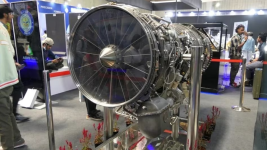
The redesign represents a fundamental architectural shift rather than an incremental modification. The earlier Kaveri Derivative Engine (KDE) delivered between 49kN and 52kN of thrust, falling short of modern fighter operational requirements.
Conceived more than four decades ago and split from the Light Combat Aircraft (LCA) project in 2008 following performance shortfalls, India’s indigenous Kaveri jet engine is undergoing a complete structural rebirth.
Facing persistent global supply chain bottlenecks that delayed deliveries of foreign powerplants and stalled local aircraft production, the Defence Research and Development Organisation’s (DRDO) Gas Turbine Research Establishment (GTRE) has uncoupled the revived Kaveri 2.0 from heavier stealth-fighter engine plans.
Instead, engineers are engineering a newly designed 90-kilonewton (kN) core specifically built to swap out imported engines on the Indian Air Force’s frontline fighters during their mid-life upgrades.
The GTRE is managing a deliberate two-pronged engine strategy. While a heavier 120kN to 140kN engine is being co-developed with French aerospace firm Safran for the fifth-generation Advanced Medium Combat Aircraft (AMCA) under the Advanced High Thrust Class Engine (AHTCE) program, Kaveri 2.0 is charted as a dedicated medium-thrust workhorse.
The redesign represents a fundamental architectural shift rather than an incremental modification. The earlier Kaveri Derivative Engine (KDE) delivered between 49kN and 52kN of thrust, falling short of modern fighter operational requirements.
Kaveri 2.0 targets 55kN to 60kN of "dry" thrust and 90kN to 100kN of maximum "wet" thrust with an afterburner — a performance threshold matching the American-made General Electric F404 engines currently powering the Tejas Mk1A.
To achieve this jump in performance, GTRE is completely rebuilding the engine core, focusing heavily on a redesigned High-Pressure Compressor (HPC) to maximise pressure ratios and fuel efficiency. The new core incorporates single-piece blisks (bladed disks) machined from advanced titanium alloys to eliminate air leaks, drop structural weight, and raise the thrust-to-weight ratio.
Additionally, single-crystal turbine blades will be integrated into the assembly to tolerate higher internal operating temperatures and boost thermal efficiency.
The transition to an indigenous 90kN engine carries direct strategic weight for the Indian Air Force. With the current GE F404 engines slated to reach their mid-life replacement cycle in the 2030s, a fully qualified Kaveri 2.0 provides an in-house alternative that reduces foreign hardware dependence and insulates the fleet from international supply chain disruptions.
Elements of the Kaveri technology baseline are already in active service. A dry, non-afterburning derivative of the engine successfully powers DRDO’s Ghatak stealth unmanned combat aerial vehicle (UCAV).
Tejas Mk1A upgrade: DRDO plans 90kN Kaveri 2.0 core overhaul to replace GE engines - BusinessToday
Facing persistent global supply chain bottlenecks that delayed deliveries of foreign powerplants and stalled local aircraft production, DRDO's Gas Turbine Research Establishment has uncoupled the revived Kaveri 2.0 from heavier stealth-fighter engine plans.
Business Today Desk
Aug 9, 2026,
Updated Aug 9, 2026, 6:08 PM IST
The redesign represents a fundamental architectural shift rather than an incremental modification. The earlier Kaveri Derivative Engine (KDE) delivered between 49kN and 52kN of thrust, falling short of modern fighter operational requirements.
Conceived more than four decades ago and split from the Light Combat Aircraft (LCA) project in 2008 following performance shortfalls, India’s indigenous Kaveri jet engine is undergoing a complete structural rebirth.
Facing persistent global supply chain bottlenecks that delayed deliveries of foreign powerplants and stalled local aircraft production, the Defence Research and Development Organisation’s (DRDO) Gas Turbine Research Establishment (GTRE) has uncoupled the revived Kaveri 2.0 from heavier stealth-fighter engine plans.
Instead, engineers are engineering a newly designed 90-kilonewton (kN) core specifically built to swap out imported engines on the Indian Air Force’s frontline fighters during their mid-life upgrades.
The GTRE is managing a deliberate two-pronged engine strategy. While a heavier 120kN to 140kN engine is being co-developed with French aerospace firm Safran for the fifth-generation Advanced Medium Combat Aircraft (AMCA) under the Advanced High Thrust Class Engine (AHTCE) program, Kaveri 2.0 is charted as a dedicated medium-thrust workhorse.
The redesign represents a fundamental architectural shift rather than an incremental modification. The earlier Kaveri Derivative Engine (KDE) delivered between 49kN and 52kN of thrust, falling short of modern fighter operational requirements.
Kaveri 2.0 targets 55kN to 60kN of "dry" thrust and 90kN to 100kN of maximum "wet" thrust with an afterburner — a performance threshold matching the American-made General Electric F404 engines currently powering the Tejas Mk1A.
To achieve this jump in performance, GTRE is completely rebuilding the engine core, focusing heavily on a redesigned High-Pressure Compressor (HPC) to maximise pressure ratios and fuel efficiency. The new core incorporates single-piece blisks (bladed disks) machined from advanced titanium alloys to eliminate air leaks, drop structural weight, and raise the thrust-to-weight ratio.
Additionally, single-crystal turbine blades will be integrated into the assembly to tolerate higher internal operating temperatures and boost thermal efficiency.
The transition to an indigenous 90kN engine carries direct strategic weight for the Indian Air Force. With the current GE F404 engines slated to reach their mid-life replacement cycle in the 2030s, a fully qualified Kaveri 2.0 provides an in-house alternative that reduces foreign hardware dependence and insulates the fleet from international supply chain disruptions.
Elements of the Kaveri technology baseline are already in active service. A dry, non-afterburning derivative of the engine successfully powers DRDO’s Ghatak stealth unmanned combat aerial vehicle (UCAV).
Tejas Mk1A upgrade: DRDO plans 90kN Kaveri 2.0 core overhaul to replace GE engines - BusinessToday

While this has been in the pipeline since long this article makes it seem as if it's a recent decision whereas what may have happened is recent events may have hastened the pace of our glacial decision making process.Tejas Mk1A upgrade: DRDO plans 90kN Kaveri 2.0 core overhaul to replace GE engines
Facing persistent global supply chain bottlenecks that delayed deliveries of foreign powerplants and stalled local aircraft production, DRDO's Gas Turbine Research Establishment has uncoupled the revived Kaveri 2.0 from heavier stealth-fighter engine plans.
Business Today Desk
Aug 9, 2026,
Updated Aug 9, 2026, 6:08 PM IST
View attachment 53466
The redesign represents a fundamental architectural shift rather than an incremental modification. The earlier Kaveri Derivative Engine (KDE) delivered between 49kN and 52kN of thrust, falling short of modern fighter operational requirements.
Conceived more than four decades ago and split from the Light Combat Aircraft (LCA) project in 2008 following performance shortfalls, India’s indigenous Kaveri jet engine is undergoing a complete structural rebirth.
Facing persistent global supply chain bottlenecks that delayed deliveries of foreign powerplants and stalled local aircraft production, the Defence Research and Development Organisation’s (DRDO) Gas Turbine Research Establishment (GTRE) has uncoupled the revived Kaveri 2.0 from heavier stealth-fighter engine plans.
Instead, engineers are engineering a newly designed 90-kilonewton (kN) core specifically built to swap out imported engines on the Indian Air Force’s frontline fighters during their mid-life upgrades.
The GTRE is managing a deliberate two-pronged engine strategy. While a heavier 120kN to 140kN engine is being co-developed with French aerospace firm Safran for the fifth-generation Advanced Medium Combat Aircraft (AMCA) under the Advanced High Thrust Class Engine (AHTCE) program, Kaveri 2.0 is charted as a dedicated medium-thrust workhorse.
The redesign represents a fundamental architectural shift rather than an incremental modification. The earlier Kaveri Derivative Engine (KDE) delivered between 49kN and 52kN of thrust, falling short of modern fighter operational requirements.
Kaveri 2.0 targets 55kN to 60kN of "dry" thrust and 90kN to 100kN of maximum "wet" thrust with an afterburner — a performance threshold matching the American-made General Electric F404 engines currently powering the Tejas Mk1A.
To achieve this jump in performance, GTRE is completely rebuilding the engine core, focusing heavily on a redesigned High-Pressure Compressor (HPC) to maximise pressure ratios and fuel efficiency. The new core incorporates single-piece blisks (bladed disks) machined from advanced titanium alloys to eliminate air leaks, drop structural weight, and raise the thrust-to-weight ratio.
Additionally, single-crystal turbine blades will be integrated into the assembly to tolerate higher internal operating temperatures and boost thermal efficiency.
The transition to an indigenous 90kN engine carries direct strategic weight for the Indian Air Force. With the current GE F404 engines slated to reach their mid-life replacement cycle in the 2030s, a fully qualified Kaveri 2.0 provides an in-house alternative that reduces foreign hardware dependence and insulates the fleet from international supply chain disruptions.
Elements of the Kaveri technology baseline are already in active service. A dry, non-afterburning derivative of the engine successfully powers DRDO’s Ghatak stealth unmanned combat aerial vehicle (UCAV).
Tejas Mk1A upgrade: DRDO plans 90kN Kaveri 2.0 core overhaul to replace GE engines - BusinessToday
What would have taken another few years was cleared pronto ! Sometimes clouds come with silver linings. Aapada mein mauka .
Be that as it may hopefully we'd see a 90 KN Kaveri 2.0 TF in a decade from now or less .

I hope at least now they can make an engine with better bypass ratio, compression efficiency and much better thrust to weight ratio.Tejas Mk1A upgrade: DRDO plans 90kN Kaveri 2.0 core overhaul to replace GE engines
Facing persistent global supply chain bottlenecks that delayed deliveries of foreign powerplants and stalled local aircraft production, DRDO's Gas Turbine Research Establishment has uncoupled the revived Kaveri 2.0 from heavier stealth-fighter engine plans.
Business Today Desk
Aug 9, 2026,
Updated Aug 9, 2026, 6:08 PM IST
View attachment 53466
The redesign represents a fundamental architectural shift rather than an incremental modification. The earlier Kaveri Derivative Engine (KDE) delivered between 49kN and 52kN of thrust, falling short of modern fighter operational requirements.
Conceived more than four decades ago and split from the Light Combat Aircraft (LCA) project in 2008 following performance shortfalls, India’s indigenous Kaveri jet engine is undergoing a complete structural rebirth.
Facing persistent global supply chain bottlenecks that delayed deliveries of foreign powerplants and stalled local aircraft production, the Defence Research and Development Organisation’s (DRDO) Gas Turbine Research Establishment (GTRE) has uncoupled the revived Kaveri 2.0 from heavier stealth-fighter engine plans.
Instead, engineers are engineering a newly designed 90-kilonewton (kN) core specifically built to swap out imported engines on the Indian Air Force’s frontline fighters during their mid-life upgrades.
The GTRE is managing a deliberate two-pronged engine strategy. While a heavier 120kN to 140kN engine is being co-developed with French aerospace firm Safran for the fifth-generation Advanced Medium Combat Aircraft (AMCA) under the Advanced High Thrust Class Engine (AHTCE) program, Kaveri 2.0 is charted as a dedicated medium-thrust workhorse.
The redesign represents a fundamental architectural shift rather than an incremental modification. The earlier Kaveri Derivative Engine (KDE) delivered between 49kN and 52kN of thrust, falling short of modern fighter operational requirements.
Kaveri 2.0 targets 55kN to 60kN of "dry" thrust and 90kN to 100kN of maximum "wet" thrust with an afterburner — a performance threshold matching the American-made General Electric F404 engines currently powering the Tejas Mk1A.
To achieve this jump in performance, GTRE is completely rebuilding the engine core, focusing heavily on a redesigned High-Pressure Compressor (HPC) to maximise pressure ratios and fuel efficiency. The new core incorporates single-piece blisks (bladed disks) machined from advanced titanium alloys to eliminate air leaks, drop structural weight, and raise the thrust-to-weight ratio.
Additionally, single-crystal turbine blades will be integrated into the assembly to tolerate higher internal operating temperatures and boost thermal efficiency.
The transition to an indigenous 90kN engine carries direct strategic weight for the Indian Air Force. With the current GE F404 engines slated to reach their mid-life replacement cycle in the 2030s, a fully qualified Kaveri 2.0 provides an in-house alternative that reduces foreign hardware dependence and insulates the fleet from international supply chain disruptions.
Elements of the Kaveri technology baseline are already in active service. A dry, non-afterburning derivative of the engine successfully powers DRDO’s Ghatak stealth unmanned combat aerial vehicle (UCAV).
Tejas Mk1A upgrade: DRDO plans 90kN Kaveri 2.0 core overhaul to replace GE engines - BusinessToday
The dry thrust of the current kaveri is already pretty similar to the GE404 in the first place and with better weight reduction methods, it can potentially be used for the Tejas Mk1a, with the improvements I've mentioned earlier, the Kaveri 2.0 should provide the tejas with greater fuel efficiency, range and power, the power figures shown here will also enable it to be used for the Tejas Mk2.
Also, what about the fact that we still lack an high altitude test facility or dedicated flying engine test bed? I would also hope that India would be willing to hire overseas expert or people from private sector for any field where we need greater expertise.
Last edited:
I read about Kaveri in 1994 and since then I am following this program. And news coming from Kaveri 2.0 program are exiting. One technical point I come across about new core is that -
GTRE focusing overall pressure ratio of 30 from new core with 6 HPC stages and it is equal to that of F414 with 7 HPC stages.
GTRE focusing overall pressure ratio of 30 from new core with 6 HPC stages and it is equal to that of F414 with 7 HPC stages.
Where did you read this? I would love to read more on it. If the uprated Kaveri 2.0 is a success, we can power almost all of our indigenous platforms on that powertrain, hope GOI is seriously investing on this program.GTRE focusing overall pressure ratio of 30 from new core with 6 HPC stages and it is equal to that of F414 with 7 HPC stages.
Where did you read this? I would love to read more on it. If the uprated Kaveri 2.0 is a success, we can power almost all of our indigenous platforms on that powertrain, hope GOI is seriously investing on this program.
This is my source. But one problem. He confused AHTCE (which is indegenous effort) with engine that will be made with the forigen partner.
About Kaveri 2.0 different media is telling different things. No information from GTRE sofar. Fully confusing. We are all hoping and praying for the success of Kaveri 2.0 which will erase all the past mishaps.