
Islamic Republic of Pakistan : News, Discussions & Updates
- Thread starter Butter Chicken
- Start date
You are using an out of date browser. It may not display this or other websites correctly.
You should upgrade or use an alternative browser.
You should upgrade or use an alternative browser.

Adding to what @Gautam has said, the specific issue in Pakistan Ocuppied J&K region of Jammu or Hills region) is there arelocal protests against refugee seats (Pakees had used some refugee seats to manipulate their local assembly with selected yes men candidates) in their assembly bundled with other demands (subsidies for wheat, royalties for Mangla Dam (infamous Mirpuris in UK come from resettlement of the submerged villagers) , cheap electricity etc) previous federal govts used to agree or pacify them, but now munir wants to show hard hand or something, so they brought Rangers(mix of BSF/CRPF for Pak case) to suppress the protests, shot multiple dozens of people, it has been going on for more than a month with still broad appeal in specific regions like rawalkot(where sudhans were dominant as they got more targeted), now with more spread to other regions like Mirpur(dominant UK pakees to global media), they may want to limit/suppress info lest GSP+ and other quotas pakees depend for their little apparel exports to EU will be targeted more.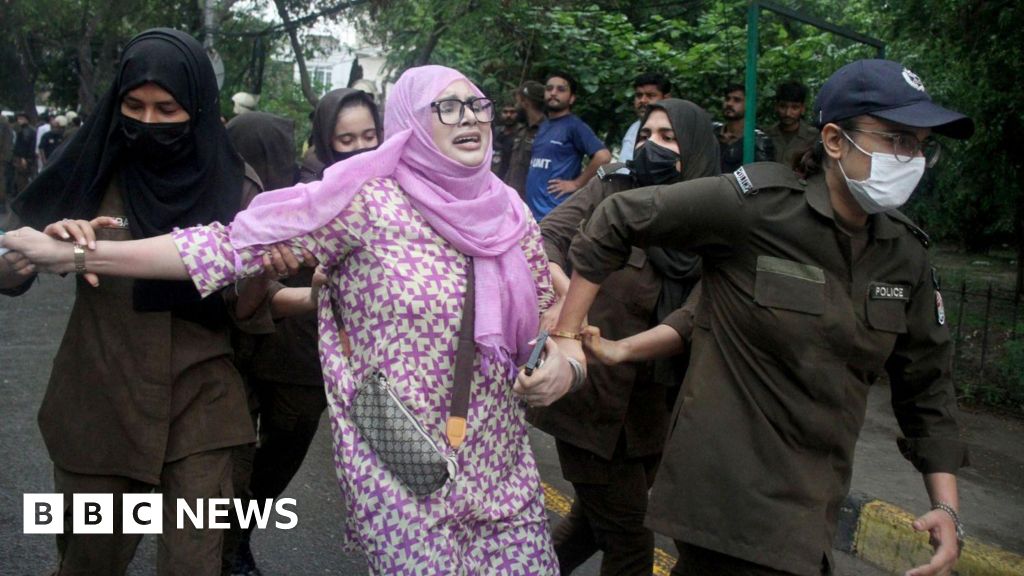
Pakistan restricts international media reporting
Anyone working for foreign media, including Pakistanis, will now need permission to report from anywhere outside three major cities.www.bbc.com
What's going down in Pakistan? Between all the defence purchases and media crackdowns, it feels like they are gearing up for a big operation of some type. It's not as if they don't have enough problems on their plates, I hear so much bad news coming out of there anymore. War next door in Iran, balochi separatism, Afghan border problems, economy, crime, etc.
We are getting more space at least to target LeT and JeM more now with unknown gunmen, as locals will be indifferent at best and might even collaborate, but broad acceptance for India is limited and not worth it for us to even think unlike Gilgit-Baltistan which severs the pakee-china connection but is not having protest for now.
And this is with significantly less savings rate than India, and pakees consume pretty high as a percentage of their income (not like undokyumented savings under mattresses were there even to begin with).This is Q1CY2026 - 4 wheeler vehicle production by country in Asia, guess where is trillyun dolla undokyumented economy?
View attachment 53388
It's kinda funny how literally no one over there has raised questions over the authenticity of their GDP data and its claims. When every single high performance economic and socio-economic indicator points out to the fact that its GDP is 30 times less than India.
What surprised me about pakistan is that even as agrarian country, pretty well suited with Indus and 5 perennial snow-melt rivers and more consistent water flows, the present day pakees or their ancestors have never thought of building canal networks,lakes, check dams even? like it is not some wonder tech there are thousand year old canals world wide like in china , India(canals, lakes, and numerous step wells in arid rajasthan) while ancestors of pakees were happy roaming with buffaloes, the mohamedan rulers also did not develop any water works neither there nor even here while funding canals in far-off iraqi deserts like al-hindiya canal and towns by Nawab of Awadh Al-Hindiya District - Wikipedia How Indian Money Built The Islamic Republic Of Iran, it took British to bring them to canal colonies and increase pakee population (biomass as you rightly call) we see presently) hence many cities with british dude names, Lyallpur, Abottabad, Jacobabad etc.
Now these are the same people that larp as sons of Indus and IVC civ continuum

Given the context of extremely shittty human resources and no improvement being done there, I would be surprised if they can build a ground up economy and capital formation without external gibs, their world view also revolves around collecting tolls for cpec as some grand strategy in last decade, now it is as master diplomat for gibs

What surprised me about pakistan is that even as agrarian country, pretty well suited with Indus and 5 perennial snow-melt rivers and more consistent water flows, the present day pakees or their ancestors have never thought of building canal networks,lakes, check dams even? like it is not some wonder tech there are thousand year old canals world wide like in china , India(canals, lakes, and numerous step wells in arid rajasthan) while ancestors of pakees were happy roaming with buffaloes, the mohamedan rulers also did not develop any water works neither there nor even here while funding canals in far-off iraqi deserts like al-hindiya canal and towns by Nawab of Awadh Al-Hindiya District - Wikipedia How Indian Money Built The Islamic Republic Of Iran, it took British to bring them to canal colonies and increase pakee population (biomass as you rightly call) we see presently) hence many cities with british dude names, Lyallpur, Abottabad, Jacobabad etc.
Now these are the same people that larp as sons of Indus and IVC civ continuum
Well the root cause for this problem goes to partition & before partition, the very State of pakistan & Idea behind to create it was mostly supported by the zamindars & fedual lord's in west pakistan other parts of independent India, the backed it with financially, politically and all others means, which is why it never connected to rural muslim population,
They knew that in independent India there will be land reforms and INC will 100% do it, as INC had the absolute majority and public support from all corners of the land, hence the creation of separate state pakistan as they didn't want to loose the power, after independence we abolished the zamindari system but pakistan didn't the zamindars and big land lord's had major power, they controlled the agrain land, so they controlled the water management, instead of building a centralised system they looked for Thier own profit, so the build canals, divert the water for Thier benefits, even in the later reforms they brought out so big loopholes, while east pakistan abolished zamindari west never did,
Even some of the canals the bulit was to Stop the Indian armour advancements in pakistan punjab & Sindh sectors, they didn't had any plan to serve the people, well it was ethnostate bulid for the riches why would they.


Brief summary of what's I think is going on in Pakistan politically:
1. Munir wants to be President. For that he needs international (read US) backing. This is needed as Pak economy is on IMF life support & the Chinese aren't as generous as the US/West.
2. Munir seems to have studied & understood what went wrong with previous Pak army chiefs that became rulers. He is not going to become a dictator President through a coup like Zia Ul Haq. Because that could be used to later unseat/assassinate him. He also won't step down from the position of army chief. A new army chief might conspire with foreign powers & local politician to oust him.
3. Munir will become President constitutionally. That would require amending to constitution, he has started to do that.
4. He also wants to amend the constitution to break Pak provinces into a number of smaller parts. He believes that would weaken the growing separatism that is emerging in many regions of Pakistan.
5. Pakistani political parties are well aware of Munir's plans and are all positioning themselves to get a favorable outcome. Favorable in terms of posts, funding etc.
6. Once he has secured US backing & the associated USD 10 billion, he will probably initiate a limited conflict with India. Probably through a terrorist attack. When India retaliates, he will use this to rally Pakistanis to his support. Any fight with India is obviously to China's benefit & the Chinese would also come to support him financially & militarily. He will secure a "victory" over India & use this "victory" to promote himself to the position of President.
Munir won't seek to be the president . I mean why should he if he can get enough political proxies to do his bidding. Besides getting to be to be the president as well as be the serving FM in the armed forces will make the coup that much more obvious inviting potential retaliation from the west not that it'd be easy to pull it off given domestic opposition especially from PTI & by the looks of it from veterans like Maulana Fazl ur Rehman.
I doubt his plans to carve out smaller states would come to fruition too irrespective the support politicians in his pocket extend him . There's growing opposition to him & his moves.
I'd argue even if he does succeed he'd be opening up a Pandora's Box unleashing forces still dormant where all the issues plaguing Paxtani civil society will converge into one big central issue - no carving out smaller states.
I doubt the US will be interested in bankrolling Paxtan to the tune of 10 billion USD though some accommodation on a far lower value can be reached. After all the US has to do the bare minimum to humour Fauji Foundation .
Finally any move on India is fraught with risks . Modi has publicly declared the next time action won't be restricted to "non state actors" but extend to those in uniform fomenting these acts.
Plus US & Israel decapitation strikes has given security & political establishments the world over especially ours ideas .
Won't be surprised if the next engagement begins with decapitation strikes on GHQ Pindi , Air & Naval HQ Islambarbaad & simultaneous action against individual Corps Commander Divisional HQ as well as Air & Naval Commands .
Hence the India option would be exercised only when he's run out of all other options.
Happy Independence Day , maamu !
May you keep celebrating many such independence days if only to keep us entertained .
And may the Kashmiris , Mirpuris Gilgitis & Baltis in PoJ&K & Northern Areas , the Balochis from Balochistan , the Pashtuns of KPK FATA & the Mohajirs & Sindhis of Sind soon celebrate their Independence Day .
@safriz
Alhamdulillah !
The most prominent Ukrainian drone manufacturer, Fire Point, is heading towards a deal with Pakistani private firms. The company is known for producing drones, which were used in the longest strikes on the most important Russian facilities, such as an oil refinery more than 2,500 km from the front line, and in attacks on energy facilities in Moscow. Fire Point recalls a slogan, "Strategic depth is no longer an advantage", which was previously spoken by Volodymyr Zelensky. In the context of cooperation with Pakistan, it should be understood as a reference to India. This is a security challenge that India cannot ignore.
Attachments
Why consanguineous marriages aka maamu hi abbu hain ought to attract capital punishment in Paxtan ?!
Astaghfirullah !
@safriz
Islamic Nato now fully activated...
Pakistani Government now defending Saudi Arabia from Pakistani Beggars....


The Other Side of Paradise: How Pakistan Crushed Protests in Kashmir
"Kashmiris are not merely demanding lower bills and cheaper bread. They are demanding respect and representation," writes Aqil Shah.
 time.com
Global attention has rarely lingered on the part of Kashmir administered by Pakistan. Yet, since an outbreak of protests in the region in June, more than 80 people have been killed by security forces. A different kind of political struggle has been gathering momentum there—one that is less a contest over sovereignty than an expression of long-simmering grievances over the conditions of daily life, from unaffordable electricity bills and rising food prices to a scarcity of jobs. Pakistan-administered Kashmir has not been insulated from the wider economic crisis in Pakistan. Rising prices, fiscal pressures, energy deficits, and repeated International Monetary Fund bailouts have pushed successive governments to reduce subsidies and raise utility prices. The people of the region, already squeezed by inflation and unemployment, experience these policies not as fiscal prudence but as evidence of how little influence they have over the decisions that shape their lives.
Pakistan’s Supreme Court has ordered former Prime Minister Imran Khan to be moved from jail to a hospital within 48 hours, following concerns over his deteriorating health. Khan has been imprisoned since August 2023 while facing multiple legal cases.

In 1955 there was one pact called as Baghdad Pact, this new pact called as Mecca Pact is on the similar guidelines and same concept but this time excluding Iran. This time it is against Russia backed Iran.
I have earlier also posted somewhere about Pakistan eager to have such pact since this ensures flow of arms and dollars to Pakistan. The only new parameter here is China because it has to play both sides.
China will play double game here since they want oil and same time want to exploit Iranian geography.
This is an old route for Pakistan's procurement.
According to a News18 report, citing a senior security source, Chinese military transport aircraft were observed landing at Pakistan’s Nur Khan airbase near Rawalpindi and Masroor airbase in Karachi. Turkish military transport aircraft were also reportedly involved in the heightened activity.
The source claimed the flights were being used to move military equipment, including drones and other defence-related matériel. However, details of the equipment allegedly transported have not been independently verified.
The reported movements come as Pakistan continues to strengthen its defence ties with both China and Türkiye, two of its key military partners.
The two countries’ military relationship has grown further following last year’s India-Pakistan military confrontation. Beijing had acknowledged that personnel from China’s aviation industry provided technical assistance to Pakistan during the conflict.
In May, Pakistan’s air chief held high-level meetings in Türkiye, where discussions focused on defence cooperation, aerospace innovation, unmanned systems and emerging technologies.
The two countries have since taken steps to expand their cooperation in fighter-aircraft development.
Turkish officials said earlier this month that nearly 200 Pakistani engineers and officials were already involved in the development of Türkiye’s KAAN fifth-generation fighter programme. Ankara also said discussions would begin on formally including Pakistan in the project.
The reported involvement of Turkish military transport aircraft in the latest airlift would add another dimension to the expanding defence relationship between Ankara and Islamabad.
Under the agreement, an armed attack against any one of the three countries would be treated as an attack against all three. Officials have described the pact as defensive and said it is not directed against any specific country.
Against this backdrop, any sustained movement of military transport aircraft involving China, Turkiye and Pakistan is likely to draw close attention, particularly if the flights are linked to the transfer of drones, weapons or other military equipment.
Security sources described the concentration of heavy military transport aircraft over roughly 60 hours as unusual, suggesting that the movements may have represented a coordinated logistical operation rather than routine military traffic, reported News18.
Pakistan has in recent years sought to expand its access to both Chinese and Turkish defence technology, while increasing its reliance on unmanned systems.
If confirmed, the reported airlift could form part of a broader effort by Islamabad to strengthen its military inventory and deepen supply links with Beijing and Ankara.
The development is likely to be closely watched in India, particularly as Pakistan continues efforts to upgrade its military capabilities following its confrontation with India and simultaneously expand defence cooperation with China and Turkiye.
During a seminar on new-age military technologies last year in July, Indian Army deputy chief Lt Gen Rahul R Singh said Pakistan was supported by both countries during the May 7-10 hostilities.
He said China provided extensive assistance, including what he described as “live” satellite inputs on Indian military movements and deployments.
“We had one border and two adversaries, actually three. Pakistan was in the front. China was providing all possible support,” Times of India quoted Singh as saying.
He also pointed to Pakistan’s dependence on Chinese military hardware, saying 81% of the military equipment it receives is Chinese.
According to Indian assessments, Pakistan used several Chinese-origin systems during the conflict, including J-10 fighter jets armed with PL-15 air-to-air missiles and HQ-9 air-defence systems.
Singh further said China had an opportunity to observe the performance of its weapons in an actual conflict. “So, it's like a live lab available to them. It is something that we have to be very cognizant about,” he said.
Turkiye, meanwhile, was also accused of providing important military support to Pakistan. Pakistani forces used Turkish-origin drones during the conflict, including Baykar Yiha III kamikaze drones and Asisguard Songar systems.
Singh’s remarks on Chinese satellite support also contrasted with an earlier assessment by Chief of Defence Staff Gen Anil Chauhan, who had said there was no proof that Beijing provided Pakistan with real-time targeting assistance, although Pakistan may have used Chinese commercial satellite imagery.
The Indian Army’s assessment nevertheless highlighted the growing military coordination between Pakistan, China and Turkiye, particularly in areas such as drones, surveillance, air defence and aerospace technology.
With inputs from agencies
------------------
Well could be the replenishment for drone sqn taken out by Indians during Op Sindoor and the spare parts for the 250 deployed Chinese SH 15 artillery. Just a speculation.
I have earlier also posted somewhere about Pakistan eager to have such pact since this ensures flow of arms and dollars to Pakistan. The only new parameter here is China because it has to play both sides.
China will play double game here since they want oil and same time want to exploit Iranian geography.
RIYADH/KARACHI/ANKARA, Aug 7 - Saudi Arabia, Pakistan and Turkey signed a joint defence agreement in Mecca on Friday, wedding Sunni Muslim U.S. allies alarmed at a regional conflagration that has brought Iranian missile fire onto Gulf oil exporters.
Iran and its allies have been firing on Saudi Arabia and other Gulf states, and blockading their energy shipments, since the U.S. and Israel attacked it on February 28 in a major escalation after years of regional tumult.
This is an old route for Pakistan's procurement.
60-hour military airlift: Chinese, Turkish aircraft to Pakistan spark defence transfer speculation
Heavy military transport aircraft made repeated trips to Pakistani airbases over 60 hours, amid Islamabad’s deepening defence ties with Beijing and Ankara, according to a reported increase in military air traffic from China and Turkiye to Pakistan has sparked fresh speculation over possible transfers of defence equipment to Islamabad, with security sources claiming that heavy military transport aircraft made repeated visits to Pakistani airbases over a period of around 60 hours.According to a News18 report, citing a senior security source, Chinese military transport aircraft were observed landing at Pakistan’s Nur Khan airbase near Rawalpindi and Masroor airbase in Karachi. Turkish military transport aircraft were also reportedly involved in the heightened activity.
The source claimed the flights were being used to move military equipment, including drones and other defence-related matériel. However, details of the equipment allegedly transported have not been independently verified.
The reported movements come as Pakistan continues to strengthen its defence ties with both China and Türkiye, two of its key military partners.
Chinese military support
China remains Pakistan’s largest defence supplier, with Islamabad relying heavily on Chinese systems across its air force, air defence and unmanned warfare capabilities.The two countries’ military relationship has grown further following last year’s India-Pakistan military confrontation. Beijing had acknowledged that personnel from China’s aviation industry provided technical assistance to Pakistan during the conflict.
Türkiye deepens defence partnership
Turkiye has also emerged as an increasingly important defence partner for Pakistan, with cooperation spanning drones, naval platforms, aerospace technology and other military systems.In May, Pakistan’s air chief held high-level meetings in Türkiye, where discussions focused on defence cooperation, aerospace innovation, unmanned systems and emerging technologies.
The two countries have since taken steps to expand their cooperation in fighter-aircraft development.
Turkish officials said earlier this month that nearly 200 Pakistani engineers and officials were already involved in the development of Türkiye’s KAAN fifth-generation fighter programme. Ankara also said discussions would begin on formally including Pakistan in the project.
The reported involvement of Turkish military transport aircraft in the latest airlift would add another dimension to the expanding defence relationship between Ankara and Islamabad.
Defence pact adds to scrutiny
The reported air activity also comes shortly after Pakistan, Turkiye and Saudi Arabia signed the Mecca Joint Defence Agreement on August 7.Under the agreement, an armed attack against any one of the three countries would be treated as an attack against all three. Officials have described the pact as defensive and said it is not directed against any specific country.
Against this backdrop, any sustained movement of military transport aircraft involving China, Turkiye and Pakistan is likely to draw close attention, particularly if the flights are linked to the transfer of drones, weapons or other military equipment.
Unusual concentration of flights
What has attracted particular attention is the reported scale and timing of the activity.Security sources described the concentration of heavy military transport aircraft over roughly 60 hours as unusual, suggesting that the movements may have represented a coordinated logistical operation rather than routine military traffic, reported News18.
Pakistan has in recent years sought to expand its access to both Chinese and Turkish defence technology, while increasing its reliance on unmanned systems.
If confirmed, the reported airlift could form part of a broader effort by Islamabad to strengthen its military inventory and deepen supply links with Beijing and Ankara.
The development is likely to be closely watched in India, particularly as Pakistan continues efforts to upgrade its military capabilities following its confrontation with India and simultaneously expand defence cooperation with China and Turkiye.
China, Turkiye support during Op Sindoor
The reported military airlift comes against the backdrop of India’s assessment that Pakistan received substantial military support from China and Turkiye during Operation Sindoor.During a seminar on new-age military technologies last year in July, Indian Army deputy chief Lt Gen Rahul R Singh said Pakistan was supported by both countries during the May 7-10 hostilities.
He said China provided extensive assistance, including what he described as “live” satellite inputs on Indian military movements and deployments.
“We had one border and two adversaries, actually three. Pakistan was in the front. China was providing all possible support,” Times of India quoted Singh as saying.
He also pointed to Pakistan’s dependence on Chinese military hardware, saying 81% of the military equipment it receives is Chinese.
According to Indian assessments, Pakistan used several Chinese-origin systems during the conflict, including J-10 fighter jets armed with PL-15 air-to-air missiles and HQ-9 air-defence systems.
Singh further said China had an opportunity to observe the performance of its weapons in an actual conflict. “So, it's like a live lab available to them. It is something that we have to be very cognizant about,” he said.
Turkiye, meanwhile, was also accused of providing important military support to Pakistan. Pakistani forces used Turkish-origin drones during the conflict, including Baykar Yiha III kamikaze drones and Asisguard Songar systems.
Singh’s remarks on Chinese satellite support also contrasted with an earlier assessment by Chief of Defence Staff Gen Anil Chauhan, who had said there was no proof that Beijing provided Pakistan with real-time targeting assistance, although Pakistan may have used Chinese commercial satellite imagery.
The Indian Army’s assessment nevertheless highlighted the growing military coordination between Pakistan, China and Turkiye, particularly in areas such as drones, surveillance, air defence and aerospace technology.
With inputs from agencies
------------------
Well could be the replenishment for drone sqn taken out by Indians during Op Sindoor and the spare parts for the 250 deployed Chinese SH 15 artillery. Just a speculation.
Not a lot of news from Pakistan Occupied Kashmir, this one one week old. I have never seen such kind of blackout on Indian side of Kashmir.
1w • 13/8/2026
2 min read
Islamabad: Massive public anger erupted across Pakistan-occupied Kashmir (PoK) on Thursday as thousands of residents took to the streets to protest months of brutal state-sponsored violence and military repression. Demonstrators mobilized in key urban hubs to express unwavering support for the Joint Awami Action Committee (JAAC), which has been leading regional civil resistance against Islamabad's constitutional policies and security actions. The spiraling unrest highlights growing alienation in the occupied territory amid rising civilian casualties and heavy-handed enforcement by security authorities.





Pakistan deploys 3 Army units in Rawalpindi for 'sensitive duties'
Pakistan deploys 3 Army units in Rawalpindi for 'sensitive duties'
Aug 22, 2026 05:12 pm
The Pakistan government has deployed three companies of the Pakistan Army in Rawalpindi for six months on "sensitive security duties."The decision was taken after a request from the Punjab home department and is authorized under Article 245 of the Pakistani Constitution.However, no specific threats or reasons for this deployment have been disclosed by authorities.
The notification states that this step has been taken "to avoid any undesirable situation as well as to respond effectively in any unforeseen situation."
Official notification
Munir granted sweeping new powers
The order came two days after Pakistan's National Assembly passed legislation expanding the authority of army chief Asim Munir.
Pakistan's new Defense Forces Act grants Chief of Defense Forces Munir sweeping powers over the armed forces, including the ability to retire, discharge, retain, or prolong personnel service.
He now oversees the Army, has operational control over the Navy and Air Force, and is the prime minister's top military adviser.
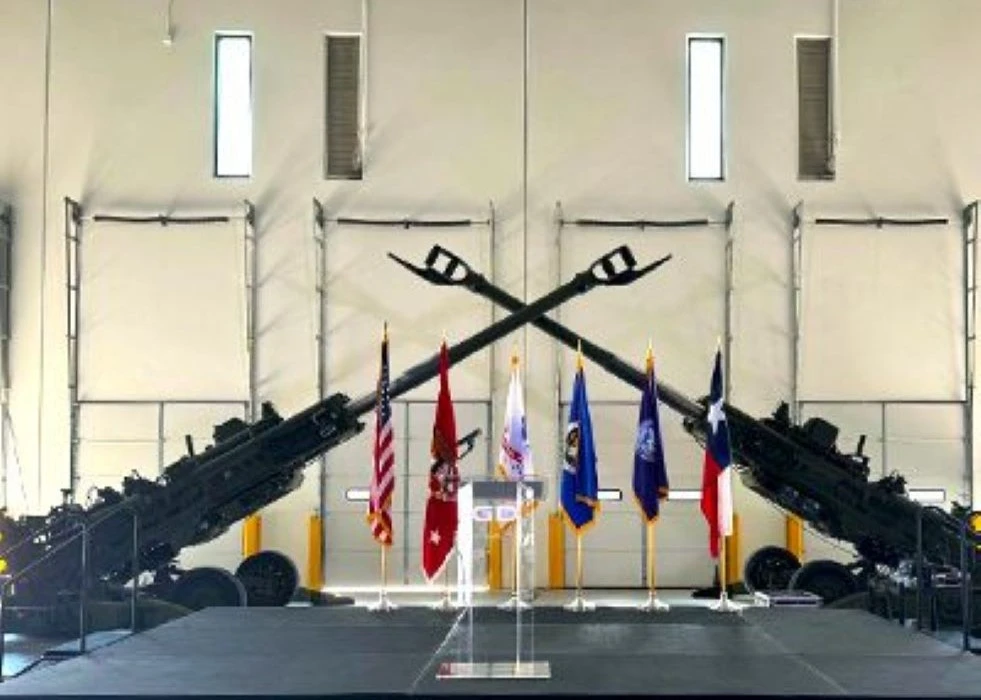
Yankees contracted a mehmet firm to set up a 155mm shell line in US
 turdef.com
Meanwhile the result...
Meanwhile paijaans who gave assembly line contracts to same guys
 turdef.com
At least the yankees would be transparent enough to report such issues, Pakistanis meanwhile will shove such bad news' to preserve "Izzat".
GD-OTS Announces REPKON for Artillery Projectile Production | TURDEF
General Dynamics Ordnance and Tactical Systems (GD-OTS) announced the Turkish REPKON for artillery projectile metal production facility in Mesquite, Texas.
turdef.com
Meanwhile the result...
Meanwhile paijaans who gave assembly line contracts to same guys
Repkon to Establish 155 mm shell Production line in Pakistan | TURDEF
Repkon, which established 155-mm artillery shell production lines for the U.S. Department of Defence, has signed a contract for a similar facility for Pakistan.
turdef.com
At least the yankees would be transparent enough to report such issues, Pakistanis meanwhile will shove such bad news' to preserve "Izzat".
