
Operation Sindoor: Aftermath
- Thread starter Defc0n
- Start date
You are using an out of date browser. It may not display this or other websites correctly.
You should upgrade or use an alternative browser.
You should upgrade or use an alternative browser.

Looks like Pak will be using these against the cornucopia of local and import 100-qty. drone orders seen recently.
CIW systems are even capable to intercept a swarm attack of Harpys and Harops. Depends on radars and used ammo by the AA-guns.
35 mm fragmentation ammo is effective .
KORKUT 35 mm system
View attachment 1302
Aselsan stationary IHTAR system against mini and micro drones
Turkish Company Aselsan Unveils its IHTAR Anti-Drone System at High Tech Port 2016 | High Tech Port 2016 Online Show Daily News | Defence security military exhibition 2016 daily news category
View attachment 1300
HARPARGE mobile anti drone systems family
DRONE KILLER | Harp Arge A.Ş. Mühendislik Sanatı
View attachment 1301
ASELSAN laser weapon against drones
IFV VERSION
View attachment 1303
NAVY VERSION
View attachment 1304

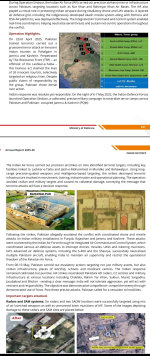
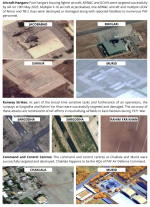
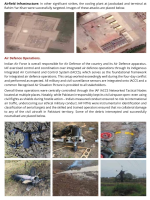
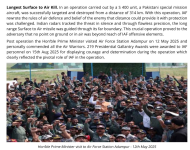
MOD ANNUAL REPORT
2025 -- 26
Operation Sindoor Details included
Scroll down Page 242


Pakistan has been investing in satellite system with the help from China to get real time images during any skirmish, and basically for missile guidance. I hope there are enough measures being taken to thwart this. Because they are investing it in military application which are directed against India.

 www.indiatoday.in
-----------------------------------------------------------------------
India may become first nation which will be forced to neutralize an enemy satellite if Pakistan continues to direct its all space assets against India aggressively and weaponize space and cross the rules of space proliferation. The world body is ignorant on this and this will cause massive repercussion if Indians decide to launch a strike on Pakistani military satellites. This may cause uproar in world media due to space debris if kinetic measure is taken.
For India it is not a huge threat but the way the Pakistani space assets for military application borrowed from China grew exponentially this is worrisome and points towards weaponisation and proliferation of the space by Pakistan which requires necessary global attention, response and immediate warning.
Pakistan has launched six Earth-observation satellites in 16 months with substantial Chinese support. The growing constellation is seen as strengthening Islamabad's ability to monitor Indian territory and strategic activity.
"The constellation that has emerged from this sixteen-month burst is not a civilian earth observation system that happens to have military applications on the side. Its orbital architecture, its sensor complement, and above all its institutional provenance tell a different and more consequential story," Rear Admiral Sudhir Pillai, former flag officer, Indian Navy, said in a blog post analysing the recent spate of launches.
The constellation includes satellites capable of capturing high-resolution imagery, identifying changes on the ground, detecting camouflaged objects and conducting persistent surveillance over areas of strategic interest, as reported by The Print.
Much of this progress has been enabled by China. Several of the satellites were launched aboard Chinese rockets, while others were developed through collaborations between Pakistani and Chinese entities. Analysts believe the partnership extends beyond launch services to include technology transfer, satellite design and data-sharing arrangements.
Pakistan has launched half a dozen satellites in 16 months. They are tracking India
Pakistan has launched six Earth-observation satellites in 16 months with substantial Chinese support. The growing constellation is seen as strengthening Islamabad’s ability to monitor Indian territory and strategic activity.
-----------------------------------------------------------------------
India may become first nation which will be forced to neutralize an enemy satellite if Pakistan continues to direct its all space assets against India aggressively and weaponize space and cross the rules of space proliferation. The world body is ignorant on this and this will cause massive repercussion if Indians decide to launch a strike on Pakistani military satellites. This may cause uproar in world media due to space debris if kinetic measure is taken.
For India it is not a huge threat but the way the Pakistani space assets for military application borrowed from China grew exponentially this is worrisome and points towards weaponisation and proliferation of the space by Pakistan which requires necessary global attention, response and immediate warning.



It is indeed new. Seems like this came from an unreleased series from the IAF or MoD's own BDA package.This one is new
View attachment 53970

Works similar to our region ! ... Still begs the question to why Paks is not accessing this service to prove their so call strikes. Answer there isn't any

They tried their best with Photoshop. None of the credible OSINT accounts wanted to work on their verification. Many even actively outed these as being fake. Hence, the need to run a smear campaign through their reporters at various media outlets. None of these article ever showed the pictures and conveniently put the ending as "these are claims made by PAF and we were not able to verify them". The AI video released recently has been trashed by all including some of their own lot that lives overseas.Works similar to our region ! ... Still begs the question to why Paks is not accessing this service to prove their so call strikes. Answer there isn't any
They are also reportedly getting the Chinese Type 625 SPAAGM + a 76mm system that seems to be derived from a naval gun. All this in just the last 4 months.Looks like Pak will be using these against the cornucopia of local and import 100-qty. drone orders seen recently.
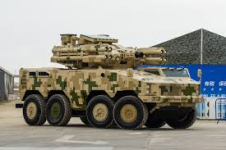


I don't think these "spray and pray" are much useful. Phalanx struggles aginst shahid 136 tyoe drones, and spend all of it's ammo in just 2-3 interception attempt.They are also reportedly getting the Chinese Type 625 SPAAGM + a 76mm system that seems to be derived from a naval gun. All this in just the last 4 months.
View attachment 53976
But we too need to have 76mm SRGM with smart ammunition against drones.
And also a dense RIM 116/HHQ10 type manpads missile based SAM other than what we already have(L70-sudarshan and bhargavastra).
And maybe some interceptor drones package too.
Pakistan is close in approving the Paksat 2 satellite project, which means more use of sat phones used by Pakistani proxy players, earlier Paksat MM1 achieved this and hence there were some initial set backs in Kashmir to neutralize it, but later dominance in the region was achieved.
Any ways, it also seems that Pakistan army is moving towards building a networked precision fire system of artillery along Indian border.
Detection: via drone, radar, satellite imagery, espionage, forward observation, etc
Data integration: integration of topography, weather, real time intelligence and coordinates to be fed to the network
Warhead selection: usage of computer based application to select the right munition based on integrated data on target
Fire Control: software calculated corrections based on parameters like munition, air speed, moisture, range
C&C : centralized command for monitoring ops
Analysis : corrections in operational parameters after analyzing the result on ground, corrections fed back to fire control
Any ways, it also seems that Pakistan army is moving towards building a networked precision fire system of artillery along Indian border.
Detection: via drone, radar, satellite imagery, espionage, forward observation, etc
Data integration: integration of topography, weather, real time intelligence and coordinates to be fed to the network
Warhead selection: usage of computer based application to select the right munition based on integrated data on target
Fire Control: software calculated corrections based on parameters like munition, air speed, moisture, range
C&C : centralized command for monitoring ops
Analysis : corrections in operational parameters after analyzing the result on ground, corrections fed back to fire control
Multiple AAA systems of different calibers create overlapping coverage zones and the kill probability is higher.I don't think these "spray and pray" are much useful. Phalanx struggles aginst shahid 136 tyoe drones, and spend all of it's ammo in just 2-3 interception attempt.
But we too need to have 76mm SRGM with smart ammunition against drones.
And also a dense RIM 116/HHQ10 type manpads missile based SAM other than what we already have(L70-sudarshan and bhargavastra).
And maybe some interceptor drones package too.
I believe there was only 1 Phalanx defending the US diplomatic compound which would've created blind zones.
In our case, the upgraded L70s and Shilkas have certainly proved themselves recently. But their RoF is low compared to modern alternatives like say the 35mm Sky Ranger/Revolver gun from Rheinmetall.
Pantsir is not a fool proof system as we've seen recently. We'd need to layer it with Biho 2 to be effective. + vehicle mounted RCWS must be standardized across armored and light skinned vehicles. Cope cages alone won't be enough.
| L-band | Satellite-Based Augmentation System (SBAS) services, associated with BeiDou navigation |
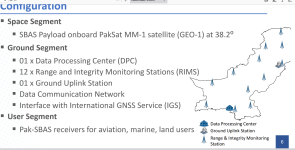
Pakistan is also trying to achieve satnav for their missiles and drones using Pak-SBAS in case GPS is shut down for them.
The launch of the second satellite (GEO-2) in the Pak-SBAS Space
Segment and augmentation of the Ground Segment is being
considered in the year 2026
▪ The Ground Segment will also be augmented with the launch of
GEO-2
India may become first nation which will be forced to neutralize an enemy satellite if Pakistan continues to direct its all space assets against India aggressively and weaponize space and cross the rules of space proliferation.
The below development of US weaponizing space, ( confirming it) has raised the possibility of India being the first country to hit enemy satellite with kinetic or non kinetic action.

US confirms for first time it has deployed space weapons
The US Air Force Secretary says the weapons are necessary to defend the country against enemy action.
 www.bbc.com
The US has confirmed it deployed a space weapon in Earth's orbit, the first time it has acknowledged such offensive capabilities.
US Secretary of the Air Force Troy Meink said the "on orbit" weapon was necessary to safeguard US forces against hostile enemy action.
Speaking at the Air, Space and Cyber Conference on Monday, Meink said the US was ready for "evolving threats", but did not elaborate on the weapon's capabilities or when it was put into orbit.
Last edited:
As India pushes drones down to the squad level while Pakistan races to build its own jamming grid along the frontier, the Su-30MKI fleet lines up for AWACS-killing R-37M missiles, Japan's F-2s land on Indian soil for the first time, and India and China hold their first-ever Corps Commander talks in the Eastern Sector. Firstpost tracks the week's key defence developments.
The Army is done treating drones as an add-on. Operation Sindoor made that call for Delhi: unmanned systems did as much of the real work as fighter jets and missiles, and the force structure is now catching up fast.
Down at the squad level: Nearly 385 infantry battalions are getting their own Ashni platoons, each carrying ten drones, four for surveillance and six kamikaze loitering munitions. A frontline company commander doesn't need to route a strike request up the chain anymore. He can see the target and hit it from his own position. The armoured corps has its equivalent now too. Shaurya Squadrons, tested first during Exercise Amogh Jwala near Jhansi, slot drone crews directly into tank regiments running T-90s and Arjuns, giving armour its own eyes and strike option instead of waiting on higher formations. Artillery has Divyastra batteries doing the same job for gun positions. Light infantry gets Bhairav commando battalions built for fast, drone-integrated operations. None of these exist in isolation. They're all pieces of the same doctrine: every arm gets its own organic drone layer instead of borrowing one.
The newly cleared Akash Tarang system adds another counter-drone layer to that shield, alongside upgraded L-70 guns. All of it now sits under Mission Sudarshan Chakra, the PM's 2035 target for a layered, AI-enabled national air defence net meant to cover everything from a single military base to entire cities. Pakistan is patching its own gaps too; Islamabad has inducted Turkish Korkut 35mm guns under the Mecca Pact, layering them with Sahin counter-UAS turrets and Chinese HQ-17AE missiles, a direct response to the BrahMos strikes that exposed its air bases during Sindoor. It's Rawalpindi trying to buy its way past a vulnerability that imports alone won't fix.
Rawalpindi is tuning its own radios: Satellite imagery this month shows Pakistan quietly expanding its electronic warfare footprint right along the frontier, a suspected ESM node at Dadyal in PoK, just 33 km from the LoC, and ELINT infrastructure coming up near hardened shelters at PAF Base Sindhri in Sindh. Read together, that's Islamabad trying to build a networked EW grid that watches Indian troop movement on one flank and Indian Air Force activity on the other. This matters directly for the drone fight. Every loitering munition, every Ashni platoon quadcopter, every Akashteer sensor link runs on GPS and radio comms that a serious ESM network is built to jam, spoof or simply listen in on. A denser Pakistani EW picture means India's drone swarms need to fly and fight through more contested electromagnetic space than they did during Sindoor, not less. It's also the reason DRDO's own EW suites on the Su-30MKI and Rafale, and ground-based jamming systems along the LoC and LAC, matter as much as the drones themselves.
Army's AASHVAST Labs to Hunt Hidden Chips and Backdoors in Defence Electronics
The Army has opened AASHVAST Labs in Delhi, inaugurated by Army Chief General Dhiraj Seth, to scan military drones and electronics for hidden vulnerabilities in hardware, software and firmware. The labs check for unauthorised remote access tools, embedded keys, unapproved software updates and weak GPS-security controls, with particular attention to Chinese origin components that may have made their way into sensitive systems.
The bigger picture: A drone can look completely genuine on a physical inspection and still carry a hidden backdoor buried in its firmware, something that only shows up under exactly this kind of deep electronic audit. As India buys and builds more of its own unmanned systems at a rapid pace, verifying the actual supply chain behind every chip and line of code becomes as important as the platform's flight performance. This is India applying the same self reliance logic it has used for missiles and radars to the invisible layer underneath them, treating electronic trust as a frontline defence issue rather than an afterthought.
Atmi Quvat
 istan is finding it difficult to repair Sargodha airbase runway even after 16 months.....
BTW Aisa Kya Maara IAF ne Ki
ies Ki G&N Abhi Tak Fati Huyi Hai, sil Bhi nahi Rahi... 

But simply buying the stuff won't cut it, they need to built an architecture around it, the reason for Akash, L70, mrsam and other sam platforms are doing good because of IACSS & akashteer platforms, providing them real time Data to what to engage and when to engage, yes the new system will provide the solution but it's gonna be more of band aid solution rather than a permanent one,Saw that bit as well. RUMINT suggested it earlier. They were rattled by the penetration that certain LM were able to achieve. They are trying to up their purchases when it comes to counter-UAS. The PA moves much quicker due to how the country is setup and how it manages it procurement policies.
Also Thier drone warfare doctrine is not upto to the standard level, they are routinely get ambushed & bombed, they don't have any drone warfare school or base, or inhouse army production unit's, less integration with other unit's,
Moreover they are looking for visual kill & somewhat of C-uas solution for Thier bases, but without a formula architecture it's just a band aid solution,
Enough said there should be heavy strike to major PAF bases from initial hour's, the army & IAF has developed some exciting drones & system, they are built some good strike packages