French Military Technology

While the first subs will be fitted with M51.4, the SNLE3G are designed to host a larger M51 successor


A major challenge for the FOST is to preserve this expertise and operational capability for the benefit of the next generation of SSBNs, the SNLE 3G. These new vessels will have different characteristics (they will be longer and somewhat heavier), while the next generations of missiles are expected to be larger in order to further improve their performance. These developments will require significant investment. This is particularly the case at the Île Longue operational base, where the superstructures surrounding the two docks need to be modernised.

 
Some information from a French journalist who visited MBDA today:

  • The UK retains some involvement in STRATUS-RS, just as France retains some involvement in STRATUS-LO. So MBDA France and MBDA UK are involved in both programmes.

  • Italy is only involved in STRATUS-LO: at one point, there had been talk of Italy (Leonardo) supplying part of the STRATUS-RS seeker, but that is now completely off the table, and it is therefore very likely that Thales France will be responsible for it.

  • Both missiles are reportedly capable of being launched from ship VLS and Ramps, as well as from aircraft
  • The VLS and Ramp versions would require an additional booster, and MBDA is trying to use the same booster for both missiles and both launch methods.

  • The Assessment phase for both missiles is now complete.
  • The STRATUS RS development contract is expected at Euronaval 2026
  • The STRATUS LO should follow by late 2026 or early 2027.
  • First deliveries are planned around 2030, with entry into service in the early 2030s.
  • MBDA’s goal is a common architecture allowing the two missiles to cover multiple platforms, flight profiles and target types while minimizing the number of hardware variants.


STRATUS-RS:
  • Same missile, same seeker and same warhead for all four missions.
  • Primary missions: anti-ship and SEAD.
  • Secondary missions: deep strike and anti-HVAA.
  • For the anti-HVAA role, there will still be some software work required for target designation, so it seems likely that this capability will not be implemented from the outset.
  • The STRATUS-RS seeker will be an active AESA seeker, with SAR functionality. It is this SAR capability (combined with advanced INS/GNSS navigation and a secondary IIR imaging sensor), that will allow it to perform SEAD/DEAD through target recognition, without having to rely on a passive sensor detecting radar emissions.
  • STRATUS-RS's propulsion will be a liquid-fueled ramjet
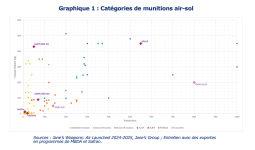
  • STRATUS-RS will have a range "well over 3 times that of Exocet". (which matches the 800km range claim on the chart i posted)
STRATUS-LO
  • Same missile, same warhead(tandem) and same seeker for both missions
  • Primary mission : deep-strike
  • Secondary missions : anti-ship
  • Passive sensors (IR+RF)
  • STRATUS-LO's propulsion will use a new turbofan (RR/Safran), allowing the missile's range to be increased considerably.
  • STRATUS-LO's range is said to be "more than doubled compared with Storm Shadow"