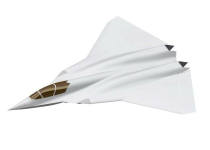
ACF French combat aircraft

Picdelamirand-oil

Senior member
Nov 30, 2017
6,393
8,374
78
France

Dassault chief reiterates demonstrator plan for Rafale-successor sixth-gen fighter​

Eric Trappier says aircraft could be flying by 2031 provided development contract is received promptly.​
Dassault Aviation chief executive Eric Trappier is still pushing to have a next-generation fighter demonstrator flying by 2031 in support of France’s emerging Avion de Combat du Futur (ACF) sixth-generation programme.

Although a formal requirement has yet to emerge, Paris is anxious to fill the gap left by the collapse earlier this year of the tri-national Future Combat Air System (FCAS) programme with Germany and Spain.

In recent weeks, government and military officials have expressed their support for the ACF – future combat aircraft in English – which at this stage is envisaged as an all-French affair, albeit one potentially open to other countries.

Speaking to FlightGlobal at the NBAA-BACE business aviation show in Las Vegas, Trappier lamented a decade lost to the FCAS programme without any tangible results.

“I’m really frustrated – we have been working for 10 years without anything flying,” he says. “Our engineers need to see a bird flying at our flight-test centre.”

Dassault was leading the New Generation Fighter (NGF) portion of the FCAS programme – a manned long-term replacement for its Rafale jet – and had been aiming to fly a demonstrator by 2029.

But Trappier is keen to replicate that process on the ACF: “I am pushing now to get a demonstrator,” he says.

“If we start now or at the beginning of 2027 it could be flying in 2031,” a timeframe he is “confident” of achieving. Trappier had in July outlined an ambition to fly a new demonstrator.

Rafale successor

Dassault has already begun internal studies based on the likely requirements of the ACF, which would replace the Rafale in both air force and naval service.

Because the fighter needs to be aircraft carrier-capable, Dassault is already liaising with ship builder Naval Group, which is developing the France Libre, the French navy’s next-generation carrier.

Although few details of the ACF have so far been disclosed, Trappier says it “will be smaller than we expected with the NGF”.

Additionally, as it will be a multi-role aircraft, “there will be a compromise between aerodynamics and stealth capabilities – a fighter still needs to remain a fighter”, he stresses.

Power will likely come from a further evolution of the Safran Aircraft Engines M88, beyond the T-Rex variant currently in development for the F5-standard Rafale. This raises thrust, with an afterburner, to around 21,000lbf (95kN), up from 17,000lbf currently.

Safran had been working with German partner MTU Aero Engines on a new powerplant for the NGF – with additional contribution from Spain’s ITP Aero – however it is unclear whether this consortium can persist following the FCAS collapse.

Should France commit to the ACF development, service entry would be around 2045, Trappier says.

Meanwhile, Dassault continues initial internal concept work on an uncrewed combat air vehicle (UCAV) for the French armed forces, albeit that it has yet to receive a development contract.

Envisaged as an aircraft of more than 10t to serve as a ‘loyal wingman’ for the Rafale, the UCAV concept design is based on preliminary attributes from the French air force.

“These are the requirements we need to work with. Then the government will find a way of funding it,” he says.
Do Dassault or any one else has told anything or put forward any requirements about the engine thrust and power generation for ACF/FCAS ?

Like for GCAP, each engine will generate 1MW of electrical energy.
 
Do Dassault or any one else has told anything or put forward any requirements about the engine thrust and power generation for ACF/FCAS ?

Like for GCAP, each engine will generate 1MW of electrical energy.
First, we set out the operational requirement; then we devise a technical solution to meet that requirement; next, we draw up a probable estimate of the power consumption required; then we add a margin to cope with any unexpected issues; and finally, we tell Safran what to do. Trappier said that the ACF will be smaller than the NGF, so I imagine he is currently going through this whole process again.
 
  • Like
Reactions: Photon Vish
Although few details of the ACF have so far been disclosed, Trappier says it “will be smaller than we expected with the NGF”.

Power will likely come from a further evolution of the Safran Aircraft Engines M88, beyond the T-Rex variant currently in development for the F5-standard Rafale. This raises thrust, with an afterburner, to around 21,000lbf (95kN), up from 17,000lbf currently.

If this means France is giving up on creating a next-gen core, that's disappointing news.

Right now it appears they're basically aiming for a Rafale-sized jet but with internal weapon bays, technological advancements & an upgraded M88++ core. This will be less expensive to develop compared to a larger air superiority-focused jet with a 6th gen engine, but there will also be a significant capability penalty when compared with likes of GCAP, F-47 or Chinese J-XDS especially in the A2A department and also in future EW potential.

This may suit France's projected needs sufficiently, but I don't see this being well suited for IAF's requirements.

The GCAP might actually be more suitable as the future MKI replacement. Too bad they already got too many cooks in that kitchen (plus no naval variant planned).

We may have a make a N-AMCA after all.
Yes, but ‘beyond the T-Rex variant’ could mean, for example, a variable dilution rate, which was difficult to get accepted in a collaborative setting but is a cost-effective way of achieving almost the same result within a national context.
 
In other words the collapse of the neo colonial African empire, China's rise at the expense of EU industrial ecosystem, inefficiencies of the French industry, inefficiencies of the French economy, mindless financing of Ukraine to prolong the war, social unrest & so on are all converging to create a perfect storm.

And India just like in the 1990s threw a lifeline to the Russian defence ecosystem is doing so again to the French defence ecosystem.

We didn't have a choice then. We refuse to exercise one now.

Give Leaderji & especially the place holder of a Raksha Mantri the - Ordre national de la Légion d'honneur - Grand Croix already..

A lot of people tend to overlook the latter & his stellar role in our defence policies & execution.
 
Yes, but ‘beyond the T-Rex variant’ could mean, for example, a variable dilution rate, which was difficult to get accepted in a collaborative setting but is a cost-effective way of achieving almost the same result within a national context.
Congratulations on revival of the Super Rafale project. In any case what's the point of the FCAS when Ukraine with no AF or IADS worth the name is still giving Russia a fight of its life.

And Le Francais will not be going up against the US. Not now not in a 100 years. So once again I see no point in the FCAS & every reason for the Super Rafale.

I'm sure with our project management skills sooner rather than later we'd be joining our brother in arm.
 
Strange India didn't merge AMCA and TEDBF.... too late now.
Indian burocrats and military officers are short sighted primarily due to extreme risk aversion mentality.

Till we don't kick out this extremely risk aversion mentality, we as a country will never grow, and may stuck like Thailand is stucked in middle income trap.
 
Indian burocrats and military officers are short sighted primarily due to extreme risk aversion mentality.

Till we don't kick out this extremely risk aversion mentality, we as a country will never grow, and may stuck like Thailand is stucked in middle income trap.
It is specialy strange after the Rafale and F-35 exemple (and F4, F18...) : it is possible to develop and produce very nice air and naval variant fighters under the same global frame.
AMCA and TEDBF are/were in the same weight class and for near missions range. A missed opportunity.
 
  • Like
Reactions: Photon Vish
Yes, but ‘beyond the T-Rex variant’ could mean, for example, a variable dilution rate, which was difficult to get accepted in a collaborative setting but is a cost-effective way of achieving almost the same result within a national context.
What if the Safran-GTRE deal goes through within a year? Wouldn't it be a better engine to work with for a future program?
 
This is significant, that France is back in the game


France receives the first Archange spy plane in Évreux for operational evaluation before regaining its electronic intelligence capability​

The French Air Force is preparing the entry into service of the Falcon 8X equipped by Thales to detect radar and communications emissions; the program includes three aircraft to replace the Transall Gabriel retired in 2022
France Archange SIGINT 1 860x484
Image of the Archange at the 105th Air Force Base in Évreux: Signature: French Air and Space Force
 
What if the Safran-GTRE deal goes through within a year? Wouldn't it be a better engine to work with for a future program?
Yes, certainly, but the Rafale line is likely to continue; Dassault prefers to take small steps. In the development of the M88, M88 T-Rex and the evolution of the M88 T-Rex, the M88 T-REX allows for the testing of hot-end technologies; perhaps the evolution of the M88 T-REX would test cold-end technologies – that is why I mentioned the variable dilution ratio. To ensure the Rafale benefits from all these technologies and tests them as early as possible, derivatives of the M88 are undoubtedly the simplest solutions; for the new engine, a new aircraft will likely be required.
 
I wish the French all the best, more competition and involvement in the space the more options for India to procure 5th/6th gen fighters in the future.

I think the biggest risk is that ACF is being sized around an engine that can be made in time rather than developing an engine that can meet the capability desired by the fighter. I'd prefer they base their demostrators/prototypes around the T-REX and build in some future capability to retrofit with new engines in the future.

we as a country will never grow, and may stuck like Thailand is stucked in middle income trap.
Maybe get to Thailand's level of HDI, GDP per capita and literacy before worrying about getting stuck at their level?
 
Maybe get to Thailand's level of HDI, GDP per capita and literacy before worrying about getting stuck at their level?
If you as a leader of a country don't plan for atleast next 30 years then you don't deserve to be a leader.

Anyways, development don't happen in vaccum, you do something whose positive result make economic fundamentals and structure stronger for future which lead to high growth.

If we don't plan for 30 next year now, then we will be on mercy of future.

Anyway Thailand GDP per capita is nothing to be boast about, they stucked to middle income trap only because their leaders think like you.

Thailand failed to become like Poland only because their leaders where vision less.
 
In the end, the best strategist was … the Macron/Trappier duo, the straight man and the comic foil:

For 10 years, they managed to pull the wool over the Germans’ eyes with a SCAF arrangement where everything would be split 50/50, then to resist the attempt to encircle them with Spain. And they came out of it with a brand-new Plan B, leaving the Germans in the lurch.
 
  • Haha
Reactions: Bon Plan
I wish the French all the best, more competition and involvement in the space the more options for India to procure 5th/6th gen fighters in the future.

I think the biggest risk is that ACF is being sized around an engine that can be made in time rather than developing an engine that can meet the capability desired by the fighter. I'd prefer they base their demostrators/prototypes around the T-REX and build in some future capability to retrofit with new engines in the future.
A solution may be to use the engine, or a direct derivative, studied for AMCA....
China has a 30 year plan, Our politicians only plan for the next election
You are right, unfortunately for all the others.
 
  • Like
Reactions: Optimist
1793569985587.png​
ACF will be smaller than NGF....

What innovations will this engine incorporate?

This new-generation fighter aircraft must be capable of both generating high thrust at supersonic speeds and cruising at low speeds for extended periods. Its engine will therefore need to be versatile. It will also be more compact to reduce weight, and its thrust – far greater than that of the Rafale – will enable the SCAF to carry more weaponry. Finally, it will need to contribute to the aircraft’s stealth capabilities. Numerous innovations will therefore be required. The turbine, for example, will reach temperatures of around 2,100°C – a temperature beyond the capabilities of current blade technologies and materials. Safran has established a research platform dedicated to advanced turbine blades to develop cutting-edge technologies and materials capable of withstanding these temperatures. The engine will also need to be ‘variable-cycle’, i.e. capable of adjusting the ratio between the primary and secondary airflows, and fitted with a swivelling nozzle to improve the aircraft’s manoeuvrability. Another avenue of innovation under consideration is hybridising the engine to manage the issue of on-board energy.
 
Last edited: