

French Military Technology
- Thread starter RISING SUN
- Start date
You are using an out of date browser. It may not display this or other websites correctly.
You should upgrade or use an alternative browser.
You should upgrade or use an alternative browser.
While the first subs will be fitted with M51.4, the SNLE3G are designed to host a larger M51 successor
A major challenge for the FOST is to preserve this expertise and operational capability for the benefit of the next generation of SSBNs, the SNLE 3G. These new vessels will have different characteristics (they will be longer and somewhat heavier), while the next generations of missiles are expected to be larger in order to further improve their performance. These developments will require significant investment. This is particularly the case at the Île Longue operational base, where the superstructures surrounding the two docks need to be modernised.
Some information from a French journalist who visited MBDA today:
STRATUS-RS:
- The UK retains some involvement in STRATUS-RS, just as France retains some involvement in STRATUS-LO. So MBDA France and MBDA UK are involved in both programmes.
- Italy is only involved in STRATUS-LO: at one point, there had been talk of Italy (Leonardo) supplying part of the STRATUS-RS seeker, but that is now completely off the table, and it is therefore very likely that Thales France will be responsible for it.
- Both missiles are reportedly capable of being launched from ship VLS and Ramps, as well as from aircraft
- The VLS and Ramp versions would require an additional booster, and MBDA is trying to use the same booster for both missiles and both launch methods.
- The Assessment phase for both missiles is now complete.
- The STRATUS RS development contract is expected at Euronaval 2026
- The STRATUS LO should follow by late 2026 or early 2027.
- First deliveries are planned around 2030, with entry into service in the early 2030s.
- MBDA’s goal is a common architecture allowing the two missiles to cover multiple platforms, flight profiles and target types while minimizing the number of hardware variants.
STRATUS-RS:
- Same missile, same seeker and same warhead for all four missions.
- Primary missions: anti-ship and SEAD.
- Secondary missions: deep strike and anti-HVAA.
- For the anti-HVAA role, there will still be some software work required for target designation, so it seems likely that this capability will not be implemented from the outset.
- The STRATUS-RS seeker will be an active AESA seeker, with SAR functionality. It is this SAR capability (combined with advanced INS/GNSS navigation and a secondary IIR imaging sensor), that will allow it to perform SEAD/DEAD through target recognition, without having to rely on a passive sensor detecting radar emissions.
- STRATUS-RS's propulsion will be a liquid-fueled ramjet
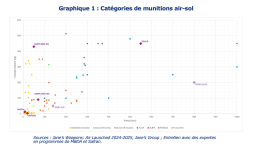
- STRATUS-RS will have a range "well over 3 times that of Exocet". (which matches the 800km range claim on the chart i posted)
- Same missile, same warhead(tandem) and same seeker for both missions
- Primary mission : deep-strike
- Secondary missions : anti-ship
- Passive sensors (IR+RF)
- STRATUS-LO's propulsion will use a new turbofan (RR/Safran), allowing the missile's range to be increased considerably.
- STRATUS-LO's range is said to be "more than doubled compared with Storm Shadow"
France Orders Four Additional SAMP/T NG Air and Missile Defence Systems
MBDA, alongside its partner Thales, is proud to announce that the Organisation for Joint Armament Cooperation (OCCAR), acting on behalf of French government, has awarded eurosam a contract to produce four additional firing units of the SAMP/T NG air defence system. This order brings the total...
 www.mbda-systems.com
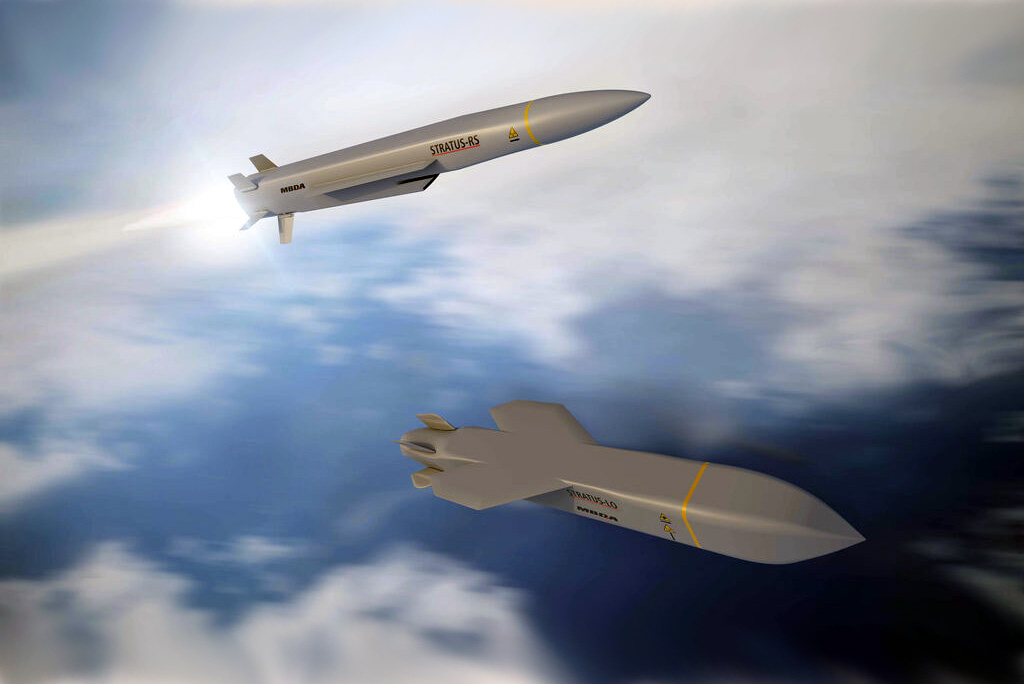
MBDA Stratus weapon family nears demonstration and manufacturing phases contract - EDR Magazine
Stratus is a dual-missile concept international programme being developed by MBDA for France, Italy, and UK.
 www.edrmagazine.eu

Safran Secures Inertial Navigation Contracts for French Nuclear Deterrence
Safran Electronics & Defense has been selected this year for three inertial navigation programs supporting France’s strategic nuclear deterrence, equipping three main platforms with its HRG (Hemispherical Resonator Gyroscope) technology:
- Sub-Surface Ballistic Nuclear (SSBN): The Global Navigation System (SGN) for France’s third-generation SSBNs will deliver unmatched performance, enabling extremely long periods of autonomous navigation without any need for GNSS recalibration. This autonomous capability is critical to the SSBN mission—operating underwater without satellite signals, the submarine must navigate discreetly and initialize M51 missile launches independently. This new system will succeed Safran Electronics & Defense’s SGN-3EV, currently in service on Triomphant-class submarines.
- M51 Missile: Safran Electronics & Defense designs and manufactures the inertial navigation unit for current versions of the M51 missile. For the M51.4, which will equip the 2nd and 3rd generation of the SSBNs, the new CI4 inertial navigation unit will leverage HRG Dual Core technology to provide the missile with enhanced accuracy in a significantly more compact package.
- Rafale Fighter: The HRG Dual Core technology will also equip most combat aircraft starting from the fifth production batch, featuring the F4 standard. On the aircraft carrier Charles de Gaulle, the Safran Electronics & Defense’s navigation system serves as a reference for aligning the Rafale’s navigation systems at sea before each mission.
This new achievement extends Safran Electronics & Defense’s more than fifty-year commitment to supporting France’s nuclear deterrence. This commitment was demonstrated once again on October 6: off the coast of Brittany, France, in the presence of the President of the French Republic, the nuclear submarine Le Vigilant successfully launched an M51.3 missile. This test was carried out to validate the operational capability of the ballistic missile submarine after its periodic maintenance and overhaul (IPER). Several of Safran Electronics & Defense’s resilient PNT (Positioning, Navigation and Timing) systems contributed to this success.
On board, the SGN-3EV navigation system and the new BELUGA high-precision clock provided the exact position and time. Inside the missile, the inertial navigation unit ensured extremely accurate guidance. As part of the test operation, the ICARE radar transponders and RGNSS receiver tracked the missile throughout its trajectory from the test center.
“We are particularly proud of the renewed trust shown by the DGA since 1972 in Safran's navigation and timing solutions. We owe our ability to meet the highest standards and deliver the best possible performance to our teams and our 58 industrial and technological sites, rooted in local regions as well as internationally, which contribute every day to the sovereignty of France and its allies”, said Franck Saudo, President of Safran Electronics & Defense.
Black-Onyx™ family to meet any specific requirement
Black-Onyx™ SP: 1Nm/4h precisionBlack-Onyx™ HP: 1Nm/24h precision
Black-Onyx™ XP48 or XP72: 1Nm/48h or 1Nm/72h precision
Black-Onyx™ Dual Core family for even more precision
Black-Onyx™ Dual Core SP96 or SP120: 1Nm/96h or 1Nm/120h precisionBlack-Onyx™ Dual Core HP: 1Nm/240h precision
Black-Onyx™ Dual Core XP: Better than 1Nm/360h precision