

Renewable energy in India : News & Updates
- Thread starter RISING SUN
- Start date
You are using an out of date browser. It may not display this or other websites correctly.
You should upgrade or use an alternative browser.
You should upgrade or use an alternative browser.


From Consumer to Competitor: How China Views India's Photovoltaic Rise
Author: Antara Ghosal Singh
Published on Jun 01, 2026
China's debate over India's solar success reflects a deeper anxiety: New Delhi's growing capacity to absorb industries, capital, and supply chains once anchored in China

In the past few days, the Chinese internet has been abuzz with news of India ‘stealing’ businesses from China, this time in the photovoltaic (PV) space. India’s photovoltaic module production capacity has “skyrocketed” from less than 10 GW in 2018 to 172 GW in 2026 (almost on par with global annual installation capacity), registering a 17-fold increase over eight years. Meanwhile, in China, leading photovoltaic companies have been reporting record-breaking losses totalling tens of billions of yuan since the fourth quarter of 2023, falling into the deepest quagmire of losses in history.
In 2025, 11 of the 15 listed Chinese PV companies reported losses totalling around 50 billion yuan. The five leading companies—TCL Zhonghuan, Jinko Solar, Longi Green Energy, JA Solar, and Trina Solar—reported losses exceeding 28 billion yuan. At this time, news of India’s transformation from a net importer in the 2000s to the “world’s second-largest manufacturer of photovoltaic modules and mobile phones” attracted significant public attention in China, and the contrasting saga (Indian boom, Chinese bust) became a trending topic on Chinese social media. In Chinese public opinion, this dramatic shift in fortunes was directly linked to alleged technology transfer from China, and Chinese companies were criticised bitterly for “aiding the enemy”.
India’s Rise Alarms China
Chinese photovoltaic industry insiders fondly remember those days when the relationship between Chinese and Indian photovoltaic companies was relatively simple: China produced, and India consumed. From 2000 to 2015, China’s cumulative investment in India was only US$ 1.24 billion, accounting for less than 0.5 percent of total global investment in India. For China, India was merely a downstream buyer of Chinese products. However, according to Chinese assessments, things began to change in recent years when India launched its ‘Make in India’ initiative along with supporting measures: i) the Production-Linked Incentive (PLI) scheme, which encouraged companies to set up factories in India; ii) the Basic Customs Duty (BCD) system, which imposed tariffs on imported components, thereby pushing companies to produce locally; and iii) the requirement of Approved List of Models and Manufacturers (ALMM) certification for participation in government projects.
As a result, it is argued that India’s module production capacity has surged, and along with it, China’s direct exports of photovoltaic modules to India have shrunk dramatically: from 8.2 GW in 2020 to 4.5 GW in 2024, and then to 2.1 GW in 2025. Overall, China’s photovoltaic product exports globally have reportedly declined year-on-year for two consecutive years, falling 13.2% year-on-year to US$24.42 billion from January to October 2025, with Chinese observers attributing this to rising competition from India in third-party markets. Therefore, the Chinese side was furious over the claim that “India has been using Chinese capital, equipment, technology, and engineers to build an industry that essentially challenges China”.
Why Chinese Firms Are Turning to India
Most Chinese observers argue that Chinese photovoltaic firms continue to sell equipment to India despite the risks, not because of a lack of strategic foresight, but because they have few alternatives. At the heart of Chinese enterprises’ plight is China’s massive overcapacity in this space. For example, in the module segment, China’s capacity is reportedly 1,100 GW+, while global demand is only 600 GW. In the polysilicon production space, China’s capacity is 3.5 million tons, while global demand is only 1.4 million tons, resulting in an oversupply of over 100 percent. In the silicon wafer space, capacity is 850 GW+, while demand is 550–600 GW, with utilisation rates of only 40 percent. Due to this massive overcapacity, operating rates in the module segment are generally below 60 percent, with many companies losing money on every watt sold and selling prices already falling below production costs. Furthermore, silver prices more than doubling in 2025 and polysilicon prices rebounding from their lows in the second half of the year have further widened the gap between costs and prices. The industry seems to be trapped in a vicious cycle of rising revenues but stagnant profits, with module prices falling below the cost line of 0.7 yuan per watt, and some companies entering an era of negative gross margins.
In this cutthroat market, where there is little room to expand domestic production, and manufacturers are facing a precipitous drop in orders, Indian orders are practically a lifeline for these companies. The gross profit margin on complete production lines sold to India is reportedly over 35 percent, far better than selling them at a loss domestically. This survival instinct of individual companies, Chinese observers argue, is leading to a “collective action dilemma” and driving supply chain spillover to India.
China Hopes to Plug the Leak
Some Chinese observers are hopeful that China can still plug the leak and course-correct on this issue. India, after all, remains a “super assembler”—its polysilicon production capacity is reportedly only about 2 gigawatts, with over 90 percent of demand met through imports. Silicon wafer production capacity is still nascent, while India’s cell production capacity is reportedly 30 gigawatts, covering less than one-sixth of its module production capacity. Import dependence on key photovoltaic equipment, such as crystal-pulling furnaces and PECVD coating machines, still exceeds 85 percent. Moreover, India is heavily reliant on the US market for module exports and remains vulnerable to Trump 2.0 tariff policies. This distorted structure of the Indian industry, they argue, still cannot pose a systemic threat to China in the short term.
Meanwhile, the Chinese government has already taken a series of measures—such as including equipment used in the production of photovoltaic modules in the catalogue of dual-use items and technologies that can no longer be exported without a licence, and the cancellation of export tax rebates for photovoltaic products starting April 1, 2026—which are expected to check domestic involution to a certain extent and thereby make it difficult for India to obtain the latest production line equipment from China in the future. The Chinese strategic community is also urging Chinese companies to abandon their strategy of “short-term survival over long-term industrial security”, avoid infighting and price wars, and maintain a competitive advantage by moving towards the higher end of the value chain.
More broadly, China is increasingly alarmed by how India has, in recent years, leveraged policy, capital, and geopolitics to cultivate its industries and is gradually demonstrating its ability to absorb entire supply chain shifts from China. The Chinese strategic community is concerned that energy storage and power batteries may be following the same path as photovoltaics. India’s policies, they argue, will make Chinese battery manufacturers very wealthy in the short term, only for the PV episode to be replicated in the energy storage sector in the coming years. Going forward, they caution, Chinese electric vehicles and even semiconductor equipment could face similar risks if adequate measures are not taken. Increasingly convinced that India is seeking to take a leaf out of China’s own playbook—albeit on a tighter timeline—China has recently initiated WTO action against Indian measures on solar cells and modules, as well as IT goods. But, much to China’s unease, its domestic economy remains its Achilles heel, as it has found no easy solution to its structural overcapacity problem amid weak domestic demand, resulting in occasional bloodbaths in key sectors.
From Consumer to Competitor: How China Views India's Photovoltaic Rise
Author: Antara Ghosal Singh
Published on Jun 01, 2026
China's debate over India's solar success reflects a deeper anxiety: New Delhi's growing capacity to absorb industries, capital, and supply chains once anchored in China
In the past few days, the Chinese internet has been abuzz with news of India ‘stealing’ businesses from China, this time in the photovoltaic (PV) space. India’s photovoltaic module production capacity has “skyrocketed” from less than 10 GW in 2018 to 172 GW in 2026 (almost on par with global annual installation capacity), registering a 17-fold increase over eight years. Meanwhile, in China, leading photovoltaic companies have been reporting record-breaking losses totalling tens of billions of yuan since the fourth quarter of 2023, falling into the deepest quagmire of losses in history.
In 2025, 11 of the 15 listed Chinese PV companies reported losses totalling around 50 billion yuan. The five leading companies—TCL Zhonghuan, Jinko Solar, Longi Green Energy, JA Solar, and Trina Solar—reported losses exceeding 28 billion yuan. At this time, news of India’s transformation from a net importer in the 2000s to the “world’s second-largest manufacturer of photovoltaic modules and mobile phones” attracted significant public attention in China, and the contrasting saga (Indian boom, Chinese bust) became a trending topic on Chinese social media. In Chinese public opinion, this dramatic shift in fortunes was directly linked to alleged technology transfer from China, and Chinese companies were criticised bitterly for “aiding the enemy”.
India’s photovoltaic module production capacity has “skyrocketed” from less than 10 GW in 2018 to 172 GW in 2026 (almost on par with global annual installation capacity), registering a 17-fold increase over eight years.
India’s Rise Alarms China
Chinese photovoltaic industry insiders fondly remember those days when the relationship between Chinese and Indian photovoltaic companies was relatively simple: China produced, and India consumed. From 2000 to 2015, China’s cumulative investment in India was only US$ 1.24 billion, accounting for less than 0.5 percent of total global investment in India. For China, India was merely a downstream buyer of Chinese products. However, according to Chinese assessments, things began to change in recent years when India launched its ‘Make in India’ initiative along with supporting measures: i) the Production-Linked Incentive (PLI) scheme, which encouraged companies to set up factories in India; ii) the Basic Customs Duty (BCD) system, which imposed tariffs on imported components, thereby pushing companies to produce locally; and iii) the requirement of Approved List of Models and Manufacturers (ALMM) certification for participation in government projects.
Due to this massive overcapacity, operating rates in the module segment are generally below 60 percent, with many companies losing money on every watt sold and selling prices already falling below production costs.
As a result, it is argued that India’s module production capacity has surged, and along with it, China’s direct exports of photovoltaic modules to India have shrunk dramatically: from 8.2 GW in 2020 to 4.5 GW in 2024, and then to 2.1 GW in 2025. Overall, China’s photovoltaic product exports globally have reportedly declined year-on-year for two consecutive years, falling 13.2% year-on-year to US$24.42 billion from January to October 2025, with Chinese observers attributing this to rising competition from India in third-party markets. Therefore, the Chinese side was furious over the claim that “India has been using Chinese capital, equipment, technology, and engineers to build an industry that essentially challenges China”.
Why Chinese Firms Are Turning to India
Most Chinese observers argue that Chinese photovoltaic firms continue to sell equipment to India despite the risks, not because of a lack of strategic foresight, but because they have few alternatives. At the heart of Chinese enterprises’ plight is China’s massive overcapacity in this space. For example, in the module segment, China’s capacity is reportedly 1,100 GW+, while global demand is only 600 GW. In the polysilicon production space, China’s capacity is 3.5 million tons, while global demand is only 1.4 million tons, resulting in an oversupply of over 100 percent. In the silicon wafer space, capacity is 850 GW+, while demand is 550–600 GW, with utilisation rates of only 40 percent. Due to this massive overcapacity, operating rates in the module segment are generally below 60 percent, with many companies losing money on every watt sold and selling prices already falling below production costs. Furthermore, silver prices more than doubling in 2025 and polysilicon prices rebounding from their lows in the second half of the year have further widened the gap between costs and prices. The industry seems to be trapped in a vicious cycle of rising revenues but stagnant profits, with module prices falling below the cost line of 0.7 yuan per watt, and some companies entering an era of negative gross margins.
In this cutthroat market, where there is little room to expand domestic production, and manufacturers are facing a precipitous drop in orders, Indian orders are practically a lifeline for these companies. The gross profit margin on complete production lines sold to India is reportedly over 35 percent, far better than selling them at a loss domestically. This survival instinct of individual companies, Chinese observers argue, is leading to a “collective action dilemma” and driving supply chain spillover to India.
China Hopes to Plug the Leak
Some Chinese observers are hopeful that China can still plug the leak and course-correct on this issue. India, after all, remains a “super assembler”—its polysilicon production capacity is reportedly only about 2 gigawatts, with over 90 percent of demand met through imports. Silicon wafer production capacity is still nascent, while India’s cell production capacity is reportedly 30 gigawatts, covering less than one-sixth of its module production capacity. Import dependence on key photovoltaic equipment, such as crystal-pulling furnaces and PECVD coating machines, still exceeds 85 percent. Moreover, India is heavily reliant on the US market for module exports and remains vulnerable to Trump 2.0 tariff policies. This distorted structure of the Indian industry, they argue, still cannot pose a systemic threat to China in the short term.
In this cutthroat market, where there is little room to expand domestic production, and manufacturers are facing a precipitous drop in orders, Indian orders are practically a lifeline for these companies.
Meanwhile, the Chinese government has already taken a series of measures—such as including equipment used in the production of photovoltaic modules in the catalogue of dual-use items and technologies that can no longer be exported without a licence, and the cancellation of export tax rebates for photovoltaic products starting April 1, 2026—which are expected to check domestic involution to a certain extent and thereby make it difficult for India to obtain the latest production line equipment from China in the future. The Chinese strategic community is also urging Chinese companies to abandon their strategy of “short-term survival over long-term industrial security”, avoid infighting and price wars, and maintain a competitive advantage by moving towards the higher end of the value chain.
More broadly, China is increasingly alarmed by how India has, in recent years, leveraged policy, capital, and geopolitics to cultivate its industries and is gradually demonstrating its ability to absorb entire supply chain shifts from China. The Chinese strategic community is concerned that energy storage and power batteries may be following the same path as photovoltaics. India’s policies, they argue, will make Chinese battery manufacturers very wealthy in the short term, only for the PV episode to be replicated in the energy storage sector in the coming years. Going forward, they caution, Chinese electric vehicles and even semiconductor equipment could face similar risks if adequate measures are not taken. Increasingly convinced that India is seeking to take a leaf out of China’s own playbook—albeit on a tighter timeline—China has recently initiated WTO action against Indian measures on solar cells and modules, as well as IT goods. But, much to China’s unease, its domestic economy remains its Achilles heel, as it has found no easy solution to its structural overcapacity problem amid weak domestic demand, resulting in occasional bloodbaths in key sectors.
From Consumer to Competitor: How China Views India's Photovoltaic Rise

Adani Group, the tycoon’s power-to-ports conglomerate, is among suitors that have been evaluating Rotterdam-based VTTI, according to the people. A deal could value the company at around €3 billion ($3.4 billion), they said.
Australian infrastructure manager IFM Investors Pty and energy and commodities group Vitol SA each own around 45% of VTTI, while Abu Dhabi National Oil Co. holds the remaining 10%.
Adnoc is considering selling out of VTTI completely and the other co-owners may also look to reduce their positions in the company in any deal, the people said, asking not to be identified discussing confidential information.

VTTI B. V. is a leading energy infrastructure company specializing in the development and operation of energy storage terminals for sustainable energy solutions, including liquefied natural gas (LNG), renewable natural gas (RNG), and hydrogen.
VTTI is a prominent energy infrastructure company that specializes in the development and operation of energy storage terminals and related infrastructure for transitional and sustainable energies. The company's core offerings include facilities for liquefied natural gas (LNG), renewable natural gas (RNG), and hydrogen, which are designed to support the evolving energy landscape. These facilities are crucial for both energy producers and consumers, providing essential storage solutions that enable the safe and efficient handling of these energy sources. VTTI's services cater to a diverse client base, including energy producers, utility companies, and industrial consumers across various geographical markets, including North America, Europe, and Asia.
Australian infrastructure manager IFM Investors Pty and energy and commodities group Vitol SA each own around 45% of VTTI, while Abu Dhabi National Oil Co. holds the remaining 10%.
Adnoc is considering selling out of VTTI completely and the other co-owners may also look to reduce their positions in the company in any deal, the people said, asking not to be identified discussing confidential information.
VTTI B.V. Asset Profile | Preqin
VTTI B.V. is a leading energy infrastructure company specializing in the development and operation of energy storage terminals for sustainable energy solutions,...
www.preqin.com
VTTI B. V. is a leading energy infrastructure company specializing in the development and operation of energy storage terminals for sustainable energy solutions, including liquefied natural gas (LNG), renewable natural gas (RNG), and hydrogen.
VTTI is a prominent energy infrastructure company that specializes in the development and operation of energy storage terminals and related infrastructure for transitional and sustainable energies. The company's core offerings include facilities for liquefied natural gas (LNG), renewable natural gas (RNG), and hydrogen, which are designed to support the evolving energy landscape. These facilities are crucial for both energy producers and consumers, providing essential storage solutions that enable the safe and efficient handling of these energy sources. VTTI's services cater to a diverse client base, including energy producers, utility companies, and industrial consumers across various geographical markets, including North America, Europe, and Asia.
Cabinet approves Rs.14,500 crore Viability Gap Funding Scheme for development of 92 GWh Grid-Scale Energy Storage Systems
Scheme to support 30 GWh Battery Energy Storage Systems, 60 GWh Pumped Storage Projects and 2 GWh emerging storage technologies
Will accelerate renewable energy integration, strengthen grid stability and ensure reliable and affordable round-the-clock power supply
Mandatory domestic content requirement for BESS to promote indigenous manufacturing and reduce import dependence
Posted On: 04 NOV 2026 3:27PM by PIB Delhi
The Union Cabinet, chaired by the Prime Minister Shri Narendra Modi, has approved the Viability Gap Funding (VGF) Scheme for Development of Grid-Scale Energy Storage Systems, with a total financial support of Rs.14,500 crore for the period FY 2026-27 to FY 2030-31. The scheme aims to support the development of 92 GWh of, yet to be commissioned; energy storage capacity across the country. The scheme will support creation of new capacities equivalent to 170% of the present-day Grid Scale Energy Storage System capacity in the country and help meet the required Grid Scale ESS capacity of 411 GWh by 2031-32.
The scheme marks a significant step towards strengthening India's power sector infrastructure, facilitating large-scale integration of renewable energy and ensuring reliable, affordable and round-the-clock power supply. It will also provide an impetus to domestic manufacturing of battery energy storage systems, reduce import dependence and enhance the country's long-term energy security.
The scheme envisages the development of 60 GWh of Hydro Pumped Storage Plant (PSP) capacity, 30 GWh of Battery Energy Storage System (BESS) capacity and 2 GWh of capacity through alternative energy storage technologies, with a total estimated investment of Rs.97,600 crore. The VGF support will help improve the financial viability of these projects and accelerate the deployment of large-scale energy storage infrastructure in the country.
Energy storage capacity will be allocated through a tariff-based competitive bidding process. Public and private sector electricity distribution companies will be eligible for VGF support for BESS and Hydro PSP projects, while projects based on alternative energy storage technologies will be implemented by public and private sector entities.
A key objective of the scheme is to strengthen India's domestic energy storage manufacturing ecosystem through demand-side financial support and reduce dependence on imported components. To promote indigenous manufacturing, BESS projects will be subject to a minimum Domestic Content Requirement (DCR) of 40%. The requirement will encourage domestic manufacturing, create opportunities for Indian industry and complement existing supply-side incentives for battery manufacturing.
The scheme represents an important intervention towards building a flexible, resilient and future-ready electricity system. By accelerating the deployment of grid-scale energy storage, it will facilitate greater utilisation of renewable energy, address the variability of renewable energy generation and reduce dependence on conventional generation for meeting balancing round-the clock power supply. The initiative will strengthen grid stability, improve renewable energy integration, encourage domestic manufacturing and enhance India's energy security, while advancing the vision of Atmanirbhar Bharat and Viksit Bharat.
https://www.pib.gov.in/PressReleaseDetail.aspx?PRID=2332474®=48&lang=1

India Steps Up Battery Localization With Two New Schemes
Anu Bhambhani
Published on: Nov 05, 2026, 1:07 pm
The Cabinet has approved INR 14,500 crore in VGF for 92 GWh of energy storage and INR 2,814 crore to support domestic lithium and nickel processing

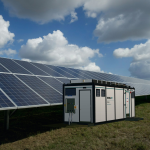
India targets battery supply chain gaps with storage funding and critical mineral processing support.(Illustrative Image; Image Credit: hyotographics/Shutterstock.com)
Key Takeaways
The government has allocated INR 14,500 crore in viability gap funding (VGF) for 92 GWh of energy storage capacity and INR 2,814 crore to develop domestic lithium and nickel processing capabilities.
A lion’s share of the total ESS capacity, 60 GWh, to be supported under VGF will come from pumped storage projects (PSP), while 30 GWh will come from battery energy storage systems (BESS), and 2 GWh from emerging storage technologies.
VGF, the Ministry of Power (MoP) explained, will improve the financial viability of the projects that together will attract an investment of approximately INR 97,600 crore.
Public and private sector companies will be eligible for VGF support for both PSP and BESS projects, which will be awarded through tariff-based competitive bidding. Alternative storage technologies will be implemented by public and private sector companies.
Funding will be provided over five years, from FY 2026-27 to FY 2030-31. According to the MoP, the scheme aims to add capacity equivalent to 170% of India’s existing grid-scale energy storage capacity to help meet the projected requirement of 411 GWh by FY 2031-32.
40% Domestic Content Requirement for BESS Projects
A highlight of the VGF Scheme for the Development of Grid-Scale Energy Storage Systems is its focus on local BESS manufacturing. The government has made it mandatory for eligible projects to ensure a minimum domestic content requirement (DCR) of 40%.
This 'demand-side' financial support will encourage domestic manufacturing and reduce reliance on imported components, stated the MoP.
“The requirement will encourage domestic manufacturing, create opportunities for Indian industry and complement existing supply-side incentives for battery manufacturing,” added the ministry.
India to Support Lithium and Nickel Processing Plants
Alongside creating demand for domestic BESS component production, the government is also offering funding support for local manufacturing. The INR 2,814 crore Capex Support Scheme to Promote Critical Mineral Processing aims to develop India’s processing facilities for critical minerals – lithium and nickel. Lithium-ion technology currently dominates the BESS space.
The scheme will provide a 30% capital subsidy on eligible investments to set up four processing plants: two lithium facilities with a minimum capacity of 30,000 tons each and two nickel facilities with a minimum capacity of 50,000 tons each. Support is capped at INR 500 crore per lithium plant beneficiary and INR 900 crore per nickel plant beneficiary.
These facilities will process lithium and nickel ores and intermediate products into high-purity compounds, with cobalt expected to be recovered as a by-product of nickel processing.
Beneficiaries will be selected through two-phase techno-commercial bidding, based on the lowest CapEx support sought. Incentives will be disbursed in three tranches.
These measures come as India seeks to reduce its dependence on China for battery materials, components, and technology. The Asian giant dominates the global battery supply chain, particularly in processing critical minerals and manufacturing battery cells and components.
Compared to landed Chinese benchmark prices, Indian manufacturers face cost disability ranging from 18% for Cathode Active Material and Nickle Manganese Cobalt (CAM-NMC) to 61% for Anode Active Material-Synthetic Graphite (AAM-SG), as per a Ministry of Heavy Industries study.
Advanced Chemistry Cell (ACC) comprises CAM, AAM, electrolyte, separator, and current collectors. ACC components account for about 76% of total cell manufacturing cost, with the cathode at 34% and the anode at 25%, according to the study.
According to The Economic Times, the Ministry of Heavy Industries is considering capital subsidies of up to 50% and sales-linked incentives to boost domestic manufacturing of battery materials and components.
The proposed incentives would implement existing government support for battery manufacturing, including the INR 18,100 crore Production Linked Incentives (PLI) scheme for ACC battery manufacturing.
India Steps Up Battery Localization With Two New Schemes
Anu Bhambhani
Published on: Nov 05, 2026, 1:07 pm
The Cabinet has approved INR 14,500 crore in VGF for 92 GWh of energy storage and INR 2,814 crore to support domestic lithium and nickel processing
India targets battery supply chain gaps with storage funding and critical mineral processing support.(Illustrative Image; Image Credit: hyotographics/Shutterstock.com)
Key Takeaways
- India has announced a new VGF scheme to support 92 GWh of energy storage, including 30 GWh of BESS
- The VGF scheme introduces a minimum domestic content requirement to encourage local manufacturing and reduce dependence on imports
- The government will also support lithium and nickel processing plants through a 30% capital subsidy under another scheme
The government has allocated INR 14,500 crore in viability gap funding (VGF) for 92 GWh of energy storage capacity and INR 2,814 crore to develop domestic lithium and nickel processing capabilities.
A lion’s share of the total ESS capacity, 60 GWh, to be supported under VGF will come from pumped storage projects (PSP), while 30 GWh will come from battery energy storage systems (BESS), and 2 GWh from emerging storage technologies.
VGF, the Ministry of Power (MoP) explained, will improve the financial viability of the projects that together will attract an investment of approximately INR 97,600 crore.
Public and private sector companies will be eligible for VGF support for both PSP and BESS projects, which will be awarded through tariff-based competitive bidding. Alternative storage technologies will be implemented by public and private sector companies.
Funding will be provided over five years, from FY 2026-27 to FY 2030-31. According to the MoP, the scheme aims to add capacity equivalent to 170% of India’s existing grid-scale energy storage capacity to help meet the projected requirement of 411 GWh by FY 2031-32.
40% Domestic Content Requirement for BESS Projects
A highlight of the VGF Scheme for the Development of Grid-Scale Energy Storage Systems is its focus on local BESS manufacturing. The government has made it mandatory for eligible projects to ensure a minimum domestic content requirement (DCR) of 40%.
This 'demand-side' financial support will encourage domestic manufacturing and reduce reliance on imported components, stated the MoP.
“The requirement will encourage domestic manufacturing, create opportunities for Indian industry and complement existing supply-side incentives for battery manufacturing,” added the ministry.
India to Support Lithium and Nickel Processing Plants
Alongside creating demand for domestic BESS component production, the government is also offering funding support for local manufacturing. The INR 2,814 crore Capex Support Scheme to Promote Critical Mineral Processing aims to develop India’s processing facilities for critical minerals – lithium and nickel. Lithium-ion technology currently dominates the BESS space.
The scheme will provide a 30% capital subsidy on eligible investments to set up four processing plants: two lithium facilities with a minimum capacity of 30,000 tons each and two nickel facilities with a minimum capacity of 50,000 tons each. Support is capped at INR 500 crore per lithium plant beneficiary and INR 900 crore per nickel plant beneficiary.
These facilities will process lithium and nickel ores and intermediate products into high-purity compounds, with cobalt expected to be recovered as a by-product of nickel processing.
Beneficiaries will be selected through two-phase techno-commercial bidding, based on the lowest CapEx support sought. Incentives will be disbursed in three tranches.
These measures come as India seeks to reduce its dependence on China for battery materials, components, and technology. The Asian giant dominates the global battery supply chain, particularly in processing critical minerals and manufacturing battery cells and components.
Compared to landed Chinese benchmark prices, Indian manufacturers face cost disability ranging from 18% for Cathode Active Material and Nickle Manganese Cobalt (CAM-NMC) to 61% for Anode Active Material-Synthetic Graphite (AAM-SG), as per a Ministry of Heavy Industries study.
Advanced Chemistry Cell (ACC) comprises CAM, AAM, electrolyte, separator, and current collectors. ACC components account for about 76% of total cell manufacturing cost, with the cathode at 34% and the anode at 25%, according to the study.
According to The Economic Times, the Ministry of Heavy Industries is considering capital subsidies of up to 50% and sales-linked incentives to boost domestic manufacturing of battery materials and components.
The proposed incentives would implement existing government support for battery manufacturing, including the INR 18,100 crore Production Linked Incentives (PLI) scheme for ACC battery manufacturing.
India Steps Up Battery Localization With Two New Schemes

India Plans Mandatory Energy Storage Rules for Power Retailers
By Rajesh Kumar Singh
November 5, 2026 at 1:00 PM GMT+5:30
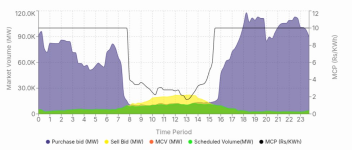
India plans to make it mandatory for electricity distributors to buy some energy storage capacity as part of their renewable purchases, as the government seeks to curb clean power wastage.
Details of the policy, including how much storage distributors will be required to buy, are still being discussed, Power Secretary Pankaj Agarwal said on Thursday. The government plans to finalize the rules by March, he said at the Bharat RE Summit in New Delhi.
https://www.bloomberg.com/news/arti...business&utm_medium=social&utm_source=twitter