India’s electric vehicle drive: Challenges and opportunities

Rare good news from a rare metal: Reserves of lithium, critical for EV batteries, found near Bengaluru
Bengaluru: Good omen for electric vehicles?

Reserves of lithium, a rare metal critical to build batteries for electric vehicles, have been discovered in Mandya, 100 km from Bengaluru — a find that should boost local manufacturing of EV batteries.

Researchers at the Atomic Minerals Directorate, a unit of India’s Atomic Energy Commission, have estimated lithium reserves of 14,100 tonnes in a small patch of land surveyed in the Southern Karnataka district, according to a paper to be published in the forthcoming issue of journal Current Science.

“The present data provides a total estimation of available Li2O as about 30,300 tonnes over an area of 0.5 km x 5 km, which works out to about 14,100 tonnes of lithium metal,” said N Munichandraiah, Emeritus Professor at the Indian Institute of Science and an expert on battery technologies.

But, to put this in perspective, the lithium find is small compared to many major producers. As the professor puts it: “If one compares with 8.6 million tonnes in Chile, 2.8 million tonnes in Australia, 1.7 million tonnes in Argentina or 60,000 tonnes in Portugal, 14,100 tonnes is not that large.”

Lead author of the paper, PV Thirupathi, did not respond to mails seeking comment.
India currently imports all its lithium needs.

Not Enough Exploration Effort
Its imports of lithium batteries tripled to $1.2 billion in fiscal year 2019 from $384 million in FY17.

In the 8 months to November, 2019, the country’s lithium battery imports stood at $929 million, according to data shared by science & technology minister Harsh Vardhan in Parliament on February 2.
Experts say while India requires lithium for its energy needs, there has been no comprehensive effort to map local reserves of lithium so far.

“We have not explored so far whether we have adequate reserves of lithium,” says Dr Rahul Walawalkar, President of India Energy Storage Alliance, a grouping that looks at battery technologies. “We don’t know the potential”.

So far, in the absence of local mines for lithium, India has set up Khanij Bidesh India Ltd to source and acquire mines in Argentina, Bolivia and Chile. Niti Aayog has set an ambitious goal of building up to 10 large factories to produce lithium-ion batteries over the next 10 years.
Rare good news from a rare metal: Reserves of lithium, critical for EV batteries, found near Bengaluru
 
  • Informative
Reactions: JustCurious
Rare good news from a rare metal: Reserves of lithium, critical for EV batteries, found near Bengaluru
Bengaluru: Good omen for electric vehicles?

Reserves of lithium, a rare metal critical to build batteries for electric vehicles, have been discovered in Mandya, 100 km from Bengaluru — a find that should boost local manufacturing of EV batteries.

Researchers at the Atomic Minerals Directorate, a unit of India’s Atomic Energy Commission, have estimated lithium reserves of 14,100 tonnes in a small patch of land surveyed in the Southern Karnataka district, according to a paper to be published in the forthcoming issue of journal Current Science.

“The present data provides a total estimation of available Li2O as about 30,300 tonnes over an area of 0.5 km x 5 km, which works out to about 14,100 tonnes of lithium metal,” said N Munichandraiah, Emeritus Professor at the Indian Institute of Science and an expert on battery technologies.

But, to put this in perspective, the lithium find is small compared to many major producers. As the professor puts it: “If one compares with 8.6 million tonnes in Chile, 2.8 million tonnes in Australia, 1.7 million tonnes in Argentina or 60,000 tonnes in Portugal, 14,100 tonnes is not that large.”

Lead author of the paper, PV Thirupathi, did not respond to mails seeking comment.
India currently imports all its lithium needs.

Not Enough Exploration Effort
Its imports of lithium batteries tripled to $1.2 billion in fiscal year 2019 from $384 million in FY17.

In the 8 months to November, 2019, the country’s lithium battery imports stood at $929 million, according to data shared by science & technology minister Harsh Vardhan in Parliament on February 2.
Experts say while India requires lithium for its energy needs, there has been no comprehensive effort to map local reserves of lithium so far.

“We have not explored so far whether we have adequate reserves of lithium,” says Dr Rahul Walawalkar, President of India Energy Storage Alliance, a grouping that looks at battery technologies. “We don’t know the potential”.

So far, in the absence of local mines for lithium, India has set up Khanij Bidesh India Ltd to source and acquire mines in Argentina, Bolivia and Chile. Niti Aayog has set an ambitious goal of building up to 10 large factories to produce lithium-ion batteries over the next 10 years.
Rare good news from a rare metal: Reserves of lithium, critical for EV batteries, found near Bengaluru
There a lot more buried in Chota Nagpur Plateau.
 
  • Like
Reactions: JustCurious
Sodium-ion battery maker Faradion mulling over manufacturing in India

The company, which had won its first order from ICM Australia, is seeking to push its Sodium-ion batteries over Lithium-ion batteries citing "exceptional superiority" and play a significant part in revolutionising automobile/mobility, storage and mobile sectors across the world.


By PTI |Last Updated: Apr 23, 2020, 01.24 PM IST
1587648511557.png
Faradion CEO James Quinn said Australasia is the next logical region for the company given the market conditions.

NEW DELHI: Sodium-ion battery maker Faradion Ltd on Thursday said it is actively exploring having a manufacturing presence in India for its batteries for diversified applications.

The company, which had won its first order from ICM Australia, is seeking to push its Sodium-ion batteries over Lithium-ion batteries citing "exceptional superiority" and play a significant part in revolutionising automobile/mobility, storage and mobile sectors across the world.

"India is one of the largest markets for mobile devices across the world. Recently, the country has also demonstrated significant progress in the adoption of EV (Electric Vehicle) technology, making it a priority market for Faradion," the company said in a statement.

Further, as the world seeks out alternatives to China-dependent Lithium-ion batteries, Faradion's Sodium-ion based technology offers a promising solution, it claimed.

"In line with this, Faradion is actively exploring manufacturing presence in India for its Sodium-ion batteries for diversified applications," the company said.

Faradion CEO James Quinn said Australasia is the next logical region for the company given the market conditions.

“Faradion is accelerating large scale industrialisation of its safe, low cost, Sodium-ion energy storage technology. After Australia, we foresee India as our next priority big market, given the huge growth in mobile devices and a bigger electric mobility market waiting to grow rapidly," he said.

Sodium-ion battery maker Faradion mulling over manufacturing in India
 
Researchers Develop New Way to Turn Polymers into Battery Components Using Microwaves

The polymers can be converted to battery anode materials in less than two minutes using an ultrafast microwave irradiation process

May 02, 2020
By Nithin Thomas Prasad


Researchers at Purdue University, in collaboration with researchers from the Indian Institute of Technology and Tufts University, have developed a technique to turn polymers into components for batteries using microwave radiation.

“We use an ultrafast microwave irradiation process to turn PET, or polyethylene terephthalate, flakes into disodium terephthalate, and use that as battery anode material,” said Vilas Pol, an associate professor of chemical engineering at the Purdue Research Foundation Office of Technology Commercialization.

The paper stated that with the aid of this ultrafast microwave irradiation process, they were able to produce disodium terephthalate waste PET flakes within 2 minutes. The explained that they tried the approach with both lithium-ion and sodium-ion battery cells.

Lithium-ion batteries are some of the most commonly used types of batteries used in electronic devices and vehicles. They are usually smaller, lighter, and more compact in size compared to alternatives like lead-acid or nickel-based batteries. They also require much lower maintenance compared to other types of batteries.

Sodium-ion battery cells, on the other hand, have been seeing a rise in popularity thanks to the fact that sodium is more widely and easily available compared to lithium. They work like lithium-ion batteries, but they do not use cobalt-based electrodes. Cobalt is also expensive, and its mining process has been shrouded by controversy in the past.

Recently, Japanese researchers announced the development of a new electrode material that could make lithium batteries cheaper, more stable, and capable of holding more charge for longer periods. The research paper explained that while researchers have previously managed to improve the charge-holding capacity of lithium batteries, they have not been able to improve the amount of charge the batteries can disperse in a useful way.

Purdue University researchers have also come up with a new thermodynamic formula, which reveals that bifacial cells make the double-sided panels generate 15% to 20% more electricity than the conventional monofacial cells on one-sided solar modules. An increasing number of companies are now moving towards two-sided solar modules, which can convert sunlight reflected from the ground, and more electricity could be generated.

Researchers Develop New Way to Turn Polymers into Battery Components Using Microwaves - Mercom India
 
  • Informative
Reactions: JustCurious
We need a firm policy statement from the Government of India in terms of setting a deadline, maybe 3-5 years from now, upon which only electric based vehicles are to be bought and utilised for public transport services (Govt or privately owned). Taxis, Buses or Rickshaws. This will give industry more clarity and a time to transition.
 
EESL to procure 250 Tata, Hyundai electric vehicles

To utilise $5 mn ADB grant for purchase

Energy Efficiency Services Limited, which comes under the Ministry of Power, said on Thursday it will procure 250 electric vehicles from Tata Motors and Hyundai Motor India.
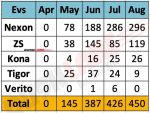
While Tata Motors won the bid to supply 150 Nexon EVs, Hyundai Motor India will supply 100 Kona electric vehicles for government use. “The companies were selected through an international competitive bidding process, which was aimed at increased participation. The letter of award for the procurement was presented to the two companies,” EESL said in a statement.
This procurement will utilise $5 million from the recent grant provided by the Asian Development Bank towards financing high priority areas like demand side energy efficiency sector projects.
EESL will procure the Nexon EV for ₹14.86 lakh each, which is cheaper by ₹13,000 than the ex-showroom price of ₹14.99 lakh, whereas Kona Electric, which offers a higher range, will be procured at an 11% lower price band of ₹21.36 lakh. “These EVs will replace the existing fleet of petrol and diesel vehicles of the Central and State Governments,” it added.
“A shift to EVs, facilitated by our e-mobility programme will reduce dependence on oil imports and promote power capacity addition in India,” Saurabh Kumar, Executive VC, EESL, said.
Eg-xUwIWsAE_jdx

Eg-xU07XsAc1fsc


Bengaluru, the home to EV startups, rolls out the red carpet for Tesla's India safari
Bengaluru: Karnataka has pitched Bengaluru to Tesla, the world’s most valuable carmaker, as a potential location for a Gigafactory where it can manufacture electric cars and batteries, a state government official told ET.

Tesla has already held preliminary talks with the state for a research and innovation unit in the city, home to many of India’s electric vehicle (EV) startups such as Ola Mobility, Ather Energy, Mahindra Electric as well as units of Daimler and Bosch.
Read more at:
Bengaluru, the home to EV startups, rolls out the red carpet for Tesla's India safari
 

Exclusive! Nahak P14, India’s fastest electric sportsbike launching next month: Top speed, price detailed


Nahak Group is soon coming up with India's fastest all-electric sports bike, better known as the P14. The bike was first showcased at the Auto Expo 2020 and is capable of reaching speeds of up to 120 kmph. Here is what all the company is coming up with in future along with its expansion plans.

By: Pradeep Shah
Updated: Oct 09, 2020 5:12 PM
1602269072441.png

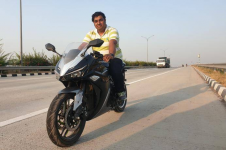
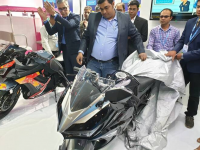
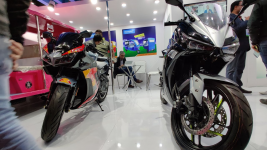
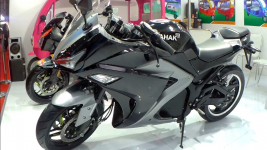
There are fast bikes, there are electric bikes and then, there are fast electric bikes! Well, with India moving in the direction of pure electric mobility, two-wheeler manufacturers, even the mainstream ones are now trying to offer the most of range and performance in a package that doesn’t hurt the pocket of the customers much. During Auto Expo 2020, a lot of EV makers showcased their innovations and creations in the form of prototypes and final production models as well and some of these included fast electric bikes as well. One such maker was Nahak Group that showcased two striking-looking all-electric motorcycles at the biennial event namely P14 and the RP46. Now, the brand is gearing up to launch the P14 in India very soon. Apart from electric bikes, the company also has plans to bring vehicles in different segments and the electric bus territory is one of them. In order to understand what all the company has in store, its investment plans and more, we recently had an insightful interaction with Pravat Kumar Nahak, Chairman, Nahak Group.

1602269021621.png

Express Drives – Kindly give us a quick brief of the electric superbike you displayed at the Auto Expo 2020 and from when it will go on sale ?

Pravat –
Nahak Motors had launched India’s two of first high-speed sports electric bikes in Auto Expo 2020, named P14 and RP46. The top speed of these bikes is 120 km/h and in a single charge, the bikes will run 150 to 180 km. We have recently received government approval for P14. We plan to start selling this sports electric bike from November 2020. The P14 electric bike will be launched in India at a price of Rs 2.50 lakh (approx).

What all the company has in store in near future in terms of the product launches ?

We are in the advanced stage of launching an electric bus. The manufacturing of these electric Buses will majorly be in line with honorable Prime Minister’s Make In India campaign. We have plans to bring this project by March 2020 and despite some issues due to Covid-19, we are on track. We have reached out to the State Government of Orissa for the allocation of land to set up a facility for the production of e Buses. The talks are in advance stage. Again, the majority of the components will be made in India.

1602269278279.png

What are the current plant capacity and expansion plans, both in terms of manufacturing and presence ?

Our current products are electric three-wheelers and e scooters. We have our plants set up in Greater Noida and Faridabad. If we talk about the plant capacity, currently we are capable of producing 2,500 to 3,000 vehicles per month. Despite less requirement of land, we have developed 95,000 square feet plant area in these two locations. With the increasing demand, we plan to expand the capacity to 8,000 to 9,000 vehicles per month by March 2021. It will consist of e-bikes, e-Scooters and three-wheelers. I would like to highlight that FRP bodies three-wheelers that we manufacture in our Greater Noida and Faridabad plants are 100 percent “Make in India” products.

How the business got affected due to Covid-19 ?

Covid-19 has impacted all industries across the globe. We are no exception. The most affected industries are those that are heavily dependent on imports. Since our products are dominantly made in India and we work very closely with Indian partners, we are coming back to business very fast. We are already working with our 90% capacity and hopeful of resuming 100% capacity very soon. We are taking extra protection and following industry norms issued by the government strictly so that we do not get affected due to Covid-19 in future. We are providing facilities like medical insurance to all and personal vehicles to some of our specific employees.

1602269228762.png

What is your strategy for charging infrastructure ?

This is a chicken and egg situation. We cannot wait to produce electric vehicles unless there is a charging infrastructure in place. Our products are easily chargeable at home with minimal infrastructure requirements. In addition to that, we have plans to establish charging centres adjacent to our outlets/ service centres. So, at a given time, the end-users have two options for charging their vehicles.

What are your thoughts on Delhi EV policy and suggestions, if any ?

The government has come up with a good EV policy. It will affect the pricing of battery. And the subsidies announced in the policy are really lucrative which will boost the industry overall. Having said so, it will be effective only when the subsidies actually pass on timely. Implementation is the key to success. The EV policy is more beneficial for businesses like ours. Three-wheelers will get more benefits. The reduced battery cost will lower down the overall cost of the vehicles and it will be more affordable for our end users be it three-wheelers or the e-bikes and e-scooters.

 
Is this contraption launching in India or Pakistan? Coz the logo and general design looks vary pak i (united bravo/ghazi I guess ) @Arsalan123 may know better
 
Last edited:
  • Haha
Reactions: Gautam
Is this contraption launching in India or Pakistan? Coz the logo and general design looks vary pak i (united bravo/ghazi I guess ) @Arsalan123 may know better
The future for electric vehicles is worse than diesel / petrol vehicles in Paxtan given 12-14 hours of load shedding every day. At least with diesel or petrol, Dimran can go hat in hand to biradar mumalik begging for petrol. How is he going to arrange electricity , is something he mustn't know the answer too.

Which brings me to an important point. Hybrid vehicles have a future in Paxtan. Granted, It's expensive but then what's PA for ? Or hydrogen fuel based vehicles but it's still in experimental stage though hydrogen is free. But gas driven ones have a huge future in Paxtan. Ask me why? Because, all Paxtanis need is an unending supply of churan Or not even that. They're natural windbags.All they need to do is connect a hose to their backside & voila ( look up the word backside, will you @Arsalan123 , before you come up with your usual retarded off centre rebuttal.) .
 
  • Haha
Reactions: Bali78
The future for electric vehicles is worse than diesel / petrol vehicles in Paxtan given 12-14 hours of load shedding every day. At least with diesel or petrol, Dimran can go hat in hand to biradar mumalik begging for petrol. How is he going to arrange electricity , is something he mustn't know the answer too.

Which brings me to an important point. Hybrid vehicles have a future in Paxtan. Granted, It's expensive but then what's PA for ? Or hydrogen fuel based vehicles but it's still in experimental stage though hydrogen is free. But gas driven ones have a huge future in Paxtan. Ask me why? Because, all Paxtanis need is an unending supply of churan Or not even that. They're natural windbags.All they need to do is connect a hose to their backside & voila ( look up the word backside, will you @Arsalan123 , before you come up with your usual retarded off centre rebuttal.) .
I’m more worried about our own EV market and govt virtually giving freehand to local baniyas to import ckds from China and assemble them and selling them with jargons like Mede in India and Developed in India.

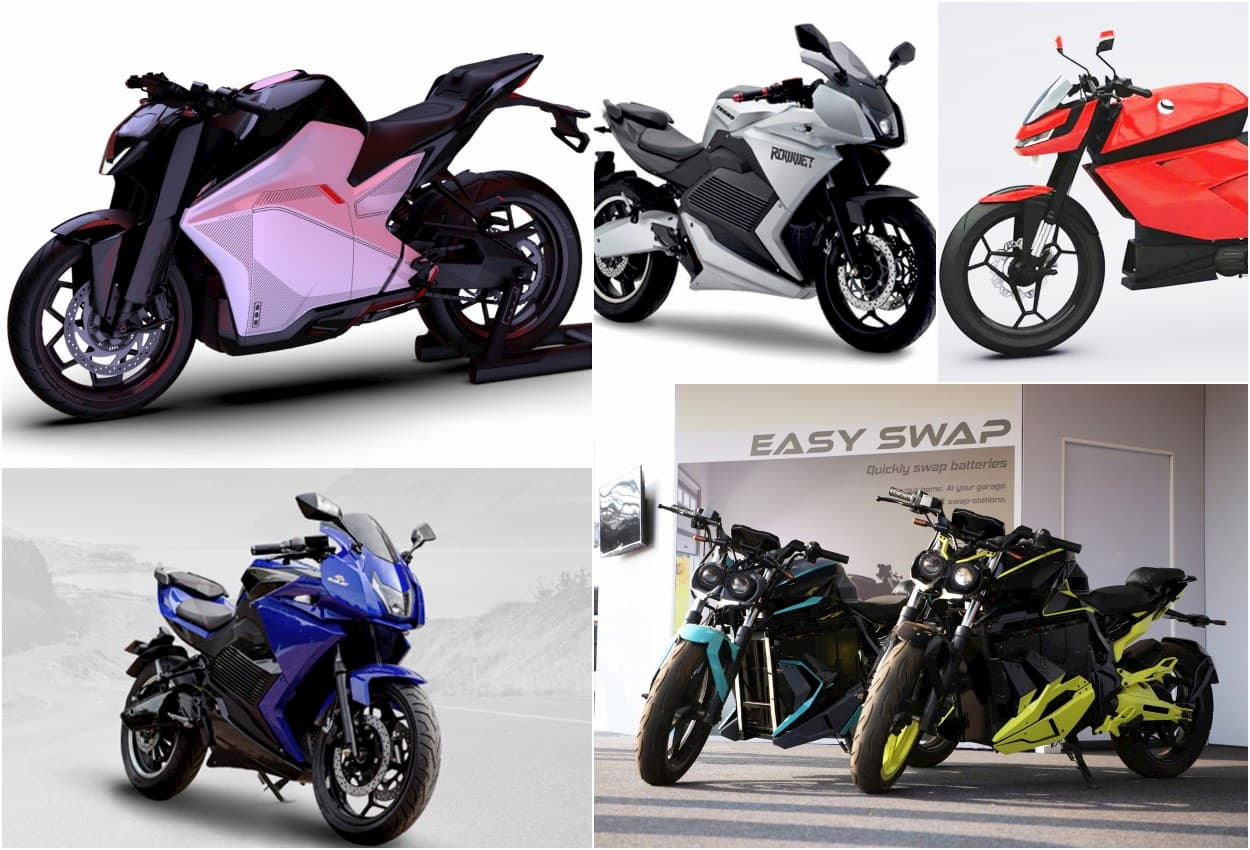
Chinese want to emulate the strategy of flooding the market with cheap goods to shut down local established brands and then monopolies them like cell phone market. They are doing this in Pakistan and African countries and to some extent in US and Europe. Just search new ev bikes and you are flooded with names like Prana, Nahak, roovi/oovi, cretin😀,Okinawa etc.
It’s gives me the vibes of so called Pakistan auto industry. Where you she cheap but fleshy models which look “Ninza like” or “BMW like” and are the garbage assembled as under the plastic body. No proper motor and battery management spec, no frame design nothing. They just appeared overnight on the shit looking showrooms/shops. And some villagers doing review/test ride of such things. Hilariously one companies CEO cum chief designer cum sales rep event told that main advantage of regenerative breaking is “brake kam ghista hai”

all these so called brands are importing ckds from Chinese mass manufacturers like Zhongshan and other dubious companies and assembling them as their own. Can you believe this level of degeneracy ?
They are essentially making things tough for genuine startups like Ather, Emflux,Tork, Emflux, and also brands like Bajaj and TVS etc.
can’t understand the logic behind banning few useless apps and simultaneously allowing their govt backed copycats to flood our markets.
 
Last edited:
  • Like
Reactions: _Anonymous_