
They have released a new tender for suppliers of VL-SRSAM to be delivered within a year. I believe there was a redesign around 2022-23, and now they are retesting everything. We have also seen the VLS redesign tenders previously.
VL-SRSAM Missiles for Indian Navy
- Thread starter Amarante
- Start date
You are using an out of date browser. It may not display this or other websites correctly.
You should upgrade or use an alternative browser.
You should upgrade or use an alternative browser.

DRDO & Indian Navy successfully flight-test indigenously-developed Vertically-Launched Short-Range Surface-to-Air Missile
This missile system will be an excellent force multiplier for Indian Navy: Raksha Mantri
Posted On: 26 MAR 2025 8:13PM by PIB DelhiDefence Research & Development Organisation (DRDO) and the Indian Navy conducted the successful flight-test of indigenously-developed Vertically-Launched Short-Range Surface-to-Air Missile (VLSRSAM) from the Integrated Test Range (ITR), Chandipur off the coast of Odisha at about 1200 hrs on March 26, 2025. The flight-test was carried out from a land-based vertical launcher against a high-speed aerial target at very close range and low altitude. It has established the Near-Boundary-Low Altitude capability of the missile system.
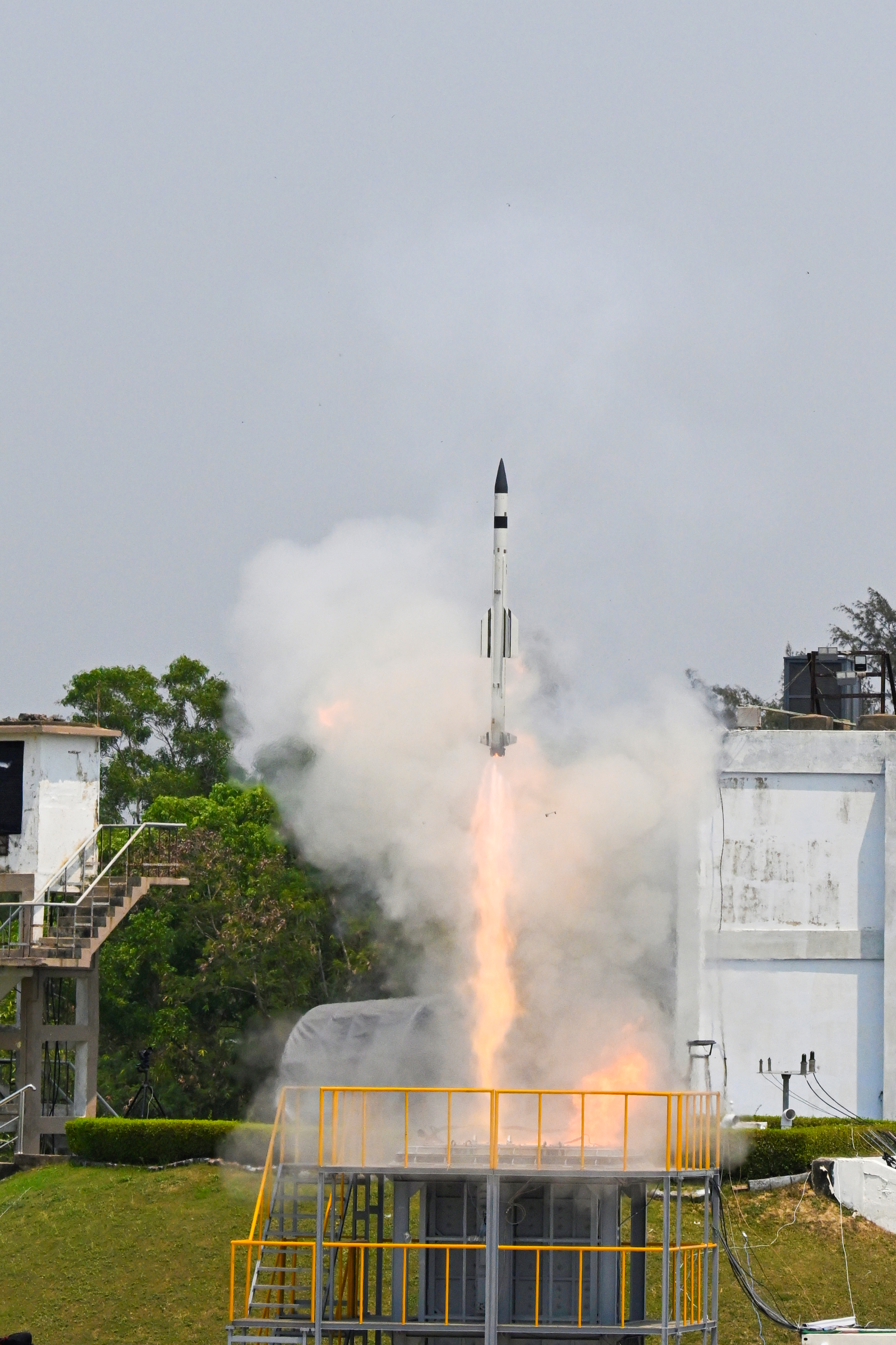
During the test, the target was completely destroyed by the missile executing the high turn rate required for engaging targets at very close range, and establishing the missile’s agility, reliability & pin-point accuracy. The test was conducted with all weapon system elements deployed in combat configuration. These elements, including missile with indigenous Radio Frequency seeker, Multi-Function Radar and Weapon Control System, have performed as per expectations. The performance of the system was validated by the flight data captured by various Range Instruments developed by ITR Chandipur.
Congratulating DRDO, Indian Navy and the industry, Raksha Mantri Shri Rajnath Singh termed the missile system as proof of India’s strong design and development capabilities in defence R&D. It will be an excellent force multiplier for the Indian Navy, he said.
View attachment 6ITyDprGjQaBAzRs.mp4


Couldn't confirm if this was the new VLS or the same old one.DRDO & Indian Navy successfully flight-test indigenously-developed Vertically-Launched Short-Range Surface-to-Air Missile
Posted On: 26 MAR 2025 8:13PM by PIB Delhi
This missile system will be an excellent force multiplier for Indian Navy: Raksha Mantri
Defence Research & Development Organisation (DRDO) and the Indian Navy conducted the successful flight-test of indigenously-developed Vertically-Launched Short-Range Surface-to-Air Missile (VLSRSAM) from the Integrated Test Range (ITR), Chandipur off the coast of Odisha at about 1200 hrs on March 26, 2025. The flight-test was carried out from a land-based vertical launcher against a high-speed aerial target at very close range and low altitude. It has established the Near-Boundary-Low Altitude capability of the missile system.
During the test, the target was completely destroyed by the missile executing the high turn rate required for engaging targets at very close range, and establishing the missile’s agility, reliability & pin-point accuracy. The test was conducted with all weapon system elements deployed in combat configuration. These elements, including missile with indigenous Radio Frequency seeker, Multi-Function Radar and Weapon Control System, have performed as per expectations. The performance of the system was validated by the flight data captured by various Range Instruments developed by ITR Chandipur.
Congratulating DRDO, Indian Navy and the industry, Raksha Mantri Shri Rajnath Singh termed the missile system as proof of India’s strong design and development capabilities in defence R&D. It will be an excellent force multiplier for the Indian Navy, he said.
View attachment 41853
VL-SRSAM console software is to be made , ie the GUI console software part. As expected it will also have the akash ng like 10 targets simultaneous engagement feature it seems.

This is just for contract renewal. pay package is very tight for govt job no wonder so many get honeytrapped.

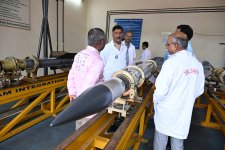

The room looks very sophisticated with wooden desi door and hanger on the wall.

The environment our top scientist work in really surprises me sometimes.The room looks very sophisticated with wooden desi door and hanger on the wall.
It's like my local govt department level infra. No wonder Russians and French were apalled at the archaic nature of HAL facility
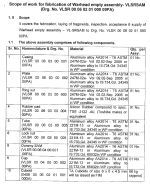
The goodies are out again , restricted but could not help
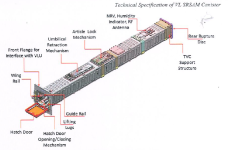
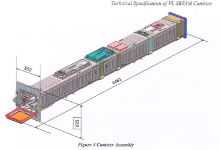
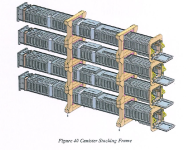
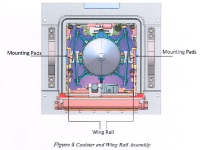


is it confirmed that VLSRSAM is based on Astra mk1 Propulsion (Single Pulse motor) over Astra Mk2 Dual pulse motor.

MFR X Band Brochure from Aero India 2025

KEY FEATURES
• The Radar is electronically stabilised to cater to Ship Roll and pitch.
• Graceful Degradation of System Performance due to distributed design of T/R Modules.
• Target designation and data to CMS and WCS.
• Automatic Acquisition and dedicated tracking of air and surface targets with high update rate, enables effective weapon control of SAMs & Guns
SPECIFICATION
• Frequency of operation: X Band MFR has four phased array antennas covering 90° each to provide 360° azimuth coverage.
The elevation coverage is up to 70°
• MFR is based on solid-state active array technology and is capable of electronic scanning in both azimuth and elevation.
• Instrumented range of 200 KM in TAWS Mode & 300 KM in LRS Mode
• Overall weight of Antenna 1.2 T
• Qualification: MIL-STD-461E/F/G, JSS55555: 2012
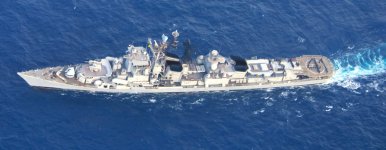
I think this is the Radar for VL-SRSAM cause that ship in the brochure looks like INS Rana to me.
And Here's INS Rana firing VL-SRSAM with the radar in the Background


KEY FEATURES
• The Radar is electronically stabilised to cater to Ship Roll and pitch.
• Graceful Degradation of System Performance due to distributed design of T/R Modules.
• Target designation and data to CMS and WCS.
• Automatic Acquisition and dedicated tracking of air and surface targets with high update rate, enables effective weapon control of SAMs & Guns
SPECIFICATION
• Frequency of operation: X Band MFR has four phased array antennas covering 90° each to provide 360° azimuth coverage.
The elevation coverage is up to 70°
• MFR is based on solid-state active array technology and is capable of electronic scanning in both azimuth and elevation.
• Instrumented range of 200 KM in TAWS Mode & 300 KM in LRS Mode
• Overall weight of Antenna 1.2 T
• Qualification: MIL-STD-461E/F/G, JSS55555: 2012
I think this is the Radar for VL-SRSAM cause that ship in the brochure looks like INS Rana to me.
And Here's INS Rana firing VL-SRSAM with the radar in the Background
As we have already seen , it is likely the Govt quoted range for this may be true figure wrt the radars detection capability. Naturally it makes no sense to make only a single pulse version of VL Astra when dual pulse is in every other sam system made today. Neither there is much logic in having a 30 km interceptor where the radar can detect from 200km sort of distance. 80km detection and 30km intercept is good for ground and naval SR use of course, but with available tech can be multi layered and for that 200km detection with 80km engagement would be good chosen parameter, even if the word short range is in there.
I think 200 km is the detection Range at 2m² RCS and 80 km would be the detection Range at 0.2m² RCS.As we have already seen , it is likely the Govt quoted range for this may be true figure wrt the radars detection capability. Naturally it makes no sense to make only a single pulse version of VL Astra when dual pulse is in every other sam system made today. Neither there is much logic in having a 30 km interceptor where the radar can detect from 200km sort of distance. 80km detection and 30km intercept is good for ground and naval SR use of course, but with available tech can be multi layered and for that 200km detection with 80km engagement would be good chosen parameter, even if the word short range is in there.
I don't think anyone designer would risk a 70 km class Medium Range SAM being guided by a Radar which has a 80 km detection Range for 0.2m² RCS
For comparison Arudhra MPR (kind of Indian equivalent to EL/M 2084 of MRSAM) has a 160 km detection Range for 0.2m² RCS
if instrumented range for long range search (LRS mode) is > 300km as suggested, then no need to worry over small rcs system. Even if a stealth jet is the adversary, it will either use a standoff weapon like a subsonic antiship cruise missile with stealth feature in which case the target would be the vector coming towards the ship, not the stealth jet. Given the terrain avoidance warning system algo also detects > 200km, that small 0.2m2 rcs object will be detected well in excess of 100km , perhaps at around 140-170km zone with enough time to track and decision to engage because that vector will obviously have few more waypoint to cover before attacking its target. So any one ship with this radar will be able to classify this threat vector quite early and deploy the kill chain.I think 200 km is the detection Range at 2m² RCS and 80 km would be the detection Range at 0.2m² RCS.
I don't think anyone designer would risk a 70 km class Medium Range SAM being guided by a Radar which has a 80 km detection Range for 0.2m² RCS
For comparison Arudhra MPR (kind of Indian equivalent to EL/M 2084 of MRSAM) has a 160 km detection Range for 0.2m² RCS
Also for MRSAM ie any medium range SAM, its detection range would be in excess of 200km even 10-15 years ago. This 80km disputed part was about Akash like short range sam system, where engagement is in a 30km bubble hard kill zone. SRSAM systems usually work with such detection & engagement zone figure. MRSAM LRSAM systems will likely be higher naturally, hence 200km+ tracking and 80km range for VL-SRSAM fits ie that 80km stated range in the doc was no mistake perhaps. This weapon complex can still have a 30km single pulse variant if it wish to deploy such, only weight & space penalty will be there.
I thought the 80km range was stated both in the MoDs end of year report and the parliamentary report? Its been confirmed for a long time no?if instrumented range for long range search (LRS mode) is > 300km as suggested, then no need to worry over small rcs system. Even if a stealth jet is the adversary, it will either use a standoff weapon like a subsonic antiship cruise missile with stealth feature in which case the target would be the vector coming towards the ship, not the stealth jet. Given the terrain avoidance warning system algo also detects > 200km, that small 0.2m2 rcs object will be detected well in excess of 100km , perhaps at around 140-170km zone with enough time to track and decision to engage because that vector will obviously have few more waypoint to cover before attacking its target. So any one ship with this radar will be able to classify this threat vector quite early and deploy the kill chain.
Also for MRSAM ie any medium range SAM, its detection range would be in excess of 200km even 10-15 years ago. This 80km disputed part was about Akash like short range sam system, where engagement is in a 30km bubble hard kill zone. SRSAM systems usually work with such detection & engagement zone figure. MRSAM LRSAM systems will likely be higher naturally, hence 200km+ tracking and 80km range for VL-SRSAM fits ie that 80km stated range in the doc was no mistake perhaps. This weapon complex can still have a 30km single pulse variant if it wish to deploy such, only weight & space penalty will be there.
yes but not sure if its engagement or detection range which was quoted.I thought the 80km range was stated both in the MoDs end of year report and the parliamentary report? Its been confirmed for a long time no?
I guess, current VLSRSAM only uses single Pulse solid motor But we (as MoD and Navy) should definitely look for Dual pulse and even extra triple pulse varients in future.
Maybe add a booster to increase Range (or take the CAMM route)
Maybe add a booster to increase Range (or take the CAMM route)