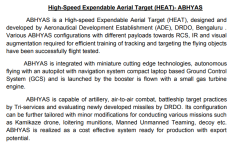
IP rights issue I guess. Govt of India wants to hold the IP rights exclusively so when needed they can produce en masse instead of 100% relying on import volume. This sudden production surge capacity building at a short notice can only be afforded (and maintained) by the Govt side for a high emergency state of war situation. Defence business is such, it is very lumpy when it comes to order esp if no major consumption over a decade or two. Your existing stock get obsolete while you find you have to cater for a large demand suddenly (suddenly does not mean few days, rather few months to year short term basis).
You are using an out of date browser. It may not display this or other websites correctly.
You should upgrade or use an alternative browser.
You should upgrade or use an alternative browser.
Does pocket money have anything to do with it? More projects means more funds. And a product already made by pvt sector in India, well seems easier to execute then pushing advanced concepts.
Chanelling my inner hydra

Chanelling my inner hydra


Not sure how feasible but this is sort of a bird hit kind of solution for this particular role ? The sheer difference in velocity for the two vectors must mean some specific solution is to be modeled and worked upon, perhaps AI assisted.
Not sure how feasible but this is sort of a bird hit kind of solution for this particular role ? The sheer difference in velocity for the two vectors must mean some specific solution is to be modeled and worked upon, perhaps AI assisted.
Okay.. I might be just rambling but hear me out.
what about a swarm of drone working as an airborne detector. An extension of our radar systems and IACCS, AKASHTEER etc.
As we know that Land based radar have their own limits due to curvature of the earth, frequency band etc. While AWACS have their own limits.
What if an AI assisted swarm is envisioned where, the drones are positioned in a way that leverage astronomy ( geometry) to create or 'un-create' the blind spots. Cheaper version means that any drones lost must be filled by backup drones and real time adjustments based on GPS , INS etc to form right constellation in sky.
I had a diagram made for it. Let me see if it's somewhere saved.
If not manned ac, this could work as hard-kill CUAS with a net gun/direct collision against WL-2/WL-3/CH-3/CH-4/Akinci type MALE drones, I'd say. Or as decoys with radar reflectors to spoof enemy AD.Not sure how feasible but this is sort of a bird hit kind of solution for this particular role ? The sheer difference in velocity for the two vectors must mean some specific solution is to be modeled and worked upon, perhaps AI assisted.
Some good pics and video in the IDSA session presentation.
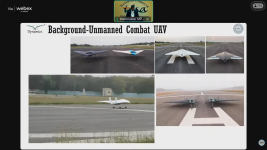
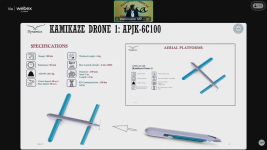
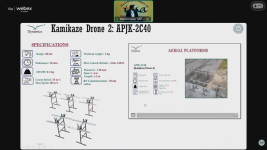
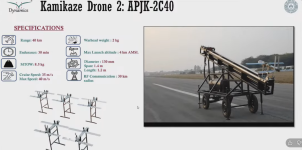


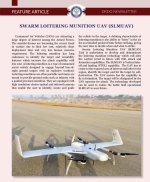
SLMUAV already had it's first flight,
Who will be the DcPP it gonna be interesting?

Who will be the DcPP it gonna be interesting?
That tender was for this purpose, development been ongoing for some time but you finalise on a frozen production ready config with the partner co. Now DRDO side only handover the tech spec, scaling that into the product needs industry expertise, time money & test facilitiesto prove acceptable performance metric. Seen plenty think what DRDO make as proto is what exactly reflected in a production ready version. It does not happen like that.
Its the reason why the tri service has so much complain with domestic products, QA QC is quite bad due to lax effort and corruption.
Its the reason why the tri service has so much complain with domestic products, QA QC is quite bad due to lax effort and corruption.


In a significant move towards strengthening India’s defence manufacturing ecosystem, the Minister witnessed the formalisation of CSIR-NAL’s collaboration with M/s Solar Defence & Aerospace Ltd. for the development of the indigenous 150-kg class Loitering Munition UAV. Powered by NAL’s certified Wankel engine, the UAV will offer a 900 km range, 6–9 hours endurance, a 5 km service ceiling and advanced capabilities such as GPS-denied navigation, low radar cross-section, and AI-enabled target identification. The Minister said that this PPP model epitomises the spirit of Atmanirbhar Bharat, ensuring that India develops critical defence technologies within the country while building industrial capacity for commercial-scale production.

I remember some DRDO infographics/ppt presentation that does show something like that.Okay.. I might be just rambling but hear me out.
what about a swarm of drone working as an airborne detector. An extension of our radar systems and IACCS, AKASHTEER etc.
As we know that Land based radar have their own limits due to curvature of the earth, frequency band etc. While AWACS have their own limits.
What if an AI assisted swarm is envisioned where, the drones are positioned in a way that leverage astronomy ( geometry) to create or 'un-create' the blind spots. Cheaper version means that any drones lost must be filled by backup drones and real time adjustments based on GPS , INS etc to form right constellation in sky.
I had a diagram made for it. Let me see if it's somewhere saved.
In a significant move towards strengthening India’s defence manufacturing ecosystem, the Minister witnessed the formalisation of CSIR-NAL’s collaboration with M/s Solar Defence & Aerospace Ltd. for the development of the indigenous 150-kg class Loitering Munition UAV. Powered by NAL’s certified Wankel engine, the UAV will offer a 900 km range, 6–9 hours endurance, a 5 km service ceiling and advanced capabilities such as GPS-denied navigation, low radar cross-section, and AI-enabled target identification. The Minister said that this PPP model epitomises the spirit of Atmanirbhar Bharat, ensuring that India develops critical defence technologies within the country while building industrial capacity for commercial-scale production.


JSW setting up $90 million military drone plant in Hyderabad
V-BAT drone manufacturing at the facility of JSW Defence is expected to commence by last quarter of 2026, said the Group
The $23 billion JSW Group is setting up an unmanned aerial systems manufacturing facility with $90 million (about Rs. 850 crore) investment at Maheshwaram electronics manufacturing cluster, on the outskirts of Hyderabad.
It has entered into a strategic partnership with US-based defence technology firm Shield AI to manufacture the latter’s Group 3 unmanned aerial system (UAS) – under a long-term licensing arrangement for transfer of technology. A fixed-wing, vertical take-off and landing (VTOL), long endurance intelligence, surveillance, reconnaissance (ISR) platform, V-BAT is currently deployed by multiple armed forces globally, including the U.S. Marine Expeditionary Units (MEUs).
The manufacturing, at the facility of JSW Defence, is expected to commence by last quarter of 2026, JSW Group said after the foundation stone laying ceremony in which IT and Industries Minister D. Sridhar Babu, JSW Group’s Parth Jindal and others participated.
The investment will enable JSW to establish a local supply chain and create an advanced facility in India for manufacturing, assembling and testing V-BAT. The effort will enable large-scale production of V-BATs in India to serve the needs of the Indian Armed Forces and also function as a global production hub, the Group said.

JSW Group’s Parth Jindal and Sarjan Shah, managing director, Shield AI at the foundation stone laying of JSW defence facility in Hyderabad | Photo Credit: BY ARRANGEMENT
“From manufacturing the globally renowned V-BAT at scale, the facility will lay the foundation for an integrated, end-to-end UAS ecosystem, from advanced manufacturing to operator training, manufacturing repair and operations (MRO) and sustained innovation. This project stands among the most significant defence technology transfers to India,” Mr. Jindal said.
On the Group’s defence ventures, he said the drone manufacturing project follows the JSW Gecko Motors joint venture, with a Ukrainian company, to make special mobility vehicles in Chandigarh. The facility was commissioned about 18 months ago and supplied nearly 200 vehicles between the Indian Army and the United Nations. In the same facility, JSW has another JV with an American firm to manufacture off-road vehicles.
V-BAT drone manufacturing at the facility of JSW Defence is expected to commence by last quarter of 2026, said the Group
The $23 billion JSW Group is setting up an unmanned aerial systems manufacturing facility with $90 million (about Rs. 850 crore) investment at Maheshwaram electronics manufacturing cluster, on the outskirts of Hyderabad.
It has entered into a strategic partnership with US-based defence technology firm Shield AI to manufacture the latter’s Group 3 unmanned aerial system (UAS) – under a long-term licensing arrangement for transfer of technology. A fixed-wing, vertical take-off and landing (VTOL), long endurance intelligence, surveillance, reconnaissance (ISR) platform, V-BAT is currently deployed by multiple armed forces globally, including the U.S. Marine Expeditionary Units (MEUs).
The manufacturing, at the facility of JSW Defence, is expected to commence by last quarter of 2026, JSW Group said after the foundation stone laying ceremony in which IT and Industries Minister D. Sridhar Babu, JSW Group’s Parth Jindal and others participated.
The investment will enable JSW to establish a local supply chain and create an advanced facility in India for manufacturing, assembling and testing V-BAT. The effort will enable large-scale production of V-BATs in India to serve the needs of the Indian Armed Forces and also function as a global production hub, the Group said.
Project will create over 300 high-value jobs
The facility is spread over 16 acres and will have a capacity to manufacture 300 V-BAT drones annually. It will house production, repair, testing, administrative, and support infrastructure. This project will create over 300 high-value jobs, the Minister’s office said.
JSW Group’s Parth Jindal and Sarjan Shah, managing director, Shield AI at the foundation stone laying of JSW defence facility in Hyderabad | Photo Credit: BY ARRANGEMENT
“From manufacturing the globally renowned V-BAT at scale, the facility will lay the foundation for an integrated, end-to-end UAS ecosystem, from advanced manufacturing to operator training, manufacturing repair and operations (MRO) and sustained innovation. This project stands among the most significant defence technology transfers to India,” Mr. Jindal said.
On the Group’s defence ventures, he said the drone manufacturing project follows the JSW Gecko Motors joint venture, with a Ukrainian company, to make special mobility vehicles in Chandigarh. The facility was commissioned about 18 months ago and supplied nearly 200 vehicles between the Indian Army and the United Nations. In the same facility, JSW has another JV with an American firm to manufacture off-road vehicles.
Total Rs.1,200 cr investment
The Group will be investing total Rs. 1,200 crore on the defence ventures, which includes Rs. 320 crore towards the technology transfer from Shield. He said India Armed Forces were evaluating the UAS from a localisation perspective. The initial order is for importing eight UAS under the emergency procurement route, something catered directly by Shield AI. The larger orders will be placed once the facility is up, he said.Abhyas tot is available now