
You are using an out of date browser. It may not display this or other websites correctly.
You should upgrade or use an alternative browser.
You should upgrade or use an alternative browser.


@marich01
Old topic but is the flight trajectory/path of Lrashm comparable to that of meduim-long range Air-2-air/sirface-to Air missiles
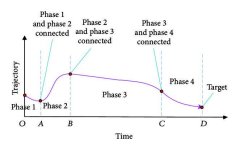
Unlike traditional HGV's, which do not "glide" like a surfboard on water or a glider plane in air for majority of their flight. They actively "ride" waves of compression (shock waves) to generate lift, kinda like skipping stones on water.
Old topic but is the flight trajectory/path of Lrashm comparable to that of meduim-long range Air-2-air/sirface-to Air missiles
Unlike traditional HGV's, which do not "glide" like a surfboard on water or a glider plane in air for majority of their flight. They actively "ride" waves of compression (shock waves) to generate lift, kinda like skipping stones on water.
Air to air engagement the vector coast to its target by using the velocity gained and generating enough lift via the control surfaces to not lose energy due to gravity pull ie not lose the gained kinetic impulse. If there were no large mid body control surface present , it would not have coasted to long distance due to no active propulsion. This is mitigated by using dual pulse or multi pulse propulsion where another active powered flight can happen a short while after the first stage motor burn completion. Hence Astra got long chord fins for both versions to fly longer distance, while Akash NG can do with 2 smaller set of fins.@marich01
Old topic but is the flight trajectory/path of Lrashm comparable to that of meduim-long range Air-2-air/sirface-to Air missiles
Flight of ground up glide profile system like LRAShM would be slightly different due to range (primary constraint) and its high Lift to drag ratio which is designed so it can sustain long glide flight via aerodynamic lift. This lift is also generated due to very high acceleration which changes the boundary layer interaction between air and body surface. The air is turned into plasma and shock waves are generated which enables the waverider concept. This phenomenon is unlikely at air to air speed which is usually below mach 5, while lrashm work at far higher speed regime.
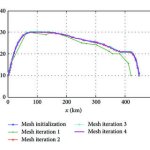
Range is primary constraint because the algorithm you would calculate will be applicable for a specific range like upto/below 400km in the graph above. This algo program can power the autopilot which drives this specific system upto <400km range. But the same algo will not give satisfactory result for LRAShM kind 1500km range requirement. Other parameters will affect the equation. That is why different constraint based different algorithm is generated and each set creates a new flight trajectory option. Some being good and some giving average result.
Also fixed ground target vs a maneuvering target or target in motion create need fo different algorithm for engagement. Hence the sam system obc algo program differs to some air to ground target obc algo program. Seeker is needed to function differently.
So lrashm's flight is it more similar to conventional hgv that flies like a skipping stone on water body for most of its flight, like mainly riding pressure/shock waves to get jumps to gain altitude multiple times in its flight.Air to air engagement the vector coast to its target by using the velocity gained and generating enough lift via the control surfaces to not lose energy due to gravity pull ie not lose the gained kinetic impulse. If there were no large mid body control surface present , it would not have coasted to long distance due to no active propulsion. This is mitigated by using dual pulse or multi pulse propulsion where another active powered flight can happen a short while after the first stage motor burn completion. Hence Astra got long chord fins for both versions to fly longer distance, while Akash NG can do with 2 smaller set of fins.
Flight of ground up glide profile system like LRAShM would be slightly different due to range (primary constraint) and its high Lift to drag ratio which is designed so it can sustain long glide flight via aerodynamic lift. This lift is also generated due to very high acceleration which changes the boundary layer interaction between air and body surface. The air is turned into plasma and shock waves are generated which enables the waverider concept. This phenomenon is unlikely at air to air speed which is usually below mach 5, while lrashm work at far higher speed regime.
Range is primary constraint because the algorithm you would calculate will be applicable for a specific range like upto/below 400km in the graph above. This algo program can power the autopilot which drives this specific system upto <400km range. But the same algo will not give satisfactory result for LRAShM kind 1500km range requirement. Other parameters will affect the equation. That is why different constraint based different algorithm is generated and each set creates a new flight trajectory option. Some being good and some giving average result.
Also fixed ground target vs a maneuvering target or target in motion create need fo different algorithm for engagement. Hence the sam system obc algo program differs to some air to ground target obc algo program. Seeker is needed to function differently.
Or is it more of organic gliding/coasting but at hypersonic speeds so some amount of wave riding does happen?
So lrashm's flight is it more similar to conventional hgv that flies like a skipping stone on water body for most of its flight, like mainly riding pressure/shock waves to get jumps to gain altitude multiple times in its flight.
Or is it more of organic gliding/coasting but at hypersonic speeds so some amount of wave riding does happen?
That would be HCM, no? I don't think we are there yet.
Na.That would be HCM, no? I don't think we are there yet.
HCM would imply continuous powered hypersonic flight, through the mission duration, using more efficient method of propulsion i.e air breathing.
Lrashm does have unpowered glide/coasting etc phases, with its rocket sustained motors igniting for powered flight in later parts of its midcourse.

So far not enough info to say exactly, as I do not have enough knowledge on this subject. it has lift generating design but not the very best high speed config (within mach 10 range as baseline) , a high kinetic impulse providing booster stage which will keep it up for considerable time. The distance covered is not important, rather detecting and acquiring its target while airborne is vital. In this regard if launched from too much distance it will not work well due to limited powered on thrust & seeker will have to acquire its target within a small time window without overlapping the entire target zone.So lrashm's flight is it more similar to conventional hgv that flies like a skipping stone on water body for most of its flight, like mainly riding pressure/shock waves to get jumps to gain altitude multiple times in its flight.
Or is it more of organic gliding/coasting but at hypersonic speeds so some amount of wave riding does happen?
Some skip part will be necessary since 1500km is vast distance for a vector that is less than 20m in length.
My question is basically limited to way it flies/glides/skipSo far not enough info to say exactly, as I do not have enough knowledge on this subject. it has lift generating design but not the very best high speed config (within mach 10 range as baseline) , a high kinetic impulse providing booster stage which will keep it up for considerable time. The distance covered is not important, rather detecting and acquiring its target while airborne is vital. In this regard if launched from too much distance it will not work well due to limited powered on thrust & seeker will have to acquire its target within a small time window without overlapping the entire target zone.
Some skip part will be necessary since 1500km is vast distance for a vector that is less than 20m in length.
What do you think is more probable from superficial analysis of its design and configuration
Its obviously for a precision attack against a (slower) moving very high value sea target, so it will not be exactly the highest speed or medium range sea skimming capability oriented weapon.My question is basically limited to way it flies/glides/skip
What do you think is more probable from superficial analysis of its design and configuration
Some chance that the BM-04 booster might be different from the A1P ie suited for a conventional role or for the glider rv it carries whichever way it may be. Not dimension wise, just by performance wise. This would make sense if it is so. It is possible to get different performance parameter by changing propellant composition and other metrics.

MoD & BDL sign Rs 2,095.70 crore contract for INVAR Anti-tank missiles to enhance lethality of T-90 tank
Posted On: 13 NOV 2025 5:32PM by PIB DelhiMinistry of Defence has inked a contract with Bharat Dynamics Limited (BDL) for the procurement of INVAR Anti-tank Missiles at a total cost of Rs 2,095.70 crore, under the 'Buy (Indian)' category. The contract was signed by senior officials of the Ministry of Defence and representatives of BDL in the presence of Defence Secretary Shri Rajesh Kumar Singh at South Block, New Delhi on November 13, 2025.
The procurement of the INVAR Anti-tank Missiles enhances the firepower and lethality of Tank T-90, the mainstay of Armoured Regiments of the Indian Army. The weapon system is a sophisticated laser-guided anti-tank missile with very high hit probability. It is set to transform the conduct of Mechanised operations and offer operational advantage against the adversary.
The procurement underscores the Government’s efforts to meet the operational requirements of the Indian Army by leveraging the existing expertise of Defence Public Sector Undertakings, along with development of niche technologies by domestic industries towards achieving Aatmanirbharta in defence.
BDL also got a sow for small batch of imaging SAL seekers. Possibly atgm related, and maybe for bmp-2 since such a product was unveiled in 2023. The imaging laser seeker is good, it can lock on target from kms ahead and very small about 250gm weight.

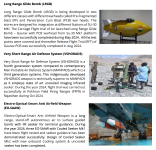
I can not understand why waste a good IIR seeker on a 125kg payload? jam proof etc yes but a tv feed would have worked, maybe they face strong EW interference around the enemy airbases. But if use a seeker make it worthwhile with 250kg class saaw like spice er does.
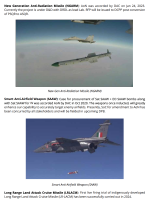

These would be useful to target smaller mobile targets like MLRS, Radars, SAMs etc, and a jet can carry a lot of SAAW like small-diameter bombs compared to limited number of 500-pound glide bombs.I can not understand why waste a good IIR seeker on a 125kg payload? jam proof etc yes but a tv feed would have worked, maybe they face strong EW interference around the enemy airbases. But if use a seeker make it worthwhile with 250kg class saaw like spice er does.
Glide bomb minus propulsion unit is not very convenient option to target any mobile target unless you are aiming for secondary damage from fragments. Even the fixed radars are targeted with something capable of bypassing the AD bubble around with lower flight altitude or high speed. If the target is mobile and you have an aerial mission to hi it, you have to find its real time co-ordinates else how are you going to send the glide bomb that works with input data of target location to the precise location? if the target has moved even a little like 40-50 meters it may not be effective.These would be useful to target smaller mobile targets like MLRS, Radars, SAMs etc, and a jet can carry a lot of SAAW like small-diameter bombs compared to limited number of 500-pound glide bombs.
One reason why railway tracks, runways are disabled first is due to this, could have hit the actual imp targets ie jets, trains etc. But a fixed target is taken out first then the strays can be picked out later with ease.