India-Brazil Bilateral Relations

image001PRYJ.jpg


With eyes on trade deals and reform in global governance, Lula heads to India with 260 firms​

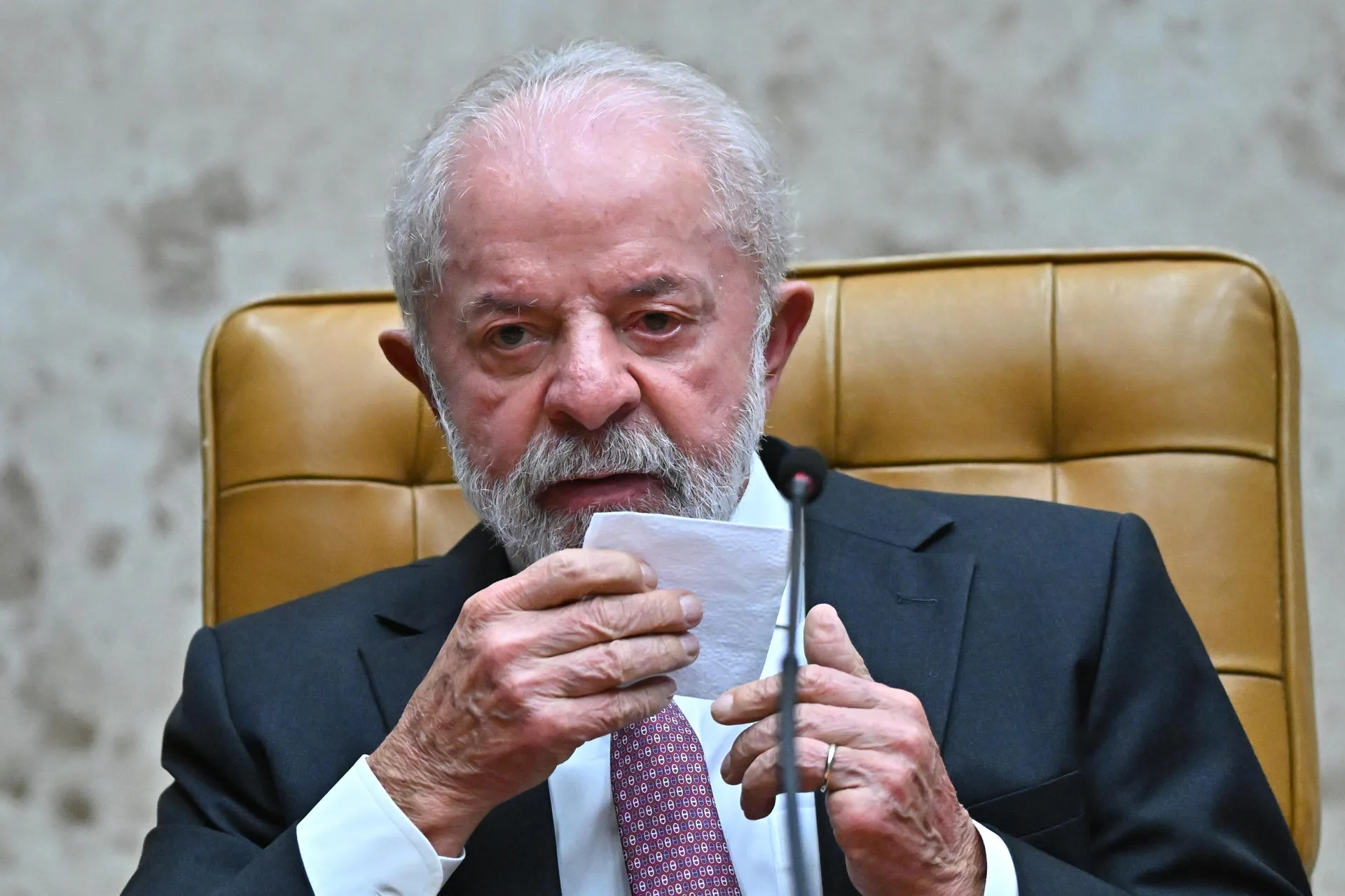
Brazil is getting ready for the Carnival this weekend, when the country literally comes to a halt, but hectic preparations are underway in Brasilia for President Lula da Silva’s upcoming visit to India with a business delegation of 260 companies.

The largest-ever Brazilian delegation to India marks the culmination of the highest-level engagement between the two countries over the past few years — in a challenging geopolitical scenario. This could also be the Brazilian leader’s last major foreign engagement before Brazil gets into election mode for the presidential polls in October this year.

Following Prime Minister Narendra Modi’s bilateral meeting with Lula in Brasilia in July 2025, when they discussed the expansion of bilateral trade, the Brazilian leader’s trip to New Delhi, from February 19 to 21, is being given top priority by the Brazilian government.
Celso Amorim, who serves as Lula’s principal foreign policy adviser, sees the visit as an opportunity for collaboration in strategic sectors between two emerging economies. “Cooperation between Brazil and India can be very broad, but I would highlight above all two domains: technology and defence,” Mr. Amorim told The Hindu.

“Brazil and India have developed, each in its own way, very important aspects of biotechnology too. In space science, India has given us a great example of how it is possible to achieve great accomplishments without necessarily resorting to the technology of the rich countries,” said Mr. Amorim, who has earlier served as Foreign Minister and Defence Minister under Presidents Lula and Dilma Rouseff, respectively.

Since the 2025 bilateral meeting, the Brazilian side has been working to strengthen its trade ties with India. Jorge Viana, head of the Brazilian Trade and Investment Promotion Agency (Apex Brazil), told The Hindu that Lula asked him last year to put together a delegation as part of his efforts to expand commercial ties with India.

“In Delhi, the President will participate in the Artificial Intelligence summit, but we are also organising a huge business meeting in collaboration with our Foreign Ministry. Apex is also opening an office in Delhi as we see India, the most populous nation, as one of the economies with the greatest potential for growth,” Mr. Viana told The Hindu from Brasília. “Till last year, India was our 10th biggest trading partner, but now in recent months it has been competing to be the fifth. It could become the third biggest.”

In 2025, Brazil purchased Indian products worth $8.5 billion, while Brazilian exports to India totalled $7 billion
— mainly in oil, sugar, molasses, fats and vegetable oils and iron ore sectors. However, Mr. Viana says, Brazilians now want to diversify their exports to India.

“We have 260 Brazilian companies attending the event that Apex is organising in Delhi. We have representatives from all strategic sectors. We are taking a lot of people from the health area, including our Health Minister, because India is a major supplier of medicines to Brazil. We also have important companies of ethanol and biofuel onboard because there is already an agreement between Brazil and India in the area.” He added that there could be a major announcement about the arrival of Embraer, the Brazilian aircraft manufacturing firm, in India.

With energy security and sustainability reshaping global alignments — and threatening to rupture the existing world order amid intensifying geopolitical rivalries — the Brazilian side is keen to deepen engagement with India in these areas. “We have to work together for the energy transition, without forgetting that we still have a large trade in oil. We cannot, from one hour to the next, abandon oil, but we do have to work so that the world is more sustainable. And sustainable not only from the economic and energy point of view, but also from political point of view,” says Mr. Amorim, who has been one of the most influential Brazilian voices in international affairs for two decades.

While trade may dominate Lula’s agenda in Delhi, Brazil is also looking at India’s presidency of BRICS in 2026 to further advance the conversation on global governance and multilateralism which is under threat. For Mr. Amorim, the grouping must debate on reforming the global order to reflect the interests of the Global South.

“It is important that the Indian presidency of BRICS leads this discussion about the current world order and how to change it. We all know the struggle there is for the expansion of the UN Security Council. A world without rules is a very difficult world. India and Brazil have always worked with rules — the rules that they helped to build and that benefited us. And this is only possible within a balanced multilateral system, which BRICS has to help strengthen and rebuild,” said the adviser to Lula.

With U.S. President Donald Trump throwing out the rulebook on international trade, emerging economies have begun to explore more trade with other countries and blocs. Just a few weeks before India signed a Free Trade Agreement (FTA) with the EU, the South American trade bloc Mercosur, which Brazil is part of, also finalised its pact with the Europeans. Now, the long-pending Mercosur-India FTA may also come up for serious discussion during Lula’s visit.

“The tension of the U.S. with the whole world has generated opportunities for countries like Brazil, which have no disputes with anyone. The Mercosur–EU agreement is moving forward well. Though it is a multilateral agreement and involves many tariffs, we will discuss it with the Indian side,” said Mr. Viana, who is a member of Lula’s Workers Party and a close confidant of the President.

Brazil is yet to agree on a trade deal with the U.S. But, with the largest-ever business delegation to India in his third term as president, the Brazilian leader is looking at striking big deals with a fellow BRICS member before returning home after the Carnival is over.
 

Brazil and India will sign a cooperation agreement on critical minerals and rare earths during Brazilian President Luiz Inácio Lula da Silva’s state visit to the Asian country next week, official sources announced Thursday.

The agreement “will follow the general line of Brazilian policy for the sector, which is to give it priority, open up to international cooperation, and bring added value to national production. Not only extracting the mineral but also processing it here,” said Susan Klebank, director for Asia and the Pacific at the Brazilian Foreign Ministry, at a press conference.

Brazil has the world’s second-largest reserves of rare earths and aims to increase its exports. However, it is also interested in agreements that would allow it to process these materials domestically and increase their value.

It also intends to diversify its trading partners for these minerals and avoid exclusivity agreements such as those sought by the United States.

This will be one of 11 agreements that the Brazilian president will sign during his trip to India from Feb. 18 to 21

The first two days, Lula will participate in the Impact of Artificial Intelligence Summit, and he will stay for two more days for his state visit.

He also plans to sign the Digital Partnership for the Future between Brazil and India, the agreement to extend tourist visas, and another to promote collaboration between Brazil’s Embraer and India’s Adani Defence & Aerospace to build aircraft in the Asian country.

Lula will also take advantage of his visit to promote negotiations to expand the preferential trade agreement between Mercosur and India, one of the South American bloc’s priorities.

Among the planned engagements are a bilateral meeting with Indian Prime Minister Narendra Modi and a dinner hosted in his honor by President Droupadi Murmu.

”Lula and Prime Minister Modi will have the opportunity to exchange views on the global situation, particularly the challenges to multilateralism and international trade,” Klebank said.

She added that they will also discuss the need for reforms to the United Nations Security Council, a body that both Brazil and India aspire to join as permanent members.

”Both leaders will also reiterate their commitment to peace in Gaza, with respect for the sovereignty of nations and democracy,” said the ambassador.

The diplomat recalled that the two countries, members of the BRICS and IBAS forums, signed a strategic partnership in 2006 and are experiencing a moment of “ascension” in their relations, “which have gained even more importance in the current context of global instability.”
 

Brazil and India will sign a cooperation agreement on critical minerals and rare earths during Brazilian President Luiz Inácio Lula da Silva’s state visit to the Asian country next week, official sources announced Thursday.

The agreement “will follow the general line of Brazilian policy for the sector, which is to give it priority, open up to international cooperation, and bring added value to national production. Not only extracting the mineral but also processing it here,” said Susan Klebank, director for Asia and the Pacific at the Brazilian Foreign Ministry, at a press conference.

Brazil has the world’s second-largest reserves of rare earths and aims to increase its exports. However, it is also interested in agreements that would allow it to process these materials domestically and increase their value.

It also intends to diversify its trading partners for these minerals and avoid exclusivity agreements such as those sought by the United States.

This will be one of 11 agreements that the Brazilian president will sign during his trip to India from Feb. 18 to 21

The first two days, Lula will participate in the Impact of Artificial Intelligence Summit, and he will stay for two more days for his state visit.

He also plans to sign the Digital Partnership for the Future between Brazil and India, the agreement to extend tourist visas,
and another to promote collaboration between Brazil’s Embraer and India’s Adani Defence & Aerospace to build aircraft in the Asian country.

Lula will also take advantage of his visit to promote negotiations to expand the preferential trade agreement between Mercosur and India, one of the South American bloc’s priorities.

Among the planned engagements are a bilateral meeting with Indian Prime Minister Narendra Modi and a dinner hosted in his honor by President Droupadi Murmu.

”Lula and Prime Minister Modi will have the opportunity to exchange views on the global situation, particularly the challenges to multilateralism and international trade,” Klebank said.

She added that they will also discuss the need for reforms to the United Nations Security Council, a body that both Brazil and India aspire to join as permanent members.

”Both leaders will also reiterate their commitment to peace in Gaza, with respect for the sovereignty of nations and democracy,” said the ambassador.

The diplomat recalled that the two countries, members of the BRICS and IBAS forums, signed a strategic partnership in 2006 and are experiencing a moment of “ascension” in their relations, “which have gained even more importance in the current context of global instability.”
We need to focus on recycling big time. That's the next proverbial gold mine. All these countries with huge deposits of REM will insist on keeping control of as much of the value chain as they can on their soil.

Apart from bettering economic prospects it also increases employment & investment in their respective countries apart from giving them leverage in case things go south.

Not many are focusing on recycling these REM as of now & once the Chinese get in , it's going to be a very different ballgame. They'd then be controlling end to end of two different supply chains , the original one where you mine refine & then process the said REM into a product for any given application & the other one where you salvage these products & then recycle them.

We like the rest of the world missed the bus when the Chinese were aggressively acquiring those mines & patented those refining technologies . I'm not sure the west would be too keen on recycling given their tough environmental laws.

This is our game to lose .
 

MoU on cooperation in areas of Rare Earth Minerals and Critical Minerals

MoU for Cooperation in the field of Postal Sector

MoU for cooperation in MSME entrepreneurship and crafts

Joint Declaration/Action Plan on Digital Partnership for Future

MoU between the INPI and CSIR – on Traditional Knowledge Digital Library

New MoU between CDSCO and ANVISA

MoU between Indian Institute of Mass Communication (IIMC) and Federal University of Minas Gerais (UFMG)

MoU between Satyajit Ray Film and Television Institute (SRFTI) and University of Sao Paolo (USP)

MoU in the Field of Mining for the Steel Supply Chain

MoU on e-Certificates of Origin.

Announcements

Brazil has extended Business visa for Indian ordinary passport holders to 10 years (came to effect from 07 February 2026)