Indian Defense Industry General News and Updates


Prime Minister Narendra Modi, who is on a two-day visit to Israel, is looking at deepening India’s already close defence ties with Tel Aviv.

No major defence procurement deal is expected to be signed during the two-day visit, contrary to the media frenzy. However, defence and security cooperation will be a key focus area, ThePrint has learnt.

The two sides will sign a framework agreement on defence cooperation that will allow companies from both sides to collaborate deeper.

Government sources told ThePrint that the idea is to move away from a buyer-seller relationship in defence to actual co-development and co-production.

“India and Israel are moving beyond transactional deals. The story is not whether a contract has been signed but what the new framework agreement is and what it seeks to do. The impact will be seen in the coming months,” a source said.

Another source added, “The sky is the limit,” when asked about the projects the two sides are working on.

Sources said Prime Minister Modi’s visit will take forward the Memorandum of Understanding (MoU), signed in November last year by Defence Secretary Rajesh Kumar Singh to expand the scope of bilateral defence ties between the two nations.

As reported by ThePrint in December, Tel Aviv is increasingly looking at India as a long-term defence manufacturing and strategic partner in its search for alternatives.

Israel is reassessing its defence partnerships, even though its own sale of military equipment to Europe is at an all-time high. Israeli defence companies currently have signed orders from Europe that would sustain them over the next four to five years, even if no new orders are placed.

Israel’s small geographic size and security vulnerabilities have made diversification of defence manufacturing a strategic priority.

A senior source in the Indian establishment has told ThePrint, “Israel has cutting-edge technology, and India has the ability to scale up manufacturing. It is a win-win situation for both sides.”

Sources explained that Israel is looking at not just Indian orders but manufacturing in India for their own and global demand.

However, Israel is seeking changes to Indian law on company share holdings and Intellectual Property Rights.

Talking about projects in the pipeline, including some of which will take a few years to materialise if at all, the sources said Israel has even offered co-production of systems that are still under development.

The systems include the Ice Breaker, a 5th generation long range cruise missile that can be air launched, the Sparrow series of missiles including the much-touted Golden Horizon, an air-launched ballistic missile that has a range of about 2,000 km, and even Arbel technology for small arms.

Arbel is a computerised system that, once integrated, allows a rifle and even a light machine gun to independently fire follow-up shots at a target after the first shot is fired, using the operator’s behaviour to determine the optimal moment to fire each shot and the rate of fire to be used.

The system was initially integrated onto IWI’s Negev light machine gun (LMG) and then subsequently onto the company’s Arad assault rifles.

Though originally meant as an anti-drone system for last-mile defence, the system can be used on any target.

Along with the systems mentioned above, Israel is also offering a slew of air defence systems for procurement, which India will decide on depending on its own need.
 

He said an Indian firm is keen to set up an ammunition plant in Poland and discussions are under way.

“So, I can tell you on the record that the only link you can establish between Poland and what you call terrorist infrastructure in Pakistan is that Polish drones were used by the Indian Army to destroy this infrastructure,” the ambassador said.

He added, “According to independent sources and Pakistani sources, India extensively used Polish-made drones sold to India during the first night and first day of the Sindoor operation.

Speaking further, the ambassador said, “And probably our drones were very successful, very effective, because the Indian Army has quite recently signed three new contracts. We will be supplying India with both attack drones and reconnaissance drones. Why? Because Polish drones tested in Ukraine are considered quite good.

Responding to a query about India being upset over a joint statement issued by Poland and Pakistan in November last year that referred to Kashmir, he said it was a misunderstanding.

Świtalski added, “We have no real problem saying India is doing right in pursuing terrorists and hitting them.”

Defence the focus


He said Poland wants not just to sell, but also to buy defence systems from India.

“We want to sell and buy Indian weaponry and military systems, unlike with any other country in the region, including Pakistan. And that is a statement which is, I think, in political terms, quite strong,”
he said.

Responding to queries on defence cooperation, the Polish ambassador said officials from the two defence ministries would be meeting soon.

“You know, there are different ideas in the discussion. Very concrete ideas. Of course, I don’t want to disclose everything… For instance, one example I can give you, because it’s on the table: one big Indian company wants to build a huge munitions factory in Poland. And it’s serious. And it’s very concrete”, the ambassador said.

“Do we need munitions? Yes, we do. We neglected the issue. Our arsenals suddenly look empty,” he said.

He added that there are “interesting and very concrete ideas” under discussion by both sides.

However, he said that at times partnerships may not materialise despite intentions.

Świtalski said Poland’s state-run company was looking for a partner in the electric vehicle sector.

“For instance, it’s not a secret that our state company in Poland is looking for a partner on electric vehicles. We initially looked at China, but it didn’t work out. Don’t ask me why. So, of course, we look to India,” Świtalski said.

“But Indian companies do not currently see a place for Poland and for Europe as such in their strategy. Then, probably, we will go to Vietnam, although our preference is India. We understand you have different business strategies. Why should you suddenly change them because Poland is interested? So, no offence,” the ambassador added.
 
It is perplexing sometimes that folks do not understand that unless you use V1.0 and start working towards upgrades for V2.0 (including improving its flaws), things will not move in the right direction. You can always import the system. However, that system was built on successive improvements and research work. Testing and fielding the weapons in the local battles is important if you wish to develop local alternatives for imports.

Long ago (I do not remember the exact forum or the year), there was an argument that LSVs and LAMVs that India was producing was not meeting demanding terrain standards. Certain improvements were made and then they were ordered in sizeable nos. If you do not use the stuff extensively, how will the 2.0 improve? If you do not give a chance to 1.0, there will be no 2.0.

The X post below captures certain aspects of the same.

 
^^ The post above was made with regards to LRLMs and ALCMs. Certain weapons have not even had their trials yet and doubts are already there if they meet certain requirements. There is space for domestic products in all these categories.
 
^^ The post above was made with regards to LRLMs and ALCMs. Certain weapons have not even had their trials yet and doubts are already there if they meet certain requirements. There is space for domestic products in all these categories.
The key word is ADE. An incompetent DRDO lab.
 
  • Haha
Reactions: Shan

For a while I'd thought this would be ideal. But certainly can't be applicable for every category (yet). IDDM still doesn't cover everything. We know there are various reasons for that & we can blame X, Y, Z rightfully or otherwise. However, at the end of the day if our forces need something specific via EP, imo that option should definitely be available
- Instead of restricting EP to IDDM, a better option imo might be: Create a list of IDDM product categories for which there should be no imports. For items under R&D, a phased approach should be pursued for inclusion in a negative import list. For items that were not sought by the services previously, there can be a level of scrutiny before EP is approved. And most importantly the the objective should be to eliminate the EP category itself by making our DAP much faster to execute.
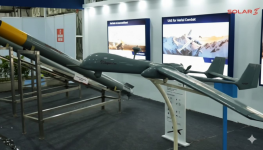
- As far as Solar Maheshwarastra is concerned: I don't think the procedure for scrutiny of suo-moto proposals were sorted out then although that option existed. Also the MoD was the decision making body ultimately, not the Army.
We need a dedicated funding path for high risk projects, iDEX & TDF funding isn't enough. Make still isn't perfect imo. Its a systemic issue that prevents firms from proliferating innovation. Without innovation, we dont address unique use cases & develop unique munitions & tech. Without that, we will always have room for EP.
 
Archer-NG?
They have their own version as well.


1773049912266.png
 
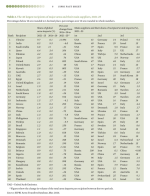
Somebody on the other forum was saying that SIPRI counts locally assembled items like KONKURS, BMP, MILAN, DO-228, SRG 76mm, AK-630 etc. by country of origin, which makes the number look big. and it doesn't distinguish between new capex items(S-400) and sustainment of old equipment inducted 20-30 years ago(BMP).
If a country imports the rights and components to build a weapon domestically (licensed production), SIPRI counts these weapons as imports. They are assigned the exact same TIV as if they had been imported fully assembled from the supplier country.

TIV is a proprietary measurement unit used by SIPRI.
 
If a country imports the rights and components to build a weapon domestically (licensed production), SIPRI counts these weapons as imports. They are assigned the exact same TIV as if they had been imported fully assembled from the supplier country.

TIV is a proprietary measurement unit used by SIPRI.
I personally don't think it should be considered Import. Because what if you make almost 90% of the components within the country with 75% of local value addition. Yet SIPRI would call it import.
 
I personally don't think it should be considered Import. Because what if you make almost 90% of the components within the country with 75% of local value addition. Yet SIPRI would call it import.
If a country imports the rights and components to build a weapon domestically (licensed production), SIPRI counts these weapons as imports. They are assigned the exact same TIV as if they had been imported fully assembled from the supplier country.

TIV is a proprietary measurement unit used by SIPRI.
Somebody on the other forum was saying that SIPRI counts locally assembled items like KONKURS, BMP, MILAN, DO-228, SRG 76mm, AK-630 etc. by country of origin, which makes the number look big. and it doesn't distinguish between new capex items(S-400) and sustainment of old equipment inducted 20-30 years ago(BMP).

Considering that SIPRI is not a special branch of UN or anything... Limiting their resources to verify the indigineous value addition in each system. I would say, it's a very good approach to an index, due to helping readers make distinction b/w IADWS vs Pantsir. Archer vs Divyastra etc.

No good when it comes to consideration for policy making. But good enough to keep the pressure up and maintain+ve momentum of building indigineous MIC.