

Seeker of a missiles definitely can help, especially modern and upcoming ones.
Though still, the higher the radar track accuracy the tighter/narrower the "handover basket" (uncertainty volume at seeker activation), the more loose this handover basket is the less chance of PK(probability kill) especially at longer ranges, where missile's kinematics are mostly exhausted especially against fast agile independent targets like fighter jets, it will not be a high confidence intercept also as modern fighter jets have rwr,MAWS etc for early warning .
Now all this is theory.
Admittedly what I put out is not a hypothetical situation. We're already seeing 300 kms AAM though that'd be for slow moving non manoeuvrable targets .Now as for reality.
** right now there is no missile that has kinematics and seeker performance to hit a fighter jet(non stealth) at 300+km(or even150+ km reliably) using loose radar track of 400-500m accuracy**
How long do you think it'd be before you see Hypersonic AAMs with a range of 400 kms precisely to take out fast moving highly manoeuvrable targets ?
That's why the uhf/vhf component of russian nebo-m is used for cueing other radars, not For fire control, unlike the chinese radar which has Cross Dipole antenna, That indicates the radar works using circular polarization which gives more accuracy and more performance in high clutter enviornment( good snr).
Secondly the idea behind the entire exercise was to demonstrate the range of these radars to detect stealth. The further one detects these stealth FAs the faster the response time for FAs on the ground to take off & intercept them before they cause harm .The longest range kill of a fighter jet is ~217km against a older *ingressing* Ukraine su-27 by a russian R-37m fired by Russian su-35 guided by ground based radars, and from the reports the Ukrainian fighter didn't react/try to evade the incoming missilse most likely due to not having rwr or MAWS( which modern fighters do), and also large rcs of Ukrainian su27( su-35 has ram treatment)
Hence detection at 300 kms > 200 kms . If that's not the case today , I don't think we'd have to wait 2 decades to see such technology being realised.
Second, by using the calculation, the tracking(loose) range of nebo-m's uhf/vhf component is ~150-200km against a stealth target, not 300km.
I don't think it'd take 2-3 decades the way technology is progressing. After all countries have mastered Hypersonics plus the 6th Gen FA like the J-36 appears to be a 50 ton behemoth.In future within 2 decades we will probably have missiles( also radars & radar grids with longer range and more accuracy at the same time) that can hit ingressing fighter jets( non-stealth) at ~400km away, but hitting a *stealth jet* at that range within 2 decades of development is highly unlikely.
The idea would be to miniaturize Hypersonic AAMs to fit into the IWB . Easier said than done I know given the technological complexities involved but whosoever achieves this will have a bleeding edge over their opponents in the next war. And if a lay person like myself can conceive of it I'm sure people making a living out of this are already working on it.
Similarly we're likely to see Hypersonic SAMs . In fact I just checked the speed at which the 40N6 SAM of the S-400 missile system travels. AI reports it to be in the high supersonic speeds ~ Mach 3.5 . We're likely to see Hypersonic SAMs much before we see Hypersonic AAMs.


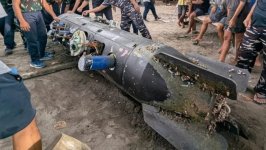
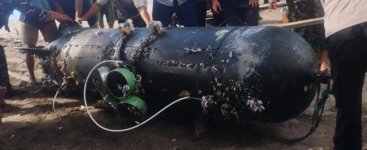
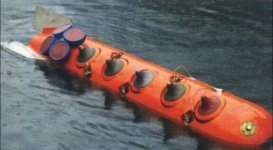


 . Now no place is safe inside Chinese hinterland for their MIC or Economic Special Zones. Can't hide or run now
