Astra Series Air to Air Missiles

Astra Mk2 (~240 km BVR) clears preliminary trials validating aerodynamics, propulsion & guidance.

✅Indigenous AESA seeker with ECCM, dual-pulse motor, and 2-way datalink for mid-course updates.
✅ Integrated user trials next, before tapping production infrastructure of the baseline system.
✅ Su-30MKI first, followed by LCA Mk1A.

x.com/alpha_defense/status/2044633637656629418
 
What was the need to declare this range upgrade??? Everyone knows another conflict will definitely happen 4 to 5 years down the line. You could have lulled them into false sense of security making them easy prey. This is what they did with PL-15.

Man...these guys are just dumbfcks
 
Some "speculations" I had made back in 2021.
@babablacksheep


Mk2 will apparently begin flight testing in 2022 and become available after 3 years. - Check.
And from the time the upgrade program starts to when serial deliveries commence it's going to take at least 6 or 7 years - Check. MKI MLU needs 7 years.
so we are talking 2027 or 2028. Plenty of time to make the SFDR available by then. - Gandiva IOC in 2028.

Speculations-galore. Pretty much 100%.
 
What was the need to declare this range upgrade??? Everyone knows another conflict will definitely happen 4 to 5 years down the line. You could have lulled them into false sense of security making them easy prey. This is what they did with PL-15.

Man...these guys are just dumbfcks

Got fooled by Chinese propaganda? You mean to say the IAF cannot do basic math?

Nobody in the IAF underestimated the PL-15's range. It was already well-known a decade ago.

The dumbfck part is definitely true if you consider the Indian govt limiting RoEs in favor of Pakistan that allowed them to move forward and get first shots in and in large numbers and still failed to a large degree. Only 2-3 jets shot down (at least 1 questionable) on our side versus PAF's claim of 70 targets available. So the PAF still came out the bigger dumbfcks in the end anyway. Had first shot advantage and still had more losses.

The Chinese and Pakistanis also know basic math. They can tell what it can do by just watching videos of the release physics and boost mechanics. What's secret are seeker, fuse, and trajectories used. Range doesn't kill, the other stuff does.
 
Got fooled by Chinese propaganda?
The Rafale: The Perfect Target for Foreign Powers Targeting France’s Defense Sector with “Deepfakes”

Competitors like China have stepped up their information operations since the Indo-Pakistani conflict, with the aim of undermining the Rafale’s perceived value. The military is countering these attacks, while the Élysée Palace negotiates major contracts. The video has all the hallmarks of a genuine candid remark by Emmanuel Macron. Posted simultaneously on X, Facebook, and Instagram during the president’s trip to New Delhi, it takes sophistication to the extreme by playing on the supposed French condescension abroad. “We’ve already lost a billion dollars on the Rafale market because of the Indian Air Force’s inefficiency,” the head of state declares. “We cannot partner with a bankrupt organization at the risk of further tarnishing our reputation.”

This is exactly the kind of campaign where the goal isn’t to convince experts, but to flood the information landscape with misinformation about an aircraft just as major contracts are being negotiated.

The Ministry of the Armed Forces has published an analysis specifically addressing this Macron deepfake video, explaining that it depicts the French president during a visit to New Delhi and has him making remarks disparaging the Indian Air Force and the Rafale. The ministry describes this campaign as having three objectives: to discredit the Rafale and the French defense industry, to undermine the Franco-Indian partnership, and to promote the competing Chinese offer, particularly the J-35.

What is highly revealing is that this attack does not focus on any specific technical feature. It seeks to create an emotional impact: to humiliate India, suggest that France looks down on its client, and turn an industrial debate into a wound to national pride. This is far more effective than a falsified performance chart, as it directly targets the Franco-Indian political relationship.

China has a clear interest in lowering the perceived value of the Rafale. The Rafale indirectly competes with Chinese offers; it equips India; it attracts interest from other countries in Asia and the Middle East; and it embodies a credible non-American alternative. The IFRI summarizes this context by describing the Rafale as having become a “geostrategic target” in a diplomatic and industrial conflict with Beijing since the Indo-Pakistani conflict of 2025.

One must also consider the mechanism at play: following Operation Sindoor, rumors sought to promote the idea that several Indian Rafales had been shot down or outmatched by Chinese aircraft and missiles. RFI, cited in the available summary, describes this Pakistan/China campaign as an attempt to push two ideas: heavy Indian losses, including Rafales, and the superiority of the Chinese aircraft supplied to Pakistan.

The Macron deepfake adds another layer: it doesn’t just say “the Rafale has failed,” it says “even the French know that the Rafale has failed because of the Indians.” It’s designed to create a rift between seller and buyer. It’s very well targeted psychologically.

So, the correct interpretation seems to me to be:

The Rafale is not under attack because it is weak; it is under attack because it has become a strategic obstacle.

If it had no value, no one would expend energy creating deepfakes, amplifying rumors of losses, flooding social media, or attempting to undermine Franco-Indian relations. The information war here reveals the perceived value of the system.

The objective is not technical truth; it is to poison the political relationship between France and India, reduce the perceived value of Rafale, and help Chinese competing aircraft in future tenders.
 
The Rafale: The Perfect Target for Foreign Powers Targeting France’s Defense Sector with “Deepfakes”

Competitors like China have stepped up their information operations since the Indo-Pakistani conflict, with the aim of undermining the Rafale’s perceived value. The military is countering these attacks, while the Élysée Palace negotiates major contracts. The video has all the hallmarks of a genuine candid remark by Emmanuel Macron. Posted simultaneously on X, Facebook, and Instagram during the president’s trip to New Delhi, it takes sophistication to the extreme by playing on the supposed French condescension abroad. “We’ve already lost a billion dollars on the Rafale market because of the Indian Air Force’s inefficiency,” the head of state declares. “We cannot partner with a bankrupt organization at the risk of further tarnishing our reputation.”

This is exactly the kind of campaign where the goal isn’t to convince experts, but to flood the information landscape with misinformation about an aircraft just as major contracts are being negotiated.

The Ministry of the Armed Forces has published an analysis specifically addressing this Macron deepfake video, explaining that it depicts the French president during a visit to New Delhi and has him making remarks disparaging the Indian Air Force and the Rafale. The ministry describes this campaign as having three objectives: to discredit the Rafale and the French defense industry, to undermine the Franco-Indian partnership, and to promote the competing Chinese offer, particularly the J-35.

What is highly revealing is that this attack does not focus on any specific technical feature. It seeks to create an emotional impact: to humiliate India, suggest that France looks down on its client, and turn an industrial debate into a wound to national pride. This is far more effective than a falsified performance chart, as it directly targets the Franco-Indian political relationship.

China has a clear interest in lowering the perceived value of the Rafale. The Rafale indirectly competes with Chinese offers; it equips India; it attracts interest from other countries in Asia and the Middle East; and it embodies a credible non-American alternative. The IFRI summarizes this context by describing the Rafale as having become a “geostrategic target” in a diplomatic and industrial conflict with Beijing since the Indo-Pakistani conflict of 2025.

One must also consider the mechanism at play: following Operation Sindoor, rumors sought to promote the idea that several Indian Rafales had been shot down or outmatched by Chinese aircraft and missiles. RFI, cited in the available summary, describes this Pakistan/China campaign as an attempt to push two ideas: heavy Indian losses, including Rafales, and the superiority of the Chinese aircraft supplied to Pakistan.

The Macron deepfake adds another layer: it doesn’t just say “the Rafale has failed,” it says “even the French know that the Rafale has failed because of the Indians.” It’s designed to create a rift between seller and buyer. It’s very well targeted psychologically.

So, the correct interpretation seems to me to be:

The Rafale is not under attack because it is weak; it is under attack because it has become a strategic obstacle.

If it had no value, no one would expend energy creating deepfakes, amplifying rumors of losses, flooding social media, or attempting to undermine Franco-Indian relations. The information war here reveals the perceived value of the system.

The objective is not technical truth; it is to poison the political relationship between France and India, reduce the perceived value of Rafale, and help Chinese competing aircraft in future tenders.

I don't think the target is India, it's about creating a rift between France and potential buyers, new and follow-ons.

Indonesia was the main target. Last year in a seminar in that country a speaker claimed 5 losses and focused on Rafale's losses in particular, 3 losses, to which the Indian defence attache, a navy captain, claimed the losses were lesser than claimed, and that it was due to RoEs. The goal was to have the second batch of 24 Rafales canceled (42+24).

You can expect the Chinese to make the same play on other potential Rafale customers, especially Taiwan, Vietnam, Malaysia, and Philippines.

Not to mention any follow-on deals by Qatar and UAE, although the Iran War will now play a greater role in that decision.

India's order for 114 will remove negative pressure anyway.

China is slowly being surrounded by Rafales.
 
This may work on the general public, the mainstream media, social media, and sometimes in parliamentary debates; but it has far less impact on a serious air force.

An air force does not judge an aircraft based on a deepfake or unverified casualty figures. It requires much more precise information: mission context, rules of engagement, aircraft configuration, weapons used, AWACS support or lack thereof, available electronic warfare capabilities, defensive/offensive posture, intelligence quality, tactical surprise, ground-to-air environment, altitude, distance, doctrine of use, debriefing, radar data, mission recordings, and industrial feedback. A lost aircraft means nothing in isolation. A loss can result from poor tactics, political constraints, unfavorable ROE, an information trap, a lack of support, or simply a highly risky mission.

Therefore, for air forces, the direct impact of Chinese propaganda is limited. The Indonesian, Indian, Emirati, Qatari, and Egyptian military leaderships are well aware that a narrative such as “three Rafales shot down, therefore the aircraft is bad” is absurd. They also know that the Rafale has classified data, real-world feedback, observable performance in exercises, measurable availability, and integration capabilities that cannot be reduced to social media noise.

But where this campaign might still have an effect is in the political environment surrounding the air forces. A decision to acquire fighter jets is never made solely by pilots. It involves ministries, budgets, parliaments, committees, the media, and sometimes public opinion. If one manages to create a sense of widespread doubt—“the Rafale may have failed,” “the French are hiding something,” “India is unhappy,” “China has proven its superiority”—then one does not convince the professionals, but one complicates the political decision.

The target is therefore not just the expert; it is the legitimacy of the purchase itself.

This is particularly true for countries where the purchase of a foreign aircraft is politically sensitive: Indonesia, Malaysia, the Philippines, Vietnam, Serbia, Saudi Arabia, and perhaps even certain Gulf clients. The air force may remain convinced, but the government may want to avoid controversy, negotiate harder, delay a payment installment, demand more guarantees, or diversify to another supplier so as not to appear captive.

So I would say:

Anti-Rafale propaganda is not aimed at convincing pilots that the Rafale is bad. It aims to give political opponents, industrial competitors, and pro-Chinese or anti-French factions simple arguments to repeat.

It is a war against perception, not against expertise.

And that is where deepfakes come in handy: not because a chief of staff will believe them, but because they create noise. They force Dassault, India, France, or the armies involved to deny, explain, and justify. Meanwhile, doubt spreads. Even when refuted, a rumor can leave a residue: “there’s no smoke without fire.”

The appropriate response from France and India is therefore not merely technical. It must also be narrative:

The Rafale is under attack because it is winning.
If the losses were truly that evident, there would be no need for deepfakes.
Air forces make judgments based on data, not on video montages.
Chinese campaigns target public opinion and policymakers, not pilots.

 
This may work on the general public, the mainstream media, social media, and sometimes in parliamentary debates; but it has far less impact on a serious air force.

An air force does not judge an aircraft based on a deepfake or unverified casualty figures. It requires much more precise information: mission context, rules of engagement, aircraft configuration, weapons used, AWACS support or lack thereof, available electronic warfare capabilities, defensive/offensive posture, intelligence quality, tactical surprise, ground-to-air environment, altitude, distance, doctrine of use, debriefing, radar data, mission recordings, and industrial feedback. A lost aircraft means nothing in isolation. A loss can result from poor tactics, political constraints, unfavorable ROE, an information trap, a lack of support, or simply a highly risky mission.

Therefore, for air forces, the direct impact of Chinese propaganda is limited. The Indonesian, Indian, Emirati, Qatari, and Egyptian military leaderships are well aware that a narrative such as “three Rafales shot down, therefore the aircraft is bad” is absurd. They also know that the Rafale has classified data, real-world feedback, observable performance in exercises, measurable availability, and integration capabilities that cannot be reduced to social media noise.

But where this campaign might still have an effect is in the political environment surrounding the air forces. A decision to acquire fighter jets is never made solely by pilots. It involves ministries, budgets, parliaments, committees, the media, and sometimes public opinion. If one manages to create a sense of widespread doubt—“the Rafale may have failed,” “the French are hiding something,” “India is unhappy,” “China has proven its superiority”—then one does not convince the professionals, but one complicates the political decision.

The target is therefore not just the expert; it is the legitimacy of the purchase itself.

This is particularly true for countries where the purchase of a foreign aircraft is politically sensitive: Indonesia, Malaysia, the Philippines, Vietnam, Serbia, Saudi Arabia, and perhaps even certain Gulf clients. The air force may remain convinced, but the government may want to avoid controversy, negotiate harder, delay a payment installment, demand more guarantees, or diversify to another supplier so as not to appear captive.

So I would say:

Anti-Rafale propaganda is not aimed at convincing pilots that the Rafale is bad. It aims to give political opponents, industrial competitors, and pro-Chinese or anti-French factions simple arguments to repeat.

It is a war against perception, not against expertise.

And that is where deepfakes come in handy: not because a chief of staff will believe them, but because they create noise. They force Dassault, India, France, or the armies involved to deny, explain, and justify. Meanwhile, doubt spreads. Even when refuted, a rumor can leave a residue: “there’s no smoke without fire.”

The appropriate response from France and India is therefore not merely technical. It must also be narrative:

The Rafale is under attack because it is winning.
If the losses were truly that evident, there would be no need for deepfakes.
Air forces make judgments based on data, not on video montages.
Chinese campaigns target public opinion and policymakers, not pilots.

Yep, all mil tech propaganda is targeted at civilians to weaken the govt machinery. An alternative target is to sow doubt in the minds of officers from other service wings. Like when the US began the propaganda that carriers are easy targets the previous decade in order to eliminate competition from China and India, and some army and air force guys still believe that propaganda.

The Chinese attempt this time has failed 'cause they didn't have anything to replace the Rafale with, but they will try again once they get technologies that are competitive.
 
  • Like
Reactions: Picdelamirand-oil
This may work on the general public, the mainstream media, social media, and sometimes in parliamentary debates; but it has far less impact on a serious air force.

An air force does not judge an aircraft based on a deepfake or unverified casualty figures. It requires much more precise information: mission context, rules of engagement, aircraft configuration, weapons used, AWACS support or lack thereof, available electronic warfare capabilities, defensive/offensive posture, intelligence quality, tactical surprise, ground-to-air environment, altitude, distance, doctrine of use, debriefing, radar data, mission recordings, and industrial feedback. A lost aircraft means nothing in isolation. A loss can result from poor tactics, political constraints, unfavorable ROE, an information trap, a lack of support, or simply a highly risky mission.

Therefore, for air forces, the direct impact of Chinese propaganda is limited. The Indonesian, Indian, Emirati, Qatari, and Egyptian military leaderships are well aware that a narrative such as “three Rafales shot down, therefore the aircraft is bad” is absurd. They also know that the Rafale has classified data, real-world feedback, observable performance in exercises, measurable availability, and integration capabilities that cannot be reduced to social media noise.

But where this campaign might still have an effect is in the political environment surrounding the air forces. A decision to acquire fighter jets is never made solely by pilots. It involves ministries, budgets, parliaments, committees, the media, and sometimes public opinion. If one manages to create a sense of widespread doubt—“the Rafale may have failed,” “the French are hiding something,” “India is unhappy,” “China has proven its superiority”—then one does not convince the professionals, but one complicates the political decision.

The target is therefore not just the expert; it is the legitimacy of the purchase itself.

This is particularly true for countries where the purchase of a foreign aircraft is politically sensitive: Indonesia, Malaysia, the Philippines, Vietnam, Serbia, Saudi Arabia, and perhaps even certain Gulf clients. The air force may remain convinced, but the government may want to avoid controversy, negotiate harder, delay a payment installment, demand more guarantees, or diversify to another supplier so as not to appear captive.

So I would say:

Anti-Rafale propaganda is not aimed at convincing pilots that the Rafale is bad. It aims to give political opponents, industrial competitors, and pro-Chinese or anti-French factions simple arguments to repeat.

It is a war against perception, not against expertise.

And that is where deepfakes come in handy: not because a chief of staff will believe them, but because they create noise. They force Dassault, India, France, or the armies involved to deny, explain, and justify. Meanwhile, doubt spreads. Even when refuted, a rumor can leave a residue: “there’s no smoke without fire.”

The appropriate response from France and India is therefore not merely technical. It must also be narrative:

The Rafale is under attack because it is winning.
If the losses were truly that evident, there would be no need for deepfakes.
Air forces make judgments based on data, not on video montages.
Chinese campaigns target public opinion and policymakers, not pilots.
By ordering 114 more Rafales, India has already replied to these Chinese propaganda posts.
 

India could witness a boost in its ability to produce conventionally armed ballistic missiles and long-range air-to-air weapons meant to shoot down adversary fighter aircraft, with the Defence Research and Development Organisation (DRDO) likely to bring domestic private companies on board as production partners, a Ministry of Defence (MoD) source told Business Standard on the condition of anonymity.

The development comes against the backdrop of lessons drawn from the West Asia crisis and the Russia-Ukraine war, as well as Pakistan’s decision to set up an Army Rocket Force Command.

“DRDO has been directed to license missile technologies to the private sector,” the source said, adding that to their knowledge, the organisation had already enlisted private partners for weapons such as short-range air-defence missiles and anti-ship missiles.

“The DRDO will likely be doing the same for other non-strategic missiles in the coming days,” the source added, identifying the Astra beyond visual range air-to-air missile and various types of surface-to-surface ballistic missiles under development as the most likely candidates.
 
x.com/alpha_defense/status/2044633637656629418
Apparently Chinese PL-16 & AIM-260 will have range close to 300kms. But still Astra MK2 with 240-260 kms range will give our fighters a fighting chance against PLAAF fighters equipped with PL-16. Can't wait for Astra MK3 which will finally give us the BVR lead that we aspire to have over our adversaries.
 
PL-16 and the AIM 260 have around the same range, maybe 260 ksm instead of 240. range doesnt matter, endgame power does, the AIm 260 will prolly be the best as its looks lie its closer to a triple pulse than a dual pulse while PL16 and the mk2-extended range will be comparable.
Apparently Chinese PL-16 & AIM-260 will have range close to 300kms. But still Astra MK2 with 240-260 kms range will give our fighters a fighting chance against PLAAF fighters equipped with PL-16. Can't wait for Astra MK3 which will finally give us the BVR lead that we aspire to have over our adversaries.
 
PL-16 and the AIM 260 have around the same range, maybe 260 ksm instead of 240. range doesnt matter, endgame power does, the AIm 260 will prolly be the best as its looks lie its closer to a triple pulse than a dual pulse while PL16 and the mk2-extended range will be comparable.

AIM-260 is dual pulse. It has more than twice the propellent of the AIM-120D and comes with almost the same dimensions. It's estimated to be slightly longer and slightly bulkier, but still designed to fit into the F-22's WB.

Design range is 2x that of AIM-120D.

“We’ve seen charts for the Air Force range requirements for Eglin Air Force Base showing circles for the test area for AMRAAM and the test area for the JATM,” Steve Trimble, Aviation Week‘s Defense Editor and good friend of the War Zone, said on the Check 6 Podcast on June 27, 2019. “The AIM-260 missile has a range circle that’s roughly double the size of the AMRAAM circle.”

In fact, NAWCWD reported that the propellent is 50% superior to AIM-120D, so it will comfortably exceed the design range.

So if that's public information, it's definitely more than 2x.
 
  • Agree
Reactions: Rajput Lion
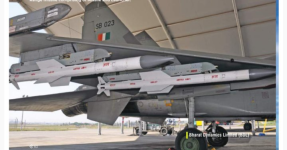
Astra Mk-1 on the unified Astra ejector launcher:
View attachment 51814

This launcher will be standard for all Astra variants.
@padira
Now do you believe me regarding Astra MK1 having universal ejector launcher?
PL-16 and the AIM 260 have around the same range, maybe 260 ksm instead of 240. range doesnt matter, endgame power does, the AIm 260 will prolly be the best as its looks lie its closer to a triple pulse than a dual pulse while PL16 and the mk2-extended range will be comparable.
Don't look towards that 260 figure in its designation and think it has only that range. Both PL-16 & AIM-260 will have 300kms launch envelope.
Any update on Astra MK2
Production likely from later this year.
 
Apparently Chinese PL-16 & AIM-260 will have range close to 300kms. But still Astra MK2 with 240-260 kms range will give our fighters a fighting chance against PLAAF fighters equipped with PL-16. Can't wait for Astra MK3 which will finally give us the BVR lead that we aspire to have over our adversaries.
You fight based on your strengths. Targets within 150 km can be handled by HSLD bombs, while airfields and strategic targets up to 300–350 km can be engaged by Suryastra. Targets in the 500–600 km range may require BrahMos or Pralay missiles. This would form your initial strike package, reducing the need for heavy IAF involvement in the opening phase. The IAF can then focus more on neutralizing high-value naval assets and carrying out precision strikes.

S.NoAirfield / BaseApprox. Distance from Indian Border (km)TypePrimary RoleApproximate Location
1PAF Base Qadri~25 km (LoC region)Military Air BaseHigh-altitude/northern operationsSkardu region
2PAF Base Nur Khan~85 kmMilitary Air BaseStrategic transport, VIP operationsNear Islamabad/Rawalpindi
3Chilas Airfield~90 kmAirfieldNorthern logistics and transportGilgit-Baltistan
4PAF Base Rafiqui~140 kmMilitary Air BaseTactical combat operationsShorkot
5PAF Base Masroor~160 kmMilitary Air BaseSouthern air command operationsKarachi
6PAF Base Faisal~170 kmMilitary Air BaseFighter and operational supportKarachi
7PAF Base Minhas~180 kmMilitary Air BaseAircraft production, testing, fighter operationsKamra
8PAF Base Shahbaz~180 kmMilitary Air BaseF-16 operationsJacobabad
9PAF Base Bholari~220 kmMilitary Air BaseModern operational airbaseSindh
10PAF Base Peshawar~220 kmMilitary Air BaseNorthern sector operationsPeshawar
11PAF Base M.M. Alam~220 kmMilitary Air BaseTraining and conversionMianwali
12PAF Base Mushaf~240 kmMilitary Air BaseMajor fighter operations hubSargodha
13PAF Base Samungli~330 kmMilitary Air BaseWestern sector operationsQuetta
14Shamsi Airfield~430 kmAirfieldRemote operational facilityBalochistan
15Ormara Airfield~500 kmAirfieldCoastal support operationsOrmara
16Pasni Airfield~620 kmAirfieldCoastal logistics/supportPasni
 
Last edited:
You fight based on your strengths. Targets within 150 km can be handled by HSLD bombs, while airfields and strategic targets up to 300–350 km can be engaged by Suryastra. Targets in the 500–600 km range may require BrahMos or Pralay missiles. This would form your initial strike package, reducing the need for heavy IAF involvement in the opening phase. The IAF can then focus more on neutralizing high-value naval assets and carrying out precision strikes.

S.NoAirfield / BaseApprox. Distance from Indian Border (km)TypePrimary RoleApproximate Location
1PAF Base Qadri~25 km (LoC region)Military Air BaseHigh-altitude/northern operationsSkardu region
2PAF Base Nur Khan~85 kmMilitary Air BaseStrategic transport, VIP operationsNear Islamabad/Rawalpindi
3Chilas Airfield~90 kmAirfieldNorthern logistics and transportGilgit-Baltistan
4PAF Base Rafiqui~140 kmMilitary Air BaseTactical combat operationsShorkot
5PAF Base Masroor~160 kmMilitary Air BaseSouthern air command operationsKarachi
6PAF Base Faisal~170 kmMilitary Air BaseFighter and operational supportKarachi
7PAF Base Minhas~180 kmMilitary Air BaseAircraft production, testing, fighter operationsKamra
8PAF Base Shahbaz~180 kmMilitary Air BaseF-16 operationsJacobabad
9PAF Base Bholari~220 kmMilitary Air BaseModern operational airbaseSindh
10PAF Base Peshawar~220 kmMilitary Air BaseNorthern sector operationsPeshawar
11PAF Base M.M. Alam~220 kmMilitary Air BaseTraining and conversionMianwali
12PAF Base Mushaf~240 kmMilitary Air BaseMajor fighter operations hubSargodha
13PAF Base Samungli~330 kmMilitary Air BaseWestern sector operationsQuetta
14Shamsi Airfield~430 kmAirfieldRemote operational facilityBalochistan
15Ormara Airfield~500 kmAirfieldCoastal support operationsOrmara
16Pasni Airfield~620 kmAirfieldCoastal logistics/supportPasni

You need ALBMs and ALCMs to improve your chances of defeating Chinese ADS 'cause of the surprise element. Land-based systems are more predictable and have longer time to target so more time to react. Otoh, land-based systems can carry larger warheads that can do more damage. Ultimately, you need VLO for maintaining a sustained air campaign.

We don't have to be as worried about PL-16 as people think because we will have our own analogues by then. RVV-SD improved medium range NEZ that made it comparable to the AIM-120D, but lost out on long range to it, never mind the PL-15. Ever since the PL-15 showed up, the PLAAF have always had a 3x range superiority over the IAF. Both Astra Mk3 and Sky Sting will exceed the PL-16.

I-Derby ER compares well with PL-15s, but they were used by our SPYDERs. At 80% of the Meteor's range performance, it's still inferior to the PL-15. It's in the same class as the earlier Astra Mk2 with 160-200 km range. So Sky Sting will be an interesting addition to the MKI/LCA fleet.
 
The Chinese claim their AESA radars are significantly superior to the Irbis-E. And they currently have 1000+ jets with AESA radars. So their claims have merit.

We have the missiles the PAF fired too, they are pretty good. There are no direct operational equivalents anywhere else.

View attachment 51981

View attachment 51982

PAF had both the export version and the PLAAF version.
Off topic but why astra missile fixed fins are so huge ??

Isn't bigger fins means more drag and also looses alot of energy during any change in direction (direction or altitude)