
That is interesting, but it raises a question.To be perfectly honest, within the Aviation Industry Corporation of China (AVIC), there are two main factions that are relatively stronger in fighter jet manufacturing.
One is Shenyang in the north (famous for the J-8), which is notorious for its rock-bottom efficiency. A well-known meme about them is "One J-8 spawned eight Academicians." This is a sarcastic jab at how, merely by designing and manufacturing the J-8 fighter, eight individuals from this institution managed to ascend to the "Academician" status—the highest honor in the Chinese engineering sector. Furthermore, in Chinese slang, "J-8" (Ji-Ba) is a homophone for the male genitalia, giving the meme a double meaning: "One dick ejaculated eight Academicians."
The other is Chengdu in the south (famous for the J-7 and J-10). Its spotlight was completely stolen by the north until it finally turned things around with the arrival of the J-10. However, this plant represents another form of corruption. Riding the wave of "Reform and Opening-up," the Chief Designer of the J-10 aggressively pursued privatization, operating as a coordinated criminal syndicate to amass massive amounts of dirty money and gobble up vast plots of real estate. The later Chief Designer of the J-20 was the prized disciple of this J-10 designer. The J-20 project originally belonged to someone else, but because the J-10 designer wielded immense authority, he snatched the project away and handed it on a silver platter to his student, Yang Wei. Ultimately, Yang Wei was also elected as an "Academician" solely due to the J-20 project. However, because the final performance of the J-20 turned out to be absolute garbage, combined with the fact that their corruption scandal eventually came to light, he has now been arrested and placed under investigation (in fact, he was detained back in 2024). A prison sentence is inevitable.
Returning to the main topic: after the collapse of the Soviet Union, the country was dirt poor. Boris Yeltsin was aggressively pushing privatization to the point where blueprints were being sold by the kilogram. Sensing a golden opportunity, the Aviation Industry Corporation of China poured massive amounts of cash into poaching talent and buying up blueprints.
During this gold rush:
The northern faction (Shenyang)沈阳 connected with Sukhoi苏霍伊.
The southern faction (Chengdu)成都 connected with Mikoyan 米格.
(Because the development of the entire Sukhoi lineage was placed under the more authoritative northern faction, Shenyang earned the nickname "Shen-khoi沈-霍伊" )
Meanwhile, next-generation fighter designs that began selection in the 1980s were submitted to the Air Force for review. This was supposed to be a stealth aircraft, but China possessed absolutely zero capability, experience, or experimental equipment to design such a plane. The relevant formulas were literally conjured up by a professor at Beihang University based entirely on Russian and American literature. The PLA had absolutely no confidence in it, so they spent tens of thousands of dollars in hard cash to hire experts from the Central Aerohydrodynamic Institute (TsAGI) in Moscow to evaluate the design.
The verdict? The radar cross-section (RCS) values calculated by the Chinese side were a staggering 10 times lower than reality. In other words, while the Chinese side believed their design had an RCS of 1㎡, the Russian assessment concluded it was 10㎡ by Russian standards. (Source: Memoirs of Academician 顾诵芬)
Consequently, the entire 1980s R&D project was completely scrapped and torn down. The next-generation aircraft would have to be decided through a head-to-head showdown between the two factions.
Shenyang (North)Su-37.
Chengdu (South) proposed an interceptor variant based on the MiG 1.42/1.46.
Ultimately, Chengdu won the bid, and the result of that victory is the J-20.
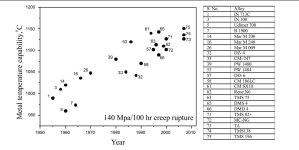
In terms of propulsion, the target engine was designated WS-15. In reality, it is a reverse-engineered R79-B300. The actual engine and its corresponding blueprints—including the complete set of vectoring nozzle blueprints—were bought and brought back from Russia in 1996 by "Academician Liu Daxiang(刘大响)." Development was carried out by shrinking the bypass ratio based on this platform. However, because their foundational capabilities were too poor, R&D dragged on disastrously; they have been grinding away at it for 30 years now. Around 2010, some suggested that the original targets were set too low and the project had dragged on for too long, meaning they should keep the designation but scrap the project and start fresh. Yet, judging by current progress, it is highly likely still just a modification of the old R79, because China lacks the capability to develop a brand-new engine from scratch in such a short timeframe. The design of this engine was also the result of assistance and theoretical calculations from Moscow—including wind tunnel testing and thermal equilibrium simulations, all completed in Moscow. The bypass ratio is likely squeezed very tight, somewhere between 0.2 and 0.3, to satisfy China's urgent operational need for maritime interception.(Source: Memoirs of Academician 刘大响).
As a result, the J-20 was forced to adopt the WS-10 "Taihang太行" series of engines. This engine was reverse-engineered from the CFM56-2 commercial turbofan introduced during the 1980s Sino-US honeymoon period. The method of reverse-engineering was to secretly disassemble the engine at night to measure and map it, and then reassemble and reinstall it before daybreak to evade commercial audits by their "American Daddy." The low-pressure stage and the lubrication system were copied lock, stock, and barrel from the AL-31F
1、WS-10/10A: Rated thrust of 12.5 tons, weighing 200 kg more than the AL-31F. It didn't pass final acceptance until 2017. Due to inherent structural defects, it was accepted only after throttling the thrust down by 700 kg (the original project goal was 13.2 tons).
2、WS-10BCFM56-7 engines and F110-GE-129 engines obtained through special illicit channels (though the low-pressure stage remained the AL-31F). It finally hit its rated thrust and passed acceptance around 2020.
3、There is also a variant with a purported 14-ton thrust.
Generally speaking, the WS-10B is inferior to the AL-31F, and the 14-ton variant is inferior to the AL-31FM1.
The name WS-10 'Taihang太行' itself is a pun. While it refers to a mountain, 'Tai Hang' also sounds like 'super capable' or 'awesome' in Chinese. However, because its garbage performance is an open secret across the Chinese internet, it has been widely mocked with the nickname 'Tai Buxing太不行'—which literally translates to 'Super Incapable' or 'Too Trash to Work.
Back to the J-20's powerplant issue: early test flights used the AL-31F; later flights used the AL-31F-M2 (according to Russian export records, these were delivered after 2015). Ultimately, for the sake of claiming "100% domestic production," the mass-produced models were fitted with the far inferior WS-10B. Today, they might also be using the 14-ton thrust variant. All in all, it is an absolute mess.
Regarding maintenance and sortie rates, the entire WS-10 series has a service life of a mere 900 to 1,500 hours, with even the latest variants not exceeding 2,000 hours.
The training standards of the Chinese Air Force are also exceptionally poor—far below Pakistan's standards, and probably on par with India's. It is an open secret that military pilots line up waiting for a chance to transfer to commercial civil aviation. Furthermore, once they hit 45 to 50 years old, they are forced to retire or transfer to flying drones, leading to an abysmal accumulation of veteran experience. In Chinese Air Force flight and adversarial training, they never conduct within-visual-range (WVR) dogfighting (the Army and even the Armed Police Force have no hand-to-hand combat training either).
As for the radar, it features an Active Electronically Scanned Array (AESA) radar. Internal propaganda boasts a detection range of "2XX" kilometers (the last two digits are always redacted and blurred out), which basically aligns with common sense, physics, and their actual technical level.
The most heavily criticized aspect is its payload capacity—everyone can see how pathetic it is, so people don't even bother talking about it anymore.
Regarding its stealth capabilities: in reality, China’s very first full-scale anechoic chamber capable of accommodating an actual, real-size fighter jet wasn't even built until after the J-20's maiden flight. To top it off, it was constructed by Shenyang—Chengdu's arch-rival. Throughout the entire design phase of the J-20, they couldn't even use proper physical testing methods to verify and refine its stealth performance
The J-20 holds a rather unique status in global aviation:
It is the only "5th-generation" fighter in the world without thrust-vectoring control (TVC). (Though with the J-35 around now, it’s one of two).
It is the only "5th-generation" fighter in the world that lacks an internal autocannon or any provision to mount one. (Though with the J-35 around, it’s one of two).
It is the only "5th-generation" fighter in the world equipped with previous-generation engines. (Though with the J-35 around, it’s one of two).
It is the only "5th-generation" fighter in the world featuring a tailless delta wing configuration.
It is the only "5th-generation" fighter in the world whose Chief Designer is rotting in a jail cell.
In short, it is truly "mind-blowing."
And then, this exact same company went ahead and designed a three-engine frontline bomber—absolutely brilliant. As a side note, the FC-1 (JF-17) also came out of this company. That thing was originally designated the "MiG-33"—not the current MiG-29M variant of the 33, but a single-engine version of the MiG-29 designed during the Soviet era to cater to cash-strapped allies. Later, the blueprints along with the engineers were sold wholesale to Chengdu.
Returning to Shen-khoi沈-霍伊 in the north: having lost out on the Air Force's next-generation contract, the Navy's 5th-generation fighter naturally fell into Shenyang's lap. The earliest prototype was called the FC-31, powered by RD-33 engines. Later, to meet naval requirements, they scaled up its dimensions (similar to the transition from the F-18 to the F/A-18C) to facilitate bomb-carrying capabilities.
However, because the design remains fundamentally terrible, judging by currently leaked spy shots and satellite imagery, this monstrosity's wingspan when folded is even wider than that of the Su-33. Yet, it is fitted with two modified RD-33 engines, with rumors claiming the thrust has been pushed up to around 10 tons. Anyone with a brain knows exactly what is going on here: they just increased the bypass ratio of the RD-33 to boost low-altitude performance while completely abandoning energy retention for air combat.
This is the J-35. And because the J-20 turned out to be such unmitigated garbage—essentially acting as nothing more than a "A MiG-31 that can go stealth, yet flies slow and carries no long-range missiles."—the Air Force now intends to buy a batch of these as well. That is the origin of the land-based variant of the J-35.
If, in your view, the Rafale is technically less impressive than something like an F-15, and if the J-20 has all the problems you described, engines, availability, payload, stealth validation, maintenance and factional issues, then how do you explain the PLAAF reportedly deploying around five J-20s for each Indian Rafale after their arrival?
I am not asking whether five J-20s are needed to defeat one Rafale in a dogfight. That would be a simplistic interpretation. I am asking whether this ratio may reflect the operational effort required to neutralize the Rafale effect: sortie generation, availability, EW, Meteor, SCALP/HAMMER, SPECTRA, and the ability of a small Rafale fleet to create disproportionate planning constraints.
In other words: does everything you explained about the J-20 help explain why China had to overcommit high-end assets opposite a very small number of Rafales?