
Operation Sindoor: Aftermath
- Thread starter Defc0n
- Start date
You are using an out of date browser. It may not display this or other websites correctly.
You should upgrade or use an alternative browser.
You should upgrade or use an alternative browser.


That's what makes air-launched BrahMos-A very dangerous missile to counter 'cause MKI can dictate its launch vector and the missile can approach the target from least expected aspect. So let them try, we'll still hit them with impunity whenever and wherever we will want.


This is what an unfinished enemy can do to you. we just poke & woke the Pakistanis in to the reality.
They started invesing in space based spy network without a having any spave program. The next round will not be an easy walk over like we had in last year.

large quantities only make sense inside the full USAF/PLAAF ecosystem. Being a healthy mix of stealth platforms, tankers, unstealthly munitions depth (like 4.5th fighters or bombers), and networked support. And the crucial piece, both China and the US control the whole pipeline. They control the engines, avionics, subsystems, and production lines. It makes sense for the US/China when the industrial base is already there.
India does not have that position.
This is what an unfinished enemy can do to you. we just poke & woke the Pakistanis in to the reality.
They started invesing in space based spy network without a having any spave program. The next round will not be an easy walk over like we had in last year.
timing is very important.
i was just wondering if the 1972 war happened in 2026. there is no USSR to send the nuke subs, and we would not be able to create Bangladesh.

I still don't know how we would have finished them? China is anyways doing heavy lifting here. How much more damage Pakistan would have received it wouldn't have stopped China from helping them to recover.
This is what an unfinished enemy can do to you. we just poke & woke the Pakistanis in to the reality.
They started invesing in space based spy network without a having any spave program. The next round will not be an easy walk over like we had in last year.
The real question here should be what counter measures are we taking?
Last edited:
SBS III bodyguard satellitesThe real question here should be what counter measures are we taking?

Hopefully our private players are ready in next 1-2 years. Because i don't think ISRO alone can fulfil this ambition.SBS III bodyguard satellites
In an all-out war, we would first take out all their military satellites using both soft-kill(using EW/Laser) and hard-kill(ASAT) methods. Even the Chinese sats providing help to Pak would be duly blocked.I still don't know how we would have finished them? China is anyways doing heavy lifting here. How much more damage Pakistan would have received it wouldn't have stopped China from helping them to recover.
The real question here should be what counter measures are we taking?

Pakistan has launched half a dozen satellites in 16 months. They are tracking India
Pakistan has launched six Earth-observation satellites in 16 months with substantial Chinese support. The growing constellation is seen as strengthening Islamabad’s ability to monitor Indian territory and strategic activity.
More than a year after India and Pakistan stepped back from the brink following Operation Sindoor, a quieter strategic contest is unfolding hundreds of kilometres above Earth.
Pakistan, with extensive Chinese support, has rapidly expanded its space-based surveillance capabilities, launching six Earth-observation satellites in just 16 months and creating a constellation capable of regularly monitoring Indian territory.
The sudden pace of development marks a dramatic departure from Pakistan's traditionally slow-moving space programme.
Since the establishment of the Space and Upper Atmosphere Research Commission (SUPARCO) in 1961, Pakistan has launched only a handful of satellites over several decades. Yet between January 2025 and April 2026, it deployed six new Earth-observation satellites, including optical imaging, hyperspectral and remote-sensing platforms.

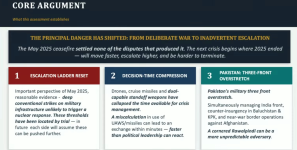
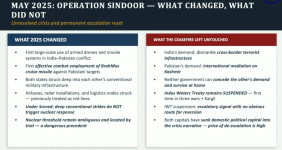
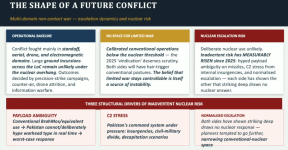
Some screenshots from gunnershot YT channel. Main argument is that China will ensure Pak will have symmetric capability so future wars will quickly start where OpSindoor ended. Things will be sped up, but the escalation ladder to nucs is still unclear. More importantly the saner Civilian authority that held the nucs in Pak is now dismantled and Munir (army) holds the nuc which makes things very volatile. Leadership must have a plan instead of leaving the situation to be prosecuted by the Armed Forces like they did in OpSindoor1.
Next war will be a test for our ASAT capabilities. What's the status on SBS-3? Irrc those are supposed to be launched in 2027 with help of private players.Pakistan has launched half a dozen satellites in 16 months. They are tracking India
Pakistan has launched six Earth-observation satellites in 16 months with substantial Chinese support. The growing constellation is seen as strengthening Islamabad’s ability to monitor Indian territory and strategic activity.www.indiatoday.in
More than a year after India and Pakistan stepped back from the brink following Operation Sindoor, a quieter strategic contest is unfolding hundreds of kilometres above Earth.
Pakistan, with extensive Chinese support, has rapidly expanded its space-based surveillance capabilities, launching six Earth-observation satellites in just 16 months and creating a constellation capable of regularly monitoring Indian territory.
The sudden pace of development marks a dramatic departure from Pakistan's traditionally slow-moving space programme.
Since the establishment of the Space and Upper Atmosphere Research Commission (SUPARCO) in 1961, Pakistan has launched only a handful of satellites over several decades. Yet between January 2025 and April 2026, it deployed six new Earth-observation satellites, including optical imaging, hyperspectral and remote-sensing platforms.
I don't see any timeline changes related to them. There are people advocating them. Found an article that urges the GoI to place the project on a faster deployment track.Next war will be a test for our ASAT capabilities. What's the status on SBS-3? Irrc those are supposed to be launched in 2027 with help of private players.

National security: Why India must fast-track SBS-III. Integrated ISR dominance in space
India’s security challenges no longer sit neatly along its land borders or maritime edges; they extend upward, into an increasingly contested and weaponised space domain. In this environment, Integrated Intelligence, Surveillance, and Reconnaissance (ISR) is...
Building satellites still takes time. And recent failures would means they have some supply chain problems. I don't think we can easily fast-track it. 2027 mein hi kuch hoga jo hoga. Risk nhi lenge abhi rush karke abhi. If in a hurry something happens then it will delay everything else..I don't see any timeline changes related to them. There are people advocating them. Found an article that urges the GoI to place the project on a faster deployment track.
National security: Why India must fast-track SBS-III. Integrated ISR dominance in space
India’s security challenges no longer sit neatly along its land borders or maritime edges; they extend upward, into an increasingly contested and weaponised space domain. In this environment, Integrated Intelligence, Surveillance, and Reconnaissance (ISR) is...timesofindia.indiatimes.com
This article reminded me of this though

Pixxel-Led Consortium Signs Agreement with IN-SPACe to Build India’s National EO Constellation | Pixxel
Pixxel formalised its agreement with the Indian National Space Promotion and Authorisation Centre (IN-SPACe) today to build India's national Earth Observation constellation. Leading a consortium of four Indian space companies, Pixxel will design, build, own, and operate the country's first...
 www.pixxel.space
Private players are supposed to start launches by the end of the year or early next year. Then the technology will be transferred to government/ISRO who also build more of these.Next war will be a test for our ASAT capabilities. What's the status on SBS-3? Irrc those are supposed to be launched in 2027 with help of private players.

I have a question, i didn't know where to ask so asking here. @randomradio @Rajput Lion
Do any BrahMos got intercepted ? As i am listing to quwa(pakistani) podcasts on youtube, and they mentioned many times that "many brahmos do get intercepted".
So if yes then how ? Is it hq9b ? Or hq16 ? Or pl15(from aircraft) ?and how many ? Like whats interception rate ?
And how BrahMos success/result compared to Rampage or SCALP-EG ?
As even in Ukraine, P800 oniks interception rate is less than 6%, and thats too ukraine's claim.
Do any BrahMos got intercepted ? As i am listing to quwa(pakistani) podcasts on youtube, and they mentioned many times that "many brahmos do get intercepted".
So if yes then how ? Is it hq9b ? Or hq16 ? Or pl15(from aircraft) ?and how many ? Like whats interception rate ?
And how BrahMos success/result compared to Rampage or SCALP-EG ?
As even in Ukraine, P800 oniks interception rate is less than 6%, and thats too ukraine's claim.
All the Brahmos we fired were got intercepted by Nur khan base, Kinara hills, sagordha etcI have a question, i didn't know where to ask so asking here. @randomradio @Rajput Lion
Do any BrahMos got intercepted ? As i am listing to quwa(pakistani) podcasts on youtube, and they mentioned many times that "many brahmos do get intercepted".
So if yes then how ? Is it hq9b ? Or hq16 ? Or pl15(from aircraft) ?and how many ? Like whats interception rate ?
And how BrahMos success/result compared to Rampage or SCALP-EG ?
As even in Ukraine, P800 oniks interception rate is less than 6%, and thats too ukraine's claim.
While HQ9 watching the show peacefully.
Only few Scalp EGs were intercepted while BrahMos-A was literally unstoppable. Interesting thing is, the BrahMos Su-30s fired were from older batch and the newer batches are even more deadly.I have a question, i didn't know where to ask so asking here. @randomradio @Rajput Lion
Do any BrahMos got intercepted ? As i am listing to quwa(pakistani) podcasts on youtube, and they mentioned many times that "many brahmos do get intercepted".
So if yes then how ? Is it hq9b ? Or hq16 ? Or pl15(from aircraft) ?and how many ? Like whats interception rate ?
And how BrahMos success/result compared to Rampage or SCALP-EG ?
As even in Ukraine, P800 oniks interception rate is less than 6%, and thats too ukraine's claim.
The Rafale loss claim is busted