Oh, absolutely! India managed to bag the AL-31F production line—the ultimate tech holy grail that the Chinese Air Force has been desperately craving and could only ever dream of acquiringWe already have that.
PAK-FA / Sukhoi Su-57 - Updates and Discussions
- Thread starter Ashwin
- Start date
You are using an out of date browser. It may not display this or other websites correctly.
You should upgrade or use an alternative browser.
You should upgrade or use an alternative browser.
U.S. engine maximum thrust figures are obtained at sea level, Mach 0.4;I was talking about weight and thrust class. 18T, 24T, 36T. F-16 is 15T.
18T sits between 15 and 24. So empty weight, loaded weight, MTOW etc will reflect the thrust.
Su-57's avionics are half a generation to a full generation behind AMCA. With 177, it's performance is 40% inferior to AMCA's. With Izd 30, it will be about 15% inferior to AMCA.
AMCA was designed to surpass the Su-57 in every way imaginable, which is why the IAF decided they are no longer interested in it. It only has a slightly shorter range and a slightly smaller WB. Both tactically irrelevant in comparison. But avionics, stealth, maintenance, operations cost etc are all excessively in favor of AMCA. It was designed 20 years after Su-57 after all.
Russian engine maximum thrust figures are obtained at sea level, zero speed.
F404-GE-400: U.S. standard 8.9 tons, converted to Russian standard 7.2 tons
F414-GE-400: U.S. standard 0.8 tons, converted to Russian standard 6.3 tons
F110-GE-129: U.S. standard 13.2 tons, converted to Russian standard 10 tons
F100-PW-220: U.S. standard 10.8 tons, converted to Russian standard 8.8 tons
F135-PW-100/400: U.S. standard 19.5 tons, converted to Russian standard 16.5 tons
By comparison:
RD-33:8.3 tons
RD-33MK:9 tons
AL-31F: 12 tons
AL-41F-1: 14.5 tons
===============
First, get the statistical standards straight — otherwise it's just rambling.
Thrust is merely an instantaneous quantity, whereas maneuverability is a linear time integral.
200 horsepower in a farm tractor and 200 horsepower in a MotoGP racing bike are not the same thing. You can't just grab a number and make a direct, side-by-side comparison.
And I have no idea where you got the idea that the AMCA is 15% better than an Su-57 equipped with Izd 30.
By that logic, it would mean the U.S. imports engines from India,
rather than exporting engines to India.
We are doing that with the indigenous Kaveri (75-90 kN) and a French engine for AMCA (120-140 kN).
As for the French, they'd better make it a priority to catch up with Turkey or South Korea. There's still a huge technological gap between them and Japan, and I doubt they have the capacity to bother with India either.
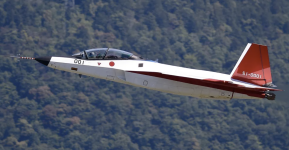
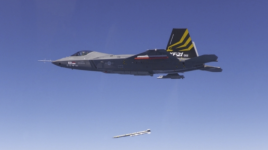
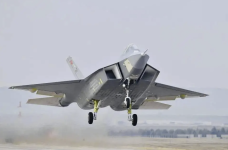
Last edited:

Clipboard error: corrected below:F404-GE-400: U.S. standard 8.9 tons, converted to Russian standard 7.2 tons
F414-GE-400: U.S. standard 0.8 tons, converted to Russian standard 6.3 tons
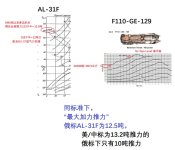
U.S. engine maximum thrust figures are obtained at sea level, Mach 0.4;
Russian engine maximum thrust figures are obtained at sea level, zero speed.
F404-GE-400: U.S. standard 8.9 tons, converted to Russian standard 6.3 tons
F414-GE-400: U.S. standard 10 tons, converted to Russian standard 7.2 tons
F110-GE-129: U.S. standard 13.2 tons, converted to Russian standard 10 tons
F100-PW-220: U.S. standard 10.8 tons, converted to Russian standard 8.8 tons
F135-PW-100/400: U.S. standard 19.5 tons, converted to Russian standard 16.5 tons
By comparison:
RD-33:8.3 tons
RD-33MK:9 tons
AL-31F: 12 tons
AL-41F-1: 14.5 tons
Last edited:

Our esteemed interlocutor is truly a master of zealously rhetorical posturing.Oh, absolutely! India managed to bag the AL-31F production line—the ultimate tech holy grail that the Chinese Air Force has been desperately craving and could only ever dream of acquiring
It was mere Dayss ago that they adamantly argued Japan's Ishikawajima-Harima Heavy Industries (IHI) fundamentally lacked the autonomous industrial capacity to produce the F110 and F100 engine series, reducing their operations to mere licensed assembly.
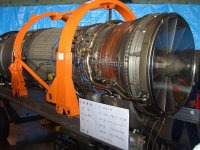
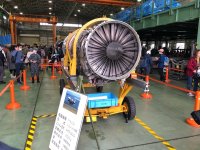
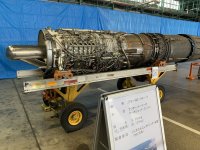
Yet, in a staggering displays of intellectual agility, the narrative now shifts seamlessly: India's licensed assembly of the AL-31FP—which completely excludes the foundational metallurgy of single-crystal turbine blade fabrication—is suddenly championed as definitive, empirical evidence of India's 'indigenous localization' of the AL-31F.
Following that twisted causality, we should realistically expect India to export thrust-vectoring AL-31F powerplants to the French to retrofit their aerodynamically constrained Rafale, rather than tolerating this absurd supply-chain inversion where Paris attempts to salvage the underpowered M88 architecture through some superficial modernization scheme.
This line of reasoning induces a severe cognitive dissociation; it is a structural self-contradiction where the left hemisphere of their analytical brain is in a violent dogfight with the right
Su-75 is the fifth generation f-16. It is perfect for India in fact considering how badly the Tejas program has been managed and the lack of planning of a fifth gen Tejas mk3 makes it all the more important for us to have the su-75. If we can mki it the su-75 with astra MK2 and 3 will be a huge problem for every airforce.I think whether something is good or not comes down to price first.
If the Su-75's price is within 60% of the Su-57's, then it's a pretty good deal.
I believe the Indian Air Force is too small, and a single-engine aircraft like this would provide a massive boost to its combat capability.
At the very least, I think it's far superior to that flashy F-35...
And from a commercial standpoint, if you buy both types simultaneously, it becomes easier to gain leverage when negotiating engine production licenses.
Of course, in the long term, I believe all fifth-generation fighters are already obsolete, and India should go straight into developing a sixth-generation fighter.
As a transitional aircraft, the Su-75 is very suitable. Moreover, its shape is clearly optimized for ground attack (for example, the forward-tilted intakes are obviously meant to shield against radar waves from below), and it has a relatively flat underside. Compared to the Su-57, it would be far less dependent on long-range guided munitions. Perhaps when dropping cheap bombs, the cost would be lower, and it could be used more boldly and with greater confidence...
So in summary, since my fundamental position is that India should pursue sixth-generation fighter development, not fifth-generation,
I think the Su-75 is actually very good,
and an irreplaceable choice.
After all, the Su-57 is twin-engine and just too expensive.
Plus it has similar engine as the final su-57M1 will have so no supply chain issues. The same engine is compatible with the mki's. On top of the su-75 the okthonik uses the same engine. So you have an entire air force on the back of one engine. An approach that should have been followed by the Kaveri.

SureI was talking about weight and thrust class. 18T, 24T, 36T. F-16 is 15T.
18T sits between 15 and 24. So empty weight, loaded weight, MTOW etc will reflect the thrust.
Wrong, the AMCA avionics is nothing but in paper, infact the avionics in Su57 is 5 generations ahead until AMCA becomes operational. The Su57's kinematic performance is also much superior.Su-57's avionics are half a generation to a full generation behind AMCA. With 177, it's performance is 40% inferior to AMCA's. With Izd 30, it will be about 15% inferior to AMCA.
Surpass in every way? The Su57 is the best fighter on the planet right now, you gotta be less delusional about said claims. Su57 had superior aerodynamics, control surfaces, twr, suoermaneuverability, supercruise, longer combat radius, bigger internal weapons bay, AI and ability to command drones and can even act as mother ship, better multi band senor suite, a decade more mature and proven tech by the time AMCA get deployed, blanketed claims like hold no meaning. Don't get me wrong, the AMCA is gonna be a great jet but claims like AMCA is gonna surpass the Su57 in every way is peak delusion from lack of understanding both's capability and maturity.AMCA was designed to surpass the Su-57 in every way imaginable, which is why the IAF decided they are no longer interested in it. It only has a slightly shorter range and a slightly smaller WB. Both tactically irrelevant in comparison. But avionics, stealth, maintenance, operations cost etc are all excessively in favor of AMCA. It was designed 20 years after Su-57 after all.
Isn't it optimized for supercruise?It's a slow-flying, gunless stealth version of the MiG-31 that can't even carry long-range air-to-air missiles.
Oh, right, he also lacks the "Kinzhal" missile.
Apart from that, its large internal weapons bay, long range missile, massive radars, long combat range etc should make it a formidable jet for any air force to face. So I would need a better explanation for this. Regarding the gun point, isn't being able to fit 2 additional missile worth the cost of removing a gun which hasn't been used much since half a century ago?
Superior stealth, better radar, thrust vectoring. It can actually supercruise unlike the j-20.how is the F22 a better jet?


Schrödinger’s Engine' paradox, severe directional instability, unintended cross-coupling yaw oscillations, non-conforming aerodynamic configurations):Isn't it optimized for supercruise?
Apart from that, its large internal weapons bay, long range missile, massive radars, long combat range etc should make it a formidable jet for any air force to face. So I would need a better explanation for this. Regarding the gun point, isn't being able to fit 2 additional missile worth the cost of removing a gun which hasn't been used much since half a century ago?
Certain structural optimizations are evident; for instance, the airframe was elongated relative to the Mikoyan Project 1.44 baseline to theoretical increase supersonic probability. However, severely constrained by a sub-optimal propulsion system possessing an excessively high bypass ratio of 0.9, alongside a highly eccentric aerodynamic layout,
Chinese domestic military enthusiasts nonetheless persistently claim the platform achieves genuine 'supersonic cruise.
Within elite Chinese defense matrices, this analytical dissonance has been reduced to a running farce, systematically codified under the following 'structural inequalities'
Let us dissect the mathematical absurdity of this dual-standard matrix:
J-20 airframe + low-RCS yet high-wave-drag DSI intake + AL-31F engine = supersonic cruise.
Conversely,
Su-27 airframe + high-RCS yet exceptionally low-drag variable intake + the F*ck same AL-31F engine ≠supersonic cruise.
This manifests as a classic 'Schrödinger’s Engine' paradox. If the AL-31F possessed such physics-defying performance reserves, why did the Russian Federation’s own design bureaus fail to extract supersonic cruise capabilities from their own baseline architectures? This delusion becomes even more glaring when factoring in basic thermodynamic realities: the AL-31F maintains a bypass ratio of 0.57, whereas the WS-10 scales at a profoundly sub-supersonic bypass ratio of 0.9.
At absolute peak optimization—and strictly when configured with the AL-31F-M2 powerplant—the J-20's kinematic envelope expands merely enough to replicate the performance of the Rafale, Eurofighter Typhoon, or MiG-35. That is, utilizing maximum afterburner to breach the transonic drag peak, before modulating back to intermediate military thrust to sustain a transient supersonic regime for a limited duration. In all empirical probability, its efficacy remains inferior even to the Su-35 baseline. As for the serial production variants equipped with the WS-10 architecture, I posit that they fundamentally lack the structural and thermodynamic capacity to achieve this performance threshold entirely
Furthermore, the platform's inability to maintain a stable linear trajectory during high-rate rolling maneuvers has degraded its operational reputation. Within the circles of seasoned domestic defense analysts, this severe directional instability and its unintended cross-coupling yaw oscillations have been reduced to a running farce, derided colloquially as the 'head-shaking' anomaly
..the J-20 exhibits a severe rigid-body kinematic decoupling, wherein the nose and the empennage conspicuously fail to rotate along a unified longitudinal axis
Last edited:

U.S. engine maximum thrust figures are obtained at sea level, Mach 0.4;
Russian engine maximum thrust figures are obtained at sea level, zero speed.
Most people here fail to understand the testing standards and the idea behind technology, as you have correctly mentioned.
Wrong, the AMCA avionics is nothing but in paper, infact the avionics in Su57 is 5 generations ahead until AMCA becomes operational. The Su57's kinematic performance is also much superior.
Su57 is already ahead and will remain ahead, but AMCA is not far when it comes to avionics, engine domain is where AMCA faces trouble. The whole radar and sensor network system will be redesigned for stealth operations with 1593 TR modules with upgradable to over 2000TR modules and AI supported beam forming. Production facility is there for avionics upto 5.5 gen.

Despite all the back-and-forth calculations you've thrown at me here, I don't even need to fact-check them to see the sheer success and economic sense of the MiG-29K and the Vikramaditya combination right from your own numbers.
The navy said the Mig-29K is not suitable for carrier ops. They are unable to conduct all the missions they want.
On the other hand, both the Rafale-M and that new dual-shaft aircraft carrier—which carries a measly 20 jets but commands a staggering initial price tag of 5 billion—are nothing short of a total laughingstock
Both carriers cannot carry more than 20 jets though. IAC-1 will also carry drones, hence a potential 16-18 jet limit for now.
Vikramaditya is more expensive than Vikrant if you include inflation. Gas turbines also make it cheaper to operate.
Rafale was also bought to create a benchmark for the upcoming CATOBAR carrier. TEDBF will be the main jet for STOBAR carriers after 2040, replacing the Mig-29K.
- AL-51 (Iz-30) with flat TVC nozzle, is for their domestic 5gen upgrade over AL-41F1 (Iz-117).
- Iz-177-S is for their 4gen upgrade over Iz-117-S.
- Iz-177 is for exported 5gen.
AL-51 is basically to make Su57 supercruise above mach 1.6
Al-177 is at the margin, may supercruise with less payload but won't reach mach 1.6.
AL-177 is a transition engine between stealth and non stealth.
Agreed, I just wanted to explain how an advanced sensor suite which is already operational with combat readiness cannot be compared with something in a lab which hasn't been mass produced, hasn't been operational or tested by the time the avionics of AMCA matures, who knows what will be capability of Su57.Su57 is already ahead and will remain ahead, but AMCA is not far when it comes to avionics, engine domain is where AMCA faces trouble. The whole radar and sensor network system will be redesigned for stealth operations with 1593 TR modules with upgradable to over 2000TR modules and AI supported beam forming. Production facility is there for avionics upto 5.5 gen.
The al-31 and m-88 are fundamentally different engines with different dimensions. And the rafale is not aerodynamically constrained.Our esteemed interlocutor is truly a master of zealously rhetorical posturing.
It was mere Dayss ago that they adamantly argued Japan's Ishikawajima-Harima Heavy Industries (IHI) fundamentally lacked the autonomous industrial capacity to produce the F110 and F100 engine series, reducing their operations to mere licensed assembly.
View attachment 52156View attachment 52157View attachment 52158
Yet, in a staggering displays of intellectual agility, the narrative now shifts seamlessly: India's licensed assembly of the AL-31FP—which completely excludes the foundational metallurgy of single-crystal turbine blade fabrication—is suddenly championed as definitive, empirical evidence of India's 'indigenous localization' of the AL-31F.
Following that twisted causality, we should realistically expect India to export thrust-vectoring AL-31F powerplants to the French to retrofit their aerodynamically constrained Rafale, rather than tolerating this absurd supply-chain inversion where Paris attempts to salvage the underpowered M88 architecture through some superficial modernization scheme.
This line of reasoning induces a severe cognitive dissociation; it is a structural self-contradiction where the left hemisphere of their analytical brain is in a violent dogfight with the right
Indeed, the Chinese military apparatus conducted exhaustive systemic evaluations to disparage the imported SDV platform, the Romanian-supplied T-72, the Soviet-baseline Su-27SK, the Project 1143.6 hull, and the AL-31F propulsion system as inherently deficient and unreliable. Yet, the definitive irony remains: after squandering decades on persistent indigenous technical iterations, the cumulative resulting output fell catastrophically short of the original baseline performance milestones established by those very platformsThe navy said the Mig-29K is not suitable for carrier ops. They are unable to conduct all the missions they want.
Both carriers cannot carry more than 20 jets though. IAC-1 will also carry drones, hence a potential 16-18 jet limit for now.
Vikramaditya is more expensive than Vikrant if you include inflation. Gas turbines also make it cheaper to operate.
Rafale was also bought to create a benchmark for the upcoming CATOBAR carrier. TEDBF will be the main jet for STOBAR carriers after 2040, replacing the Mig-29K.
Subsequently, And then they came up with the legendary Type 88 Shotgun Sniper Rifle, the Type 99A Parade Heavy Tank, the J-11B Level-Flight Missile Transport Aircraft, the 001A Damage Control Training Aircraft Carrier, and the WS-10 Parts-Spraying Engine.
The bureaucratic techno-elites of both Beijing and New Delhi share an identical psychological and operational matrix: they harbor an unspoken veneration for American and Western infrastructure—resulting in the fragmented acquisition of half-realized platforms; conversely, they publicly express disdain for Russian hardware—yet invariably capitulate to purchasing it in the final procurement cycle.
Their childs are uniformly offshored to Harvard University,
even as they perform intense, state-sanctioned anti-American hostility, while simultaneously preserving their umbilical economic reliance on American trade matrices.
The ultimate irony of this mirror-image pathology is that despite operating on identical systemic tracks, they remain structurally incapable of tolerating one another's existence
Given the catastrophic operational outcomes observed across the Red Sea and the Persian Gulf, the aircraft carrier will be rendered structurally obsolete and entirely non-viable by 2040
The novel conceit of gas-turbine propulsion for aircraft carriers is structurally relegated to secondary and minor naval powers. As established, this is a compromise for capital-expenditure reduction, characterized primarily by suppressed operational maintenance overheads and simplified lifecycle servicing. Conversely, supercarriers invariably deploy steam turbine architectures, which yield superior absolute shaft horsepower, expanded blue-water endurance, minimized logistical footprint constraints, and the thermodynamic capacity required to actuate catapult systems. It represents a staggering display of fiscal myopia to allocate five billion dollars toward an empty hull and squander over ten billion more to procure a contingent of fewer than thirty airframes, only to abruptly manifest anxiety over long-term maintenance overheads.
When 2.5 billion dollars are readily hemorrhaged to procure forty-five Russian-baseline fighter aircraft, the systemic price differential alone would comfortably subsidize the carrier's fleet operational expenditures for decades.
Furthermore, is India structurally resigned to indefinitely maintaining this middle size carrier air wing of a mere twenty-odd aircraft? In the future event that New Delhi attempts to construct a Super fleet carrier—notwithstanding the platform's overarching strategic obsolescence—to what geopolitical broker will they pay an even more extortionate premium to acquire a legacy steam turbine architecture, driven by their own institutional path dependency?
Last edited:
U.S. engine maximum thrust figures are obtained at sea level, Mach 0.4;
Russian engine maximum thrust figures are obtained at sea level, zero speed.
F404-GE-400: U.S. standard 8.9 tons, converted to Russian standard 7.2 tons
F414-GE-400: U.S. standard 0.8 tons, converted to Russian standard 6.3 tons
F110-GE-129: U.S. standard 13.2 tons, converted to Russian standard 10 tons
F100-PW-220: U.S. standard 10.8 tons, converted to Russian standard 8.8 tons
F135-PW-100/400: U.S. standard 19.5 tons, converted to Russian standard 16.5 tons
By comparison:
RD-33:8.3 tons
RD-33MK:9 tons
AL-31F: 12 tons
AL-41F-1: 14.5 tons
===============
First, get the statistical standards straight — otherwise it's just rambling.
Thrust is merely an instantaneous quantity, whereas maneuverability is a linear time integral.
Incorrect. Advertised US engine figures are at sea level, zero speed, static conditions at ISA+15 deg C. You are reading this wrong.
200 horsepower in a farm tractor and 200 horsepower in a MotoGP racing bike are not the same thing. You can't just grab a number and make a direct, side-by-side comparison.
Those are designed for different purposes.
And I have no idea where you got the idea that the AMCA is 15% better than an Su-57 equipped with Izd 30.
By that logic, it would mean the U.S. imports engines from India,
rather than exporting engines to India.
AMCA's engine will be flat-rated to ISA+30 deg C to match Indian conditions like Kaveri was, whereas both 177 and Izd 30 are flat rated to ISA+15. When these engines are brought to India, the thrust drops by 15%. So 18T thrust drops to 15.3T and 16T drops to 13.6T.
Assuming 30T loaded weight for Su-57 and 19T for AMCA, we get TWR of 1.29 for AMCA and 1.02 and 0.91 for Su-57.
Without the thrust lapse, Su-57 would get 1.2 and 1.07, still much lower than AMCA.
While the Su-57 generates more thrust, which is an advantage, the TWR difference is still too much to bridge the gap. We will have to operate the Su-57 at half its fuel load to be as capable as AMCA.
As for the French, they'd better make it a priority to catch up with Turkey or South Korea. There's still a huge technological gap between them and Japan, and I doubt they have the capacity to bother with India either.
View attachment 52153View attachment 52154View attachment 52155
The French are far beyond all three countries.
Clipboard error: corrected below:View attachment 52159
U.S. engine maximum thrust figures are obtained at sea level, Mach 0.4;
Russian engine maximum thrust figures are obtained at sea level, zero speed.
F404-GE-400: U.S. standard 8.9 tons, converted to Russian standard 6.3 tons
F414-GE-400: U.S. standard 10 tons, converted to Russian standard 7.2 tons
F110-GE-129: U.S. standard 13.2 tons, converted to Russian standard 10 tons
F100-PW-220: U.S. standard 10.8 tons, converted to Russian standard 8.8 tons
F135-PW-100/400: U.S. standard 19.5 tons, converted to Russian standard 16.5 tons
By comparison:
RD-33:8.3 tons
RD-33MK:9 tons
AL-31F: 12 tons
AL-41F-1: 14.5 tons
Your interpretation is wrong.
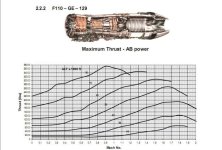
The thrust curves are correct but are highlighting different things. Both are not at the same standard.
The AL-31F is showing performance of the engine from full thrust of 120 kN. The F110 curve is showing a gradual transition from minimum burner to full thrust.
The goal of the F110 here is to show how an efficient transition can help the jet escape the loss of thrust at mach 0.3-0.4 due to ram drag. And at mach 0.3 to mach 0.4 the ram drag essentially stops thrust build up at 28000 lbs, but goes back to building thrust above mach 0.4. You can see how the AL-31F thrust drops between 0.3 and 0.4 too.
At standard temperature, zero speed at sea level, the F110 gives 131 kN.
Here's a better picture. You can clearly see it stagnate at 28000 lbs.
Ah, and the US ads claim the F-35 is "incredibly affordable," while the C-5B's official marketing numbers versus actual Air Force test data show a 50% difference in max-payload range and 50% more runway needed for takeoff. Then there's the 120mm HEAT round that can supposedly punch through bunkers, and one "war-changing" decisive weapon after another on the Russia-Ukraine battlefield — Switchblade, M1A2, M777, Hellfire, HIMARS, F-16. Oh, and let's not forget the USS Freedom littoral combat ship, USS Independence littoral combat ship, DDG-1000, and the world's safest Boeing 737 MAX...Incorrect. Advertised US engine figures are at sea level, zero speed, static conditions at ISA+15 deg C. You are reading this wrong.
Those are designed for different purposes.
AMCA's engine will be flat-rated to ISA+30 deg C to match Indian conditions like Kaveri was, whereas both 177 and Izd 30 are flat rated to ISA+15. When these engines are brought to India, the thrust drops by 15%. So 18T thrust drops to 15.3T and 16T drops to 13.6T.
Assuming 30T loaded weight for Su-57 and 19T for AMCA, we get TWR of 1.29 for AMCA and 1.02 and 0.91 for Su-57.
Without the thrust lapse, Su-57 would get 1.2 and 1.07, still much lower than AMCA.
While the Su-57 generates more thrust, which is an advantage, the TWR difference is still too much to bridge the gap. We will have to operate the Su-57 at half its fuel load to be as capable as AMCA.
The French are far beyond all three countries.
Also, nobody cares about your ISA sea-level static thrust numbers. Air combat doesn't happen on the runway, after all.
Our esteemed interlocutor is truly a master of zealously rhetorical posturing.
It was mere Dayss ago that they adamantly argued Japan's Ishikawajima-Harima Heavy Industries (IHI) fundamentally lacked the autonomous industrial capacity to produce the F110 and F100 engine series, reducing their operations to mere licensed assembly.
View attachment 52156View attachment 52157View attachment 52158
Yet, in a staggering displays of intellectual agility, the narrative now shifts seamlessly: India's licensed assembly of the AL-31FP—which completely excludes the foundational metallurgy of single-crystal turbine blade fabrication—is suddenly championed as definitive, empirical evidence of India's 'indigenous localization' of the AL-31F.
Following that twisted causality, we should realistically expect India to export thrust-vectoring AL-31F powerplants to the French to retrofit their aerodynamically constrained Rafale, rather than tolerating this absurd supply-chain inversion where Paris attempts to salvage the underpowered M88 architecture through some superficial modernization scheme.
This line of reasoning induces a severe cognitive dissociation; it is a structural self-contradiction where the left hemisphere of their analytical brain is in a violent dogfight with the right
We currently produce 63% of the AL-31F. It will rise to 80% over time using Indian materials while also boosting thrust to 132 kN.
Currently, we fabricate Russian single crystal blades ourselves, but the alloy comes from Russia. In the next step, we will replace those alloys with our own.
https://******/threads/cemilac-cert...tic-defence-manufacturing-for-su-30mki.17192/
Historically, the specific alloy grades required for the engine—such as BZL1, BZL14H, and ZS 6Y—were treated as restricted, "black-box" items.Even though Hindustan Aeronautics Limited (HAL) has been manufacturing the AL-31FP engines under licence at its Sukhoi Engine Division in Koraput, Odisha, the crucial raw materials for the high-temperature sections still had to be sourced directly from Russia.
With MIDHANI's newly certified alloys, HAL can now source these foundational metals locally.
The remaining 20% are raw materials, which is financial decision.
Here's the key point: the Al-31F sustains 12 tons of thrust at 11 km altitude at Mach 2.3 — and this needs to be pointed out specifically, it requires zero modifications. This is the original 1980s version.Your interpretation is wrong.
The thrust curves are correct but are highlighting different things. Both are not at the same standard.
The AL-31F is showing performance of the engine from full thrust of 120 kN. The F110 curve is showing a gradual transition from minimum burner to full thrust.
The goal of the F110 here is to show how an efficient transition can help the jet escape the loss of thrust at mach 0.3-0.4 due to ram drag. And at mach 0.3 to mach 0.4 the ram drag essentially stops thrust build up at 28000 lbs, but goes back to building thrust above mach 0.4. You can see how the AL-31F thrust drops between 0.3 and 0.4 too.
At standard temperature, zero speed at sea level, the F110 gives 131 kN.
Here's a better picture. You can clearly see it stagnate at 28000 lbs.
View attachment 52171
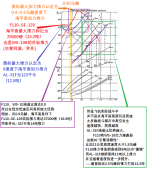
Meanwhile, the F110-GE-129 can't even manage 8 tons at that same altitude ceiling, and can only reach Mach 1.9 at best.
At even higher altitudes, the F110 and F100 produce less thrust than an RD-33.
Executing a transformation on your specific diagram is a thoroughly trivial matter; the datasets simply need to be mapped onto a unified coordinate system for direct comparative analysis.
The following is a chart I made on a Chinese forum. Just bear with it—red represents the F110-129 at 0 altitude and 11 kilometers respectively, and blue represents the first-generation AL-31F.
↓↓↓↓↓