To successfully offload industrial garbage like the M88 and F404 at a premium price, while simultaneously sandbagging a major competitor—oh, excuse me, a 'fine Western partner:indian'—is truly a beautiful piece of business.I don't mind criticism, but it needs to make sense.
There is no logical flow to his opinions about engines. He's not making an apples-to-apples comparison.
For example, both F404 and M88-2 were designed for 71 kN and 75 kN compared to RD-33's 81 kN, and he's using these two engines to compare to a 98 kN F414, an engine known to blow all three engines outta the water.
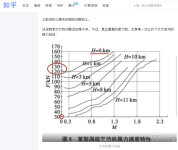
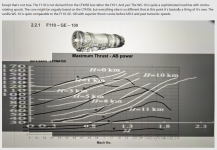
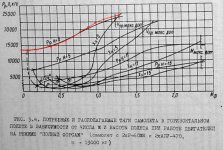
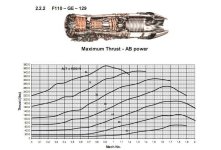
And he's unable to relate the engines to the airframes they have been designed for. Like F110 maxing out performance at lower altitudes for multirole jets compared to AL-31F's higher altitude requirement. Or a 75 kN M88-4E being sufficient for the Rafale 'cause the canards generate up to 25% more lift.
In fact, the Chinese should be absolutely thrilled to see you guys end up with the F404 or M88
The F110 only manages to squeeze out decent thrust when crawling around at low altitudes. In stark contrast, achieving extended missile ranges and maximizing the strike distance of glide weapons demands the high-altitude, high-speed performance that the AL-31F delivers—a luxury Indian aircraft are biologically destined to never achieve.
Furthermore, since the canopies of the F-15 and F-16 can't even withstand the friction-induced heat of low-altitude, high-speed flight without literally melting, I genuinely fail to see where this supposed 'low-altitude, high-speed advantage' of yours actually lies. If this mythical advantage does exist, could you do me a favor and just make up another story on the spot
Let me guess: is this yet another case where India's aircraft can miraculously pull it off, but the Americans' own planes somehow fail to deliver? I wonder, is this sudden technological miracle a byproduct of indian 'political transparency,' or is it driven by some other mystical superpower?
Of course, before you go on inventing more stories, shouldn't you at least master the basic literacy required to read the very chart you posted?
And yet, you still haven't answered my question: what exactly does 22,000 pounds equate to in metric thrust?
Or, to make it even simpler for you: how many KN is that supposed to be?
If you could somehow manage to patch up this glaring hole in your logic with a proper conversion process, it might actually make your little fairy tales sound a bit more vivid and convincing
Attachments
Last edited: