MMRCA 2.0 - Updates and Discussions

What is your favorite for MMRCA 2.0 ?

  • F-35 Blk 4

    Votes: 44 16.4%
  • Rafale F4

    Votes: 205 76.5%
  • Eurofighter Typhoon T3

    Votes: 5 1.9%
  • Gripen E/F

    Votes: 5 1.9%
  • F-16 B70

    Votes: 1 0.4%
  • F-18 SH

    Votes: 10 3.7%
  • F-15EX

    Votes: 11 4.1%
  • Mig-35

    Votes: 2 0.7%

  • Total voters
    268
  • Poll closed .
For nations like China and India, the utility of fixed runways and airbases is highly questionable. Due to the extreme population density and the ubiquity of smartphones, there is virtually no security or secrecy to speak of. In wartime, aircraft must be dispersed to primitive farmlands or rotated across highway strips.
This sounds good and all in paper but in real world, we need such airbases for fuel and weapons storage, maintenance facilities, spare parts, command and control, air defence etc. Except for short skirmishes, you won't be running a sustained air campaigns from random farm fields.
Consequently, the capability for Short Take-Off and Landing (STOL) on unpaved runways is an absolute necessity.
It is certainly good to have but not an absolute necessity, else the F22, F35A, Rafale, Typhoon, J20 etc would be having it. But I agree with you to a certain extend, a good rule we can follow to survive missile attacks is not being where the enemy expects us to be even though it is becoming increasingly difficult with advancement in surveillance technology which we may or may not be able to neutralise in case of war, Sweden is famous for this concept. During the Cold War, Swedish fighters such as the Saab 37 Viggen and later the Saab JAS 39 Gripen were designed to operate from dispersed road bases because Sweden assumed its main airfields would be attacked.

We can employ similar methods along with building hardened shelters, air defence systems, decoys, fast runway repair methods, mobile logistics etc
 
This sounds good and all in paper but in real world, we need such airbases for fuel and weapons storage, maintenance facilities, spare parts, command and control, air defence etc. Except for short skirmishes, you won't be running a sustained air campaigns from random farm fields.

It is certainly good to have but not an absolute necessity, else the F22, F35A, Rafale, Typhoon, J20 etc would be having it. But I agree with you to a certain extend, a good rule we can follow to survive missile attacks is not being where the enemy expects us to be even though it is becoming increasingly difficult with advancement in surveillance technology which we may or may not be able to neutralise in case of war, Sweden is famous for this concept. During the Cold War, Swedish fighters such as the Saab 37 Viggen and later the Saab JAS 39 Gripen were designed to operate from dispersed road bases because Sweden assumed its main airfields would be attacked.

We can employ similar methods along with building hardened shelters, air defence systems, decoys, fast runway repair methods, mobile logistics etc

Su-57 is designed for both.

Using dispersed airfields is called ACE, Agile Combat Employment, where the main base and the airfields follow a hub and spoke model. Transports, helicopters, and trucks can carry the required crew and equipment.

Su-57 can also land and take off in less than 500 m of unpaved runway due to Russia's undeveloped landmass. But J-20 will operate in extremely well-developed environments.

US and India are heavily dependent on ACE while PLAAF is planning to implement it soon.

 
J36 is quite good in that regard, it can takeoff from the heart of china and can go long in range with usable load

Presion ammunition became mainstream so runway are in danger,

but long range precision ammunition are not that cheap (except shahid type drones which can be shot down easily if enough gun based, drone based interceptors and then lasers and small rocket based like india's bhargavastra)

And runways are easier to reapir, so constantly using millions of dollar missiles, many of whome will be shot down is very costly,

one has to use atleast 10 everday or two, milti million dollar missiles to make a defeneded runway to a remain disable

Very costly, and then 2 more problems
1) enough width tracks can also be used as runways, though sortie rate will be limited
2) ramped like in indian/soviat carriers , can easily support a heavy thrust aircraft
The biggest threat of the j-36 is it's ability to fire pl-17 from its iwb.
Pl-17 effectiveness remains questionable beyond 200 km but it still makes it a threat. Also it's larger bay can carry their cruise missile arsenal.
It's a good design all the third engine positioning seems quite flawed for some reason.
 
Brand-new Rafale F4 undergoing trials at the DGA...

The transmitters are mounted on a wall, but there is cladding on all sides (and removable cladding can be placed on the floor).

717477440_18355324372243016_2795529194701625098_n.webp


The Rafale can be tilted by 15° in all axes, and different wavelengths are tested, from 140 MHz to 40 GHz, by rotating the aircraft through 360° (the suspension cables are made of fabric, not metal).

This is obviously used to qualify the RCS of the aircraft itself (in unarmed and armed configurations), but it also allows real-world measurements to be correlated with computer simulations, in order to validate the accuracy of the latter.

For this campaign, there was one measurement in armed configuration (I do not have the details of the configuration), and one in unarmed configuration.
To test all the other reinforced configurations, we use extrapolation: we measure the SER of the reinforcements and pylons in a smaller test rig, and then numerically combine all this data to determine the SER from all angles, in every possible and imaginable configuration.

Some say that we are also testing the effectiveness of SPECTRA

We can see a Rafale suspended in an anechoic chamber, likely for highly detailed electromagnetic measurements: radar signature, effects of the pylons, weapon load configurations, validation of numerical models, and also the qualification of certain SPECTRA behaviours.

The key point is that this type of test debunks the simplistic notion that the Rafale is merely a ‘non-stealth’ aircraft to which a good jammer has been added. The reality is much more subtle: Dassault and the DGA are measuring the aircraft’s actual signature under controlled conditions, across a very broad spectrum, and then correlating these measurements with numerical models. This then makes it possible to predict the SER according to angles, frequencies, external loads, pylons, fuel tanks, missiles and operational configurations.

Testing from 140 MHz to 40 GHz is particularly interesting. This covers everything from low-frequency detection bands to the higher bands used for fire control or radar imaging. In other words, the focus is not merely on the “marketing” RCS in the X-band at the front, but on how the aircraft behaves electromagnetically across the entire real-world radar environment.

And if SPECTRA is being tested in this context, it would make sense. A chamber of this type allows us to measure not only the passive echo, but also how an on-board system might respond to controlled emissions: reception, characterisation, transmission of countermeasures, jamming, active cancellation or related techniques. Obviously, the details remain classified, but the test bench is perfectly suited to this type of validation.

When a Rafale takes off with its payload, its SER depends on the configuration: missiles, fuel tanks, pylons, air-to-ground weapons, and any asymmetric charges. But as soon as a payload is fired or dropped, the electromagnetic geometry changes. A missile launched, a fuel tank dropped, a bomb fired, an empty pylon – all of these alter the radar echo and the radiation patterns.

If SPECTRA knows the initial configuration and receives information from the weapons system — shot fired, station cleared, missile launched, munition dropped — it can logically adapt its parameters: signature libraries, jamming tactics, transmission modes, threat management, vulnerability assessment based on angle and frequency. This transforms electronic warfare into a living system, linked to the aircraft’s actual status.

And this underscores the value of tests in an anechoic chamber. We are not simply measuring the “bare Rafale”. We are building a database of electromagnetic behaviour: the unarmed aircraft, the armed aircraft, pylons, weaponry, configurations, and intermediate states. The system can then utilise this data during operations.

SPECTRA does not protect an abstract Rafale; it protects the Rafale as it is at that moment, with its actual configuration and its firing history.

 
We should most definitely order MICA NG IR in huge numbers, not only for Rafale fleet but even for MKI/Tejas too. Over the cold mountains of Himalayas, Rafale with MICA NG IR would prove to be an absolute killer of PLAAF jets.

Even MKI will also have a formidable Long Range modern 100+ kms range IR missile as R-27ET is now completely obsolete. On the hindside, for us, MICA NG RF is now completely redundant as our Astra MK2 outclasses it in nearly every aspect(except off rail agility).
 

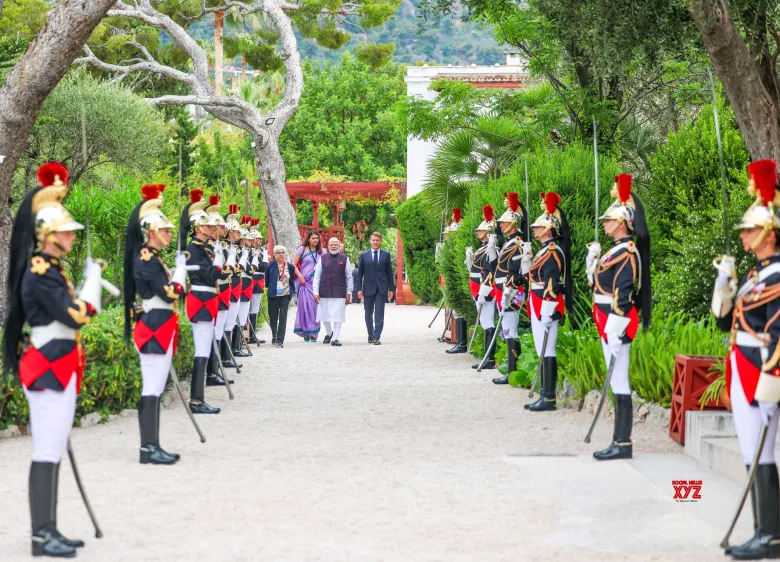
France assures tech transfer, weapon integration for 114 Rafale jets ahead of PM Modi’s visit

France does not see its military ties with India as a ‘customer-provider’ relationship, a source added, saying 'very substantive discussions are on at the moment'

Ahead of Prime Minister Narendra Modi’s visit, France has assured that it is comfortable sharing technology for the Rafale fighter jets, and that integrating Indian weapons onto the jet is part of the deal.
Top French diplomatic sources said on Thursday, “Yes, we are comfortable sharing technology, and ‘Make in India’ will be part of the deal.”
Asked about the integration of Indian weapons onto the jet, the source said, “Integration of local weapons is also a part of the deal.”

France does not see its military ties with India as a ‘customer-provider’ relationship, the source added, saying “very substantive discussions are on at the moment”.

India has sent a formal Letter of Request (LoR) to France for procuring 114 more Rafale jets. An LoR is a formal government-to-government communication used to initiate defence procurement under an Intergovernmental Agreement (IGA) framework.

The IAF Rafales will be acquired under the ‘Make in India’ scheme, with French plane maker Dassault partnering with an Indian firm. For the deal, India has laid down non-negotiable clauses, including indigenous weapons and data links.

Engine, airframe, and avionics are part of the transfer of technology. The integration of Indian weapons, missiles, and ammunition on all 114 jets is also part of the deal. The plane maker is expected to provide secure data links to allow digital integration of the jets with Indian radars and sensors, sending imagery to ground-based controllers.

In the past few years, avionics, weapons, and missiles on the Rafale have been upgraded since IAF ordered its fleet of 36 in 2015. IAF flies the ‘F3R’ version of the plane, the same as French Air Force. Dassault Aviation has introduced the ‘F-4’ version, an upgrade. India is seeking a mix of the ‘F-4’ version and the upcoming ‘F-5’ version.

The plane maker will also provide transfer of technology (ToT) for making airframes. Its suppliers, like engine maker Safran and avionics provider Thales, will be part of the ToT.

The indigenous content is expected to be between 55% and 60% once ToT for airframes, engines, and avionics is completed.

The upgrade includes a next-generation active electronically scanned array (AESA) radar for longer detection range and improved resilience to electronic warfare. It will have a better self-protection system to detect and counter new and emerging threats. Capabilities will include better long-range detection and identification of enemy threats, backed by missiles with longer ranges. The jet will be mated with better satellite links and even have artificial intelligence algorithms to assist the pilot with improved situational awareness and decision-making.

The Rafale fighter jets are part of IAF’s multi-pronged plan to increase its fleet. IAF already flies 36 Rafale jets, while the Navy has ordered 26 of the marine variant of the same jet. Increasing numbers would reduce maintenance costs.

A Rafale flight training and Maintenance, Repair, and Overhaul (MRO) facility is operational at the IAF base in Ambala. IAF has the capacity — space, spares, tooling, and trained manpower — to immediately take in two squadrons, about 36–38 planes.
 
India must not relinquish its strategic autonomy; but it must understand that, if it is to achieve this in the face of China, it must choose the right catalyst for technological advancement. And today, that catalyst can be none other than France.
 

Earlier today, the meeting between Prime Minister Narendra Modi and the French President Emannuel Macron in Nice in southern France did not result in the usual giveaway deal — a characteristic of Indian foreign policy in the new millennium. That there was no mention of Delhi plonking $43 billion for the useless Rafale, came as a relief.

May be, Modi finally understands that using arms buys as a foreign policy means of winning small consideration from the US and states in Europe, exacts really high costs, beggars the country, and in no way helps India technologically in any meaningful way.

But old habits of mind die hard and Rafale may still be bought but not in the numbers the IAF wishes. Indeed, it seems the advice from the highest levels of the joint military was heeded by the PM, and it is that if Rafale must be bought then only 40-60 more of the 4.5 generation Rafale combat aircraft — the same generation as the indigenous Tejas, be purchased. The argument ostensibly made was that if the full complement of 114 aircraft is obtained from Dassault, it’d mean dividing the cost between buying the platform and buying exorbitantly priced weapons such as the Meteor air-to-air missile, each of which costs Rs 60 crore! A fully loaded Rafale’d cost a head-turning Rs 1,000 crores!!!

How many Rafale will actually be bought depends on whether France relents on “source codes”, which are software instructions for the design know why. In the case, of the avionics suite, for instance, the source codes are contained in the Interface Control Document (ICD).

The reason Delhi has stiffened its stance and is pushing Paris on this issue is because two other offers are on the table — Russia’s complete with tech-transfer, including source codes, for its 5th generation fighter — Su-57E, and Sweden’s for its Saab 4.5 gen Gripen E.

Combat aircraft are pricey items and, in this age of drones, an unaffordable luxury. But the Indian government which is otherwise fiscally responsible, apparently gets into a brain freeze when confronted by the hardware demands of the IAF in particular — or why else would it approve previous payouts for Rafale?

Here’s the secret why, gleaned after soundings at the highest levels of the military. Modi believes France and Israel are the countries India should tap for military goods, that this will help “diversify” the sources of military supply, and as alternative to the US and Russia. In our system, what the PM wants the country gets, even if it is manifestly the worst option!

And further, it also matters what Modi’s two ministers with some say in such purchases believe. The Defence Minister Rajnath Singh is the “old time politician” who thinks Russia is a reliable supplier and the country should stay with it. Hence, we have the Su-57 in the running. And external affairs minister S. Jaishankar — surprise! surprise! pleading for US-sourced stuff — the F-35 (?) and for endless buys of P-8Is, and the C-130Js and C-17s transporters.

Then there’s the fact of Rajnath Singh beginning to command respect in the military also for his siding with and supporting the armed services in their endless tussles with the Defence Ministry bureaucrats. No small thing! A senior officer reflecting the prevailing sentiment, said this: Rajnath may not be a Parrikar, but he has our back. The late Manohar Parrikar, an IIT engineer with a problem-solving mindset and forensic skills in evaluating comparative offers of expensive foreign armaments leaned, incidentally, towards augmenting the numbers of the Su-30MKI (that I had advocated and still do) rather than going in for the Rafale. Parrikar was by far the best defence minister India has had and, for his cost-saving efforts, was shifted back to Goa as chief minister!

PS He is the third person to say Rafale numbers will come down.
 

Earlier today, the meeting between Prime Minister Narendra Modi and the French President Emannuel Macron in Nice in southern France did not result in the usual giveaway deal — a characteristic of Indian foreign policy in the new millennium. That there was no mention of Delhi plonking $43 billion for the useless Rafale, came as a relief.

May be, Modi finally understands that using arms buys as a foreign policy means of winning small consideration from the US and states in Europe, exacts really high costs, beggars the country, and in no way helps India technologically in any meaningful way.

But old habits of mind die hard and Rafale may still be bought but not in the numbers the IAF wishes. Indeed, it seems the advice from the highest levels of the joint military was heeded by the PM, and it is that if Rafale must be bought then only 40-60 more of the 4.5 generation Rafale combat aircraft — the same generation as the indigenous Tejas, be purchased. The argument ostensibly made was that if the full complement of 114 aircraft is obtained from Dassault, it’d mean dividing the cost between buying the platform and buying exorbitantly priced weapons such as the Meteor air-to-air missile, each of which costs Rs 60 crore! A fully loaded Rafale’d cost a head-turning Rs 1,000 crores!!!

How many Rafale will actually be bought depends on whether France relents on “source codes”, which are software instructions for the design know why. In the case, of the avionics suite, for instance, the source codes are contained in the Interface Control Document (ICD).

The reason Delhi has stiffened its stance and is pushing Paris on this issue is because two other offers are on the table — Russia’s complete with tech-transfer, including source codes, for its 5th generation fighter — Su-57E, and Sweden’s for its Saab 4.5 gen Gripen E.

Combat aircraft are pricey items and, in this age of drones, an unaffordable luxury. But the Indian government which is otherwise fiscally responsible, apparently gets into a brain freeze when confronted by the hardware demands of the IAF in particular — or why else would it approve previous payouts for Rafale?

Here’s the secret why, gleaned after soundings at the highest levels of the military. Modi believes France and Israel are the countries India should tap for military goods, that this will help “diversify” the sources of military supply, and as alternative to the US and Russia. In our system, what the PM wants the country gets, even if it is manifestly the worst option!

And further, it also matters what Modi’s two ministers with some say in such purchases believe. The Defence Minister Rajnath Singh is the “old time politician” who thinks Russia is a reliable supplier and the country should stay with it. Hence, we have the Su-57 in the running. And external affairs minister S. Jaishankar — surprise! surprise! pleading for US-sourced stuff — the F-35 (?) and for endless buys of P-8Is, and the C-130Js and C-17s transporters.

Then there’s the fact of Rajnath Singh beginning to command respect in the military also for his siding with and supporting the armed services in their endless tussles with the Defence Ministry bureaucrats. No small thing! A senior officer reflecting the prevailing sentiment, said this: Rajnath may not be a Parrikar, but he has our back. The late Manohar Parrikar, an IIT engineer with a problem-solving mindset and forensic skills in evaluating comparative offers of expensive foreign armaments leaned, incidentally, towards augmenting the numbers of the Su-30MKI (that I had advocated and still do) rather than going in for the Rafale. Parrikar was by far the best defence minister India has had and, for his cost-saving efforts, was shifted back to Goa as chief minister!

PS He is the third person to say Rafale numbers will come down.
Gripen E will never land in India : it is far too a Tejas mk2 competitor....
 

Earlier today, the meeting between Prime Minister Narendra Modi and the French President Emannuel Macron in Nice in southern France did not result in the usual giveaway deal — a characteristic of Indian foreign policy in the new millennium. That there was no mention of Delhi plonking $43 billion for the useless Rafale, came as a relief.

May be, Modi finally understands that using arms buys as a foreign policy means of winning small consideration from the US and states in Europe, exacts really high costs, beggars the country, and in no way helps India technologically in any meaningful way.

But old habits of mind die hard and Rafale may still be bought but not in the numbers the IAF wishes. Indeed, it seems the advice from the highest levels of the joint military was heeded by the PM, and it is that if Rafale must be bought then only 40-60 more of the 4.5 generation Rafale combat aircraft — the same generation as the indigenous Tejas, be purchased. The argument ostensibly made was that if the full complement of 114 aircraft is obtained from Dassault, it’d mean dividing the cost between buying the platform and buying exorbitantly priced weapons such as the Meteor air-to-air missile, each of which costs Rs 60 crore! A fully loaded Rafale’d cost a head-turning Rs 1,000 crores!!!

How many Rafale will actually be bought depends on whether France relents on “source codes”, which are software instructions for the design know why. In the case, of the avionics suite, for instance, the source codes are contained in the Interface Control Document (ICD).

The reason Delhi has stiffened its stance and is pushing Paris on this issue is because two other offers are on the table — Russia’s complete with tech-transfer, including source codes, for its 5th generation fighter — Su-57E, and Sweden’s for its Saab 4.5 gen Gripen E.

Combat aircraft are pricey items and, in this age of drones, an unaffordable luxury. But the Indian government which is otherwise fiscally responsible, apparently gets into a brain freeze when confronted by the hardware demands of the IAF in particular — or why else would it approve previous payouts for Rafale?

Here’s the secret why, gleaned after soundings at the highest levels of the military. Modi believes France and Israel are the countries India should tap for military goods, that this will help “diversify” the sources of military supply, and as alternative to the US and Russia. In our system, what the PM wants the country gets, even if it is manifestly the worst option!

And further, it also matters what Modi’s two ministers with some say in such purchases believe. The Defence Minister Rajnath Singh is the “old time politician” who thinks Russia is a reliable supplier and the country should stay with it. Hence, we have the Su-57 in the running. And external affairs minister S. Jaishankar — surprise! surprise! pleading for US-sourced stuff — the F-35 (?) and for endless buys of P-8Is, and the C-130Js and C-17s transporters.

Then there’s the fact of Rajnath Singh beginning to command respect in the military also for his siding with and supporting the armed services in their endless tussles with the Defence Ministry bureaucrats. No small thing! A senior officer reflecting the prevailing sentiment, said this: Rajnath may not be a Parrikar, but he has our back. The late Manohar Parrikar, an IIT engineer with a problem-solving mindset and forensic skills in evaluating comparative offers of expensive foreign armaments leaned, incidentally, towards augmenting the numbers of the Su-30MKI (that I had advocated and still do) rather than going in for the Rafale. Parrikar was by far the best defence minister India has had and, for his cost-saving efforts, was shifted back to Goa as chief minister!

PS He is the third person to say Rafale numbers will come down.

Since Bharat Karnad said it, the opposite will happen.
 

Earlier today, the meeting between Prime Minister Narendra Modi and the French President Emannuel Macron in Nice in southern France did not result in the usual giveaway deal — a characteristic of Indian foreign policy in the new millennium. That there was no mention of Delhi plonking $43 billion for the useless Rafale, came as a relief.

May be, Modi finally understands that using arms buys as a foreign policy means of winning small consideration from the US and states in Europe, exacts really high costs, beggars the country, and in no way helps India technologically in any meaningful way.

But old habits of mind die hard and Rafale may still be bought but not in the numbers the IAF wishes. Indeed, it seems the advice from the highest levels of the joint military was heeded by the PM, and it is that if Rafale must be bought then only 40-60 more of the 4.5 generation Rafale combat aircraft — the same generation as the indigenous Tejas, be purchased. The argument ostensibly made was that if the full complement of 114 aircraft is obtained from Dassault, it’d mean dividing the cost between buying the platform and buying exorbitantly priced weapons such as the Meteor air-to-air missile, each of which costs Rs 60 crore! A fully loaded Rafale’d cost a head-turning Rs 1,000 crores!!!

How many Rafale will actually be bought depends on whether France relents on “source codes”, which are software instructions for the design know why. In the case, of the avionics suite, for instance, the source codes are contained in the Interface Control Document (ICD).

The reason Delhi has stiffened its stance and is pushing Paris on this issue is because two other offers are on the table — Russia’s complete with tech-transfer, including source codes, for its 5th generation fighter — Su-57E, and Sweden’s for its Saab 4.5 gen Gripen E.

Combat aircraft are pricey items and, in this age of drones, an unaffordable luxury. But the Indian government which is otherwise fiscally responsible, apparently gets into a brain freeze when confronted by the hardware demands of the IAF in particular — or why else would it approve previous payouts for Rafale?

Here’s the secret why, gleaned after soundings at the highest levels of the military. Modi believes France and Israel are the countries India should tap for military goods, that this will help “diversify” the sources of military supply, and as alternative to the US and Russia. In our system, what the PM wants the country gets, even if it is manifestly the worst option!

And further, it also matters what Modi’s two ministers with some say in such purchases believe. The Defence Minister Rajnath Singh is the “old time politician” who thinks Russia is a reliable supplier and the country should stay with it. Hence, we have the Su-57 in the running. And external affairs minister S. Jaishankar — surprise! surprise! pleading for US-sourced stuff — the F-35 (?) and for endless buys of P-8Is, and the C-130Js and C-17s transporters.

Then there’s the fact of Rajnath Singh beginning to command respect in the military also for his siding with and supporting the armed services in their endless tussles with the Defence Ministry bureaucrats. No small thing! A senior officer reflecting the prevailing sentiment, said this: Rajnath may not be a Parrikar, but he has our back. The late Manohar Parrikar, an IIT engineer with a problem-solving mindset and forensic skills in evaluating comparative offers of expensive foreign armaments leaned, incidentally, towards augmenting the numbers of the Su-30MKI (that I had advocated and still do) rather than going in for the Rafale. Parrikar was by far the best defence minister India has had and, for his cost-saving efforts, was shifted back to Goa as chief minister!

PS He is the third person to say Rafale numbers will come down.
This guy is even bashing P-8I , C-17 purchase and thinks Su-30 MKI to be bought in MRFA

Has never flown a plane and neither has a technical degree ( a political science one ) and thinks more Su 30MKI will be better than Rafale.

He thinks entire IAF is fool which has HAL Nashik to churn out Su 30MKI but still want Western Jets ( for their engines and serviceability )