
Turkey - Pakistan - Saudi Arabia joint defense pact
- Thread starter Ashwin
- Start date
You are using an out of date browser. It may not display this or other websites correctly.
You should upgrade or use an alternative browser.
You should upgrade or use an alternative browser.


Will the believers of Allah unite against the better believers of Allah?

As i said earlier. They can't build a motorcycle. So whats there to fear from these inbr*ds. Remember, they're already assembling Chinese stuff and theyre gonna get the J35 (this is a serious threat, the only serious threat). Even then we whooped them.The Pakistanis have been positioning themselves as a low cost production hub for Turkish defence mfgrs for a while now. This new 3-way defence pact will formalize defence co-op between the 3 countries.
With Saudi funding and Turkish tech, Pak will seek to build up its own MIC (which has developed some original products lately like a 155mm gun for KSA). Bayraktar is already collaborating with AWC and other defence cos in Pak. Saudi firms like SAMI could soon follow suit.
Not a short term threat to India, but surely something to think about in the long term.
So them assembling some Turkish drones makes no difference. In any real conflict all of their factories are within range of our missiles and can be flattened.
As for the Arabs, a monkey armed with a twig is a more formidable soldier than the best soldier in an Arab army. These guys got licked by a handful of Jews in the desert (3 times). What else is to say about them.
This is essentially a tripartite of jokers.

I believe this alliance is primarily aimed at the UAE . It could also be against non state actors like the Houthis.
Here's what I posted in the other forum.
This alliance is not so much against the Iranians , (although that's a consideration too but you don't exactly get into an alliance in the middle of a conflict as jointmanship is a factor which can't materialise in such a short timespan on the go . This isn't juggad ) as it is against the UAE I suspect.
With Qatar out of the equation thanks to Iran taking out a few gas fields which'd take a few years to get back online , Turdogan needs a new sponsor for his weapons program.
That's where KSA comes in with Paxtan to provide the boots on the ground. Paxtan can't afford to go up against Iran with anywhere between 15-20% of its population comprising of Shi'a . Besides why would Turkey open up a front against Iran ?
As far as India goes given KSA has considerable investments in India they'd be cautious not to be drawn into an Indo Pak conflagration which Paxtan would try its best to do.
Turkey doesn't need a second invitation though its participation would be restricted to arms supply & occasional technical support on ground like last time .
India needs to draw KSA into investing more into India & get Indian businesses to invest in KSA. There's no mutual enmity between the two countries though having said that UAE would try to use us against them if this alliance is brought to bear upon the UAE.
As long as the US is still the sole super power they won't let things cross a certain threshold but with the US distracted & over stretched this alliance essentially is also a hedge for the future.
Nonetheless the ME is a snake pit with rapidly shifting loyalties & alliances where people say something think something else & do something entirely different.
Basically like Paxtan all the ME states including Iran & Turkey believe in punching above their weight. We're the exact opposite of these states. Having said that , the deeper we get involved in the ME the more we have our task cut out .

Once again we should've been proactive here & developed ties with Somaliland if we didn't want to establish formal diplomatic ties with them by recognising Somaliland .
Ostensibly the reason we aren't doing so is because Somaliland is a breakaway province of Somalia which is to say our BA Hons in Eng Lit babooos in the MEA are hesitant about setting a precedent given the repercussions it'd have say in Kashmir.
While this is understandable given none of the African countries have recognised it too , it hasn't prevented some of them from having informal ties with Somaliland which we could too given the strategic implications of Turkey having deep strategic & defence ties with Somalia.
This directly impinges on our interest in the IOR especially given Turkey's aim of having an Aircraft Carrier fleet which in all likelihood would be based in Somalia , a base for its space ventures & boots on the ground in the form of bases for its Air Force & Army .
None of the major powers have recognised Somaliland which for all practical purposes is an independent country though not a sovereign state except for Israel. Not even the UAE has done so in spite of having close ties with Somaliland.
I suspect we'd be using our ties with UAE to further our interests in Somaliland which is the wrong way to go about things as there's no convergence of interests between us in that region except for the fact both Turkey & UAE are supporting opposing sides in Africa.
If you want to know another reason Turkey is in an alliance with KSA & Paxtan check out the opposing sides Turkey & the UAE support in active conflicts across Asia & Africa.
This is one of the reasons I suspect this alliance while on the face of it seems aimed at Iran is actually meant to undermine the UAE.
Google Search
I think it should be clear now why the President of the UAE Al Nahyan also the ruler of Abu Dhabi made a whistle stop tour of India in January this year with his cabinet meeting Modi for only a couple of hours elevating relations between the UAE & India into a strategic partnership which is short hand for an alliance given India's aversion to formal alliances.
Another example of why the ME is a snake pit & the wheels within wheels within wheels now increasingly becoming a characteristic of foreign affairs throughout the world especially in our immediate & extended neighborhood.
Here's what I posted in the other forum.
This alliance is not so much against the Iranians , (although that's a consideration too but you don't exactly get into an alliance in the middle of a conflict as jointmanship is a factor which can't materialise in such a short timespan on the go . This isn't juggad ) as it is against the UAE I suspect.
With Qatar out of the equation thanks to Iran taking out a few gas fields which'd take a few years to get back online , Turdogan needs a new sponsor for his weapons program.
That's where KSA comes in with Paxtan to provide the boots on the ground. Paxtan can't afford to go up against Iran with anywhere between 15-20% of its population comprising of Shi'a . Besides why would Turkey open up a front against Iran ?
As far as India goes given KSA has considerable investments in India they'd be cautious not to be drawn into an Indo Pak conflagration which Paxtan would try its best to do.
Turkey doesn't need a second invitation though its participation would be restricted to arms supply & occasional technical support on ground like last time .
India needs to draw KSA into investing more into India & get Indian businesses to invest in KSA. There's no mutual enmity between the two countries though having said that UAE would try to use us against them if this alliance is brought to bear upon the UAE.
As long as the US is still the sole super power they won't let things cross a certain threshold but with the US distracted & over stretched this alliance essentially is also a hedge for the future.
Nonetheless the ME is a snake pit with rapidly shifting loyalties & alliances where people say something think something else & do something entirely different.
Basically like Paxtan all the ME states including Iran & Turkey believe in punching above their weight. We're the exact opposite of these states. Having said that , the deeper we get involved in the ME the more we have our task cut out .
Once again we should've been proactive here & developed ties with Somaliland if we didn't want to establish formal diplomatic ties with them by recognising Somaliland .
Ostensibly the reason we aren't doing so is because Somaliland is a breakaway province of Somalia which is to say our BA Hons in Eng Lit babooos in the MEA are hesitant about setting a precedent given the repercussions it'd have say in Kashmir.
While this is understandable given none of the African countries have recognised it too , it hasn't prevented some of them from having informal ties with Somaliland which we could too given the strategic implications of Turkey having deep strategic & defence ties with Somalia.
This directly impinges on our interest in the IOR especially given Turkey's aim of having an Aircraft Carrier fleet which in all likelihood would be based in Somalia , a base for its space ventures & boots on the ground in the form of bases for its Air Force & Army .
None of the major powers have recognised Somaliland which for all practical purposes is an independent country though not a sovereign state except for Israel. Not even the UAE has done so in spite of having close ties with Somaliland.
I suspect we'd be using our ties with UAE to further our interests in Somaliland which is the wrong way to go about things as there's no convergence of interests between us in that region except for the fact both Turkey & UAE are supporting opposing sides in Africa.
If you want to know another reason Turkey is in an alliance with KSA & Paxtan check out the opposing sides Turkey & the UAE support in active conflicts across Asia & Africa.
This is one of the reasons I suspect this alliance while on the face of it seems aimed at Iran is actually meant to undermine the UAE.
Google Search
I think it should be clear now why the President of the UAE Al Nahyan also the ruler of Abu Dhabi made a whistle stop tour of India in January this year with his cabinet meeting Modi for only a couple of hours elevating relations between the UAE & India into a strategic partnership which is short hand for an alliance given India's aversion to formal alliances.
Another example of why the ME is a snake pit & the wheels within wheels within wheels now increasingly becoming a characteristic of foreign affairs throughout the world especially in our immediate & extended neighborhood.

Diplomatically, the Pakistanis get a lot of mileage out of forums like OIC on Kashmir, etc. An 'Islamic NATO' mutual defence agreement would be the mil equivalent, facilitating a free flow of tech, plugging gaps in Pak's arsenal and eventually their MIC.As i said earlier. They can't build a motorcycle. So whats there to fear from these inbr*ds. Remember, they're already assembling Chinese stuff and theyre gonna get the J35 (this is a serious threat, the only serious threat). Even then we whooped them.
So them assembling some Turkish drones makes no difference. In any real conflict all of their factories are within range of our missiles and can be flattened.
As for the Arabs, a monkey armed with a twig is a more formidable soldier than the best soldier in an Arab army. These guys got licked by a handful of Jews in the desert (3 times). What else is to say about them.
This is essentially a tripartite of jokers.
So far, they were largely reliant on Chinese hardware which let them down badly during Op Sindoor. Top of the line Euro stuff remained out of bounds for lack of hard cash (except for some naval SAMs from Italy).
Turkey gives them access to Euro tech, at friendship prices. Plus integration into Turkish defence supply chains (even if as a Tier 3 partner) brings them valuable forex and upskilling opportunities that would eventually end up flowing into strategic progs.
Bayraktar is helping Pak develop small SOWs like Kagem V3/Kemankes which are similar to those being provided by the US/NATO to Ukraine. The Russians have had a tough time against this class of weapon.
For the Arabs, Pak has historically been nothing more than a gun for hire, but recognition as a 'partner', gives them an ego boost and emboldens the PA to target Kashmir.
To launch those SOWs they would have to come within range of our SAMs. 200 km aint gonna cut it, M2 or S400 would have long fired several shots to intercept those aircraft.Diplomatically, the Pakistanis get a lot of mileage out of forums like OIC on Kashmir, etc. An 'Islamic NATO' mutual defence agreement would be the mil equivalent, facilitating a free flow of tech, plugging gaps in Pak's arsenal and eventually their MIC.
So far, they were largely reliant on Chinese hardware which let them down badly during Op Sindoor. Top of the line Euro stuff remained out of bounds for lack of hard cash (except for some naval SAMs from Italy).
Turkey gives them access to Euro tech, at friendship prices. Plus integration into Turkish defence supply chains (even if as a Tier 3 partner) brings them valuable forex and upskilling opportunities that would eventually end up flowing into strategic progs.
Bayraktar is helping Pak develop small SOWs like Kagem V3/Kemankes which are similar to those being provided by the US/NATO to Ukraine. The Russians have had a tough time against this class of weapon.
For the Arabs, Pak has historically been nothing more than a gun for hire, but recognition as a 'partner', gives them an ego boost and emboldens the PA to target Kashmir.
And what type of Euro tech are they gonna get access to? I think its a stretch to say Turkish stuff can match Euro stuff. Only hair in the soup is Kaan and its euro electronics. But its more likely they will get J35 instead as Kaan will need more time.
And what type of Euro tech are they gonna get access to? I think its a stretch to say Turkish stuff can match Euro stuff. Only hair in the soup is Kaan and its euro electronics. But its more likely they will get J35 instead as Kaan will need more time.
For one, they were close to getting French RC400 and MICA AAMs for their JF-17s.
As a NATO member, Turkey can easily tap into Western electronics and components for their local products. Its why some of their projects like the Hurkus AJT have had such a short development cycle.
Third party exports might need approval but the Turks can get around that hurdle by using alternative suppliers like Ukraine (for helicopter engines, etc).
No AD system has a 100% intercept rate and Chinese elint could well sniff out gaps in our radar coverage like NATO is doing for Ukraine. We need more elint/infrared assets in space to detect missile launches, datalinks, etc and provide early warning. These could help our jets avoid pop-up attacks by PL-15/16, too. Hopefully SBS-3 will arrive on time to plug those gaps.To launch those SOWs they would have to come within range of our SAMs. 200 km aint gonna cut it, M2 or S400 would have long fired several shots to intercept those aircraft.

Def. X and some even in def. forums spend lot of time chasing 5th Gen. tech and hyping up various other aerial platforms. ELINT, AWACS, SAT ISR, and ECM are left aside like step children.No AD system has a 100% intercept rate and Chinese elint could well sniff out gaps in our radar coverage like NATO is doing for Ukraine. We need more elint/infrared assets in space to detect missile launches, datalinks, etc and provide early warning. These could help our jets avoid pop-up attacks by PL-15/16, too. Hopefully SBS-3 will arrive on time to plug those gaps.

In the next round they will try Thier 100% for a visible damage in india, they might have planned & gathered most of the info about Indian AD system where it's strong and where it's weak by now with the Chinese help, they will get additional SAM from turkey & SOW,For one, they were close to getting French RC400 and MICA AAMs for their JF-17s.
As a NATO member, Turkey can easily tap into Western electronics and components for their local products. Its why some of their projects like the Hurkus AJT have had such a short development cycle.
Third party exports might need approval but the Turks can get around that hurdle by using alternative suppliers like Ukraine (for helicopter engines, etc).
No AD system has a 100% intercept rate and Chinese elint could well sniff out gaps in our radar coverage like NATO is doing for Ukraine. We need more elint/infrared assets in space to detect missile launches, datalinks, etc and provide early warning. These could help our jets avoid pop-up attacks by PL-15/16, too. Hopefully SBS-3 will arrive on time to plug those gaps.
We can't neturalise every aerial target but we have to minimise them,
We need more AD rich environment, and for that BMD -1 can't be restricted to Delhi NCR & mumbai, it has to cover punjab, j&k, himachal, rajasthan, gujrat, & other area's,
And the navy first targets should be hunting down those subs from the first hours, asserting complete dominance over indian Ocean & gulf sea,
And for the air force & army striking every major airbases & radar installation, SAM sites form the get go with volumes of fire, which will push them in defensive position, then picking out thier SPG units to limit the causality & damage off in the north, & cutting the KKH-1 highway completely, so that the reinforcement can be delayed for them, the first blow has to big & powerful simultaneously,
The quickly we make the realise they are venerable the sooner they will fold and we minimise our attrition rate, the longer we strech our attrition increases, yes we will come out top due to prolonged war, due to sheer economical & industrial capacity but there will be some serious infra & other damages we have to endure, the longer it takes more players get involved the messier it becomes, the equation changes very often,
The production line of akash variants, qrsam, BMD also should go to private vendors, we need multiple production line, and the pralay & lrlacm lines too, the more the volume the sooner pakistan will surrender

Their stated goal is dams. They must not be allowed to claim any victory on IWT.

Expected reaction from Israeli side:
Israel's answer to the 'Muslim NATO'
The defense pact signed in Mecca by Saudi Arabia, Turkey and Pakistan is accelerating the regional arms race. It pushes normalization with Riyadh further out of reach and positions Ankara as a threat on par with Iran. Israel needs to respond along two parallel axes: its existing Mediterranean alliance with Greece and Cyprus, and a new counter pact with the United Arab Emirates and India.
by Dr. Oshrit Birvadker
Published on 08-10-2026 13:45
Last modified: 08-10-2026 14:29
The joint defense pact signed in Mecca over the weekend by Saudi Arabia, Turkey and Pakistan marks a strategic turning point in the Middle East and South Asia. The new pan-Islamic alliance brings together the custodian of Islam's holiest sites, a nuclear power and a NATO member, and is likely to accelerate the regional and global arms race.
The development poses significant challenges for Israel, pushes the prospect of normalization with Riyadh further out of reach and cuts short the vision of a "new Middle East." Israel's appropriate response should be to immediately tighten coordination with the United Arab Emirates and India.
This did not come out of nowhere. Discussions began early this year in response to the continuing erosion of US deterrence. Washington's policy toward Iran in recent months, characterized by restraint, hesitation and an unwillingness to demonstrate force, heightened the sense of insecurity and pushed regional states to diversify their strategic sources of support.
Although the member states portray the agreement as a collective defense mechanism, a NATO-style mutual defense clause is far from a guarantee of action, as previous alliances have demonstrated, including the Saudi-Pakistani agreement signed in September 2025. At this stage, moreover, there is no indication that Pakistan is extending a nuclear umbrella to its partners.
Turkey is a threat on par with Iran
After betting on regional calm only to find itself drawn into a multi-front war and a maritime blockade with devastating consequences for its energy revenues and development plans, the Saudi kingdom was left exposed. That reality forced Riyadh to make a dramatic move toward Turkey after nearly a decade of strained relations, driven in particular by the leverage Ankara derives from its military presence in and around Somalia. Alongside an accelerated military buildup, Saudi Arabia is now seeking to shape a system of strategic alliances that will provide both protection and a counterweight to its rivals.
Turkey, meanwhile, is emerging as a major threat to Israel, no less significant than Iran. Ankara will seek to use the alliance to expand its influence in the Gulf and challenge Israel both diplomatically and militarily. Pakistan, for its part, continues to consolidate its position as an influential player while demonstrating the value of its strategic assets to the US amid the continuing deadlock and lack of a solution to the confrontation with Iran.
Islamabad has a long history of cooperation with Riyadh. Their security relationship has traditionally rested on a bilateral arrangement in which Saudi Arabia provided financial and energy support while Pakistan supplied military capabilities and personnel. The defense agreement signed last year, intended to demonstrate both Islamic unity and military strength, already marked a significant step-up for those ties.
At the same time, the Ankara-Islamabad axis is gaining momentum, with security procurement and industry at its core. Turkey is now Pakistan's second-largest arms supplier, and the two countries are moving beyond off-the-shelf procurement toward deeper cooperation involving the joint development and production of technology from the ground up. More recently, at an industry exhibition held in Pakistan with representatives from 32 institutions in the two countries, Turkish Defense Minister Yaşar Güler said an official agreement for Pakistani participation in the development and production of the KAAN fighter jet was close to completion. The relationship became particularly significant during the India-Pakistan confrontation in May 2025.
A trilateral framework modeled on the "Mecca agreement" could now give this cooperation a dramatic boost. Massive Saudi financial backing, from a country that ranks among the world's highest military spenders, would allow Riyadh to tighten its control over defense-sector supply chains. At the same time, Saudi Arabia and Pakistan would gain faster access to advanced defense technologies, intelligence cooperation, and Turkish expertise and training. Riyadh's drive to reorganize its security architecture would also expand the joint development of military platforms, particularly drones, naval systems and future fighter-aircraft programs.
A trilateral axis calls for a trilateral response
The new reality, in which Saudi Arabia is moving away from normalization talks and Turkey is emerging as a central threat, requires Israel to adopt a strategy based on two parallel axes.
The first is already operating in the Mediterranean through Israel's ties with Greece and Cyprus, giving Jerusalem an essential counterweight to Turkish influence, particularly against Ankara's growing relationship with the new government in Damascus led by Ahmed al-Sharaa.
The second axis faces east and should focus on establishing and stabilizing a strategic triangle comprising Israel, the United Arab Emirates and India.
The UAE, which has watched the expansion of Turkish influence in the Middle East with concern, particularly because of Ankara's links to political Islamist movements including the Muslim Brotherhood, is likely to find itself at the center of a new source of friction with Riyadh. The Emirates, it should be recalled, was the leading Arab state to break with the long-standing regional consensus and establish formal relations with Israel under the 2020 Abraham Accords. Since then, Abu Dhabi has further deepened and expanded its strategic and defense cooperation with Jerusalem, despite public criticism from senior Emirati officials over Israel's fighting in Gaza and Lebanon.
Although the UAE imports fewer weapons than Saudi Arabia, it nevertheless ranks among the world's major arms buyers, reflecting a clear strategy: "small but lethal." Abu Dhabi's policy of diversifying its suppliers, born of necessity during the Obama administration, led it to deepen its strategic and defense partnership with Israel while rapidly strengthening its alignment with India. Cooperation with New Delhi has since moved to a new level with the signing of a strategic framework agreement, culminating in a multibillion-dollar deal now taking shape for the acquisition of BrahMos missiles.
The India card
The new agreement has also put India on heightened alert. New Delhi is concerned not only about the military strengthening of its Pakistani rival, but also that Pakistan could become a conduit through which Turkey expands its strategic footprint in South Asia. Against this backdrop, India will likely have to deepen coordination with countries affected by Turkey's expanding reach, strengthen its defense and intelligence capabilities, and build additional regional partnerships in maritime security, intelligence and economics.
Faced with an emerging trilateral alliance that gives its members an end-to-end advantage, from technological development through low-cost mass production, the importance of a counter-triangle becomes clear: Israel, the United Arab Emirates and India.
Strategic relations between Jerusalem and New Delhi, which flourished under the leadership of Prime Minister Benjamin Netanyahu and Indian Prime Minister Narendra Modi and produced diplomatic backing, military assistance and an expansion of production lines, are emerging as a critical component of Israel's national resilience in the face of the threat of arms embargoes and international isolation. Throughout this process, the three countries have been bound by overlapping interests, close relations and a deep foundation of mutual trust. That makes such an alliance an essential geopolitical anchor for stabilizing the region and containing the threats now taking shape.
Dr. Oshrit Birvadker is an expert on India's foreign and national security policy, as well as a business development expert and entrepreneur. She is a senior research fellow at the Jerusalem Institute for Strategy and Security (JISS).
https://www.israelhayom.com/2026/08/10/israels-answer-to-the-muslim-nato/
Israel's answer to the 'Muslim NATO'
The defense pact signed in Mecca by Saudi Arabia, Turkey and Pakistan is accelerating the regional arms race. It pushes normalization with Riyadh further out of reach and positions Ankara as a threat on par with Iran. Israel needs to respond along two parallel axes: its existing Mediterranean alliance with Greece and Cyprus, and a new counter pact with the United Arab Emirates and India.
by Dr. Oshrit Birvadker
Published on 08-10-2026 13:45
Last modified: 08-10-2026 14:29
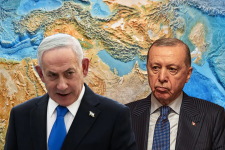
Netanyahu and Erdogan against the backdrop of a map of the Middle East. Photo: Oren Ben Hakoon, AFP
The joint defense pact signed in Mecca over the weekend by Saudi Arabia, Turkey and Pakistan marks a strategic turning point in the Middle East and South Asia. The new pan-Islamic alliance brings together the custodian of Islam's holiest sites, a nuclear power and a NATO member, and is likely to accelerate the regional and global arms race.
The development poses significant challenges for Israel, pushes the prospect of normalization with Riyadh further out of reach and cuts short the vision of a "new Middle East." Israel's appropriate response should be to immediately tighten coordination with the United Arab Emirates and India.
This did not come out of nowhere. Discussions began early this year in response to the continuing erosion of US deterrence. Washington's policy toward Iran in recent months, characterized by restraint, hesitation and an unwillingness to demonstrate force, heightened the sense of insecurity and pushed regional states to diversify their strategic sources of support.
Although the member states portray the agreement as a collective defense mechanism, a NATO-style mutual defense clause is far from a guarantee of action, as previous alliances have demonstrated, including the Saudi-Pakistani agreement signed in September 2025. At this stage, moreover, there is no indication that Pakistan is extending a nuclear umbrella to its partners.
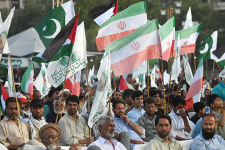
A pro-Iran rally in Islamabad. Photo: AFP
Turkey is a threat on par with Iran
After betting on regional calm only to find itself drawn into a multi-front war and a maritime blockade with devastating consequences for its energy revenues and development plans, the Saudi kingdom was left exposed. That reality forced Riyadh to make a dramatic move toward Turkey after nearly a decade of strained relations, driven in particular by the leverage Ankara derives from its military presence in and around Somalia. Alongside an accelerated military buildup, Saudi Arabia is now seeking to shape a system of strategic alliances that will provide both protection and a counterweight to its rivals.
Turkey, meanwhile, is emerging as a major threat to Israel, no less significant than Iran. Ankara will seek to use the alliance to expand its influence in the Gulf and challenge Israel both diplomatically and militarily. Pakistan, for its part, continues to consolidate its position as an influential player while demonstrating the value of its strategic assets to the US amid the continuing deadlock and lack of a solution to the confrontation with Iran.
Islamabad has a long history of cooperation with Riyadh. Their security relationship has traditionally rested on a bilateral arrangement in which Saudi Arabia provided financial and energy support while Pakistan supplied military capabilities and personnel. The defense agreement signed last year, intended to demonstrate both Islamic unity and military strength, already marked a significant step-up for those ties.
At the same time, the Ankara-Islamabad axis is gaining momentum, with security procurement and industry at its core. Turkey is now Pakistan's second-largest arms supplier, and the two countries are moving beyond off-the-shelf procurement toward deeper cooperation involving the joint development and production of technology from the ground up. More recently, at an industry exhibition held in Pakistan with representatives from 32 institutions in the two countries, Turkish Defense Minister Yaşar Güler said an official agreement for Pakistani participation in the development and production of the KAAN fighter jet was close to completion. The relationship became particularly significant during the India-Pakistan confrontation in May 2025.
A trilateral framework modeled on the "Mecca agreement" could now give this cooperation a dramatic boost. Massive Saudi financial backing, from a country that ranks among the world's highest military spenders, would allow Riyadh to tighten its control over defense-sector supply chains. At the same time, Saudi Arabia and Pakistan would gain faster access to advanced defense technologies, intelligence cooperation, and Turkish expertise and training. Riyadh's drive to reorganize its security architecture would also expand the joint development of military platforms, particularly drones, naval systems and future fighter-aircraft programs.
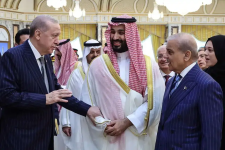
Turkish President Recep Tayyip Erdogan with Saudi Crown Prince Mohammed bin Salman and Pakistani Prime Minister Shehbaz Sharif. Photo: AFP
A trilateral axis calls for a trilateral response
The new reality, in which Saudi Arabia is moving away from normalization talks and Turkey is emerging as a central threat, requires Israel to adopt a strategy based on two parallel axes.
The first is already operating in the Mediterranean through Israel's ties with Greece and Cyprus, giving Jerusalem an essential counterweight to Turkish influence, particularly against Ankara's growing relationship with the new government in Damascus led by Ahmed al-Sharaa.
The second axis faces east and should focus on establishing and stabilizing a strategic triangle comprising Israel, the United Arab Emirates and India.
The UAE, which has watched the expansion of Turkish influence in the Middle East with concern, particularly because of Ankara's links to political Islamist movements including the Muslim Brotherhood, is likely to find itself at the center of a new source of friction with Riyadh. The Emirates, it should be recalled, was the leading Arab state to break with the long-standing regional consensus and establish formal relations with Israel under the 2020 Abraham Accords. Since then, Abu Dhabi has further deepened and expanded its strategic and defense cooperation with Jerusalem, despite public criticism from senior Emirati officials over Israel's fighting in Gaza and Lebanon.
Although the UAE imports fewer weapons than Saudi Arabia, it nevertheless ranks among the world's major arms buyers, reflecting a clear strategy: "small but lethal." Abu Dhabi's policy of diversifying its suppliers, born of necessity during the Obama administration, led it to deepen its strategic and defense partnership with Israel while rapidly strengthening its alignment with India. Cooperation with New Delhi has since moved to a new level with the signing of a strategic framework agreement, culminating in a multibillion-dollar deal now taking shape for the acquisition of BrahMos missiles.
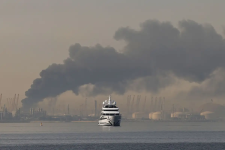
An Iranian strike in the United Arab Emirates. Photo: AFP
The India card
The new agreement has also put India on heightened alert. New Delhi is concerned not only about the military strengthening of its Pakistani rival, but also that Pakistan could become a conduit through which Turkey expands its strategic footprint in South Asia. Against this backdrop, India will likely have to deepen coordination with countries affected by Turkey's expanding reach, strengthen its defense and intelligence capabilities, and build additional regional partnerships in maritime security, intelligence and economics.
Faced with an emerging trilateral alliance that gives its members an end-to-end advantage, from technological development through low-cost mass production, the importance of a counter-triangle becomes clear: Israel, the United Arab Emirates and India.
Strategic relations between Jerusalem and New Delhi, which flourished under the leadership of Prime Minister Benjamin Netanyahu and Indian Prime Minister Narendra Modi and produced diplomatic backing, military assistance and an expansion of production lines, are emerging as a critical component of Israel's national resilience in the face of the threat of arms embargoes and international isolation. Throughout this process, the three countries have been bound by overlapping interests, close relations and a deep foundation of mutual trust. That makes such an alliance an essential geopolitical anchor for stabilizing the region and containing the threats now taking shape.
Dr. Oshrit Birvadker is an expert on India's foreign and national security policy, as well as a business development expert and entrepreneur. She is a senior research fellow at the Jerusalem Institute for Strategy and Security (JISS).
https://www.israelhayom.com/2026/08/10/israels-answer-to-the-muslim-nato/


Houthis say missiles hit Saudi military ship and four escort vessels
Yemen’s Iran-aligned Houthis attacked what they described as a Saudi military ship and four escort vessels in the Red Sea with missiles, according to the group’
Yemen’s Iran-aligned Houthis attacked what they described as a Saudi military ship and four escort vessels in the Red Sea with missiles, according to the group’s military spokesperson Yahya Saree on social media on Monday.
There was no immediate confirmation from Saudi authorities.
Mocha is a Red Sea port near the Bab el-Mandeb Strait, a strategic chokepoint connecting the Red Sea with the Gulf of Aden and an important international shipping route.
Last Tuesday, the Houthis attacked a ship in the Bab el-Mandeb Strait at the southern entrance to the Red Sea, Houthi-run news agency Saba reported. Yemen's transport ministry said four crew members were killed in the attack.
The Houthis imposed a naval blockade in July against Saudi Arabia in the Red Sea in response to what they described as a Saudi siege on Yemen, an allegation Riyadh has denied.
So when will be Allah blessed Al Khalids rolling into Yemen? Or is Allah's blessings not enough?
Well well well , turns out Dr Birvadkar is a Jew from Maharashtra with deep roots in Mumbai as per her Linked in profile . Why am I not surprised at the her India tilt in the article ?Expected reaction from Israeli side:
Israel's answer to the 'Muslim NATO'
The defense pact signed in Mecca by Saudi Arabia, Turkey and Pakistan is accelerating the regional arms race. It pushes normalization with Riyadh further out of reach and positions Ankara as a threat on par with Iran. Israel needs to respond along two parallel axes: its existing Mediterranean alliance with Greece and Cyprus, and a new counter pact with the United Arab Emirates and India.
by Dr. Oshrit Birvadker
Published on 08-10-2026 13:45
Last modified: 08-10-2026 14:29
View attachment 53483
Netanyahu and Erdogan against the backdrop of a map of the Middle East. Photo: Oren Ben Hakoon, AFP
The joint defense pact signed in Mecca over the weekend by Saudi Arabia, Turkey and Pakistan marks a strategic turning point in the Middle East and South Asia. The new pan-Islamic alliance brings together the custodian of Islam's holiest sites, a nuclear power and a NATO member, and is likely to accelerate the regional and global arms race.
The development poses significant challenges for Israel, pushes the prospect of normalization with Riyadh further out of reach and cuts short the vision of a "new Middle East." Israel's appropriate response should be to immediately tighten coordination with the United Arab Emirates and India.
This did not come out of nowhere. Discussions began early this year in response to the continuing erosion of US deterrence. Washington's policy toward Iran in recent months, characterized by restraint, hesitation and an unwillingness to demonstrate force, heightened the sense of insecurity and pushed regional states to diversify their strategic sources of support.
Although the member states portray the agreement as a collective defense mechanism, a NATO-style mutual defense clause is far from a guarantee of action, as previous alliances have demonstrated, including the Saudi-Pakistani agreement signed in September 2025. At this stage, moreover, there is no indication that Pakistan is extending a nuclear umbrella to its partners.
View attachment 53484
A pro-Iran rally in Islamabad. Photo: AFP
Turkey is a threat on par with Iran
After betting on regional calm only to find itself drawn into a multi-front war and a maritime blockade with devastating consequences for its energy revenues and development plans, the Saudi kingdom was left exposed. That reality forced Riyadh to make a dramatic move toward Turkey after nearly a decade of strained relations, driven in particular by the leverage Ankara derives from its military presence in and around Somalia. Alongside an accelerated military buildup, Saudi Arabia is now seeking to shape a system of strategic alliances that will provide both protection and a counterweight to its rivals.
Turkey, meanwhile, is emerging as a major threat to Israel, no less significant than Iran. Ankara will seek to use the alliance to expand its influence in the Gulf and challenge Israel both diplomatically and militarily. Pakistan, for its part, continues to consolidate its position as an influential player while demonstrating the value of its strategic assets to the US amid the continuing deadlock and lack of a solution to the confrontation with Iran.
Islamabad has a long history of cooperation with Riyadh. Their security relationship has traditionally rested on a bilateral arrangement in which Saudi Arabia provided financial and energy support while Pakistan supplied military capabilities and personnel. The defense agreement signed last year, intended to demonstrate both Islamic unity and military strength, already marked a significant step-up for those ties.
At the same time, the Ankara-Islamabad axis is gaining momentum, with security procurement and industry at its core. Turkey is now Pakistan's second-largest arms supplier, and the two countries are moving beyond off-the-shelf procurement toward deeper cooperation involving the joint development and production of technology from the ground up. More recently, at an industry exhibition held in Pakistan with representatives from 32 institutions in the two countries, Turkish Defense Minister Yaşar Güler said an official agreement for Pakistani participation in the development and production of the KAAN fighter jet was close to completion. The relationship became particularly significant during the India-Pakistan confrontation in May 2025.
A trilateral framework modeled on the "Mecca agreement" could now give this cooperation a dramatic boost. Massive Saudi financial backing, from a country that ranks among the world's highest military spenders, would allow Riyadh to tighten its control over defense-sector supply chains. At the same time, Saudi Arabia and Pakistan would gain faster access to advanced defense technologies, intelligence cooperation, and Turkish expertise and training. Riyadh's drive to reorganize its security architecture would also expand the joint development of military platforms, particularly drones, naval systems and future fighter-aircraft programs.
View attachment 53486
Turkish President Recep Tayyip Erdogan with Saudi Crown Prince Mohammed bin Salman and Pakistani Prime Minister Shehbaz Sharif. Photo: AFP
A trilateral axis calls for a trilateral response
The new reality, in which Saudi Arabia is moving away from normalization talks and Turkey is emerging as a central threat, requires Israel to adopt a strategy based on two parallel axes.
The first is already operating in the Mediterranean through Israel's ties with Greece and Cyprus, giving Jerusalem an essential counterweight to Turkish influence, particularly against Ankara's growing relationship with the new government in Damascus led by Ahmed al-Sharaa.
The second axis faces east and should focus on establishing and stabilizing a strategic triangle comprising Israel, the United Arab Emirates and India.
The UAE, which has watched the expansion of Turkish influence in the Middle East with concern, particularly because of Ankara's links to political Islamist movements including the Muslim Brotherhood, is likely to find itself at the center of a new source of friction with Riyadh. The Emirates, it should be recalled, was the leading Arab state to break with the long-standing regional consensus and establish formal relations with Israel under the 2020 Abraham Accords. Since then, Abu Dhabi has further deepened and expanded its strategic and defense cooperation with Jerusalem, despite public criticism from senior Emirati officials over Israel's fighting in Gaza and Lebanon.
Although the UAE imports fewer weapons than Saudi Arabia, it nevertheless ranks among the world's major arms buyers, reflecting a clear strategy: "small but lethal." Abu Dhabi's policy of diversifying its suppliers, born of necessity during the Obama administration, led it to deepen its strategic and defense partnership with Israel while rapidly strengthening its alignment with India. Cooperation with New Delhi has since moved to a new level with the signing of a strategic framework agreement, culminating in a multibillion-dollar deal now taking shape for the acquisition of BrahMos missiles.
View attachment 53485
An Iranian strike in the United Arab Emirates. Photo: AFP
The India card
The new agreement has also put India on heightened alert. New Delhi is concerned not only about the military strengthening of its Pakistani rival, but also that Pakistan could become a conduit through which Turkey expands its strategic footprint in South Asia. Against this backdrop, India will likely have to deepen coordination with countries affected by Turkey's expanding reach, strengthen its defense and intelligence capabilities, and build additional regional partnerships in maritime security, intelligence and economics.
Faced with an emerging trilateral alliance that gives its members an end-to-end advantage, from technological development through low-cost mass production, the importance of a counter-triangle becomes clear: Israel, the United Arab Emirates and India.
Strategic relations between Jerusalem and New Delhi, which flourished under the leadership of Prime Minister Benjamin Netanyahu and Indian Prime Minister Narendra Modi and produced diplomatic backing, military assistance and an expansion of production lines, are emerging as a critical component of Israel's national resilience in the face of the threat of arms embargoes and international isolation. Throughout this process, the three countries have been bound by overlapping interests, close relations and a deep foundation of mutual trust. That makes such an alliance an essential geopolitical anchor for stabilizing the region and containing the threats now taking shape.
Dr. Oshrit Birvadker is an expert on India's foreign and national security policy, as well as a business development expert and entrepreneur. She is a senior research fellow at the Jerusalem Institute for Strategy and Security (JISS).
https://www.israelhayom.com/2026/08/10/israels-answer-to-the-muslim-nato/
https://www.linkedin.com/in/dr-oshr...utm_content=profile&utm_medium=member_android


Why do you want israel to attack SA ? They were near to ink Abraham agreement (the main root of the 7th october pogrom by Hamas, inspired by Iran...).So now Pakistanis have to give Missiles and Nukes to Saudis in case of an Israeli attack
The sole real threats to India areWe'll need to see if this agreement commits both countries to send direct military assistance in case either of them went to war. If it does have something similar to NATO Article 5, then it would have serious security implications for India.
1) China
10) Pakistan
and far away all the others.
Not that KSA or Turkey ever posed a military threat to India. But Turkey gives them access to European grade tech in strategic areas lile solid rocket motors, missile guidance systems, etc.The sole real threats to India are
1) China
10) Pakistan
and far away all the others.
US intel has already indicated that Pak could be building long range BMs.
KSA is too weak once the west technicians are away.Not that KSA or Turkey ever posed a military threat to India. But Turkey gives them access to European grade tech in strategic areas lile solid rocket motors, missile guidance systems, etc.
US intel has already indicated that Pak could be building long range BMs.
Turkey is too far from India.
In fact I see more Iran to be frightened by these 3 country.