Lockheed Martin F-35 Lightning and F-22 'Raptor' : News & Discussion

US clears way for $24.3 billion fighter jet sale to Saudi Arabia

  • Deal includes 48 aircraft, 49 engines and support equipment, State Department says
  • Move may test US pledge to preserve Israel's military superiority
  • Riyadh sought the jet for years to modernize forces and deter Iran
WASHINGTON, Sept 17 (Reuters) - The US Department of State said on Thursday it has approved the potential sale of Lockheed Martin's F-35 ‌Lightning II fighter jets to Saudi Arabia, as the kingdom is drawn deeper into war in the Middle East.

A sale would mark a significant policy shift from the US, potentially altering the balance of military power in the Middle East and testing Washington's definition of maintaining its ally Israel's "qualitative military edge."

Saudi Arabia made a direct appeal for the jets in early 2025 to US President Donald Trump and has long been interested in Lockheed Martin's fighter.

The estimated $24.3 billion sale would include 48 of the military aircraft and 49 ⁠Pratt & Whitney engines along with communications equipment, spare parts and other support items, the State Department said.

Washington weighs weapons sales to the Middle East in a way that ensures Israel maintains a "qualitative military edge", effectively guaranteeing that Israel gets more advanced US weapons than regional Arab states.

The F-35, built with stealth technology that allows it to evade enemy detection, is considered the world's most advanced fighter jet. Israel has operated the aircraft for a decade, building multiple squadrons, and remains the only Middle Eastern country to possess the weapons system.

Saudi Arabia, the largest customer for US arms, has sought the fighter for years as it looks to modernize its air force and counter regional threats, particularly from Iran. The kingdom's renewed push for what would ‌constitute two ⁠squadrons comes as the Trump administration has signaled openness to deepening defense cooperation with Riyadh. The Saudi Air Force flies a mix of fighter aircraft including Boeing F-15s, European Tornados and Typhoons.

The F-35 issue has also been intertwined with broader diplomatic efforts. The administration of former US President Joe Biden previously explored providing F-35s to Saudi Arabia as part of a comprehensive deal that would have included Riyadh normalizing ⁠relations with Israel, though those efforts ultimately stalled.

Trump has made arms sales to Saudi Arabia a priority since returning to office. In 2025, the United States agreed to sell the kingdom an arms package worth nearly $142 billion, which the White House called "the largest defense cooperation ⁠agreement" Washington has ever done.

Congressional scrutiny could pose challenges to any F-35 sale. Lawmakers previously questioned arms deals with Riyadh following the 2018 murder of Saudi journalist Jamal Khashoggi, and some members of Congress remain wary of deepening military cooperation ⁠with the kingdom.

Saudi Arabia is pursuing ambitious economic and military modernization plans under Crown Prince Mohammed bin Salman's Vision 2030 agenda. The kingdom has sought to diversify its defense partnerships in recent years while maintaining its decades-long security relationship with Washington.

--------
Source: Reuters
Reporting by Ismail Shakil and Mike Stone; writing by Susan Heavey; Editing by Doina Chiacu and Nia Williams
 
They didn't go for mighty stealthy Rafale? :unsure:

They did look, but as the comps show, they are not as good and dearer than F-35

Riyadh has officially requested a detailed quote from Dassault Aviation for a potential acquisition of 54 Rafales,
Saudi Arabia apparently even contemplated buying as many as 100-200 Rafales, according to a previous La Tribune report
 
Last edited:
I am not certain that these planes will enable them to win their war against the Houthis in sandals. As for defeating Iran—let's not even go there :devilish:
IAF F-35I were flying over Iran airspace during their 12 day war. USAF, USN and IAF F-35's were flying over Iran airspace during Operation Epic Furry.
F-35's are meant to SEAD/DEAD and to dominate the skies over enemy territory that is why first world nations buy F-35's and those that can't, or are not allowed, buy a much less inferior fighter. :D
 
This is how LM gets the US to pay for a F-16 update, to be competitive with FMS, As well as a small US order, to sell to and to update other F-16 fleets, The holdup on the Taiwanese fleet, has put a hole on the assembly line, this will rectify that
 
Last edited:
  • Like
Reactions: Photon Vish
Just a recall :
It is exactly at the same point than the EAU in 2021. They had also a congress notification for F-35 and also a magic price and also US telling that "F-35 for SA would not change the equilibrium in the region".

An other recall : US can just have sign a deal with houthis
"With Ansar Allah continuing its campaign and major allies such as the US and Pakistan showing little interest in direct military intervention, Saudi Arabia may increasingly have to confront the Houthi threat with limited outside support."
 
Last edited:

Hill investigates after F-35 parts diverted to Hong Kong​

The incident raises the possibility that top secret weapons technology may have been exposed to a foreign adversary — including China.
Sensitive F-35 fighter jet technology was unexpectedly diverted to Hong Kong this summer, sparking an inquiry on Capitol Hill and raising the possibility that China could have access to key components of the highly classified weapon system.

A shipment of F-35 parts bound for the United States for repairs was rerouted as it transited the Pacific Ocean from Australia, according to three people familiar with the matter who were granted anonymity to discuss private conversations. The Pentagon confirmed the disappearance of some components.
The parts, which an intermediary was transporting on behalf of F-35 manufacturer Lockheed Martin, instead wound up in Hong Kong. It’s not clear why the equipment was rerouted or who has possession of it now.


The incident, which has not been previously reported, triggered an ongoing series of briefings for congressional staff on key national security committees. State Department and Pentagon officials first briefed staff in June, according to the people, and multiple additional briefings are expected in the coming weeks.

The shipment included one of the jet’s canopies, which covers the cockpit and contains stealth technology that only the U.S. and its allies have access to, according to two of the people. An adversary could study the parts and potentially reverse-engineer the prized technology if it had one of the canopies.

The Pentagon’s F-35 Joint Program Office said in a statement it was “aware of a shipment issue of unserviceable F-35 Lightning II components.”

The office is working with U.S. authorities and industry partners “to retrieve these components, investigate the incident, and place safeguards to avoid a future occurrence,” it added.

The shipment’s unexpected diversion to Hong Kong, a special administrative region of China, would have brought it into Beijing’s sphere of influence. China has in recent years tightened its grip on the city and enacted increasingly strict national security laws that allow Chinese authorities to influence Hong Kong’s political system and crack down on dissent.

China has already engaged in widespread espionage on secret Pentagon programs, including the F-35.

“It’s no secret that China has been aggressively trying to get F-35 data through electronic espionage, among other means,” said J.J. Gertler, a former House Armed Services Committee staff member and Congressional Research Service military aviation analyst. “But even if they already had specifications or other data about the part, possessing a real one can give them even more to go on and can verify or refine whatever they already had learned.”

The F-35 supply chain is a vast, global operation that relies on facilities across multiple countries to move and repair parts. And while there are Australian maintenance depots for the jet, none are yet capable of repairing canopies.

F-35 manufacturer Lockheed Martin manages the program’s overall supply chain and uses commercial shipping providers to transport parts.

Lockheed said in a statement it couldn’t discuss the status of shipments for security reasons but follows all U.S. regulations for shipping aircraft components.

“Our teams handle every shipment with the utmost diligence and safeguards to ensure the integrity of the F-35 program and the security of our allied partners,” it said.

The canopy, a critical component of the F-35’s stealth capabilities, is an acrylic bubble that tops the cockpit and is coated with a thin layer of transparent radar absorbent material that helps hide the plane from enemy radar.

According to the Air Force’s own description, that layer of stealth protection can degrade over time, prompting the repair or replacement of canopies among the more than 1,300 fighter jets that have been produced for the U.S. and its allies.

The State Department declined to comment. The Chinese Embassy said it was not familiar with the incident.

The F-35 program, which includes the U.S. and other nations such as the U.K., Australia, Denmark, Norway and Poland, has a unique way of managing the flow of aircraft parts. Countries have access to a shared pool of spare parts stored around the globe that the Defense Department owns until the parts are on the fighter jet.

Although the Defense Department has stepped up oversight of the F-35 supply chain in recent years, it does not account for spare parts in the pool — Lockheed does.

A Government Accountability Office report from 2023 found that more than 1 million F-35 spare parts have gone missing in the past five years. The watchdog agency concluded the department hasn’t been able to review spare part losses worth tens of millions of dollars because Lockheed controls the information.

“The F-35 Joint Program Office does not track or enter these spare parts into an accountable property system of record that would enable it to capture and store real-time changes to property records,” the report said. “The prime contractors maintain this information.”

Spare parts shortages mean the fighter jet is often grounded. While sustainment costs have continued to increase, the F-35 has not met performance goals and performance “has trended down,” according to a GAO report from this year.

The program is on track to be the world’s costliest, and the Pentagon expects to spend almost $2 trillion over the course of its lifespan.
 
  • Agree
Reactions: Amarante

Hill investigates after F-35 parts diverted to Hong Kong​

The incident raises the possibility that top secret weapons technology may have been exposed to a foreign adversary — including China.
Sensitive F-35 fighter jet technology was unexpectedly diverted to Hong Kong this summer, sparking an inquiry on Capitol Hill and raising the possibility that China could have access to key components of the highly classified weapon system.

A shipment of F-35 parts bound for the United States for repairs was rerouted as it transited the Pacific Ocean from Australia, according to three people familiar with the matter who were granted anonymity to discuss private conversations. The Pentagon confirmed the disappearance of some components.
The parts, which an intermediary was transporting on behalf of F-35 manufacturer Lockheed Martin, instead wound up in Hong Kong. It’s not clear why the equipment was rerouted or who has possession of it now.


The incident, which has not been previously reported, triggered an ongoing series of briefings for congressional staff on key national security committees. State Department and Pentagon officials first briefed staff in June, according to the people, and multiple additional briefings are expected in the coming weeks.

The shipment included one of the jet’s canopies, which covers the cockpit and contains stealth technology that only the U.S. and its allies have access to, according to two of the people. An adversary could study the parts and potentially reverse-engineer the prized technology if it had one of the canopies.

The Pentagon’s F-35 Joint Program Office said in a statement it was “aware of a shipment issue of unserviceable F-35 Lightning II components.”

The office is working with U.S. authorities and industry partners “to retrieve these components, investigate the incident, and place safeguards to avoid a future occurrence,” it added.

The shipment’s unexpected diversion to Hong Kong, a special administrative region of China, would have brought it into Beijing’s sphere of influence. China has in recent years tightened its grip on the city and enacted increasingly strict national security laws that allow Chinese authorities to influence Hong Kong’s political system and crack down on dissent.

China has already engaged in widespread espionage on secret Pentagon programs, including the F-35.

“It’s no secret that China has been aggressively trying to get F-35 data through electronic espionage, among other means,” said J.J. Gertler, a former House Armed Services Committee staff member and Congressional Research Service military aviation analyst. “But even if they already had specifications or other data about the part, possessing a real one can give them even more to go on and can verify or refine whatever they already had learned.”

The F-35 supply chain is a vast, global operation that relies on facilities across multiple countries to move and repair parts. And while there are Australian maintenance depots for the jet, none are yet capable of repairing canopies.

F-35 manufacturer Lockheed Martin manages the program’s overall supply chain and uses commercial shipping providers to transport parts.

Lockheed said in a statement it couldn’t discuss the status of shipments for security reasons but follows all U.S. regulations for shipping aircraft components.

“Our teams handle every shipment with the utmost diligence and safeguards to ensure the integrity of the F-35 program and the security of our allied partners,” it said.

The canopy, a critical component of the F-35’s stealth capabilities, is an acrylic bubble that tops the cockpit and is coated with a thin layer of transparent radar absorbent material that helps hide the plane from enemy radar.

According to the Air Force’s own description, that layer of stealth protection can degrade over time, prompting the repair or replacement of canopies among the more than 1,300 fighter jets that have been produced for the U.S. and its allies.

The State Department declined to comment. The Chinese Embassy said it was not familiar with the incident.

The F-35 program, which includes the U.S. and other nations such as the U.K., Australia, Denmark, Norway and Poland, has a unique way of managing the flow of aircraft parts. Countries have access to a shared pool of spare parts stored around the globe that the Defense Department owns until the parts are on the fighter jet.

Although the Defense Department has stepped up oversight of the F-35 supply chain in recent years, it does not account for spare parts in the pool — Lockheed does.

A Government Accountability Office report from 2023 found that more than 1 million F-35 spare parts have gone missing in the past five years. The watchdog agency concluded the department hasn’t been able to review spare part losses worth tens of millions of dollars because Lockheed controls the information.

“The F-35 Joint Program Office does not track or enter these spare parts into an accountable property system of record that would enable it to capture and store real-time changes to property records,” the report said. “The prime contractors maintain this information.”

Spare parts shortages mean the fighter jet is often grounded. While sustainment costs have continued to increase, the F-35 has not met performance goals and performance “has trended down,” according to a GAO report from this year.

The program is on track to be the world’s costliest, and the Pentagon expects to spend almost $2 trillion over the course of its lifespan.
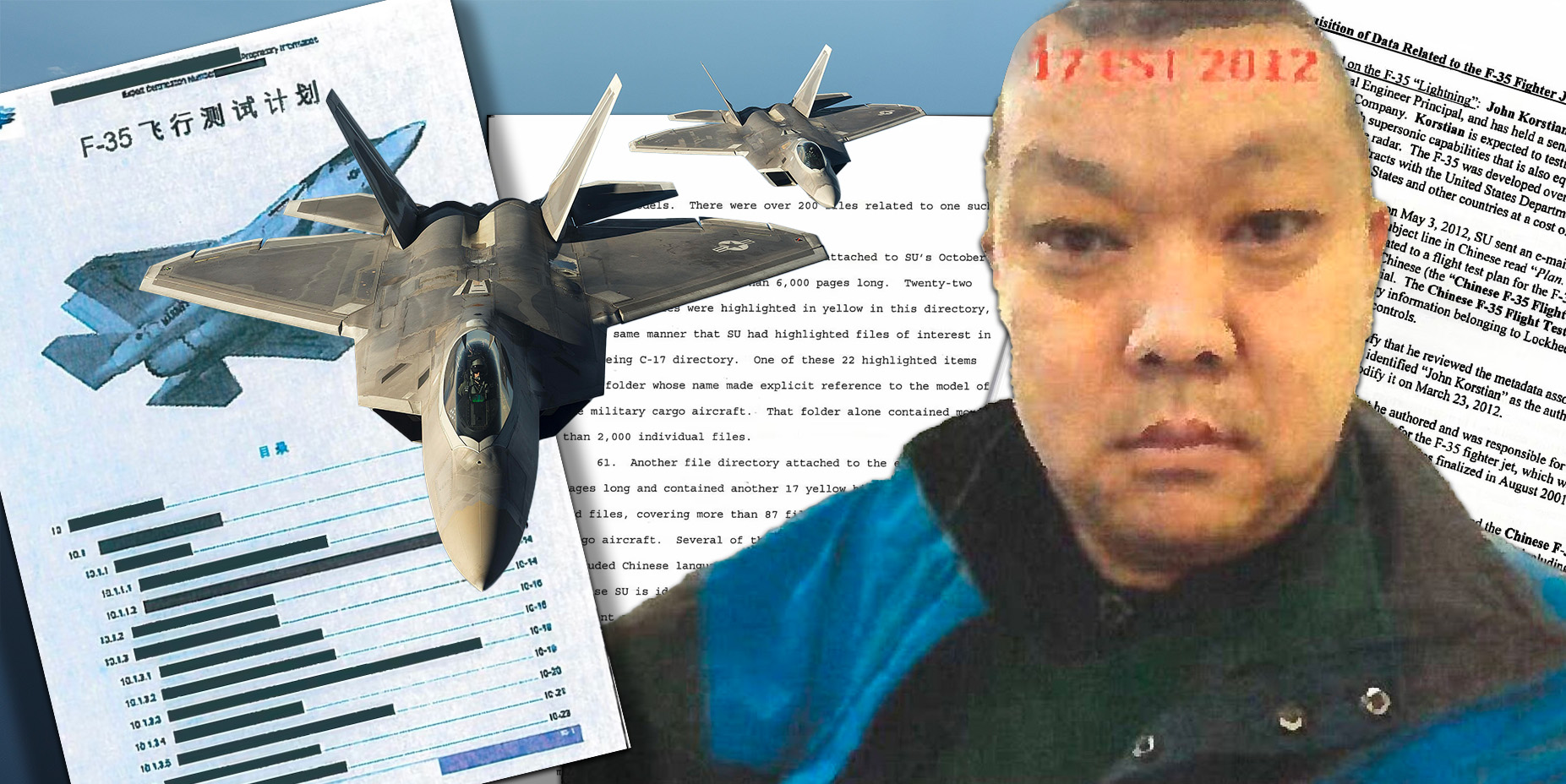
There is also the well-known story of Chinese espionage targeting the F-22 and F-35 programs, which spanned six years (2008–2014), but as early as "...2009, six current and former government officials confirmed to the *Wall Street Journal* that the *Joint Strike Fighter* program (the origin of the F-35) had been repeatedly infiltrated by Chinese hackers; the latter had managed to steal several terabytes of data regarding the aircraft's design and systems...":

There is also the "RTX scandal":
 
Luckily, France doesn't have to worry about Chinese espionage on the Rafale, It doesn't have any tech worth stealing :ROFLMAO:
Americans and french had already sold their entire tech stack in the early 70's and 80's.
They have already given the Chinese building blocks for an entire aero-space industries. It's just mediocrity of Chinese engineers that they just can't go beyond a certain level of tech superiority over the Americans.