
was wishing they would try and go for a two stage configuration.ISRO has put out a tender for the Third Launch Pad (TLP) to be built to support NGLV launches. Tender provides insights into the latest specs of the NGLV & its variants:
Layout of the TLP:
View attachment 55766
NGLV variants:
View attachment 55767
Next Generation Launch Vehicle (NGLV) / Project Soorya: News & Updates
- Thread starter Gautam
- Start date
You are using an out of date browser. It may not display this or other websites correctly.
You should upgrade or use an alternative browser.
ISRO has put out a tender for the Third Launch Pad (TLP) to be built to support NGLV launches. Tender provides insights into the latest specs of the NGLV & its variants:
Layout of the TLP:
View attachment 55766
NGLV variants:
View attachment 55767
How does the new config stack up against Chinese Long March 10 LVs?

was wishing they would try and go for a two stage configuration.
Yeah, me too. TSTO needs powerful engines in larger clusters. 7 x LME-240 on Stage 1 & 2 x LME-240 on Stage 2 won't cut it. We need more powerful engines & we need more of them per stage.
The LME-240 is a challenging project for LPSC. This is the most powerful liquid rocket we have ever attempted to make. The FFSC is a complex engine cycle we have little experience with. The Methalox propellant mix is also a new thing for LPSC. Clustering 7 large engines is a challenge of its own. The most we have done so far is a cluster of 2 Vikas engines for the LVM3. Vikas engines are 1/3 the power of the LME-240.
Lots of variables in this project already. So, ISRO is naturally trying to derisk the program wherever they can. They are experienced with 3/4 stage rockets. 2 stage to orbit is another new thing, another variable that can go wrong. Can't fault this approach.
I wish they eventually make a two-stage version of the NGLV though.
How does the new config stack up against Chinese Long March 10 LVs?
Only concrete thing we know about the LMLV is its payload targets to LEO & TLI. LMLV is targeting 85 tons to LEO, 29.5 tons cargo to TLI, 26.5 tons to TLI human rated. These are for expendable LMLV, all 3 core stages would need to burn till depletion.
Wiki says LM-10 is targeting 70 tons to LEO & 27 tons to TLI. Their engines are ready, ours are still a few years away.


was wishing they would try and go for a two stage configuration.
Yeah, me too. TSTO needs powerful engines in larger clusters. 7 x LME-240 on Stage 1 & 2 x LME-240 on Stage 2 won't cut it. We need more powerful engines & we need more of them per stage.
The LME-240 is a challenging project for LPSC. This is the most powerful liquid rocket we have ever attempted to make. The FFSC is a complex engine cycle we have little experience with. The Methalox propellant mix is also a new thing for LPSC. Clustering 7 large engines is a challenge of its own. The most we have done so far is a cluster of 2 Vikas engines for the LVM3. Vikas engines are 1/3 the power of the LME-240.
Lots of variables in this project already. So, ISRO is naturally trying to derisk the program wherever they can. They are experienced with 3/4 stage rockets. 2 stage to orbit is another new thing, another variable that can go wrong. Can't fault this approach.
I wish they eventually make a two-stage version of the NGLV though.
Apparently, the two-stage config is not feasible for us due to geography of launching from SHAR, A two-stage rocket would result in the booster having to come down over populated landmasses in Myanmar/SE Asia. So that's all of our GEO sats & equatorial LEO orbits out the window. That's why ISRO went with three stage, so that the booster comes down sooner, while still over the Bay of Bengal. Watch this vid from 2:17 onwards:
Going south for polar orbits would be fine (not counting the Sri Lanka dogleg penalty ofcourse) but most of the rationale for NGLV is in heavier payloads to GEO & TLI so that won't make the same kind of sense as it did for PSLV or even LVM3.
Kulasekarapattinam (I'm gonna call it K-PAT from now on) launching toward south bypassing SL is there to remove that dogleg penalty for polar/SSO but that launchpad is dedicated for small (or at most medium) launchers. Certainly no NGLV going there.
Man, we really need to explore setting up a launchpad in Mauritius or Seychelles. Govt or one of the private players.
P.S.
In that video (from over 2 years ago), Dr. Somanath says that forging facilities for launcher rings greater than 5m dia did not exist in India, hence the NGLV's dia was fixed at that size. Since then of course we know that it got upgraded to 6.5m so I'm guessing that domestic infrastructure has since been built up or is at least in the pipeline? Haven't been following that part closely, maybe @Gautam knows something?
Apparently, the two-stage config is not feasible for us due to geography of launching from SHAR, A two-stage rocket would result in the booster having to come down over populated landmasses in Myanmar/SE Asia. So that's all of our GEO sats & equatorial LEO orbits out the window. That's why ISRO went with three stage, so that the booster comes down sooner, while still over the Bay of Bengal. Watch this vid from 2:17 onwards:
I remember this video. It is theoretically possible to do a 2-stage launch & recovery if we launch from Gujarat & recover near A&N islands or if we can launch from Lakshadweep islands & recover near the Bengal/Odisha coast or on land-based sites.
A few years back there was some discussions about setting up a launch port on the Gujarat coast. But that was dropped for obvious reasons. Gaganyaan recovery will happen near the Gujarat coast by the way.
Setting up rocket handling infra on either the A&N islands or Lakshadweep is not easy or cheap.
Going south for polar orbits would be fine (not counting the Sri Lanka dogleg penalty ofcourse) but most of the rationale for NGLV is in heavier payloads to GEO & TLI so that won't make the same kind of sense as it did for PSLV or even LVM3.
Kulasekarapattinam (I'm gonna call it K-PAT from now on) launching toward south bypassing SL is there to remove that dogleg penalty for polar/SSO but that launchpad is dedicated for small (or at most medium) launchers. Certainly no NGLV going there.
Man, we really need to explore setting up a launchpad in Mauritius or Seychelles. Govt or one of the private players.
I am hoping that in a decade we have enough launch cadence that existing infra at SDSC or K-PAT won't be able to manage them. Agnikul is moving towards having mobile launch capability. Other companies might need to do the same. If the low to medium end of the satellite market in India is eaten up by the pvt. players, that would leave ISRO with no choice but to strengthen their hand on the heavier end.
Maybe a launch port on the islands would become possible then.
P.S.
In that video (from over 2 years ago), Dr. Somanath says that forging facilities for launcher rings greater than 5m dia did not exist in India, hence the NGLV's dia was fixed at that size. Since then of course we know that it got upgraded to 6.5m so I'm guessing that domestic infrastructure has since been built up or is at least in the pipeline? Haven't been following that part closely, maybe @Gautam knows something?
Post #37 on this thread.
I remember this video. It is theoretically possible to do a 2-stage launch & recovery if we launch from Gujarat & recover near A&N islands or if we can launch from Lakshadweep islands & recover near the Bengal/Odisha coast or on land-based sites.
A few years back there was some discussions about setting up a launch port on the Gujarat coast. But that was dropped for obvious reasons. Gaganyaan recovery will happen near the Gujarat coast by the way.
Setting up rocket handling infra on either the A&N islands or Lakshadweep is not easy or cheap.
In both cases (Gujarat or Lakshadweep), it would require the rocket to overfly India itself. Gujarat especially. I don't see us letting that happen. Too much risk of falling stages and any untoward incident could cause public backlash on the space program.
Only ones to authorize overland flights remain dictatorships like China (and Russia) where this sort of opposition is crushed. Not possible to implement here. Even those countries would have built more on coasts if geography allowed them to (I think China did build one on Hainan island eventually though).
Some countries are just geographically blessed when it comes to supporting launch pads. Some are just outright cursed. We're in between.
For what it is (small sat launches to polar/SSO), KPAT is gonna be one of the best locations in the world. But we have to make some adjustments (like our three-stage design) for where geography doesn't suit us.
I do wish we launched over SE Asia without giving a single F though

I am hoping that in a decade we have enough launch cadence that existing infra at SDSC or K-PAT won't be able to manage them. Agnikul is moving towards having mobile launch capability. Other companies might need to do the same. If the low to medium end of the satellite market in India is eaten up by the pvt. players, that would leave ISRO with no choice but to strengthen their hand on the heavier end.
Maybe a launch port on the islands would become possible then.
Yea.
Post #37 on this thread.
Ah, now I remember this post. I did think I read something about this somewhere but it was a hazy memory!

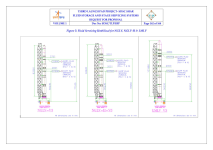
wasnt there some talk of like slanted service tower also like how falcon 9 had? is it still going ahead ?
wasnt there some talk of like slanted service tower also like how falcon 9 had? is it still going ahead ?
Yep. Take a close look at the base of the truss tower. The point where the tower meets the launch pedestal. You can see a pivot joint there. The tower will lean away from the rocket as it lifts off. You can see the graphic at post #32 on this thread shows a tower leaning away as the LMLV takes off.
Ah, now I remember this post. I did think I read something about this somewhere but it was a hazy memory!
Shailesh Forging works have recently started producing 7.1 m OD x 1 m height seamless precision ring rolling. They are targeting customers in wind energy, industrial machinery & aerospace sectors.
View attachment Shailesh Forging Works 7.1m ring.mp4

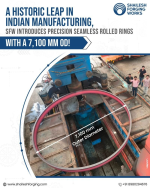



This is what I wrote the last time:
I get a feeling that the NGLV will eventually end up having a dia of 7-7.5m. That would be necessary to accommodate a cluster of 9x LME-240/LME-300 engines.
We have already reached 7.1 m OD. 1 m height is a problem; it is around 1/3 of what we need. I am fairly confident we can get upto 7.5 m OD & 3-3.5 m height in a few years.
I hope ISRO doesn't limit the NGLV/LMLV to 6.5 m OD. That would cap its growth potential. The NGLV as it is today, would struggle to take off with LME-110 engines. For decent performance need the 7x LME-240 at a minimum. If we could do 9x LME-240, even better. ISRO would scale up the LME-240 to LME-300 eventually.
To accommodate all of these changes the dia of the rocket needs to be 7-7.5 m. Otherwise we end up with a hard limit of how many engines we can cluster & how big each engine can be.
The NGLV is still at least 5-7 years away, realistically 10 years away. It will be in service for probably ~20 years. Indian industry's ring making capacity has gone from 5 m to 7.1 m in just a few years. At this pace, a 7-7.5 m dia rocket is achieveable in the near future. I hope we don't kneecap its growth potential.
