Corvettes of Indian Navy : News and Discussions

Does anyone know why we we are going for 16 ASW-SWC to replace only 4 Abhay class? Any new requirements to defend coastlines against submarines?

Also the older news articles claim that ASW-SWC will be able to prosecute intruding aircraft, but it doesn't have any air defence.
Chinese and Pakistani increase in submarine and under water capabilities.
Pakistan already has 4 agusta submarines add 8 hangor class submarines.
Another issue the new frigate they got from Turkey.
China is a whole different ball game although they still have a lot of dated kilo classes which would logically be taken.
 
  • Like
Reactions: Photon Vish
When will it get it's SAM
The VL-SRSAM is taking a troubling amount of time to mature. The VLS has gone through 2 major modifications already.

Then there is the range enhancement of the Astra Mk-1. The Mk-1's max range has increased from 110 km to 160 km & the IAF will order the extended range version. So, the base variant on which the VL-SRSAM is based will be discontinued.

It is likely the new VL-SRSAM will be based on this extended range Astra Mk-1. Doesn't make sense to keep production open for just the Navy.

Until this mess is sorted out the Kamorta class has to rely on its escort ships for AD.
 
The VL-SRSAM is taking a troubling amount of time to mature. The VLS has gone through 2 major modifications already.

Then there is the range enhancement of the Astra Mk-1. The Mk-1's max range has increased from 110 km to 160 km & the IAF will order the extended range version. So, the base variant on which the VL-SRSAM is based will be discontinued.

It is likely the new VL-SRSAM will be based on this extended range Astra Mk-1. Doesn't make sense to keep production open for just the Navy.

Until this mess is sorted out the Kamorta class has to rely on its escort ships for AD.
Unlikely. VL-SRSAM is meant to be an inner layer/anti-missile replacement for Barak-1. The range will likely be limited to no more than 50km (ESSM B2 class) or the overlap with MRSAM on other DDG/FFG will be too high, making the latter almost redundant.

Plus the associated X-band MFR has a detection range of only ~200km which means the engagement range will be lower still.
 
Last edited:
VL-SRSAM is meant to be an inner layer/anti-missile replacement for Barak-1.
I know that.

The range will likely be limited to no more than 50km (ESSM B2 class) or the overlap with MRSAM on other DDG/FFG will be too high, making the latter almost redundant.
Does it make sense to have 2 separate production lines for 2 different variants of the same missile? IAF won't order the older more of the 110km ranged missile. Having a combined production line for Astra Mk-1 & VL-SRSAM is the logical course of action.

Plus the associated X-band MFR has a detection range of only ~200km which means the engagement range will be lower still.
The 160 km range of the improved Astra Mk-1 is achieved when launched from a fighter. The same missile when launched from a ground/naval VLS would give you around half that range, so around 80 kms.

I don't think that radar range is going to be an issue.
 
I know that.


Does it make sense to have 2 separate production lines for 2 different variants of the same missile? IAF won't order the older more of the 110km ranged missile. Having a combined production line for Astra Mk-1 & VL-SRSAM is the logical course of action.


The 160 km range of the improved Astra Mk-1 is achieved when launched from a fighter. The same missile when launched from a ground/naval VLS would give you around half that range, so around 80 kms.

I don't think that radar range is going to be an issue.
The VLSRSAM is not the same missile as the astra mk1. its 20cm longer and around 30 kgs heavier. Its closer to the astra mk2 than mk1.
 
Unlikely. VL-SRSAM is meant to be an inner layer/anti-missile replacement for Barak-1. The range will likely be limited to no more than 50km (ESSM B2 class) or the overlap with MRSAM on other DDG/FFG will be too high, making the latter almost redundant.

Plus the associated X-band MFR has a detection range of only ~200km which means the engagement range will be lower still.
Can VL-SRSAM be quad-packed in any of the VLS used by IN ?

If not then, is there any plans to quad this like ESSM ?
 
Does it make sense to have 2 separate production lines for 2 different variants of the same missile? IAF won't order the older more of the 110km ranged missile. Having a combined production line for Astra Mk-1 & VL-SRSAM is the logical course of action.
DRDO is working on a truck mounted VL-SRSAM launcher for the IAF. This will likely supplement and then replace the Syder-SR/MR batteries which have a max intercept range of 35km, iirc.

Astra Mk1 fits that niche perfectly. (All bets off if IAF signs up for QRSAM but they likely prefer a more compact weapon with fast acceleration post launch). A longer ranged round would be overkill for the naval point defense/base defense role.

I agree with your point about a common production line, though.
 
Can VL-SRSAM be quad-packed in any of the VLS used by IN ?

If not then, is there any plans to quad this like ESSM ?
I'd say the design benchmark for VLSRSAM has always been the MBDA CAMM which comes in a unique 2X3 cell VLS. But turns out it can be quadpacked into the Mk41 VLS which is also being fitted on the RN's upcoming T26 FFG.

The IN will likely follow the same template with multiple, dedicated VLS types.
 

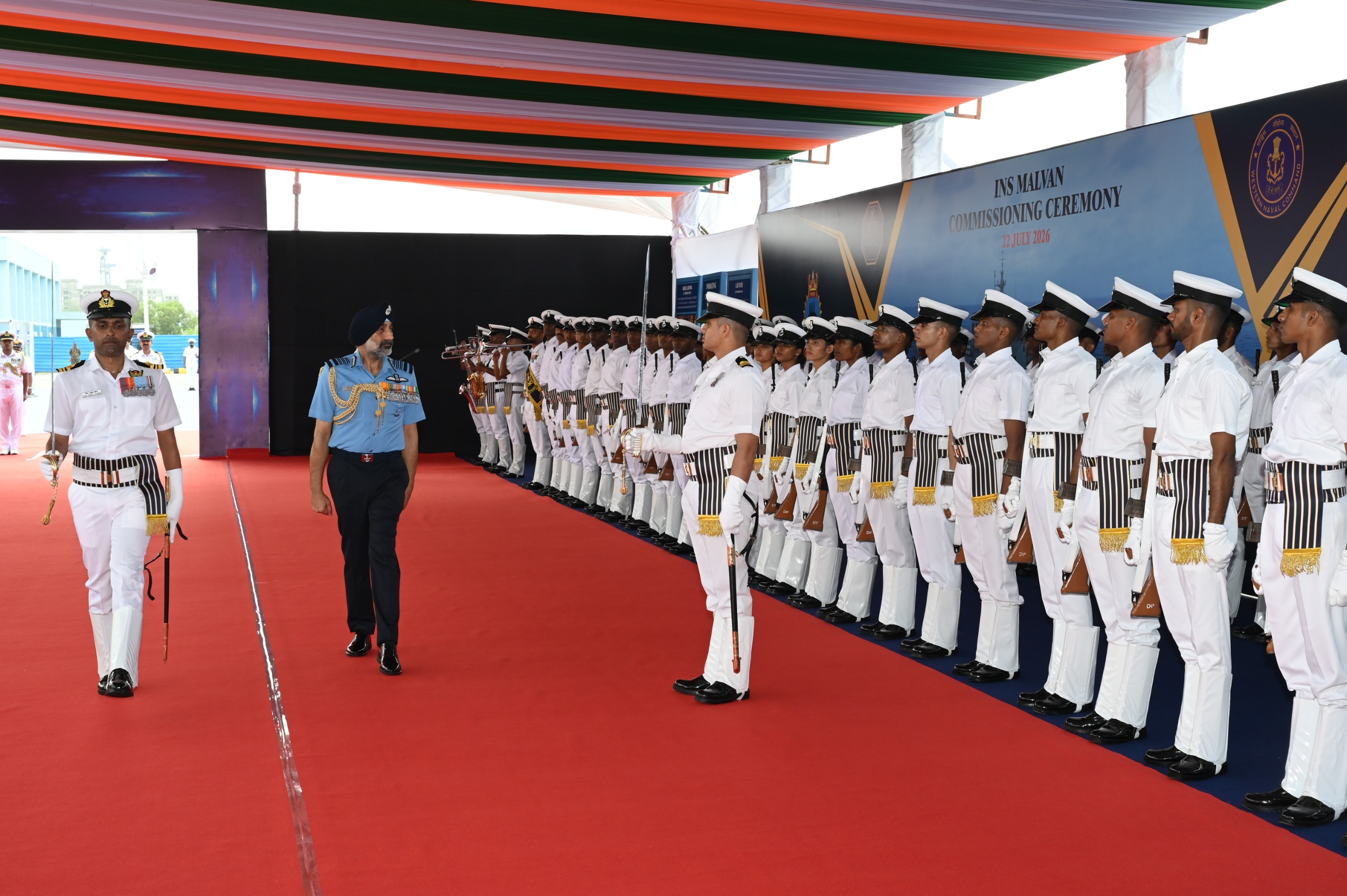
INDIAN NAVY COMMISSIONS INS MALVAN, THE SECOND OF THE MAHE-CLASS ANTI-SUBMARINE WARFARE SHALLOW WATER CRAFT

Posted On: 22 JUL 2026 5:21PM by PIB Delhi

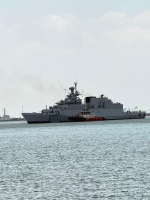
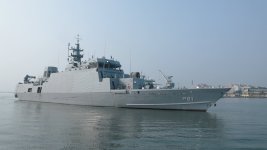
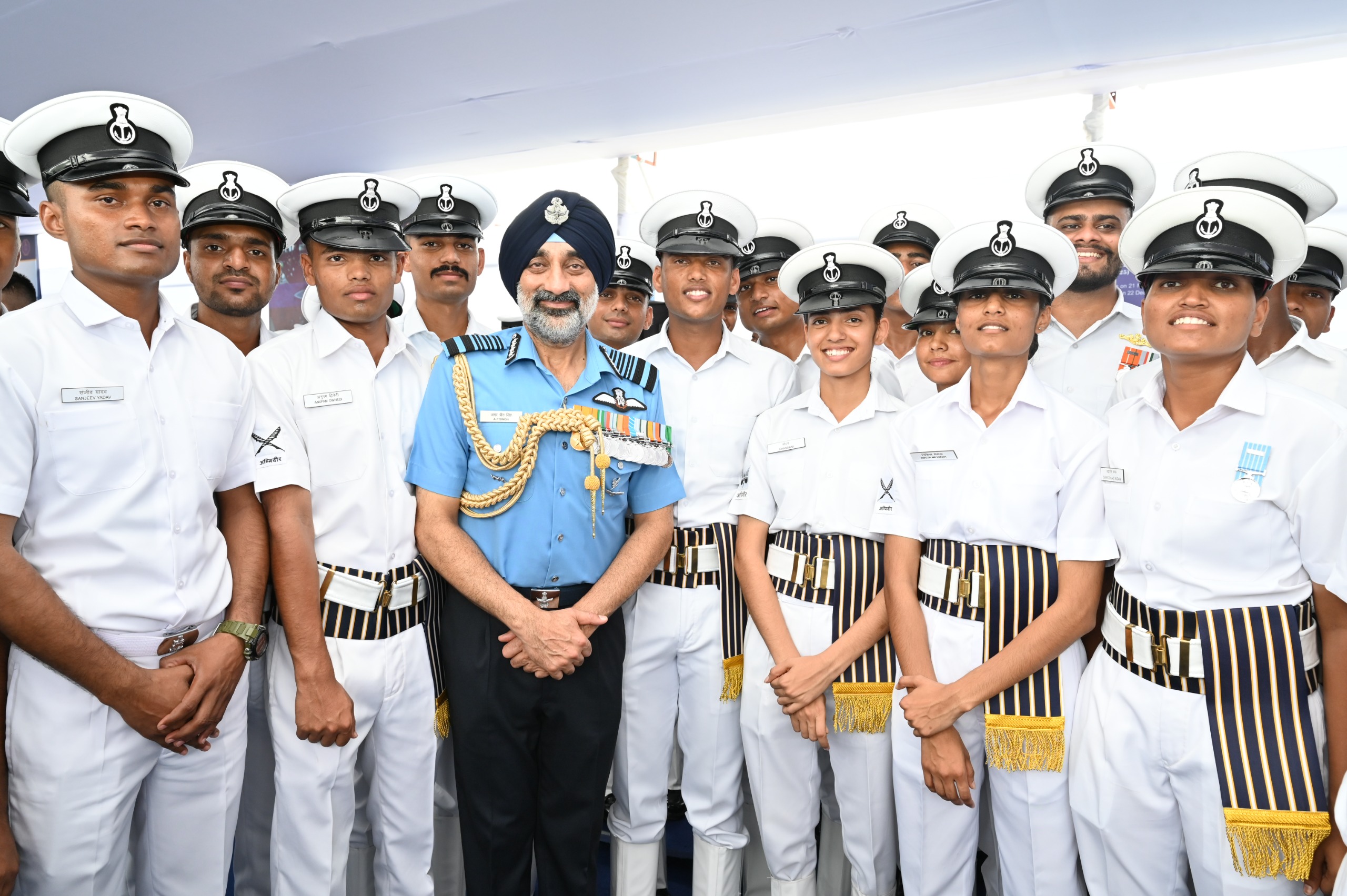
INS Malvan, the second of the indigenously designed and built Mahe-class Anti-Submarine Warfare Shallow Water Craft (ASW-SWC), was commissioned at Karwar on 22 Jul 2026. The event was presided over by Air Chief Marshal AP Singh, Chief of the Air Staff, in the presence of Vice Admiral Sanjay Vatsayan, Flag Officer Commanding-in-Chief, Western Naval Command. Other senior naval officers, representatives from Cochin Shipyard Limited (CSL), Kochi, veterans, and distinguished guests were also in attendance.

The ship carries deep historical and cultural significance as it derives its name from the historical coastal town of Malvan in Maharashtra, a region intrinsically linked to the illustrious maritime heritage of Chhatrapati Shivaji Maharaj. The vessel also encapsulates the legacy of her predecessor, an inshore Indian Naval Minesweeper that remained in service till 2003.

INS Malvan is the second of eight ASW-SWCs, being indigenously built by CSL, Kochi, and the sixth of 16 ASW-SWCs to be commissioned into Indian Navy. With over 80 percent indigenous content, the ship reinforces the Government of India’s vision of Aatmanirbhar Bharat and India’s expanding ecosystem of naval design, equipment, system integration, and growing self-reliance in defence shipbuilding.

The vessel is equipped for Underwater Surveillance, Anti-Submarine Warfare (ASW) operations, and Low Intensity Maritime Operations (LIMO) along with Mine Warfare capability. The vessel will further bolster coastal defence, littoral security, and enhance Maritime Domain Awareness.

The crest of INS Malvan carries the ‘Bagh Nakha’ (Tiger's Claw), symbolising bravery, warfare tactics, agility, and audacity, resonating with the ship's ethos to attack rapidly and strike silently. The waves surrounding ‘Bagh Nakha’ reflect the vast sea surrounding the coasts and the Indian Navy's unwavering resolve to remain ever vigilant, ever ready, and steadfast in safeguarding the nation's seas and sovereignty. The ship's motto, ‘Silent Claws’, embodies lethality, stealth, and the ability to strike the adversary swiftly.

Addressing the gathering on the occasion, the Chief of the Air Staff emphasised the critical importance of safeguarding sea lines of communication to ensure unimpeded maritime trade amid global uncertainties. He lauded the Indian Navy's impressive growth and its commitment to the Aatmanirbhar initiative, specifically highlighting the warship's over 80 percent indigenous content. Drawing inspiration from the Indian Navy's model of embedding officers directly into the shipbuilding process, he suggested that similar practices could accelerate self-reliance across the broader defence ecosystem. He also reaffirmed the vision of tri-service integration, calling for seamless jointness among the Indian Army, Indian Navy, and Indian Air Force to ensure the nation succeeds as one unified force in future conflicts.

The commissioning of INS Malvan adds a significant punch to the Indian Navy’s Anti-Submarine Warfare capabilities. With the ability to operate seamlessly with larger surface combatants, submarines, and aviation assets, induction of INS Malvan enables the Indian Navy to remain Combat Ready, Credible, Cohesive, and Future Ready to ensure national security and safeguard India’s maritime interests at all times and at all locations.

WhatsAppImage2026-07-22at7.12.28PMAVMO.jpeg


WhatsAppImage2026-07-22at7.12.28PM(1)01H7.jpeg


WhatsAppImage2026-07-22at7.12.28PM(2)DJ56.jpeg


WhatsAppImage2026-07-22at7.12.29PMF636.jpeg
 
  • Like
Reactions: Gautam and Fatalis