

You are using an out of date browser. It may not display this or other websites correctly.
You should upgrade or use an alternative browser.
You should upgrade or use an alternative browser.


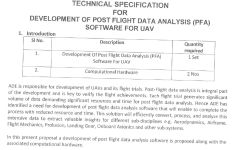
MPATGM ground pop-up trial from ADE Archer SRUAV-W:

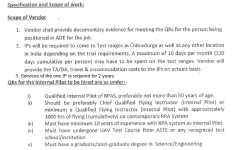
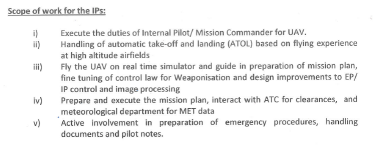
ADE hiring internal pilots for RPAS flying. Likely Archer NG ?


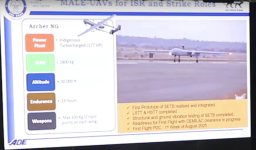
So program is alive.
Status
Power Plant - Indigenous Turbocharged 177hp Engine
MTOW - 1800 kg
Altitude - 30,000 ft
Endurence - 29 Hours
Weapons - Max 300 kg (2 hard points on each wing)
• First Prototype of SETB realised and integrated
• LSTT (low speed taxi trials) and HSTT (high speed taxi trials)completed
• Structural and ground vibration testing of SETB completed
• Readiness for First Flight with CEMILAC clearance in progress
• First Flight PDC - 1st week of August 2025
Of course it is, the pilot hiring tender came out twice, first time got some terms not acceptable hence amended. Since that was for RPSA , only one option that is almost ready and not ghatak.
Even hired water tankers at ATR for the deployed workers was a proof
Even hired water tankers at ATR for the deployed workers was a proof
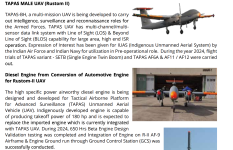

From surveillance to strike: DRDO upgrades unnamed aerial vehicle Archer-NG
Initially envisioned as a medium-altitude long-endurance (MALE) drone focused on intelligence, surveillance and reconnaissance (ISR), Archer-NG is now being upgraded to perform combat missions against both ground and aerial targets.
Initially envisioned as a medium-altitude long-endurance (MALE) drone focused on intelligence, surveillance and reconnaissance (ISR), Archer-NG is now being upgraded to perform combat missions against both ground and aerial targets.
According to DRDO officials, the platform’s current development phase prioritises advanced ISR performance through the integration of high-resolution electro-optical and infrared sensors, synthetic aperture radar, and secure high-bandwidth data links. These systems are aimed at delivering real-time battlefield awareness and strengthening operational decision-making.
The UAV is expected to achieve endurance of over 18 hours and operate at service ceilings above 30,000 feet, enabling long-duration missions across diverse operational environments.
The next stage of development centres on weaponisation and multi-role deployment. Archer-NG is being configured to carry precision-guided munitions, anti-tank guided missiles, and air-to-air weapons to support counter-UAV operations and precision strike capabilities.
DRDO is also working on integrating artificial intelligence-enabled target recognition and swarming functionality, allowing the platform to coordinate with manned fighter aircraft and other unmanned systems in future network-centric warfare scenarios.
A senior DRDO scientist described the shift as a transition from an “eye in the sky” to a “sensor-shooter node”, reflecting a broader strategic emphasis on persistent surveillance, rapid target acquisition and strike capability within a single mission profile.
The programme marks a significant step in India’s effort to build indigenous, combat-ready unmanned systems aligned with the demands of modern warfare.
According to DRDO officials, the platform’s current development phase prioritises advanced ISR performance through the integration of high-resolution electro-optical and infrared sensors, synthetic aperture radar, and secure high-bandwidth data links. These systems are aimed at delivering real-time battlefield awareness and strengthening operational decision-making.
The UAV is expected to achieve endurance of over 18 hours and operate at service ceilings above 30,000 feet, enabling long-duration missions across diverse operational environments.
The next stage of development centres on weaponisation and multi-role deployment. Archer-NG is being configured to carry precision-guided munitions, anti-tank guided missiles, and air-to-air weapons to support counter-UAV operations and precision strike capabilities.
DRDO is also working on integrating artificial intelligence-enabled target recognition and swarming functionality, allowing the platform to coordinate with manned fighter aircraft and other unmanned systems in future network-centric warfare scenarios.
A senior DRDO scientist described the shift as a transition from an “eye in the sky” to a “sensor-shooter node”, reflecting a broader strategic emphasis on persistent surveillance, rapid target acquisition and strike capability within a single mission profile.
The programme marks a significant step in India’s effort to build indigenous, combat-ready unmanned systems aligned with the demands of modern warfare.
How is this news, Archer-NG has already been described to be able to carry weapons in various posters
From surveillance to strike: DRDO upgrades unnamed aerial vehicle Archer-NG
Initially envisioned as a medium-altitude long-endurance (MALE) drone focused on intelligence, surveillance and reconnaissance (ISR), Archer-NG is now being upgraded to perform combat missions against both ground and aerial targets.www.indiatoday.in
Initially envisioned as a medium-altitude long-endurance (MALE) drone focused on intelligence, surveillance and reconnaissance (ISR), Archer-NG is now being upgraded to perform combat missions against both ground and aerial targets.
According to DRDO officials, the platform’s current development phase prioritises advanced ISR performance through the integration of high-resolution electro-optical and infrared sensors, synthetic aperture radar, and secure high-bandwidth data links. These systems are aimed at delivering real-time battlefield awareness and strengthening operational decision-making.
The UAV is expected to achieve endurance of over 18 hours and operate at service ceilings above 30,000 feet, enabling long-duration missions across diverse operational environments.
The next stage of development centres on weaponisation and multi-role deployment. Archer-NG is being configured to carry precision-guided munitions, anti-tank guided missiles, and air-to-air weapons to support counter-UAV operations and precision strike capabilities.
DRDO is also working on integrating artificial intelligence-enabled target recognition and swarming functionality, allowing the platform to coordinate with manned fighter aircraft and other unmanned systems in future network-centric warfare scenarios.
A senior DRDO scientist described the shift as a transition from an “eye in the sky” to a “sensor-shooter node”, reflecting a broader strategic emphasis on persistent surveillance, rapid target acquisition and strike capability within a single mission profile.
The programme marks a significant step in India’s effort to build indigenous, combat-ready unmanned systems aligned with the demands of modern warfare.
Article from February 2025How is this news, Archer-NG has already been described to be able to carry weapons in various posters
What ia the status of this Jayem's 180hp engine last time I checked there was report of this being integrated to tapas uav for testing so whats the latest status if anyone of you having any details regarding it ??
Attachments



Are we developing any stealth UAV with very high endurance ( >10 hours) for ISR Role ?
It's very needed against china for Brahmos and LRAShM to hit them the target ship.
It's very needed against china for Brahmos and LRAShM to hit them the target ship.
Bid Number: GEM/2026/B/7610449
Custom Bid for Services - DESIGN FOR CONVERSION OF FIXED MAIN LANDING GEAR (MLG) TO RETRACTABLE MLG FOR EXPERIMENTAL UAV
MTOW - 1800 kg
Contract Period - 4 Months
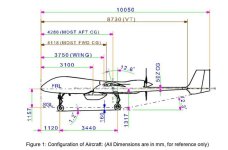
Custom Bid for Services - DESIGN FOR CONVERSION OF FIXED MAIN LANDING GEAR (MLG) TO RETRACTABLE MLG FOR EXPERIMENTAL UAV
MTOW - 1800 kg
Contract Period - 4 Months


It's that time of the year again. In less than 6 months we'd be having AI-27 & still no sign of the Rustom -> Tapas -> Archer -> Archer NG to whatever it's called now but plenty of publicity material being disseminated in SM on it.
Same MO since 2019 at the very least. Rinse & repeat.
H̶a̶r̶ K̶a̶a̶m̶ D̶e̶s̶h̶ k̶e̶ N̶a̶a̶m̶ ila
100 mein 99 beimaan phir bhi mera Bharat Mahaan.
Same MO since 2019 at the very least. Rinse & repeat.
H̶a̶r̶ K̶a̶a̶m̶ D̶e̶s̶h̶ k̶e̶ N̶a̶a̶m̶ ila
100 mein 99 beimaan phir bhi mera Bharat Mahaan.

It's that time of the year again. In less than 6 months we'd be having AI-27 & still no sign of the Rustom -> Tapas -> Archer -> Archer NG to whatever it's called now but plenty of publicity material being disseminated in SM on it.
Same MO since 2019 at the very least. Rinse & repeat.
H̶a̶r̶ K̶a̶a̶m̶ D̶e̶s̶h̶ k̶e̶ N̶a̶a̶m̶ ila
100 mein 99 beimaan phir bhi mera Bharat Mahaan.
Archer NG first flight was on September 27,2025 according to MoD annual report.