Defense Space Agency (DSA) and Defence Cyber Agency (DCA) : Discussions and Updates

randomradio

Senior Member
Nov 30, 2017
24,165
20,674
India
Big boost to Indian forces, three new armed forces unit to be set up

A big move by the Defence Ministry. Defence Ministry has cleared a decade-long proposal to create three new institutions involving the Army, Navy and Air Force for special tasks: (1) The Armed Forces Special Operations Division; (2) The Defence Cyber Agency; (3) The Defence Space Agency.The proposals -- the Cabinet notes -- have been placed before the Cabinet Committee on Security, headed by the Prime Minister and includes members from the ministries of Defence, Finance, External Affairs, and Home.
 
  • Like
Reactions: RATHORE
Excellent and long overdue. Now on towards Integrated Theater Commands and a Chief of Defense Staff.
 
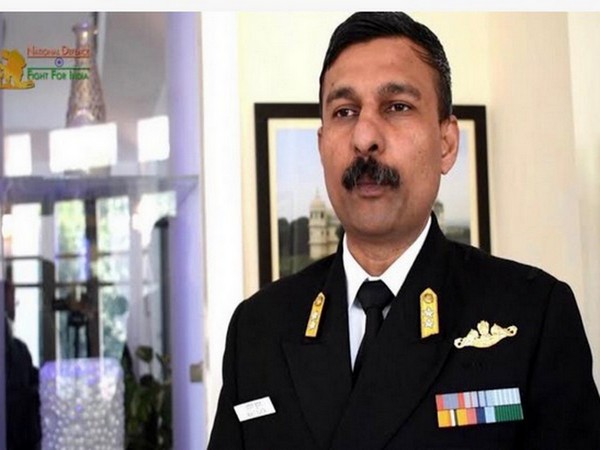
India set to have Defence Cyber Agency in May; Rear Admiral Mohit to be its first chief
Admiral_navy_vLMgVVL.jpg

In a bid to bolster its capabilities to tackle threats emanating from hackers, mostly from Chinaand Pakistan, Indiais all set to have Defence CyberAgency (DCA) by next month, headquartered in the capital. SeniorNavyofficerRear AdmiralMohitGupta will be the first headof the DCA.

"We are working to raise the Defence CyberAgency in May itself. The work has almost been completed. A new building has been hired in the nationalcapital which will act as the headquarters of the formation," sources in the Defence Ministrytold ANI here.

As agreed upon by the Defence Ministryand the three services, the cyberagency would be headed by Rear AdmiralGupta. The Navyis expected to announce his formal appointment anytime, sources said.

DCA is one of the three agencies along with the Special Forces and Space to be set up as per the clearance given by Prime MinisterNarendra Modiduring the Combined Commanders' Conference in Jodhpur last year.

The DCA will include a lot of existing capability with the armed forces for tackling threats in the cyber domain and will also have the elements of DRDOworking in it, sources said.

While the Cyber agency is ready to be launched with its headquarters in New Delhi, the setting up of the Space agency will take some time as the structure for it is still being discussed.

The Special Forces agency would be headed by a Major Generalrank officerof the Armyand is likely to come up at Agra, which already has a Para brigadeand the wherewithal to airlift Special Forces operatives in large numbers as the base co-exists with an IAF transport aircraft squadron specialising in these operations.

One of the top Armyofficers, EasternArmyCommanderLt Gen MM Naravane had recently stated that the units of the Cyber agency will be spread across the country.

"There will be units or cells or dedicated officers at every headquarter to deal with the aspect of cybersecurity," he had said.

According to defence sources, almost on a daily basis, efforts are made by hackers, especially from Pakistanand Chinato break into the militarysystems to steal information and create disruption.

The tri-servicesIntegrated Defence Staff is also holding an exercise with NTRO, RAW, NationalSecurity Council and DRDOwhere cyber attacks would be launched on critical militaryinfrastructure and the authorities concerned would thwart them using their tools and skills in the domain.


Indian Armed Forces Set To Conduct First Joint Cyber Exercise ‘Cyberex’ To Prevent Attacks On Key Infrastructure

In an attempt to strengthen its cyberwarfare capabilities and have a formidable presence in the virtual world, India will be conducting a major cyber exercise, ‘Cyberex’, this week. The exercise will see the participation of all the three branches of the Indian Armed forces, Economic Times has reported.

The two-day exercise under the aegis of the integrated defence staff will see various organisations like National Security Council Secretariat (NSCS), the Indian Computer Emergency Response Team (CERT-In), National Informatics Centre (NIC), National Technical Research Organisation (NTRO), Defence Research and Development Organisation (DRDO), and Computer Security Resource Centre (CSRC) participating in it.

Cyberex will aim to assess the situation, seek responses, damage control and requisite actions required for a synergised response when a cyber attack happens at military and national levels. The exercise along with other such endeavours is seen as a requirement to face challenges in the fifth dimension of warfare after the first four “real” battlefields of land, air, sea and space.

India’s late entry to this format of warfare and lack of an established military cyber command has hampered its capacity to challenge its neighbour China and its cyber warfare capabilities.

China, on the other hand, has been steadily upgrading its cyber weapons to degrade or destroy an adversary’s military assets and strategic networks, it can also affect energy, banking, transport and communication grids. The country apart from its hacker brigades has a Strategic Support Force to oversee the People’s Liberation Army’s space, cyber and electronic warfare operations.

Indian Armed Forces are establishing a small tri-service Defence Cyber Agency (DCA), led by a naval officer which will involve an upgrade of the existing Defence Information Assurance and Research Agency, with leverage to hire civilian experts from outside.

The agency will undertake “defensive” cyber operations, with the “offensive” ones being left to other agencies under the national security adviser.

 
Defence Space Agency will be based at Bengaluru
ANI I Published May 15, 2019, 8:26 pm IST I Updated May 15, 2019, 8:26 pm IST

Air Vice Marshal Dharkar presently looking after the air defence operations of a key command will be its likely head
dc-Cover-8o61k4vh8oailfchn20lgn2pm6-20190515202056.Medi.jpeg

Air Vice Marshal S P Dharkar (Photo: ANI)


New Delhi: Soon after it successfully carried out an anti-satellite test, India is setting up its military space agency headquartered at Bengaluru with the ace fighter pilot Air Vice Marshal (AVM) S P Dharkar as its likely head.

The tri-services Space agency is likely to command all the space assets of the three services including the A-SAT capability, which can be used to destroy enemy space-based satellites and other assets.

However, the final decision has not yet been taken on the capabilities and assets to be given to this agency.

AVM Dharkar presently looks after the air defence operations of an important command along the borders.

Bengaluru seems to be an obvious choice as the location of the space agency as it is also the headquarters of ISRO, which manages all types of space programmes of the country.

Ace Special Forces operative and Sri Lanka war veteran Maj Gen A K Dhingra has been appointed as the first head of Country's first tri-services Special Operations Division comprising commandos from all three services.

The Armed Forces Special Operations Division has been set up by the government to undertake joint operations by three services and will have elements from the Army's Parachute Regiments SF, Marine Commandos (MARCOS) of the Navy and the Garud Commandos of the Indian Air Force.

Rear Admiral Mohit Gupta has been appointed as the head of the Defence Cyber Agency set up in Delhi with people from all three services.

Defence Space Agency will be based at Bengaluru
 
Centre may create single agency for cyber defence

India may soon have a single authority or agency responsible for the entire spectrum of defensive cyber operations in the country, a senior official in a security agency said on condition of anonymity.

The move comes even as India faces renewed threat of cyber attacks and cyber terrorism . For instance, the breach in a part of a network of India’s largest civil nuclear facility, the Kudankulam Nuclear Power Plant (KNPP) in Tamil Nadu, in September. The attack did not compromise critical systems, but gained access to the plant’s administrative network.

According to the official cited in the first instance, the government’s plan is to rearrange and reorganize over a dozen agencies engaged in the protecting India’s cyber infrastructure.

Currently, these agencies have their individual control and reporting systems. The idea is to restructure these to ensure better coordination and functioning, the official added.

The Ministry of Electronics and Information Technology, the Ministry of Home Affairs, the Ministry of Defence, the National Security Council Secretariat (NSC), and the National Technical Research Organization (NTRO), and several other departments and agencies have their own cyber units that look at various aspect of cybersecurity.

Then there are specialised units including the Computer Emergency Response Team, India (CERT.IN), National Critical Information Infrastructure, and the National Cyber Coordinator Centre.

More are being added by the day. For instance, MHA recently launched CyCord (Cyber Cooperation Centre) under the Intelligence Bureau (IB). CyCord is a platform of several agencies and government departments. It plays a defensive role in the cyber world, and focused on hacking and online investigations . The ministry already had the National Cybercrime Threat Analytics Unit (TAU), the Platform for Joint Cybercrime Investigation Team, the National Cybercrime Forensic Laboratory and the Cybercrime Ecosystem Management Unit.

National Cyber Security Coordinator, Lieutenant General Rajesh Panth has now been given the job of working out a structure that brings together the capabilities of all these units and agencies. “The primary task of the National Cyber Security Policy 2020 will be to bring in cohesion,” the official cited in the first instance said. He added that “there have been several rounds of discussions at the National Security Council Secretariat (NSCS) on the issue and a broad framework has already been worked out.”

The last National Cyber Security Policy was released in 2013. The new policy – National Cyber Security Policy 2020 - will emphasize cybersecurity awareness and hygiene. It is likely to suggest a cybersecurity course for schools and colleges curriculum.

The reorganisation will need the assent of the Union Cabinet before being implemented.

“The reorganization must also deal with the fact that the Information Technology Act is under the Ministry of Electronics and Information Technology (MEITY). In the current parliamentary system, the ministry responsible for implementing the law generally gets to regulate and execute it,” a second senior official associated with Indian cyber security efforts said, asking not to be identified.

“We are studying models across the world before we arrive at a structure,” a third senior official directly involved in the process of coming up with the plan said on condition of anonymity.

“Globally, the trend is to have overarching agencies for better and command and control. It is time we also have a similar structure. India’s capabilities in the cyber world have expanded and there are a large number of agencies, but sharing real-time information is always not enough. Cyber defence capabilities is a critical strategic requirement. I think this a very positive move,” said Aruna Sudarajan, a former telecom secretary.

Across the world, the command control of defence cyber operations has been put under a well defined single command and control. For instance, the Government Communications Headquarters (GCHQ) of the United Kingdom is responsible for all things related to protecting cyberinfrastructure. Similarly, the Cyber Security Agency of Singapore reports to the Prime Minister and is responsible for the complete spectrum of defensive cyber operations. The National Security Agency of the US has the complete command and control.
 
  • Like
Reactions: GuardianRED
India makes progress in space-based military capabilities
defence.capital
defence.capital
3 days ago
CartSat3Crop.jpg
File Photo: India’s space-based military asset for surveillance and communication
By Atul Kumar
Space
is deemed the fourth dimension of military warfare after land, sea, and air, and it has been quickly advancing as the critical sphere for strategic advantage during war and peace.
As of today, no virtual action has ever materialised in space. However, four nations — the United States, Russia, China, and India — have shown the capabilities to militarise outer space.
Last year, with the success of ‘Mission Shakti‘, India has demonstrated its military and technological mastery in the fourth dimension.
Today, militaries around the world are heavily dependent on communication systems, reconnaissance and surveillance gears positioned in space.
Space-borne sensors are strategically vital for military forces due to battlefield transparency that facilitates a better situational awareness and intelligence mechanism in a multi-dimensional warfare scenario.
Countries like the US, Russia and China hold massive digits of space-borne sensors including military communication, electronic intelligence, infrared and electro-optical as well as radar satellites.
Chinese military alone operates dozens of spy class sensors that include Huanjing and Yaogan series satellites.
The Yaogan series fitted with electro-optical digital imaging and high-resolution synthetic aperture radar sensors are the primary space-borne reconnaissance and surveillance assets of People’s Republic of China‘s military.
Set side-by-side, the Indian military had not invested substantially in space-based assets. However, with the sufficient increase in space budget over the years, India has brought in substantial progress in its space-based capabilities.
Indian build-up in Space
After the successful development of indigenous navigation system christened ‘NavIC‘ that is currently accessible to Indian defence forces, India’s elite space research body, Indian Space Research Organisation (ISRO), has been punctiliously working with Defence Research and Development Organisation, academia and industry for the development and launch of new-generation space-borne detectors.
Several hi-tech military communications, electro-optic, ELINT and SAR-based satellites have already been launched by ISRO for the Indian military since 2014. As of 2019, Indian military employs over a dozen space-borne gears to support their airborne, maritime, and land-based operations.
In order to boost armed forces satellite-based communication and network-centric capabilities, ISRO has placed GSAT-7 and GSAT-7A into the near-Earth orbit.
The multi-band GSAT-7 , also known as Rukmini, is the first dedicated military communication satellite primarily utilised by the Indian Navy to expand its blue water span by transmitting precise real-time information among its shore-based systems, surface ships, airborne assets, bases and underwater submarines.
While new-generation GSAT-7A empowers Indian Air Force network centric structure by interlinking its airborne fleet, airbases, radar stations as well as AWACS network.
Besides, it also equips the Indian Army with substantial transmission mechanism for land-based operations. Also, a more powerful GSAT-7R would supplant GSAT-7 by the end of the year.
For surveillance, Indian forces are heavily dependent on CARTOSAT and RISAT series of spacecraft. ISRO has put more than a dozen of these spacecraft into the Earth’s orbit.
Among the nine launched CARTOSAT satellites, the latest third-generation CARTOSAT-3 would be India’s most powerful electro-optical observer in space. This highly agile satellite is equipped with a high-resolution panchromatic payload that would provide Images at 0.25m ground resolution, better than any defence satellite currently operated by the Indian military.
While ISRO’s latest launched RISAT-2BR1 and RISAT-2B radar imaging spy satellites would provide surveillance by using ‘X-band’ Synthetic Aperture Radar. They would supplant the previous RISAT-2 equipped with Israel’s IAI-made X-band SAR sensors.
These space-borne Indian assets would provide 24×7 surveillance to India’s land borders as well as maritime boundaries in all weather conditions. Both space assets operate an Indian-origin X-band SAR for imaging operations, and provide very high-resolution radar images of borders, military installations and hostile vessels in the region.
Furthermore, in the coming months, their capabilities will be enhanced by launching two new RISAT members, RISAT-2BR2 and RISAT-1A. In addition to this, India’s first-ever space-borne ELINT spacecraft, EMISAT, has also been activated by ISRO.
Conceived and designed by Defence Electronics Research Laboratory of DRDO, the 436-kg EMISAT, suited with a pure military ELINT payload named ‘Kautilya‘ operates in the electromagnetic spectrum, would deploy to uncover enemy radar sites and electronic warfare capabilities near borders and coastline.
Altogether, these indigenous space capabilities will significantly improve battlefield transparency for the Indian military, and eventually will benefit Indian weaponry to accomplish critical missions with full precision.
Besides, ISRO has also fielded its new HySIS (Hyper Spectral Imaging Satellites) series of spacecraft. The first of the HySIS series has already become operational. The HySIS, equipped with two infrared sensors (Visible near IR & Shortwave IR), would be used for civilian applications including agriculture, coastal zone monitoring and resources discoveries.
Besides, it would also be accessible to Indian defence forces. New GISAT (Geo Imaging Satellite) class of optical space sensors based on CARTOSAT will also be introduced this year. Collectively, the entire constellation of Indian Low-Earth Orbit satellites will deny any kind of sanctuary to opponent forces anywhere in the region.
As of now, both the US and Russia have their space forces to supervise, maintain and protect their space-borne assets from hostile anti-space threats.
Thanks to ‘Mission Shakti’, New Delhi has also embarked on the groundwork for creating a robust command structure for its space-based operations to obtain a military edge to counter the hostile expansion of Beijing‘s interest in the region.
In 2010, India established a nodal body for its space planning and operations called ‘Integrated Space Cell‘ that is jointly governed by specialists from Indian armed forces, ISRO and DRDO.
In a move to further active its space-based doctrine, last year, New Delhi has also announced the creation of an elite ‘Defence Space Agency‘ under the Integrated Defence Staff Headquarters of the Ministry of Defence.
This Bengaluru-based space warfare agency will supervise and take care of India’s space-based strategic gears. Eventually, further robustness of these national assets would become the foundation of a definitive space command of India.
 
Do we have the launch dates?
The GSAT 7R launch should happen by the end of 2022-23 FY.

The 7B and 7C were approved recently, so will take time. 7B should happen by 2023-24 FY end. And 7C the next FY.

Things can speed up but GSLV has GISAT, IDRSS, IRNSS series of satellites to launch too. Many of them pending for years now. So will take time.

But 7R should happen. Hopefully by this year end.
 
  • Like
Reactions: Chain Smoker
The GSAT 7R launch should happen by the end of 2022-23 FY.

The 7B and 7C were approved recently, so will take time. 7B should happen by 2023-24 FY end. And 7C the next FY.

Things can speed up but GSLV has GISAT, IDRSS, IRNSS series of satellites to launch too. Many of them pending for years now. So will take time.

But 7R should happen. Hopefully by this year end.

It's surprising that the army approval came so late. Probably 'cause they were still working on their own comm systems.

6A was disappointing.
 
/!\ errr… if Kautilya = EMISAT, then my previous post is 2 years late!
(and it is a single sat. so why 4 in the pic?)
Apologizes.

I would imagine EMISAT was a proof of concept...a more extensive system which would consist of a constellation of sats (don't know how many) would probably be realized at a future date.