
Don't know, there should be another dcpp involved.What about IAF? They were also supposed to get 3 squadrons of the QRSAM.
DRDO QRSAM and SPYDER Air Defence Systems
- Thread starter Ashwin
- Start date
You are using an out of date browser. It may not display this or other websites correctly.
You should upgrade or use an alternative browser.
You should upgrade or use an alternative browser.

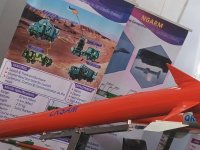
QRSAM Brochure from Vigyan Vaibhav 2025
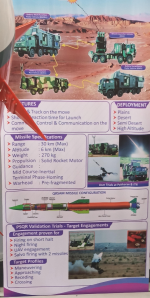
Features
• Search and Track on the move
• Shorter Reaction time for launch
• Command and Control & Communication on the move
Deployment
• Plains
• Desert
• Semi Desert
• High Altitude
Missile Specifications
• Range : 30 km (Max)
• Altitude : 6 km (Max)
• Weight : 270 kg
• Propulsion : Solid Rocket Motor
• Guidence
Mid Course : Inertial
Terminal : Homing
• Warhead : Pre fragmented
PSQR Validation Trials - Target Engagements
Engagement Proven For
• Firing on Short halt
• Night Firing
• UAV Engagement
• Salvo firing with 2 missiles
Target Profiles
• Maneuvering
• Approaching
• Receding
• Crossing
QRSAM Warhead Brochure from Vigyan Vaibhav 2025
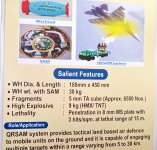
Salient Features
• Warhead Diameter & Length : 180 mm × 450 mm
• Warhead Weight with SAM : 30 Kg
• Fragments : 5 mm TA cuboids (Approx 6500 nos)
• High Explosive : 9 kg (HMX / TNT)
• Lethality : 3 hits/ Sqm at lethal range of 15 m
Role / Application
QRSAM system provides tactical land based air defence to mobile units on the ground and it is capable of engaging multiple target with a range varying from 5 to 30 km
Users : Indian Army
Features
• Search and Track on the move
• Shorter Reaction time for launch
• Command and Control & Communication on the move
Deployment
• Plains
• Desert
• Semi Desert
• High Altitude
Missile Specifications
• Range : 30 km (Max)
• Altitude : 6 km (Max)
• Weight : 270 kg
• Propulsion : Solid Rocket Motor
• Guidence
Mid Course : Inertial
Terminal : Homing
• Warhead : Pre fragmented
PSQR Validation Trials - Target Engagements
Engagement Proven For
• Firing on Short halt
• Night Firing
• UAV Engagement
• Salvo firing with 2 missiles
Target Profiles
• Maneuvering
• Approaching
• Receding
• Crossing
QRSAM Warhead Brochure from Vigyan Vaibhav 2025
Salient Features
• Warhead Diameter & Length : 180 mm × 450 mm
• Warhead Weight with SAM : 30 Kg
• Fragments : 5 mm TA cuboids (Approx 6500 nos)
• High Explosive : 9 kg (HMX / TNT)
• Lethality : 3 hits/ Sqm at lethal range of 15 m
Role / Application
QRSAM system provides tactical land based air defence to mobile units on the ground and it is capable of engaging multiple target with a range varying from 5 to 30 km
Users : Indian Army
Last edited:



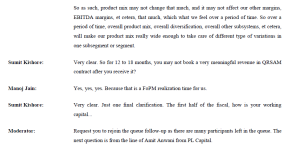
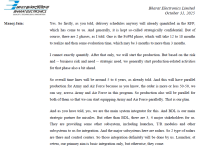
QRSAM will be contracted in this financial year. But the actual full-rate protection will take an additional one and a half years because the Army and Air Force have requested many new improvements. So, the total delivery time has increased from 3-4 years to 5-6 years. There will be an internal trial of first lot out of production then only will full rate production will happen.
What BEL said actually go in hand with the above tender, even though its from DRDL tendering this looks like BDL making the fopm article with canisters etc while BEL do their share of work and test this considering 18 months timeline. If user trials as claimed before were already over some time ago, then this live missile in canister indicate such a situation. Wonder what changes more they want, satcom link moving map quicker reaction on move tracking short halt all were tested. Perhaps low flying objects a worry , esp fpv drones that can target this?QRSAM will be contracted in this financial year. But the actual full-rate protection will take an additional one and a half years because the Army and Air Force have requested many new improvements. So, the total delivery time has increased from 3-4 years to 5-6 years. There will be an internal trial of first lot out of production then only will full rate production will happen.

Ideally imo, if the weapon is better than OsaAK, Strela systems, you give production orders.What BEL said actually go in hand with the above tender, even though its from DRDL tendering this looks like BDL making the fopm article with canisters etc while BEL do their share of work and test this considering 18 months timeline. If user trials as claimed before were already over some time ago, then this live missile in canister indicate such a situation. Wonder what changes more they want, satcom link moving map quicker reaction on move tracking short halt all were tested. Perhaps low flying objects a worry , esp fpv drones that can target this?
By the time you have 1st regiment inducted, you will have a working assembly line and an upgraded Mk1A.
Less delays, more capabilities.
production order is already coming, just want to know what more recc has been asked by the 2 users that prompted them to maybe trial around round of test with the first production model in 18 months or so time. If it is normal feedback around that, then it won't need much tweaking. If it is progressing to production then a bill of material list is shared with the prod agency already that is cleared based on trials feedback. Now if further major modification is asked, it will definitely cause slight issue in supply chain later and renders the current frozen BOM somewhat invalid.Ideally imo, if the weapon is better than OsaAK, Strela systems, you give production orders.
By the time you have 1st regiment inducted, you will have a working assembly line and an upgraded Mk1A.
Less delays, more capabilities.
QRSAM updates are a lot, so have patience.
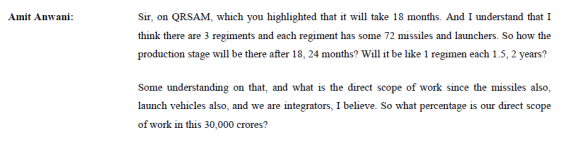

QRSAM seems to a very big program. Right now 3 regiments for Army and 3 squadrons for IAF. Overall requirement is of 11 each.QRSAM updates are a lot, so have patience.
View attachment 47500
View attachment 47502
View attachment 47503
View attachment 47504
View attachment 47505
View attachment 47506
View attachment 47507
View attachment 47508
View attachment 47509
Also, what is Shatrughat and Samaghat?
part of Dharashakti probably, seen lot of mentions.QRSAM seems to a very big program. Right now 3 regiments for Army and 3 squadrons for IAF. Overall requirement is of 11 each.
Also, what is Shatrughat and Samaghat?
QRSAM seems to a very big program. Right now 3 regiments for Army and 3 squadrons for IAF. Overall requirement is of 11 each.
Also, what is Shatrughat and Samaghat?
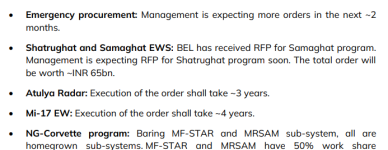
6500 cr order approx
In a major development, India is moving towards deploying its own home grown integrated air defence system to protect the Delhi National Capital Region from enemy aerial threats like missiles, drones and fast moving aircraft.
The multilayered Integrated Air Defence Weapon System (IADWS) would be based around the indigenous air defence missiles such as the Quick Reaction Surface to Air Missile systems and Very Short Range Air Defence Systems along with other associated equipment to protect the Delhi National Capital Region, senior defence sources told ANI.
The project is being processed by the Defence Ministry at a time when Pakistan apparently tried to target the country during the Operation Sindoor in May this year. The plan to deploy the indigenous weapon system would be a big boost for homegrown defence systems as Indiahad earlier planned to deploy the US-made National Advanced Surface to Air Missile System-II (NASAMS-II).
The two sides had even started negotiations for the sale of the American system that protects the city of Washington DC and the White House there.
The Indian government did not move forward on the deal with the Americans as they were asking for a very high price, sources said.
The IADWS would be responsible for protecting the vital installations in the national capital region and is the responsibility of the Indian Air Force. The Defence Research and Development Organisation (DRDO) would be working with production agencies who will work on the networking and command and control
"Systems are required for such a complicated air defence system," sources said.
The DRDO has successfully developed multiple air defence systems like the QRSAM, Medium Range SAM and is working on developing a long range SAM under project Kusha.
India is also working to get its two remaining squadrons of the S-400 Sudarshan air defence missile systems while also considering a Russian proposal for more S-400s along with the S-500 air defence system. (ANI)

What other kind/ variant of the systems are required than the already developed or in development like Kusha ( actual work done). We got 10-30 Kw C-UAS based on microwaves. QRSAM, MRSAM and kusha. What else?
In a major development, India is moving towards deploying its own home grown integrated air defence system to protect the Delhi National Capital Region from enemy aerial threats like missiles, drones and fast moving aircraft.
The multilayered Integrated Air Defence Weapon System (IADWS) would be based around the indigenous air defence missiles such as the Quick Reaction Surface to Air Missile systems and Very Short Range Air Defence Systems along with other associated equipment to protect the Delhi National Capital Region, senior defence sources told ANI.
The project is being processed by the Defence Ministry at a time when Pakistan apparently tried to target the country during the Operation Sindoor in May this year. The plan to deploy the indigenous weapon system would be a big boost for homegrown defence systems as Indiahad earlier planned to deploy the US-made National Advanced Surface to Air Missile System-II (NASAMS-II).
The two sides had even started negotiations for the sale of the American system that protects the city of Washington DC and the White House there.
The Indian government did not move forward on the deal with the Americans as they were asking for a very high price, sources said.
The IADWS would be responsible for protecting the vital installations in the national capital region and is the responsibility of the Indian Air Force. The Defence Research and Development Organisation (DRDO) would be working with production agencies who will work on the networking and command and control
"Systems are required for such a complicated air defence system," sources said.
The DRDO has successfully developed multiple air defence systems like the QRSAM, Medium Range SAM and is working on developing a long range SAM under project Kusha.
India is also working to get its two remaining squadrons of the S-400 Sudarshan air defence missile systems while also considering a Russian proposal for more S-400s along with the S-500 air defence system. (ANI)
EMP? Laser? Independent radars integrated to the whole architecture?
QRSAM seems close, one dcpp released part orders for tier 1 vendors. It is to be of decent size. 
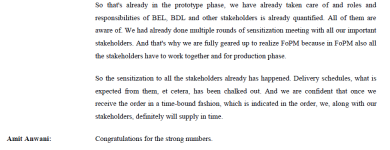
BEL Concall
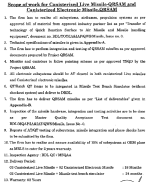
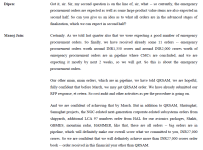
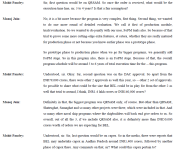
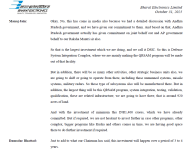
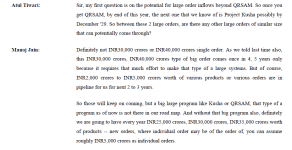
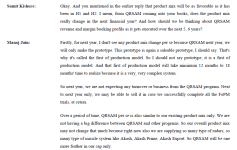
Okay. So, as I told last time also, we were actually hopeful that by last year, last quarter itself, we may get or else the first quarter of this year. So, we are still fully optimistic that before June end, we may get this order. There is only 5% to 10% chance that it may slip to July. But otherwise, we are confident as on today also that by June end, we may sign this contract.
All the formalities, all other evaluations, all technical CMCs, etcetera, different stages are there. They all are over now in the process of necessary approvals at various stage in ministries. So, we are confident that in next 1, 1.5 months, it should be over. Worst case, it may slip by 1 more month. So, we are not expecting more than that delay as of today.
And regarding the program, once we sign the program within 18 months, we are supposed to give the first of production model. So, we have already started gearing up the initial homework what is required for this, we have already started, so that we don't want to slip on this first
target of 18 months. We will definitely give our first of production model within 18 months of signing the contract. And after that, only the real bulk supplies will start.

Can QRSAM or Akash-NG engage tactical ballistic missiles like Nasr, Fatah-1, Fatah-2 ??
Fatah-1 and Fatah-2 are in Pakistani rocket force, that means they will have large quantities of these missiles.
We need to be prepared for a Large ballistic missile attack.
Fatah-1 and Fatah-2 are in Pakistani rocket force, that means they will have large quantities of these missiles.
We need to be prepared for a Large ballistic missile attack.
I mean technically the akash-1 did manage to intercept the fateh-1 but that was under the IAACS umbrella which offloads radar data from multiple sites. We dont know how many Akash-1s were fired for the intercept.Can QRSAM or Akash-NG engage tactical ballistic missiles like Nasr, Fatah-1, Fatah-2 ??
Fatah-1 and Fatah-2 are in Pakistani rocket force, that means they will have large quantities of these missiles.
We need to be prepared for a Large ballistic missile attack.
On its own the QRSAM will not be able to do so 90% of the time(might get a lucky shot or two), The QRSAM is not meant for SRBM defene, its meant to protect armoured columns and moving bases. Its a mobile Ad platform meant to protect vs PGM, not vs ballistics.
the Akash NG on the other hand has a much better chance at SRBM defence. Should be able to easily do so under the IAACS but idk without it. Its not like the barak-8 with dual pulse motors.
Is it confirmed that it was Akash-1? Many people says that it was MR-SAM.I mean technically the akash-1 did manage to intercept the fateh-1 but that was under the IAACS umbrella which offloads radar data from multiple sites. We dont know how many Akash-1s were fired for the intercept.
Then what is its use ? It can nit shot down aircraft of drone as its engagement altitude is so low. QRSAM is just to shot down munitions dropped by enemy ?On its own the QRSAM will not be able to do so 90% of the time(might get a lucky shot or two), The QRSAM is not meant for SRBM defene, its meant to protect armoured columns and moving bases. Its a mobile Ad platform meant to protect vs PGM, not vs ballistics.
And pakistan developed Nasr in 2013, if QRSAM can not intercept a tactical ballistic missile (nor it can aircraft or male/hale drone) then it's waste of money to buy this.
Akash NG too have dual pulse, with more propellant weight, i thought that it will have high burn rate specifically for tactical ballistic missile.the Akash NG on the other hand has a much better chance at SRBM defence. Should be able to easily do so under the IAACS but idk without it. Its not like the barak-8 with dual pulse motors.
I thought that with compromise in rdnge(for both QRSAM and Akash NG), they will be fsr far more effective against ballistic missile.
As china is fielding lots of tactical ballistic in its Rocket Force.
I would say, its pathetic if both don't have significantly better ballistic missile capability than MR-SAM
