Aviones C-390 Millennium, misiles Akash y cazas Tejas, medios clave para un acuerdo inédito entre Brasil e India
Oficiales de las marinas de Brasil e India analizan la cooperación en el mantenimiento de los submarinos franceses Scorpène, que equipan a brasileños e indios, y discuten el intercambio de e ...
C-390 Millennium aircraft, Akash missiles, and Tejas fighter jets are key assets for an unprecedented agreement between Brazil and India.
The Brazilian vice president, the defense minister, and the commander of the FAB are negotiating with Indian officials a compensation and technology transfer package.
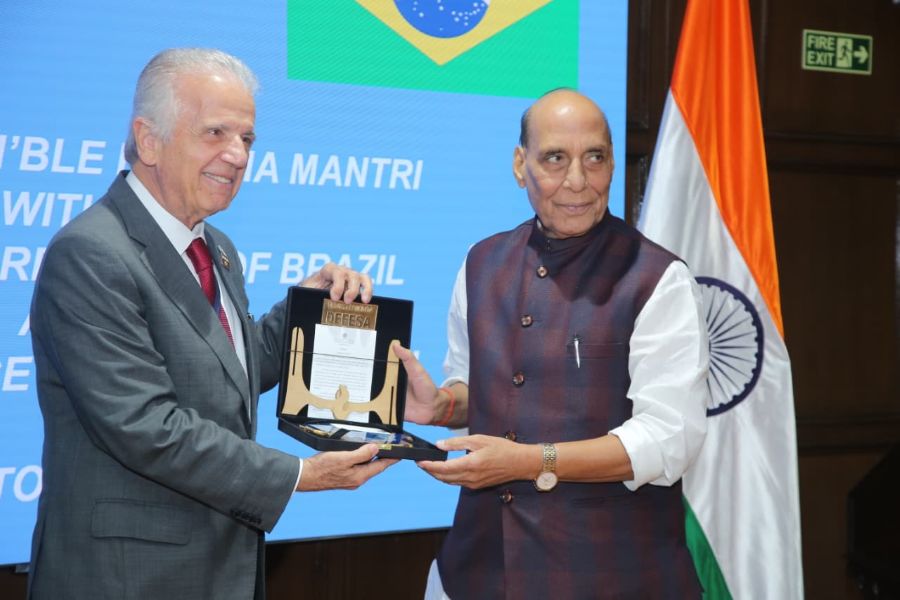
On a high-level government mission, Brazilian Vice President Geraldo Alckmin, accompanied by Defense Minister José Múcio Monteiro Filho, and the Commander of the Brazilian Air Force, Brigadier Marcelo Kanitz Damasceno, are making an official visit to New Delhi (October 15-17) to strengthen bilateral relations between the countries, particularly in the defense sector.
The Brazilian delegation was received by Indian Defense Minister Rajnath Singh to exchange ideas on domestic weapons systems and platforms, in what would mark a new phase of technological, industrial, and strategic cooperation between the two member nations of the BRICS, G20, and IBAS.
According to Vice President Alckmin, the partnership is essential for the diversification and strengthening of both countries' defense industries, reducing external dependencies and expanding national innovation and production capabilities. Cooperation between Brazil and India is not only commercial; it is strategic. "We are building a path that unites technology, defense, and sustainability, strengthening our industries and the autonomy of our people," Alckmin said in New Delhi.
Several Brazilian and Indian defense products are driving the negotiations, including Embraer's C-390 Millennium multi-mission military freighter, the Indian Akash surface-to-air missile system, and the LCA Tejas MK1A light combat fighter.
Embraer is actively promoting discussions for the sale and possible local co-production of the C-390 Millennium, including in talks with Mahindra Defense Systems, a component of the Make in India initiative.
The Indian Air Force has expressed initial interest in up to 80 units of the aircraft, designed for logistics transport, in-flight refueling, and aeromedical evacuation, among other roles. Technology transfer and local production are part of the negotiations, aligned with India's strategy to boost domestic industry.
The Akash system, developed by the Indian air defense agency DRDO, represents a medium-altitude air defense solution, notable for its effective range of up to 30 km and its ability to engage multiple targets simultaneously. It is worth noting that Brazil is currently evaluating it to strengthen its integrated air defense system, with the possibility of acquiring the Akash-NG version (still under development), which features advanced radar technology and the ability to intercept modern threats such as drones and cruise missiles.
The Tejas MK1A fighter, the latest version of the Indian project, features a modern AESA radar design, uses an engine similar to that of Brazil's Gripen fighter, and can be armed with new air-to-air missiles such as the BVR Astra from Bharat Dynamics Limited. Furthermore, the aircraft is designed for low acquisition and maintenance costs per flight hour, offers supersonic performance, and allows safe operational progression for pilots who can advance to the SAAB Gripen E/F.
There are doubts about which version of the Akash would be offered to Brazil, which prefers the more recent NG. Signature: DRDO
India also showcased complementary technologies, such as airborne airborne warning and control (AEW&C) systems using the Embraer EMB-145 platform, WHAP armored vehicles, advanced torpedoes, and electronic warfare sensors, illustrating the technological breadth of cooperation.
The visit also strengthens joint training, interoperability, and maintenance programs. Officials from the Brazilian and Indian navies discussed cooperation in the maintenance of the French Scorpène submarines, which equip Brazilian and Indian navies, and discussed the exchange of naval and anti-submarine warfare strategies.
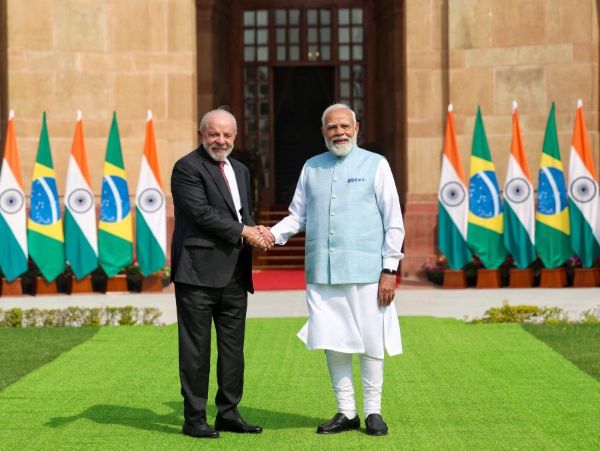
With President Luis Inácio Lula da Silva's official visit to India approaching, scheduled for early 2026, this mission is intended to prepare for and consolidate the strategic plan to expand bilateral trade to $20 billion by 2030, supported by policies such as the expansion of the Mercosur-India Preferential Trade Agreement.
In his remarks, Minister Rajnath Singh emphasized that India sees Brazil as a reliable partner for the joint production and development of defense systems, and highlighted the importance of technological equity and cooperation in addressing global security and innovation challenges.
In this context, Brazil-India cooperation symbolizes the joint action of the largest democracies in the Global South, seeking to build an alternative technological and strategic development axis that unites Brazilian and Indian industrial capabilities to respond to the demands of the 21st century.
The Tejas, in addition to being supersonic, can be navalized, something that interests the Brazilian Navy to replace its aging A-4K/KU. Signature: Indian Ministry of Defense