India vs China - War Gaming Scenarios : Related News , Updates , Discussions & Analysis .

Its not just the engine. The Stryker's suspension and drive train are also problematic.

All that's manageable.

Also, switching from Russian to US armoured vehicle maintainance practices will be a huge culture shock for IA mechanized units.

Dude...

The IA typically asks for some rather unusual modifications like outward facing seats, firing ports, et all, etc. All that would likely come at the cost of some armour.

Yeah, we need to see what sort of design changes the IA's Stryker will come with.

Anyway, what I'm more concerned about is the actual conditions for the requirement. Whether the IA needs it or there was a lobby attempt to kill it.
 
There's nothing in it that says Beidou performs AMTI, which was your actual claim. It was already well known that Pak has access to military grade signals from Beidou.

Pakistan armed forces have been availing this opportunity since 2014 soon after the visit of Premier Li Keqiang in 2013.

The Chinese have other constellations for imaging, like the Jilin, which is normal.
Chinese have been updating BDS for MMT, GMTI & even AMTI, though none of the above are its primary functions.
 
China is rapidly increasing and enhancing their space network. So while BDS may not have been designed for that, there are many incremental updates which China has done to enable BeiDou to do MTI. There are many research papers regarding this: https://www.researchgate.net/public...sed_Passive_Radar_with_Short-Time_Integration

Beidou does not have a sensor for MTI. You need radar or IR.

What's noted in the research paper has nothing to do with Beidou, but using Beidou's signals as a passive radar, no different from using cellphone signals. Anybody, even non-Chinese, can create a receiver that picks up Beidou signals and use time division multiplexing to find targets based on Beidou returns from Beidou signals.

Beidou is purely GPS. It continuously transmits its location data and a receiver, like a cellphone, uses multiple satellites to pinpoint its own location on the ground.
 
Beidou does not have a sensor for MTI. You need radar or IR.

What's noted in the research paper has nothing to do with Beidou, but using Beidou's signals as a passive radar, no different from using cellphone signals. Anybody, even non-Chinese, can create a receiver that picks up Beidou signals and use time division multiplexing to find targets based on Beidou returns from Beidou signals.

Beidou is purely GPS. It continuously transmits its location data and a receiver, like a cellphone, uses multiple satellites to pinpoint its own location on the ground.
There are ways it can do that. Just leave it at that.......
 
In this thread itself, I've written in detail about how we plan to detect VLO jets like F-22, J-20A etc. and VLO bombers like B-2 et al using our PCLR tech along with our new "anti-stealth grid". Here is a very good article regarding all of it:

India’s new Anti-Stealth Radar Grid can detect 5th-gen F-35, Su-57 fighter jets – All about THIS air defence system

India has unveiled a new anti-stealth radar grid under Mission Sudarshan Chakra to detect 5th-generation fighters like the F-35, Su-57 and China’s J-35. Using passive PCLR technology, it strengthens India’s air defence against stealth aircraft and drones.

Mission Sudarshan Chakra
The advanced system comes amid the need to modernise India’s air defence architecture in the aftermath of Operation Sindoor. The Indian government announced Mission Sudarshan Chakra under the Defence Research and Development Organisation (DRDO), along with other defence agencies, which has been tasked with developing next-generation radar technologies to combat threats from stealth and aerial systems.

Anti-stealth radar grid
As part of a move to ramp up the country’s air defence system, India has developed an anti-stealth radar grid, which uses the architecture of Passive Coherent Location Radar (PCLR), now being integrated as a critical element of the national Low Observable Detection Network (LODN).

How does PCLR work?
PCLR is a passive multi-static radar system that does not transmit any radio signals of its own, unlike traditional radars that emit radio waves and listen for reflections. Instead, it uses signals already present in the environment, such as FM radio broadcasts, to detect and track disturbances caused by aircraft passing through, without revealing its own location.

Significant boost in defence industry
The system would complement the existing range of indigenous and imported systems, including the Akash missile system, S-400 Triumf, Barak-8 and SPYDER, to boost India’s defence against 5th-generation fighters and drones. Defence analysts have lauded the new anti-stealth radar grid, saying that it will significantly improve India’s defence capabilities.

Source: India’s new Anti-Stealth Radar Grid can detect 5th-gen F-35, Su-57 fighter jets – All about THIS air defence system
 
  • Like
Reactions: _Anonymous_
In this thread itself, I've written in detail about how we plan to detect VLO jets like F-22, J-20A etc. and VLO bombers like B-2 et al using our PCLR tech along with our new "anti-stealth grid". Here is a very good article regarding all of it:


Source: India’s new Anti-Stealth Radar Grid can detect 5th-gen F-35, Su-57 fighter jets – All about THIS air defence system


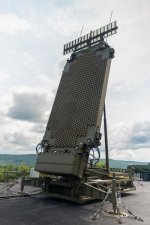
The holy grail of counter stealth GBR is the US TPY-4 3DELRR which is a UHF G-band system with unique bubble TRMs. The Chinese have an developed an almost identical looking copy called JY-26.

Granted, it is not passive but my point is we need to scale up our designs to match gobal standards.

TPY-4-2025__thumbnail_2.jpg
 
The holy grail of counter stealth GBR is the US TPY-4 3DELRR which is a UHF G-band system with unique bubble TRMs. The Chinese have an developed an almost identical looking copy called JY-26.

View attachment 50765
Our anti-stealth radar grid would also incorporate Surya VHF radar(made with Belarussian collaboration) and DRDO VHF-SR using 80 GaN based TRMs and can work between 30MHz to 300MHz frequency along with tracking 100+ targets from 500kms away. At 30MHz, no shape based stealth can save you from detection.

The US system works at around 1.2GHz(L band) whilst Chinese system that you have quoted works at 350MHz(UHF). Our system is going to be far superior to both.
 
  • Like
Reactions: Speedster1
The holy grail of counter stealth GBR is the US TPY-4 3DELRR which is a UHF G-band system with unique bubble TRMs. The Chinese have an developed an almost identical looking copy called JY-26.

Granted, it is not passive but my point is we need to scale up our designs to match gobal standards.

View attachment 50765
thyreearly warning. You cant get a proper missile track out of these systems.l They only serve as a tripwire to alert other radars to focus beam here
 
  • Like
Reactions: Rajput Lion
thyreearly warning. You cant get a proper missile track out of these systems.l They only serve as a tripwire to alert other radars to focus beam here
The earlier UHF/VHF radars were solely that because they didn't have proper resolution thus no weapons grade track but our systems are going to be different. Both Surya VHF & DRDO-BEL's VHF-SR are designed with AI based algorithms to track stealth targets from 400-500 kms away.

They also employ a 'staring mode' where they can fix their beam on a particular area to get high resolution weapons grade track on low RCS targets. Our next-gen VHF radars are also designed with digital signal processing which increases Signal-to-Noise(SNR) ratio by upto 6dB, enabling filtering and tracking very low RCS targets.

Along with all of the above, our strategy to counter enemy 5th/6th gen fighterd/bombers isn't just a 'one trick pony' but a multi-faceted one which means proper sensor-fusion backed by AI enabled software algorithms fusing all our sensors(VHF, PCLR, L, S & X band along with EO data and Sat feed) into one comprehensive battlespace picture which allows us to see the unseen and vanquish the unvanquished.

PS: @randomradio & @_Anonymous_ agree with my above analysis?
 
The earlier UHF/VHF radars were solely that because they didn't have proper resolution thus no weapons grade track but our systems are going to be different. Both Surya VHF & DRDO-BEL's VHF-SR are designed with AI based algorithms to track stealth targets from 400-500 kms away.

They also employ a 'staring mode' where they can fix their beam on a particular area to get high resolution weapons grade track on low RCS targets. Our next-gen VHF radars are also designed with digital signal processing which increases Signal-to-Noise(SNR) ratio by upto 6dB, enabling filtering and tracking very low RCS targets.

Along with all of the above, our strategy to counter enemy 5th/6th gen fighterd/bombers isn't just a 'one trick pony' but a multi-faceted one which means proper sensor-fusion backed by AI enabled software algorithms fusing all our sensors(VHF, PCLR, L, S & X band along with EO data and Sat feed) into one comprehensive battlespace picture which allows us to see the unseen and vanquish the unvanquished.

PS: @randomradio & @_Anonymous_ agree with my above analysis?
None of this information is available in the public domain so I've no clue whatsoever especially since I've a very limited imagination.

You'd have to ask the person who confuses imagination for thinking here since the latter comes normally to any right thinking person which is > 95% of the population , the remaining 5% being the mentally impaired , the criminally insane & professional story tellers.

At times the latter two categories overlap with each other but that's a discussion for another day.
 
  • Haha
Reactions: Rajput Lion
nto one comprehensive battlespace picture which allows us to see the unseen and vanquish the unvanquished.
for that we need good number of space assests our current sate in that domain is very poor, they govt has to integrate private players with the space securtity and offensive domain, in good numbers, give them more contracts, or backed by funding, digantara, kepler aerospace, kawa space, azista space, pixxel,
AFR Satellite captures Xi'an Xianyang Airport in China | Azista Space posted on the topic | LinkedIn

if the got more contracts and funding we can have more real time data
 
The earlier UHF/VHF radars were solely that because they didn't have proper resolution thus no weapons grade track but our systems are going to be different. Both Surya VHF & DRDO-BEL's VHF-SR are designed with AI based algorithms to track stealth targets from 400-500 kms away.

They also employ a 'staring mode' where they can fix their beam on a particular area to get high resolution weapons grade track on low RCS targets. Our next-gen VHF radars are also designed with digital signal processing which increases Signal-to-Noise(SNR) ratio by upto 6dB, enabling filtering and tracking very low RCS targets.

Along with all of the above, our strategy to counter enemy 5th/6th gen fighterd/bombers isn't just a 'one trick pony' but a multi-faceted one which means proper sensor-fusion backed by AI enabled software algorithms fusing all our sensors(VHF, PCLR, L, S & X band along with EO data and Sat feed) into one comprehensive battlespace picture which allows us to see the unseen and vanquish the unvanquished.

PS: @randomradio & @_Anonymous_ agree with my above analysis?

In a way, yes. VHF/UHF are typically volumetric scan radars. You can track a stealth jet with VHF/UHF, but you cannot get weapons-grade track. The purpose of this radar is to detect and track the general location of a stealth jet and then use other radars and IR to generate weapons-grade track. The target will be within a box that's kilometers long or wide, depending on the shape of the beam.

For example, Su-35's Irbis-E only has a 200 km search range in volume scan. But with narrow band search, it can improve that to 350-400 km. If the VHF/UHF radar can detect a stealth target at long range, a group of cooperative Su-35s can then focus their main beams towards the target within a narrow band and get weapons-grade track from long range. A similar-sized GaN radar can double that range.

So the main purpose of this radar is to make the life of small wavelength radars easier.

But AESA and AI can improve accuracy by 10 times. Surya VHF's radar shape is a plus-sign, which means the aim is to get the target within a 1x1 km box or even a 3x3 km box. The longer the distance, the bigger the box, but at 3x3 km, you can use it to generate weapons-grade track. The only difference is while a fighter radar can place a BVR within meters of the target, Surya will place a missile within a kilometer of the target, which implies you need the missile to make the necessary adjustments during end-game, so there's a higher probability of missing the target when using Surya. The better option will still remain for another small wavelength radar to actually do the job.

It's a physical limitation, it cannot be improved. That's why even L band radars like AWACS cannot provide weapons-grade tracking, particularly because the array is not in a plus-shape, but a rectangle, so it cannot tell the altitude of the target. You need S band and above, and that's where you find all the weapons-grade tracking radars, Erieye, MF-STAR, TPY-2 etc.

So yes, a multi-layer surveillance system can be used to defeat stealth. This is actually the reason why the current lot of stealth jets can no longer penetrate advanced IADS and are forced to operate in permissive environments. It's also why the IAF feels comfortable in terms of air defese even though the enemy has J-20 and J-35. It's also why 4th gen jets still remain survivable.

 
for that we need good number of space assests our current sate in that domain is very poor, they govt has to integrate private players with the space securtity and offensive domain, in good numbers, give them more contracts, or backed by funding, digantara, kepler aerospace, kawa space, azista space, pixxel,
AFR Satellite captures Xi'an Xianyang Airport in China | Azista Space posted on the topic | LinkedIn

if the got more contracts and funding we can have more real time data

Yep. But first GMTI and then AMTI. It's gonna take us a decade to get there. By the early 2030s, we will have satellite-based GMTI.

The Americans and Chinese will have AMTI at IOC before 2035.
 
for that we need good number of space assests our current sate in that domain is very poor, they govt has to integrate private players with the space securtity and offensive domain, in good numbers, give them more contracts, or backed by funding, digantara, kepler aerospace, kawa space, azista space, pixxel,
AFR Satellite captures Xi'an Xianyang Airport in China | Azista Space posted on the topic | LinkedIn

if the got more contracts and funding we can have more real time data
We are planning a slew of military satellite constellations(around 52) in both LEO & GEO before 2029. It's part of our SBS Phase III project.
 
In a way, yes. VHF/UHF are typically volumetric scan radars. You can track a stealth jet with VHF/UHF, but you cannot get weapons-grade track. The purpose of this radar is to detect and track the general location of a stealth jet and then use other radars and IR to generate weapons-grade track. The target will be within a box that's kilometers long or wide, depending on the shape of the beam.

For example, Su-35's Irbis-E only has a 200 km search range in volume scan. But with narrow band search, it can improve that to 350-400 km. If the VHF/UHF radar can detect a stealth target at long range, a group of cooperative Su-35s can then focus their main beams towards the target within a narrow band and get weapons-grade track from long range. A similar-sized GaN radar can double that range.

So the main purpose of this radar is to make the life of small wavelength radars easier.

But AESA and AI can improve accuracy by 10 times. Surya VHF's radar shape is a plus-sign, which means the aim is to get the target within a 1x1 km box or even a 3x3 km box. The longer the distance, the bigger the box, but at 3x3 km, you can use it to generate weapons-grade track. The only difference is while a fighter radar can place a BVR within meters of the target, Surya will place a missile within a kilometer of the target, which implies you need the missile to make the necessary adjustments during end-game, so there's a higher probability of missing the target when using Surya. The better option will still remain for another small wavelength radar to actually do the job.

It's a physical limitation, it cannot be improved. That's why even L band radars like AWACS cannot provide weapons-grade tracking, particularly because the array is not in a plus-shape, but a rectangle, so it cannot tell the altitude of the target. You need S band and above, and that's where you find all the weapons-grade tracking radars, Erieye, MF-STAR, TPY-2 etc.

So yes, a multi-layer surveillance system can be used to defeat stealth. This is actually the reason why the current lot of stealth jets can no longer penetrate advanced IADS and are forced to operate in permissive environments. It's also why the IAF feels comfortable in terms of air defese even though the enemy has J-20 and J-35. It's also why 4th gen jets still remain survivable.
Surya VHF is a 3D tracking radar, so it can tell range, azimuth & elevation of the target.
 
The earlier UHF/VHF radars were solely that because they didn't have proper resolution thus no weapons grade track but our systems are going to be different. Both Surya VHF & DRDO-BEL's VHF-SR are designed with AI based algorithms to track stealth targets from 400-500 kms away.

They also employ a 'staring mode' where they can fix their beam on a particular area to get high resolution weapons grade track on low RCS targets. Our next-gen VHF radars are also designed with digital signal processing which increases Signal-to-Noise(SNR) ratio by upto 6dB, enabling filtering and tracking very low RCS targets.

Along with all of the above, our strategy to counter enemy 5th/6th gen fighterd/bombers isn't just a 'one trick pony' but a multi-faceted one which means proper sensor-fusion backed by AI enabled software algorithms fusing all our sensors(VHF, PCLR, L, S & X band along with EO data and Sat feed) into one comprehensive battlespace picture which allows us to see the unseen and vanquish the unvanquished.

PS: @randomradio & @_Anonymous_ agree with my above analysis?
bro like please dont take this the wrong way but rn your being delusional. There is no VHF/UHF radar out there that can track at those ranges. theresolution is simply tooo low. Like sure you know that something is there in a 2kmx2kmx4 km box but thats not even close to enough for tracking.
 
  • Like
Reactions: YoungWolf