
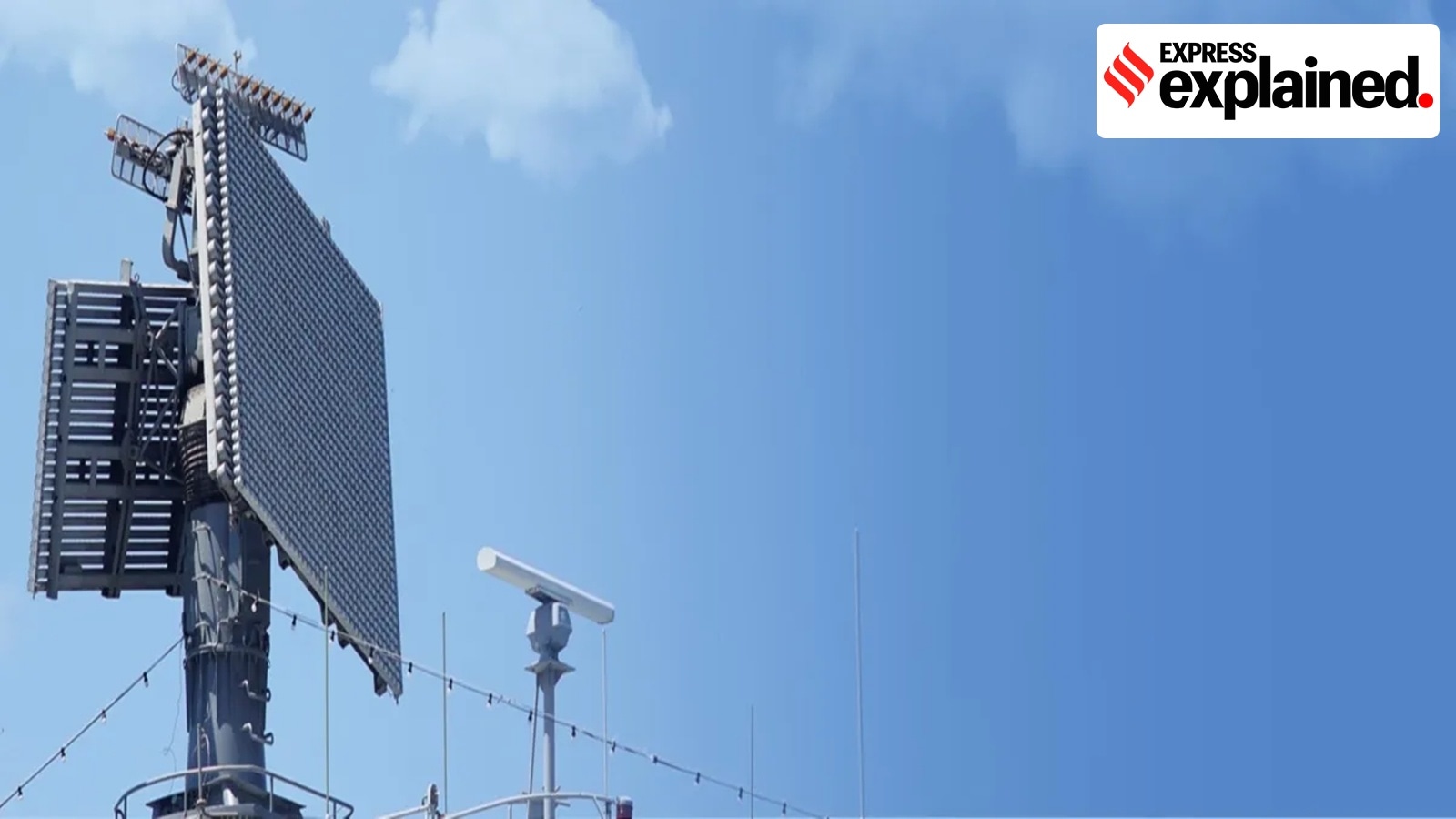
Indian AESA Radar Developments


With the procurement of a range of advanced air defence (AD) radars, the Indian Army has begun the process of plugging gaps in its air defence network along the northern and western borders.

This comes four months after Operation Sindoor, during which hundreds of Pakistani Unmanned Aerial Vehicles (UAVs) were able to breach Indian airspace.

The Army has sought to procure up to 45 Low Level Light Weight Radars (Enhanced), up to 48 Air Defence Fire Control Radar-Drone Detectors (ADFCR-DD), and 10 Low Level Light Weight Radars (Improved).

These AD radars can detect, track, and engage aerial objects with small radar cross-sections (RCS), like the Pakistani drones which infiltrated Indian airspace in May.

Currently with forces​

Both the Army and the Indian Air Force (IAF) have both surveillance and fire control radars.

The IAF controls most of the high and medium power radars (HPRs and MPRs) which have ranges of up to several hundred kilometres and can track aerial threats at higher altitudes. These are used to tackle larger threats such as fighter jets, enemy transport aircraft, or Airborne Warning and Control System (AWACS).

Both the IAF and the Army also have some Low Level Light Weight Radars (LLLRs). These have lower ranges and are meant to track aerial objects, often smaller, flying at lower altitudes.

For fire control radars, the IAF has a range of radars in place, such as the 3D central acquisition radar and the Rajendra radar. The Army, on the other hand, primarily uses Flycatchers, which are indigenously upgraded Super Fledermaus (USFM) radars, and the AD tactical control radar.

Upgrades long needed​

There has long been a need to upgrade the Army’s aging radars. India’s three-day long conflagration with Pakistan in May further made this case.

During Op Sindoor, hundreds of low-cost enemy drones were used to camouflage a few surveillance and attack drones. These entered Indian airspace from across multiple locations along the border, before they were shot down.

A senior Army officer said that the procurement of LLLWRs and ADFCR-DDs stems from the need to tackle future threats from such smaller, low-flying aerial objects, such as drones, which can overwhelm older AD systems or even blindside them.

Such objects, the officer explained, are frequently being used in new-age conflicts globally, including during Op Sindoor and by Hamas against Israel. There is thus a need to increase the number of LLLRs and other fire control radars, which cannot only detect threats with low RCS but also identify friend from foe in a cluttered air space.

RCS, or radar signature, is a measure of how detectable an object is by radar, usually represented in square metres; larger the RCS, greater the detectability. The RCS is not only the function of the size of an aerial object but also its specific design features: the basic thrust of modern stealth technology is to reduce an aircraft’s RCS.

The new radars being procured will be capable of scanning the airspace, detecting and tracking targets, and prioritising them based on the threat they pose.

An enhanced LLLR, for instance, would be able to pick up signals from low-RCS drones, including swarms, and transmit target data to weapon systems up to 10 km away.

The ADFCR-DD — which are modern fire control radars — will be capable of detecting, identifying, classifying, and controlling weapon systems to target even the smallest surveillance and attack drones, making destruction of such threats far more effective.

India’s AD infra​

India’s AD infrastructure comprises AD guns and surface-to-air missiles like the Russian S-400s and the indigenous Akash missile system. Despite some breaches, this system performed remarkably during Operation Sindoor, and prevented Pakistan from inflicting any significant damage during its aerial forays into India.

The Army has the Akashteer system in place. This provides a common, real-time air picture to the control room, radars and AD guns, enabling coordinated AD operations by integrating various radar systems, sensors and communication technologies into a single operational framework.

Similarly, the IAF has the Integrated Air Command and Control System (IACCS), which is an automated command and control system that integrates data from all air defence assets to detect, identify, intercept, and destroy hostile intruders, while simultaneously controlling offensive packages deep inside enemy territory.

At the moment, the defence establishment is focussing its energies in setting up a comprehensive air defence shield as a part of Mission Sudarshan Chakra. Towards this, the Defence Research and Development Organisation (DRDO) last month successfully conducted maiden flight tests of an Integrated Air Defence Weapon System (IADWS).
 
SAR radar for UAV and Helicopter Applications

Interestingly this SAR Radar uses Ku band where as most other radars of this category use X band

Brochure for HiSAR radar From Aero India 2023
1758410301984.jpeg
1758410311110.jpeg
Technical Specifications
No of Axes : 2
• Mounting Arrangment : Elevation over Azimuth
• Travel Range :
Azimuth : ± 135 degrees
Elevation : + 5 to - 65 degrees
• Modes of Operation : Position and Scanning
• Pointing Accuracy : ≤ 1 milliradian (± 500 μrad ± 0.003 degrees)
• Scan Rate / Velocity :
Azimuth : 6°/sec to 60°/sec
Elevation : 6°/sec to 30°/sec
• Azimuth Pointing Limits :
Software : ± 135°
Electrical : ± 175°
Mechanical : ± 179°
• Elevation Pointing Limits :
Software : + 5° to - 65°
Electrical : + 7° to -67°
Mechanical : + 10 to - 70°
• Diameter : 330 ± 2 mm

Courtesy : Kuntal Biswas


Unknown Origin Brochure of HiSAR Radar
1758410322064.jpeg

1758410332996.jpeg
Ku band SWaP Optimised Synthetic Aperture Radar (HISAR)

Ku band SWaP Optimised Synthetic Aperture Radar is an airborne sensor for all weather imaging and reconnaissance Wide area fine resolution imaging through spotlight modes and GMTI modes for moving moving target detection. Realtime SAR Imagery generation coupled with Ground Exploitation Software makes it either as a self sufficient standalone system or as a part of a Sensor Suite

Features
• Day / Night and all-weather imaging
• High instantaneous bandwidth generation
• Large Area imaging capability
• Onboard Realtime Image generation
• Advanced algorithms for high resolution imaging modes
• SWaP optimised system for UAV / Aircraft Operations
• Easily interfaced with Aircraft / UAV's Mission Payload Computers
 
Some notes about Tile Architecture.

Tile Based Architecture is an innovative approach to constructing Active Electronically Scanned Array (AESA) radars that represents a significant departure from traditional slat array designs. In this architecture, the array is constructed using layers of components oriented parallel to the face of the antenna, creating flat "tiles" that can be assembled together to form larger radar systems.

It's effect when it comes to cooling is quite good.
  • Distributed Heat Dissipation: Flat tile design enables more effective thermal management compared to the concentrated heat loads in slat architectures.
  • Better Cooling: Parallel layer arrangement facilitates more efficient heat removal.

Key components for this include the following:
  • Integrated Design: Antenna elements and RF beamformers are integrated into a single, multilayer RF printed circuit board (PCB).
  • T/R Module Placement: Transmit/receive (T/R) modules are surface-mounted directly to the back of the antenna aperture PCB using standard commercial manufacturing processes.
  • Modular Construction: Individual tiles can be combined to form arrays of virtually any size.

Uses industry-standard surface mount technology and commercial PCB processes instead of expensive ceramic substrates and chip-and-wire assembly. This provides substantial cost saving.
 
Passive radar & sensors are the core of stealth tech, not the design or materials entirely. As soon as you radiate , you are detected & seen no matter how much lower frontal rcs you got or how much C-C body. Enemy adversary know about your presence & will zoom onto your track by various means. You are no more " invisible ". Americans always avoid this topic as sensitive classified information with their propaganda. The core of stealth tech is with this very niche tech, very difficult to formulize, make & sustain.
 
Passive radar & sensors are the core of stealth tech, not the design or materials entirely. As soon as you radiate , you are detected & seen no matter how much lower frontal rcs you got or how much C-C body. Enemy adversary know about your presence & will zoom onto your track by various means. You are no more " invisible ". Americans always avoid this topic as sensitive classified information with their propaganda. The core of stealth tech is with this very niche tech, very difficult to formulize, make & sustain.
forgive me for asking what may seem like a stupid question but if you are detected as soon as you radiate then how would 2 stealth aircraft fight against each other in a AWACS free environment? or will they never ever do so?

I have also heard that our virupaksha sorta promises us a decent detection range against stealth targets for proper BVR combat. Is this true? would this passive detection system make it useless or will the detection range be long enough(150-200km+) for it to not matter nearly as much?

Especially against the j35 or the j20 which will be our main adversaries for the next 10 years.
Do you think the passive detection systems on the j20 is good enough compared to Israeli or American systems while not underestimating the Chinese
 
forgive me for asking what may seem like a stupid question but if you are detected as soon as you radiate then how would 2 stealth aircraft fight against each other in a AWACS free environment? or will they never ever do so?
I wish I have enough knowledge on this to explain, what i said above was from a scientific pov that is for basic principle of a stealth configuration flying vehicle. Materials of choice, very specific aerodynamic shaping, reduced rcs frontal shape etc all are enabling tech for a stealth jet, similarly the very important possibly the most important part is developing the passive sensors because when airborne the way to detect is via electronic means. So to have non radiating element and yet still be able to detect the adversary before it knows of your presence is the crux of the thing.

About the engagement, that part is for the military people to devise accordingly what the jet capability offers to you. As we know there are many slips between what is claimed vs what is on hand, so you try to use the jet & the capability it offers to the best way possible. This part is for the military to create a training plan, engagement rule etc. The scientists who built the jet can not tell or teach about this part. They can only make the jet better functionally, by making it more agile, lighter, quicker, suppress any telling sign of possible detection via testing, make better avionics & sensor suite ie provide all the tools. Then the air force has to come up with a plan how to use this jet with stealth to a good practical use.

I have also heard that our virupaksha sorta promises us a decent detection range against stealth targets for proper BVR combat. Is this true? would this passive detection system make it useless or will the detection range be long enough(150-200km+) for it to not matter nearly as much?
Very hard to quantify until virupaksha is made & tested on ground rig, then flown on trial jet nose mounted. There is some performance drop off in real ambient condition. Passive detection stands a better chance in this regard ie much late detection by enemy. Surprising is very crucial element in air game. Since we can not predict exactly how far or when it will detect, but only provide a possible set of data based on experimentation. Remember this data need to be field proven & there is often anomaly in that, such dataset are treated as highly confidential & restricted. Usually 200km or more far apart poses little threat, in such engagement one side want to be seen so the other is deterred from any aggressive action.

Especially against the j35 or the j20 which will be our main adversaries for the next 10 years.
Do you think the passive detection systems on the j20 is good enough compared to Israeli or American systems while not underestimating the Chinese
I have data on neither so your take is as good as mine. Even if there is surprising element, that surprise work for one time only. Nobody pits entire inventory against each other so the tactics SOP is evolved based on real time engagement. That flexibility is always there to react as per the threat you face.
 
  • Like
Reactions: Crimson Fox