

Its under Make-2, unlikely to materialise any time soon.I don't know if this was posted here before
Army is looking for a multimode multifunction WLR for the artillery regiments. Currently they use both BFSR-MR (for tracking infantry vehicles, helicopters etc.) and Swathi WLR (for counter battery). They want to combine both these functions in the new radar.
You are using an out of date browser. It may not display this or other websites correctly.
You should upgrade or use an alternative browser.
You should upgrade or use an alternative browser.
paint the entire vehicle in camouflage pattern and then put make "made in India" in dark black and "E" in bright blue. They need to showoff every where.Well BEL already has Advanced multi functional aesa radar (AMAR)
View attachment 48643
.It's scalable
. 120km range
.X -band (9-10GHz)
.360° coverage
.C-RAM C-UAS

Probably a prototype and meant for PR.paint the entire vehicle in camouflage pattern and then put make "made in India" in dark black and "E" in bright blue. They need to showoff every where.
I doubt army would accept every operational vehicle with glaring signal as such
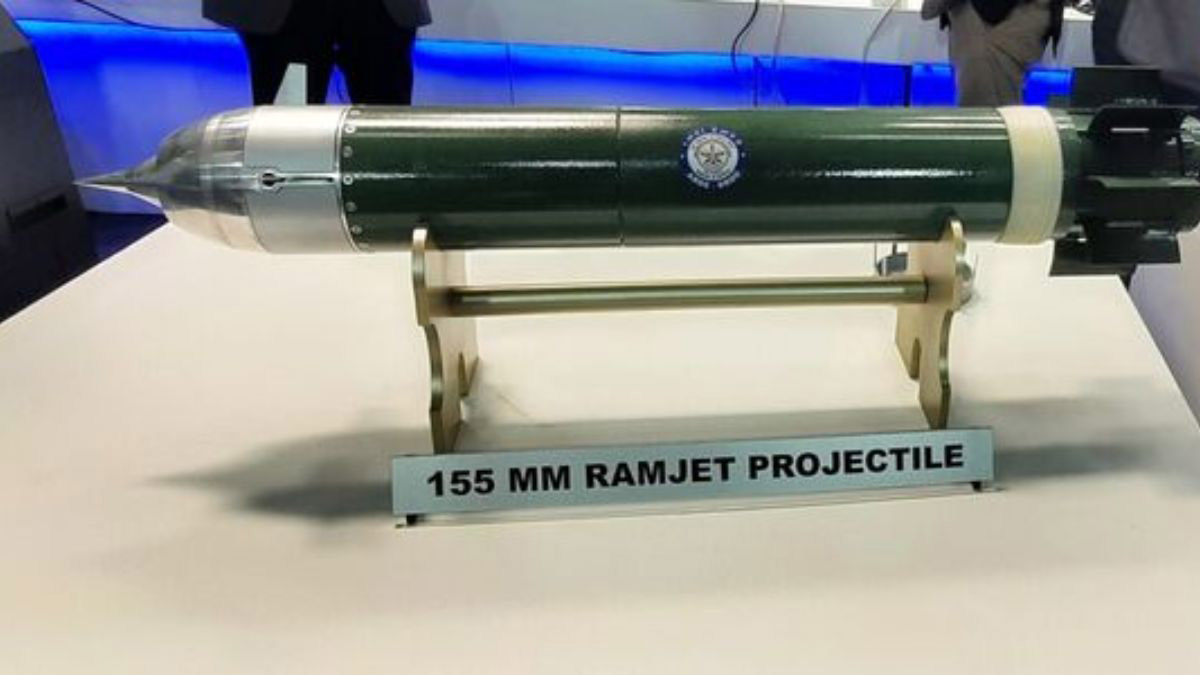
RAMJET Artillery coming soon
 www.theweek.in
Indian Army to be world’s first to use ramjet-powered 155 mm artillery shells
This 'Atmanirbharta' initiative, in collaboration with IIT Madras, will increase the range of existing shells by 30-50 per cent without compromising lethality


Existing guided arty shells have smaller warheads than regular ones, this one has to carry fuel apart from GNC system. NAMMO's prototype has between 2-4kg of explosives as far as i remember. Excalbur has 5.4kg while standard shells usually have between 5-10kg.RAMJET Artillery coming soon
Indian Army to be world’s first to use ramjet-powered 155 mm artillery shells
This 'Atmanirbharta' initiative, in collaboration with IIT Madras, will increase the range of existing shells by 30-50 per cent without compromising lethality
Without it having pinpoint accuracy, I wonder what it's utility is going to be.
long range strikes on enemy bunkers. Artillery is unguided so you need to fire a lot of shells for a confirmed kill at range because of wind and other factors at that range. the ramjets shells will have a PGK so they should be able to hit with accuracy and with the atags the ange is like 80+km(possiby 85km)Existing guided arty shells have smaller warheads than regular ones, this one has to carry fuel apart from GNC system. Without it having pinpoint accuracy, I wonder what it's utility is going to be.
They are really costly though(100k USD per) so cost to kill is more important than cost per shot ig. 2 shells could do the work of 40 in terms of precision so will be good for MGS and k9 and maybe even atags cause shoot and scoot will be way faster and safer. Wont be mass produced at the same level as the normal shell(obviously) but will be very useful and will really hurt their logistics planning and supply.
At $100k they're as costly as the imported Excalibur we bought 800+ of and used during Op Sindoor. But again, they're good even with fewer amounts of explosives as they have pretty good accuracy (in no EW environment though) so it makes up for it. But 2-4kg of explosive filling (could be even less) if not as accurate as 2-3 metre CEP is a dud, and won't work under extensive jamming (neither would Excalibur).long range strikes on enemy bunkers. Artillery is unguided so you need to fire a lot of shells for a confirmed kill at range because of wind and other factors at that range. the ramjets shells will have a PGK so they should be able to hit with accuracy and with the atags the ange is like 80+km(possiby 85km)
They are really costly though(100k USD per) so cost to kill is more important than cost per shot ig. 2 shells could do the work of 40 in terms of precision so will be good for MGS and k9 and maybe even atags cause shoot and scoot will be way faster and safer. Wont be mass produced at the same level as the normal shell(obviously) but will be very useful and will really hurt their logistics planning and supply.
Although I do feel it can be used to target large aircrafts for example, like in Nur Khan airbase which happens to be the hub for their transport fleet. Or can help target air defences if real time intelligence is somehow available. But is a dud at hitting infrastructure.
This sort of news is purely propaganda brief to create good PR without any actual proof shown. Most of the time its based on very minute thing like a few prototype rounds are test fired with close coordination of Army. That is not induction at all. Only when CEMILAC certification is complete can a system be inducted formally and that process is a lengthy one.
Naturally no one will ask the reporter or DRDO about it , or even apply common sense.
proof is in below 2-3 para
“Once developed, the Indian Army is free to use this in any number of 155 mm shells as it can retrofitted on to an existing 155 mm artillery shell,” says Ramakrishna.
At the moment, the shell is undergoing developmental trials with IIT Madras even while it has been successfully tested in trials at Rajasthan’s Pokharan field firing ranges.
On whether the ramjet-powered shell can be fitted for the M 777 ultra-light howitzer, the IIT Madras professor said: “Once the technology is developed it can be used on any gun system that the Indian Army has in its armoury.”
So the technology is not yet fully developed and proven but already PR pushing for induction of the product.
Naturally no one will ask the reporter or DRDO about it , or even apply common sense.
proof is in below 2-3 para
“Once developed, the Indian Army is free to use this in any number of 155 mm shells as it can retrofitted on to an existing 155 mm artillery shell,” says Ramakrishna.
At the moment, the shell is undergoing developmental trials with IIT Madras even while it has been successfully tested in trials at Rajasthan’s Pokharan field firing ranges.
On whether the ramjet-powered shell can be fitted for the M 777 ultra-light howitzer, the IIT Madras professor said: “Once the technology is developed it can be used on any gun system that the Indian Army has in its armoury.”
So the technology is not yet fully developed and proven but already PR pushing for induction of the product.
This sort of news is purely propaganda brief to create good PR without any actual proof shown. Most of the time its based on very minute thing like a few prototype rounds are test fired with close coordination of Army. That is not induction at all. Only when CEMILAC certification is complete can a system be inducted formally and that process is a lengthy one.
Naturally no one will ask the reporter or DRDO about it , or even apply common sense.
proof is in below 2-3 para
“Once developed, the Indian Army is free to use this in any number of 155 mm shells as it can retrofitted on to an existing 155 mm artillery shell,” says Ramakrishna.
At the moment, the shell is undergoing developmental trials with IIT Madras even while it has been successfully tested in trials at Rajasthan’s Pokharan field firing ranges.
On whether the ramjet-powered shell can be fitted for the M 777 ultra-light howitzer, the IIT Madras professor said: “Once the technology is developed it can be used on any gun system that the Indian Army has in its armoury.”
So the technology is not yet fully developed and proven but already PR pushing for induction of the product.
Can they use this tech to create a cheaper alternative to C-UAS system instead?
I have no idea.Can they use this tech to create a cheaper alternative to C-UAS system instead?

This sort of news is purely propaganda brief to create good PR without any actual proof shown. Most of the time its based on very minute thing like a few prototype rounds are test fired with close coordination of Army. That is not induction at all. Only when CEMILAC certification is complete can a system be inducted formally and that process is a lengthy one.
Naturally no one will ask the reporter or DRDO about it , or even apply common sense.
proof is in below 2-3 para
“Once developed, the Indian Army is free to use this in any number of 155 mm shells as it can retrofitted on to an existing 155 mm artillery shell,” says Ramakrishna.
At the moment, the shell is undergoing developmental trials with IIT Madras even while it has been successfully tested in trials at Rajasthan’s Pokharan field firing ranges.
On whether the ramjet-powered shell can be fitted for the M 777 ultra-light howitzer, the IIT Madras professor said: “Once the technology is developed it can be used on any gun system that the Indian Army has in its armoury.”
So the technology is not yet fully developed and proven but already PR pushing for induction of the product.

India test fires ramjet powered artillery shell
Long Range Artilleries From the catapults to cannons to the modern-day artillery – the role of artillery & big guns has always been a winning factor in the battlefield. Artilleries have b…
 indiandefenseanalysis.wordpress.com

At the start of this YT video, Gen Shankar / Sandeep Unnithan hint at a breakthrough for the Ramjet arty during tests held in Dec2025. No specific details, but listen to Gen Shankar's response:
On a somewhat related topic, DRDO was working on Bourrelet "nubless" projectiles as described in this @RandomGoober X post:
PIB release: The AoN was also accorded for 155 mm Nubless projectile for use in 155 mm Artillery guns which will enhance lethality and safety of the projectiles
Note this includes a "Rocket Assisted" projectile with ~60km range.

PIB release: The AoN was also accorded for 155 mm Nubless projectile for use in 155 mm Artillery guns which will enhance lethality and safety of the projectiles
Note this includes a "Rocket Assisted" projectile with ~60km range.


Review karte raho bas.
BTW 45 cal MGS? Export to someone new?
Test fired and clearance for full scale industrial production (not the LRIP/FOPM units) there is usually a gap of 2-5 years even at a highly optimistic estimate.India test fires ramjet powered artillery shell
Long Range Artilleries From the catapults to cannons to the modern-day artillery – the role of artillery & big guns has always been a winning factor in the battlefield. Artilleries have b…
Testing has been on since 2022. Earlier test results were mixed. Necessary modifications have been made. I expect them to succeed in the forthcoming tests.
Beyond that given the rigmarole of repeated tests, all weather trials , etc who knows how long will it take to certify those shells as successful.
Beyond that given the rigmarole of repeated tests, all weather trials , etc who knows how long will it take to certify those shells as successful.
Test fired and clearance for full scale industrial production (not the LRIP/FOPM units) there is usually a gap of 2-5 years even at a highly optimistic estimate.
Yeah it is not that there would be no success & all effort is in vain, rather if the program is still between the IIT and army, it would take some more time to complete. Neither army nor IIT can do the production part at a grand scale, for that they would need OFB or pvt org involvement via tot or dcpp method. This would mean some more time to proof test and clear the product made by the industry partner. Timescale may be shorter due to user involvement but overall we are still some way off any formal induction, given how complex this tech can be.Testing has been on since 2022. Earlier test results were mixed. Necessary modifications have been made. I expect them to succeed in the forthcoming tests.
Beyond that given the rigmarole of repeated tests, all weather trials , etc who knows how long will it take to certify those shells as successful.
Wonder if the rocket assisted shell can be less complex to make than a ramjet shell?
This is the first time the IA is supporting a state of the art pioneering tech program instead of playing catch up.Yeah it is not that there would be no success & all effort is in vain, rather if the program is still between the IIT and army, it would take some more time to complete.
Even otherwise you could expect delays , what to speak of a cutting edge program like this ?
Frankly I don't get the point of your objection in this case in the light of what I've explained above.Neither army nor IIT can do the production part at a grand scale, for that they would need OFB or pvt org involvement via tot or dcpp method. This would mean some more time to proof test and clear the product made by the industry partner. Timescale may be shorter due to user involvement but overall we are still some way off any formal induction, given how complex this tech can be.
Wonder if the rocket assisted shell can be less complex to make than a ramjet shell?
More Ramjet Arty news coming out.
"These shells extend range by 30–50% while retaining destructive power"
Either way, bodes well that the Army is leading this project -- it should give them the confidence they don't need to remain just a "user". And this might pave the way for a US DoD style grants/funding with universities.
"These shells extend range by 30–50% while retaining destructive power"
Either way, bodes well that the Army is leading this project -- it should give them the confidence they don't need to remain just a "user". And this might pave the way for a US DoD style grants/funding with universities.