
You are using an out of date browser. It may not display this or other websites correctly.
You should upgrade or use an alternative browser.
You should upgrade or use an alternative browser.
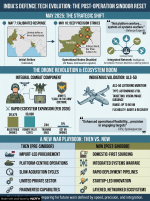

On the launch of four satellites by Pakistan, Lt Gen Zubin A Minwalla says, "We have noticed with professional interest the launch of four satellites by Pakistan recently. Let me also put it in context that our first military satellite was launched in 2001. Subsequently, in the last decade, we have been launching satellites constantly. We understand probably more than anybody that it is not space is not only just an enabler, it is a contested operational domain. We formed the Defence Space Agency in the year 2019 at the headquarters of IDS with a simple mandate that it looks after all space-related issues of the three services and coordinates that effort. So we are well, I would say ahead and we have some niche programs to be launched. The Defence Space Agency will soon start controlling some constellations as we go ahead in the next couple of years, in terms of ISR satellites, in terms of communication satellites, and we are looking very carefully at space situational awareness..."
There are opportunities that are emerging in the ISR and BDA fields. I hope that domestic participants in these sectors are able to encash on these. The govt. and the MoD will need to walk the talk as Space-based ISR activities requires significant commitment of resources. Plans are good. However, putting the plan to action is the crucial aspect.


Bharat Forge Secures Long-Term Contract with Embraer for Manufacturing of Landing Gear Forgings
Bharat Forge Ltd. (BFL), a global leader in advanced forging and precision engineering, today announced that it has entered into a long-term contract with Embraer for the manufacturing and supply of critical landing gear forgings and becomes the first supplier from India to enter Embraer global Aerospace supply chain for forged components.Under the agreement, Bharat Forge will supply high-integrity forged components for landing gear systems across Embraer’s commercial and defence aircraft programs. This engagement reinforces Bharat Forge’s expanding role in the global aerospace supply chain and strengthens its position as a trusted partner for complex, safety-critical components.
The Long-Term Contract reflects a shared commitment to quality, reliability, and long-term collaboration, while underscoring Bharat Forge’s capabilities in delivering forged products that meet stringent global certification standards.
Mr. Amit B Kalyani, Vice Chairman & Joint MD, Bharat Forge Limited commented, “The fact that BFL is the first Indian supplier of forged components for Embraer is a proud moment & a testament to the capabilities we have built in the Aerospace business and we thank them for the trust they have reimposed on BFL. We look forward to growing and adding value to our association with Embraer in the coming years. These contracts will enable to create scale for critical structural components complementing the scale built in the Aero Engine components space.”
This first contract signed with an Indian company reflects Embraer’s commitment to advancing the aerospace ecosystem in India, creating long-term value across the entire supply chain. It also comes at a time when Embraer is steadily expanding its presence in the country and maintaining active dialogue with local industry leaders and government stakeholders.

Special Report: Indian firm advances quantum communications for military networks
Bangalore-based firm QNu Labs has been supporting the Indian government's efforts to enhance quantum communications, including for defence applications, using its Armos...
 www.janes.com
Bangalore-based firm QNu Labs has been supporting the Indian government's efforts to enhance quantum communications, including for defence applications, using its Armos quantum key distribution (QKD) platform.
Speaking to Janes, Sunil Gupta, CEO and co-founder of QNu Labs, and Sudiptaa Paul Choudhury, the company's chief marketing officer, outlined the technologies being developed and applied to strengthen quantum communications for the Indian Armed Forces, as well as plans to sustain growth in these capabilities.
QNu Labs has previously been contracted to supply different configurations of Armos to the Indian Navy and the Indian Army. The company is also using Armos to establish an extended quantum communications network intended to provide secure communications capabilities for the armed forces.
In April, India's Ministry of Science & Technology announced that QNu Labs had developed and demonstrated a 1,000 km quantum communication network under the government's National Quantum Mission (NQM), which aims, among other quantum objectives, to establish a QKD network spanning more than 2,000 km by 2031.
Quantum network
Gupta said the 1,000 km quantum communication network demonstrated under the NQM was achieved using the Armos platform.He added that the platform used in the demonstration was independently validated and certified by the Ministry of Communications' Telecommunication Engineering Centre (TEC), and Arizona-based network testing company VIAVI Solutions using its MAP-300 optical test and measurement system.
“Under controlled conditions, the system demonstrated secure key generation over distances of up to 200 km of standard telecom fibre at 40 dB loss on the quantum channel, without requiring signal amplification, while consistently maintaining quantum bit error rates of below 4%, well within safe operating thresholds,” Gupta said.


Do give this a go:

 swarajyamag.com
Walk into the automotive lab at an engineering institute in southern India, and the first thing you notice is the engines. Typically donated by a major Indian OEM (original equipment manufacturer) towards no particular project and no embedded engineer acting as a “mentor.” Just dispensable hardware tossed over a wall.
Walls. I have run into them again and again, building labs for universities and watching up close how the system around those labs fails to connect.
In India, a typical collaboration between a company and university goes as follows. The company donates equipment for a lab or writes a cheque. A professor accepts it — either as part of a standalone collaboration with the company, or to satisfy a government requirement to get funds for a research project — and issues a press release.
Then both sides return to their separate worlds. Later, the company complains at a NASSCOM panel that the universities didn’t deliver anything useful and produce engineers that are not trained in the right areas. The college complains that the company never engaged.
If you think about it, both are right. The point is that the system was designed to produce just this outcome.
India Has Labs, Money, And Startups — Here’s Why They Struggle To Work Together
Walk into the automotive lab at an engineering institute in southern India, and the first thing you notice is the engines. Typically donated by a majo
swarajyamag.com
Walk into the automotive lab at an engineering institute in southern India, and the first thing you notice is the engines. Typically donated by a major Indian OEM (original equipment manufacturer) towards no particular project and no embedded engineer acting as a “mentor.” Just dispensable hardware tossed over a wall.
Walls. I have run into them again and again, building labs for universities and watching up close how the system around those labs fails to connect.
In India, a typical collaboration between a company and university goes as follows. The company donates equipment for a lab or writes a cheque. A professor accepts it — either as part of a standalone collaboration with the company, or to satisfy a government requirement to get funds for a research project — and issues a press release.
Then both sides return to their separate worlds. Later, the company complains at a NASSCOM panel that the universities didn’t deliver anything useful and produce engineers that are not trained in the right areas. The college complains that the company never engaged.
If you think about it, both are right. The point is that the system was designed to produce just this outcome.
If funded well and supported by both Industry as well as GoI, certain startups have potential to contribute to emerging as well as existing defence verticals. I had shared an article before stating how sometimes raising capital itself becomes a hassle and founders find themselves disillusioned leading to them either shutting shop or selling their firms to re-coup investments. These founders then move away from hardware activities and try ventures that have mass market appeal (like FMCG, IT etc.).
Last edited:
Tata's C-130J MRO facility near Bengaluru airport to be operational by December 2026; Chandrasekaran reviews defence programmes
Tata Sons chairman N Chandrasekaran on June 2 reviewed key defence manufacturing and maintenance programmes of Tata Advanced Systems Ltd (TASL), including the upcoming maintenance, repair and overhaul (MRO) facility for military aircraft near Bengaluru airport.
Chandrasekaran was accompanied by TASL Managing Director Sukaran Singh and other senior executives during the visit, which covered facilities engaged in aerospace, unmanned systems and land mobility platforms.
C-130J MRO facility to be operational by December 2026
Tata Sons chairman inspected the upcoming defence MRO facility being developed near Bengaluru airport. Spread across 16 acres with a built-up area of 15,000 square metres, the facility is expected to be commissioned by December 2026.
TASL said the project will be India's first privately operated defence MRO facility and will undertake heavy maintenance and avionics upgrades for the Lockheed Martin C-130J transport aircraft. The unit is expected to employ more than 250 personnel.
Focus on UAVs and loitering munitions
Chandrasekaran also visited TASL's Electronics City facility, where he reviewed unmanned aerial vehicle (UAV) manufacturing operations, optronics product lines and land mobility systems.
The company showcased its indigenous UAV programmes and loitering munitions platforms, including upgraded systems capable of operating at ranges from 50 km to several hundred kilometres while carrying higher payloads.
Land mobility and armoured platforms
At the facility, TASL highlighted the international expansion of its land mobility business, which has supplied more than 4,000 multi-axle, high-mobility platforms to overseas customers, including the Royal Moroccan Army and the Armenian Armed Forces, over the past three years.
The company also showcased military variants of Jaguar Land Rover Defender vehicles equipped with optronics, navigation systems and armour protection for defence applications.
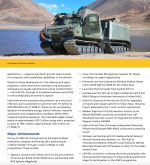
Among the systems demonstrated was the Advanced Armoured Platform, a tracked combat vehicle developed jointly with the Defence Research and Development Organisation (DRDO) and integrated with a 30-mm crewless turret developed in-house by TASL.
Airbus H125 assembly line and artillery systems
The final leg of the visit was TASL's Vemagal facility near Bengaluru, where Chandrasekaran reviewed the Tata Advanced Systems-Airbus H125 final assembly line being developed for the Indian market. He also inspected manufacturing units involved in the production of C295 aircraft wiring harnesses, the Advanced Towed Artillery Gun System (ATAGS), Mounted Gun Systems (MGS), and launcher system integration facilities. TASL in a statement said the visit underscored the Tata Group's focus on expanding its defence business through indigenous technology development, advanced manufacturing and large-scale industrial capabilities aimed at supporting India's defence and security requirements.
BEL concall https://www.bseindia.com/xml-data/corpfiling/AttachHis/f32d2ed7-e599-42b4-ab37-d8e5e79ae0ca.pdf
As I told last year also, again, I am telling you it is the indigenization, indigenization of critical technology, indigenization of modules, system, subsystems. That has definitely helped all of us for that. And that's why we are putting all our efforts in increasing this indigenization score for
all of us.
So, one thing is by our own in-house efforts, we have created even a separate indigenization cell in BEL to closely monitor our own development as well as the development done by our MSME and other start-up and other partners. We are closely monitoring and supporting our ecosystem partners to increase this indigenization. The more faster we do indigenization, the more profitable all of us will be. That much I can assure you, it is only and only indigenization, which has really helped all of us.
Indigenous content, as you know nowadays, Government of India policy itself is minimum 60% in all our new projects. So, we are of the order of 80% to 85% mostly in our indigenous content for various programs. So, it depends upon the different type of product and product mix. Our homegrown products or our DRDO driven products, sometimes that is even 90% also.
Some other programs where still we are depending on TOT, which we have taken a few years back, we are around 55%, 60%, 65%. But overall, it will be more than 80%. And right now, the main limitation which we are foreseeing is the semiconductors only because otherwise module subsystems level, enough infrastructure in India has been created.
So, we are not seeing much challenge for that. But semiconductor, it will take at least a few more years before the semiconductor ICs will start getting from India itself. So that will affect us on the indigenization score slightly. But next 2 to 3 years, between 80% to 85% on an
average indigenous content will be there for our products.
Yes, certainly. So, NGC, there are some so many subsystems of NGC, Next Generation Corvette program, which definitely will come this year. And a few may spill over to next year also, a few subsystems. But at least 50% of the subsystems we are hoping to get this year only
in NGC program.
The Shatrughat and Samaghat EW solutions, we are hoping very, very soon. P-75I, which I listed just before. So, there are a lot many 6 subcomponents within that. So, we are going to get some order for that this year. HAMMER program, we are expecting very soon.
Shakti Phase IV, we are expecting very soon. MFR-X radar for naval ships also we are expecting very soon. So, these are some of the big-ticket items, which we are going to get mostly in this year itself. A few may spill over to next year. That is '26, '27 and slightly beyond '27, '28, this mix of the projects which I have listed just now to you.
As I told last year also, again, I am telling you it is the indigenization, indigenization of critical technology, indigenization of modules, system, subsystems. That has definitely helped all of us for that. And that's why we are putting all our efforts in increasing this indigenization score for
all of us.
So, one thing is by our own in-house efforts, we have created even a separate indigenization cell in BEL to closely monitor our own development as well as the development done by our MSME and other start-up and other partners. We are closely monitoring and supporting our ecosystem partners to increase this indigenization. The more faster we do indigenization, the more profitable all of us will be. That much I can assure you, it is only and only indigenization, which has really helped all of us.
Indigenous content, as you know nowadays, Government of India policy itself is minimum 60% in all our new projects. So, we are of the order of 80% to 85% mostly in our indigenous content for various programs. So, it depends upon the different type of product and product mix. Our homegrown products or our DRDO driven products, sometimes that is even 90% also.
Some other programs where still we are depending on TOT, which we have taken a few years back, we are around 55%, 60%, 65%. But overall, it will be more than 80%. And right now, the main limitation which we are foreseeing is the semiconductors only because otherwise module subsystems level, enough infrastructure in India has been created.
So, we are not seeing much challenge for that. But semiconductor, it will take at least a few more years before the semiconductor ICs will start getting from India itself. So that will affect us on the indigenization score slightly. But next 2 to 3 years, between 80% to 85% on an
average indigenous content will be there for our products.
Yes, certainly. So, NGC, there are some so many subsystems of NGC, Next Generation Corvette program, which definitely will come this year. And a few may spill over to next year also, a few subsystems. But at least 50% of the subsystems we are hoping to get this year only
in NGC program.
The Shatrughat and Samaghat EW solutions, we are hoping very, very soon. P-75I, which I listed just before. So, there are a lot many 6 subcomponents within that. So, we are going to get some order for that this year. HAMMER program, we are expecting very soon.
Shakti Phase IV, we are expecting very soon. MFR-X radar for naval ships also we are expecting very soon. So, these are some of the big-ticket items, which we are going to get mostly in this year itself. A few may spill over to next year. That is '26, '27 and slightly beyond '27, '28, this mix of the projects which I have listed just now to you.
PTC Industries Reports Strong FY26 Performance; Q4 Marks Forging Milestone at Lucknow Strategic Materials Complex
Capability Creation and Capability Validation (SMTC / Materials Ecosystem)
Open Die Forging milestone: Aerolloy completed installation and successful hot and cold trials of the 4500/5100 Tonne Intelligent Open Die. Forging System at SMTC, a significant milestone that strengthens its integrated “Melting + Casting + Forging” platform and enhances domestic capability in large, complex forgings for critical aerospace and defence applications.
Titanium & Superalloys Materials Plant milestone: The Company marked a key milestone at SMTC in the Uttar Pradesh Defence Industrial Corridor, reinforcing the development of its integrated strategic materials ecosystem.
Superalloy & Titanium melting/remelting capability: Commissioning of Vacuum Induction Melting (VIM) and VAR 400 furnace, enabling large aerospace-grade castings and strengthening the Company’s strategic materials platform.
Plasma Arc Melting (PAM) readiness: Installation completed and ready for trials and commissioning, with capacity of approximately 600 TPA for Titanium alloy ingots.
Titanium & Superalloys Materials Plant milestone: The Company marked a key milestone at SMTC in the Uttar Pradesh Defence Industrial Corridor, reinforcing the development of its integrated strategic materials ecosystem.
Superalloy & Titanium melting/remelting capability: Commissioning of Vacuum Induction Melting (VIM) and VAR 400 furnace, enabling large aerospace-grade castings and strengthening the Company’s strategic materials platform.
Plasma Arc Melting (PAM) readiness: Installation completed and ready for trials and commissioning, with capacity of approximately 600 TPA for Titanium alloy ingots.
Global Program Wins / Strategic Orders / Multi-year Visibility
Blue Origin – BE-4 engines: Development and supply order for large, high-integrity Nickel-based Superalloy investment castings for orbital-class propulsion hardware.
Honeywell Aerospace Technologies: Long-term supply agreement for Titanium and Superalloy precision investment castings across multiple aerospace programmes.
Safran Aircraft Engines: Major order for LEAP-1A and LEAP-1B engine cast components, reinforcing ATL’s position in global aero-engine supply chains.
ISRO-VSSC Titanium ingot conversion order: Order for conversion of approximately 40 tonnes into Ti-6Al-4V alloy ingots using the Double VAR process.
BrahMos Aerospace order: Supply of critical Titanium castings of approximately Rs. 1,100 Mn, to be executed over 24 months.
GTRE (DRDO) milestone: Post-cast operations to manufacture Single Crystal ‘Ready-to-Fit’ turbine blades.
Honeywell Aerospace Technologies: Long-term supply agreement for Titanium and Superalloy precision investment castings across multiple aerospace programmes.
Safran Aircraft Engines: Major order for LEAP-1A and LEAP-1B engine cast components, reinforcing ATL’s position in global aero-engine supply chains.
ISRO-VSSC Titanium ingot conversion order: Order for conversion of approximately 40 tonnes into Ti-6Al-4V alloy ingots using the Double VAR process.
BrahMos Aerospace order: Supply of critical Titanium castings of approximately Rs. 1,100 Mn, to be executed over 24 months.
GTRE (DRDO) milestone: Post-cast operations to manufacture Single Crystal ‘Ready-to-Fit’ turbine blades.
Strategic Partnerships / Ecosystem Building
Safran Aircraft Engines MoU: MoU signed to develop a robust domestic defence aerospace ecosystem in India.
MoU with Bharat Dynamics Limited (BDL): Proposed joint venture for propulsion systems, guided bombs and aero-engines, subject to requisite approvals.
MoU with Kineco Aerospace & Defence: Strategic collaboration to co-develop hybrid aerostructures and localise flight-critical components.
PLI Scheme 1.2 (Specialty Steel): MoUs executed covering Titanium Alloys and Super Alloys under the strategic sector category.
MoU with Bharat Dynamics Limited (BDL): Proposed joint venture for propulsion systems, guided bombs and aero-engines, subject to requisite approvals.
MoU with Kineco Aerospace & Defence: Strategic collaboration to co-develop hybrid aerostructures and localise flight-critical components.
PLI Scheme 1.2 (Specialty Steel): MoUs executed covering Titanium Alloys and Super Alloys under the strategic sector category.
Capacity Expansion / Manufacturing Scale-up
Trac Precision Solutions (UK) capability expansion: Investments in EDM systems, deep-hole drilling and automated storage solutions, along with installation of a second Makino G7 5-axis machining platform, enhancing throughput, reducing setup time and strengthening its ability to deliver complex, high-precision components with consistent quality.
Mehsana facility expansion: Addition of significant shop-floor area, advanced equipment and automation to address global supply chain
opportunities.
Trac - clean-tech diversification: Strategic partnership with Coolbrook to supply components for RotoDynamic Heater technology.
Mehsana facility expansion: Addition of significant shop-floor area, advanced equipment and automation to address global supply chain
opportunities.
Trac - clean-tech diversification: Strategic partnership with Coolbrook to supply components for RotoDynamic Heater technology.
Defence ministry ends BDL monopoly, opens tactical missile production to private firms
After ending the monopoly of maharatna Central Public Sector Enterprise (CPSE) Hindustan Aeronautics Ltd (HAL) in aerospace manufacturing, the Ministry of Defence (MoD) has opened indigenous tactical missile production to private companies to offer a level playing field for the industry and meet their growing demand from armed forces.
Defence Research & Development Organisation’s (DRDO’s) 10 to 12 tactical missile development projects have been distributed among public as well as private companies on the basis of their capabilities, moving away from earlier practice of heavily relying on defence PSU Bharat Dynamics Ltd as the production partner.
This also comes to meet the requirements of proposed Defence Acquisition Procedure (DAP) 2026 and create an ecosystem to fulfil aspirations of self reliance in this emerging theatre of firepower which has become central to modern warfare, fundamentally altering how conflicts are fought. It’s also a prelude to a discussion within the armed forces for raising a rocket force for a coordinated response against aerial threats as some countries, including China and Pakistan, have established.
Tactical missiles are short-to-medium-range guided weapons, which carry conventional warheads and are designed for use within a specific theater of military operations. Unlike strategic missiles — built to move across continents to destroy massive targets like cities or entire military bases — tactical missiles focus on high-precision strikes against localised enemy forces, infrastructure and assets.
Decentralisation efforts
At least four private defence companies – Adani Defence & Aerospace, Bharat Forge, ICOMM and Solar Defence and Aerospace Ltd – have been selected as Development-cum-Production Partners (DcPPs) to complete different DRDO tactical missiles programmes between three and five years. Under the DcPP model, introduced to reduce development cycle, the DRDO and a selected private or public industry partner co-develop a functional system or prototype for completing subsequent design, trials, and evaluations. After that follows orders from armed forces.Besides them, BDL (Bharat Dynamics Ltd) and BEL (Bharat Electronics Ltd) too have been contracted for the same missile projects. Pralay, which underwent user evaluation trials towards the end of December 2025 demonstrating capability of hitting targets with precision between a range of 150 and 500 km, both the PSUs are jointly participating in the production. In a couple of other programmes, BDL is partnering with private companies.
Some of the projects private industry is collaborating for are: Naval Anti-Ship Missile – Short Range (NASM-SR), which is the first indigenous helicopter-launched anti-ship missile; and Rudram I,II and III series of supersonic and hypersonic air-to-surface (ASM) ground attack and anti-radiation missiles.
Similarly, other private participation projects include Very Short-Range Air Defence System (VSHORADS), a fourth-generation Man-Portable Air-Defence System (MANPAD), Long-Range Glide Bomb (LRGB), which is 1,000 kg class air-to-ground smart weapon, and UAV-Launched Precision Guided Missile (ULPGM-V3).
With recent global conflicts, especially the ongoing US-Israel-Iran war, raising the profile of tactical missiles in the modern warfare, armed forces previously content with imports of such vectors, are seeking home-grown solutions, said industry sources.
Beyond tactical missiles, the Ministry of Defence is also contemplating roping in private sector for ballistic missile manufacturing as well. Last month, Defence Secretary Rajesh Kumar Singh had said at a CII function that the time has come to open up ballistic missile manufacturing to the private sector.
A retired IAF official says that France will share its learning and development methodologies with India from its FCAS project as India works on AMCA. Are we really this naive? They will aid you in refining your FA by sharing their know-how from their 6th gen initiative? Also, DA Rafale F5 is coming by 2027? I am certainly learning new things. This seems to be a commentary account (political and forces related). I was able to verify that this is not synthetic.
It is quite unfortunate and saddening to see veterans harbouring such thoughts.
It is quite unfortunate and saddening to see veterans harbouring such thoughts.

let me give you a piece of advice, any retired general or officer who goes about speaking to the media is doing it for the money and for the money and views you need sensationalist headlines. Im 99.9% sure he doesnt believe a word of what hes saying but is saying whatever he likes for the money, the actual normal retired generals shut their mouths and mind their own buisness while maintaining contacts just to know whats going on. They are sometimes the source of the Insider reports.
A retired IAF official says that France will share its learning and development methodologies with India from its FCAS project as India works on AMCA. Are we really this naive? They will aid you in refining your FA by sharing their know-how from their 6th gen initiative? Also, DA Rafale F5 is coming by 2027? I am certainly learning new things. This seems to be a commentary account (political and forces related). I was able to verify that this is not synthetic.
It is quite unfortunate and saddening to see veterans harbouring such thoughts.