
Indian Electronics Manufacturing Developments : News and Discussions
- Thread starter RISING SUN
- Start date
You are using an out of date browser. It may not display this or other websites correctly.
You should upgrade or use an alternative browser.
You should upgrade or use an alternative browser.


SK Hynix looks for local partner to set up memory assembly unit in India - The Economic Times
The South Korean high bandwidth memory major is likely in early talks with Noida-based ASP Sealing and a cluster of state governments to set up a memory chip ATMP unit. Among the states, Odisha seems to be frontrunner.
https://www.pib.gov.in/PressReleasePage.aspx?PRID=2194182
The progress of implementation of the ₹1,500 crore Incentive Scheme for Critical Mineral Recycling was reviewed today by Shri Piyush Goyal, Secretary, Ministry of Mines. Besides Ministry officials, it was attended by Jawaharlal Nehru Aluminium Research, Development & Design Centre (JNARDDC), Nagpur, an autonomous institute of the Ministry of Mines, which has been appointed as the Project Management Agency (PMA) for the Scheme. Secretary (Mines) reviewed various aspects of the application process. JNARDDC informed that a significant number of entities have so far registered on the portal designated for receiving applications.
The Incentive Scheme is a key component of the National Critical Mineral Mission, aimed at developing the recycling capacity in the country for extraction of critical minerals from secondary sources such as E-waste, spent Lithium-ion Batteries (LiBs), and other scrap. The Scheme was earlier approved by the Union Cabinet on 03.09.2025, following which it was launched along with detailed Scheme guidelines on 02.10.2025. The Scheme has been made open for applications for six months: 02.10.2025 – 01.04.2026.
JNARDDC, in its role as the PMA, had organized a Workshop and Interactive Stakeholder Consultation on 21.11.2025, with around 30 prospective beneficiaries participating — 15 physically at JNARDDC, Nagpur and rest 15 joining online. The participants represented start-ups, established recyclers, technology providers and industrial stakeholders interested in strengthening India’s critical mineral recycling eco-system. They were explained about various aspects, including portal registration, application filing, eligibility criteria, documentation requirements and incentive disbursement processes. Procedural and operational queries were addressed during the session. To facilitate smooth participation, the PMA provided hands-on guidance to stakeholders who sought help in navigating the portal registration and application submission process, including demonstrating the complete online workflow to ensure accurate and timely submissions.
During the review by Secretary (Mines) today, JNARDDC was asked to conduct such consultations and engagement sessions throughout the implementation phase to support stakeholders and ensure the successful implementation of the Scheme. JNARDDC also reaffirmed its commitment to extend continuous support through helpdesk assistance and clarificatory responses.
Development of 3 Lakh Ton Annual Recycling Capacity for Critical Mineral Extraction
Envisaged from the ₹1,500 crore Incentive Scheme
The progress of implementation of the ₹1,500 crore Incentive Scheme for Critical Mineral Recycling was reviewed today by Shri Piyush Goyal, Secretary, Ministry of Mines. Besides Ministry officials, it was attended by Jawaharlal Nehru Aluminium Research, Development & Design Centre (JNARDDC), Nagpur, an autonomous institute of the Ministry of Mines, which has been appointed as the Project Management Agency (PMA) for the Scheme. Secretary (Mines) reviewed various aspects of the application process. JNARDDC informed that a significant number of entities have so far registered on the portal designated for receiving applications.
The Incentive Scheme is a key component of the National Critical Mineral Mission, aimed at developing the recycling capacity in the country for extraction of critical minerals from secondary sources such as E-waste, spent Lithium-ion Batteries (LiBs), and other scrap. The Scheme was earlier approved by the Union Cabinet on 03.09.2025, following which it was launched along with detailed Scheme guidelines on 02.10.2025. The Scheme has been made open for applications for six months: 02.10.2025 – 01.04.2026.
JNARDDC, in its role as the PMA, had organized a Workshop and Interactive Stakeholder Consultation on 21.11.2025, with around 30 prospective beneficiaries participating — 15 physically at JNARDDC, Nagpur and rest 15 joining online. The participants represented start-ups, established recyclers, technology providers and industrial stakeholders interested in strengthening India’s critical mineral recycling eco-system. They were explained about various aspects, including portal registration, application filing, eligibility criteria, documentation requirements and incentive disbursement processes. Procedural and operational queries were addressed during the session. To facilitate smooth participation, the PMA provided hands-on guidance to stakeholders who sought help in navigating the portal registration and application submission process, including demonstrating the complete online workflow to ensure accurate and timely submissions.
During the review by Secretary (Mines) today, JNARDDC was asked to conduct such consultations and engagement sessions throughout the implementation phase to support stakeholders and ensure the successful implementation of the Scheme. JNARDDC also reaffirmed its commitment to extend continuous support through helpdesk assistance and clarificatory responses.


really quite interesting and revolutionary research, could change the display manufacturing system in India dramatically. Been going on since 2021 and prototypes in 2026 ig. Its not standard amoled. Its "Close-Space Sublimation (CSS) of the organic emitter from a specially-designed donor substrate using Laser-Induced Selective Film Transfer."
It will overcome the PPi issue that AMOLED displays face and also provides significant research towards the manufacturing of MicroLEDs which also use LIFT but for a different purpose.
Gigabyte to start manufacturing motherboards in India, plans to add monitors and laptops soon
Gigabyte will soon start manufacturing in India joining the likes of OEMs such as Asus, Acer, HP, and Lenovo. The company's India manufacturing will start off with motherboards with plans to scale up to monitors and laptops in the future. Gigabyte has not yet disclosed details of its contract manufacturing partner, which models would be manufactured in the country, or any projections.
By Vaidyanathan Subramaniam, Published 12/11/2025
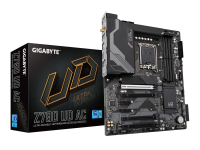
Gigabyte, a Taiwan-based company, has announced that it has entered into a "strategic contract manufacturing partnership" for local motherboard manufacturing in India. According to Gigabyte, the new manufacturing initiative will help further consolidate the brand's market position in India while easing logistics and upholding strict production and performance standards.
Gigabyte offers a wide range of motherboards featuring Intel and AMD chipsets across the Aorus, Aero, Gaming, Ultra Durable, Eagle, and AI TOP series. At the moment, the focus is to promote local manufacturing of motherboards with plans to expand into monitors and laptops in the near future.
Graphics cards and other PC hardware are not part of this initiative just yet. Gigabyte hasn't divulged who is its contract manufacturer and which exact motherboard SKUs would be made under this initiative.
With this, Gigabyte is joining a steadily growing list of OEMs taking advantage of the Government of India's flagship "Make in India" initiative, which aims to boost local manufacturing, increase foreign direct investment (FDI), enhance skills, and create jobs across 27 manufacturing and service sectors including electronics and IT.
Make in India's lower duties and a generously endowed production-linked incentive (PLI) scheme seem to be quite lucrative for consumer tech makers eyeing manufacturing in the country, with analysts projecting the electronics manufacturing services (EMS) market in India to reach $80 billion by FY27.
Apple makes and exports a significant number of iPhone 17 Pro models in India alongside China while the iPhone 17 and iPhone Air are fully assembled in India via Foxconn, Pegatron, and Tata Electronics. Apple's exports from India stood at $12.8 billion in 2024.
Other prominent smartphone OEMs basing their production in India include Samsung, Xiaomi, Oppo, Vivo, Realme, Motorola, and Lava.
On the laptop front, HP partnered with Dixon Technologies' subsidiary Padget Electronics and VVDN Technologies earlier in 2025 to assemble laptops, desktop PCs, and all-in-ones. Apart from HP, Dixon also produces laptops for Lenovo and Acer.
Asus, too, gets a good number of Vivobook, ExpertBook, and desktop PCs assembled in India via Dixon, Flex, and VVDN Technologies.
Gigabyte to start manufacturing motherboards in India, plans to add monitors and laptops soon


Four of the largest listed electronic component makers—Dixon Technologies, Amber Enterprises, Kaynes Technology, and Syrma SGS—reported $6.1 billion in revenue last fiscal. Privately held Tata Electronics ended with $7.4 billion in revenue, according to data from the FY25 annual report of Tata Sons.

India’s electronics boom could reach $500 billion, rivalling IT by 2030
Faster growth, policy support, and rising local manufacturing are positioning India’s electronics sector to match IT services in revenue and opportunity by the end of the decade.
 www.livemint.com

GMDC Accelerates its Rare Earths Push with Indigenous Processing Technology from BARC
Ahmedabad, 19 January 2026: Gujarat Mineral Development Corporation Ltd. (GMDC) today took a strategic step in its rare earths journey as the Bhabha Atomic Research Centre (BARC), the premier R&D institute under the Department of Atomic Energy (DAE), Government of India, transferred an indigenous rare earth processing technology to the Corporation for its Ambadungar Rare Earth Project. The technology transfer event took place in BARC Campus, Trombay in presence of The Director, BARC and The Director, Materials Group – BARC along with the officials of GMDC Ltd.Developed by BARC, the fully indigenous technology titled “Process for the Recovery of Rare Earth Values from Ankeritic Ore Body of Ambadungar, Gujarat, India (CH48MinD)” is designed to produce Mixed Rare Earth Concentrate (MREC) from the Ambadungar hard-rock ankeritic ore. The process provides GMDC with a robust pathway to address ore-specific technical challenges and lays the foundation for pilot-scale validation.
GMDC intends to deploy the technology initially at the pilot scale basis, with continued technical support from BARC, to undertake process validation, recovery optimisation and environmental performance assessment, prior to advancing the project to subsequent stages. GMDC also proposes to leverage its promoted institution, the International Center of Excellence in Mining Safety and Automation (iCEM), Ahmedabad, for pilot-scale and analytical testing activities. This approach is expected to optimise timelines and strengthen institutional
capabilities.
GMDC | Building One of the Best Rare Earth Mining & Processing Hub
GMDC’s rare earth hub provides REEs - critical minerals, including LREE and Neodymium for magnets, supporting NdFeB, clean energy, electric motors and optical glass.
Mining and Beneficiation at Ambadungar
MDC is developing one of the world’s largest rare earth deposits at Ambadungar, a village in Chota Udepur district of Gujarat. The development consists of an open pit mine, processing plants, tailings storage facility, water supply, bulk power supply, mine infrastructure, workshops, offices, modern residential facilities with a best-in-class living ecosystem.Our Ambadungar deposits contain light rare earth elements or LREE’s which are critical minerals for most economies globally. The ore will be mined from an open-pit mine and transferred for processing through crushing, milling, conditioning and floatation to form a mixed rare earth concentrate.
Separation and Integrated Downstream Manufacturing at Bharuch
The mixed rare earth carbonate produced at Ambadungar will be transferred to our separation plant in our REE hub at Bharuch. The end-result from this separation process will be the valuable rare earth oxides – Nd, Pr, La, Ce.(Neodymium, Praseodymium, Lanthanum , Cerium)These separated oxides will be converted into metals and further used in manufacturing products such as catalysts for catalytic cracking as well as rare earth magnets –which serve as the cornerstone for global transition to clean energy and mobility.


India’s largest pre-silicon chip validation facility opens at C-DAC Bengaluru - The Economic Times
The Centre for Development of Advanced Computing (C-DAC) has launched the PRITVI-ACE pre-silicon validation facility in Bengaluru to strengthen India’s semiconductor design ecosystem. According to C-DAC officials, it enables end-to-end validation, from individual IP blocks to full system-level...
India in talks over critical minerals deals with Brazil, Canada, France, Netherlands, sources say
India is in talks with Brazil, Canada, France and the Netherlands over deals to jointly explore, extract, process and recycle critical minerals, sources said, as it broadens its global outreach to secure supplies of key raw materials.The focus would be on lithium and rare earths, and India would also seek access to mineral-processing technologies, the sources said, declining to be identified because the discussions are confidential.
Heavy reliance on arch rival China, which dominates global supplies of many minerals and has advanced mining and processing technology, underscores the need for India to reach out to a range of countries as it accelerates its energy transition to cut emissions, mining experts said.
However, from discovery to production, mining can take years, as exploration alone runs five to seven years and often ends without a viable mine.
India aims to replicate elements of a critical minerals agreement it signed with Germany in January, which covers exploration, processing and recycling, as well as the acquisition and development of mineral assets in both countries and in third countries, one of the sources said.
"There are requests and we are talking to France, Netherlands and Brazil while the agreement with Canada is under active consideration," the source said.
The Ministry of Mines is leading the effort, the sources said.
India has been scouting globally for critical minerals and has signed pacts with Argentina, Australia, and Japan, and is in talks with Peru and Chile on broader bilateral agreements that also cover critical minerals.
Maharashtra has highest ‘rare earth’ reserves in India, says Indian Bureau of Mines data
Nagpur : With rare earth elements (REEs) a buzzword these days, the latest data compiled by Indian Bureau of Mines (IBM) shows Maharashtra has the highest resources of the critical minerals. REEs include 17 specialty metals and have a major use in defence manufacturing, leading to sudden global focus, reports Shishir Arya.Data compiled by the mining sector regulator, shows India has over 29 lakh tons of estimated REE resources. Of this, over 12 lakh tons, around 41% of the country’s total resource, lie in Maharashtra, as per the data. Gujarat is ranked second at 11 lakh tons.
In Vidarbha, public sector mining company, Western Coalfields Limited (WCL), is exploring RREs in the overburden — earth dug out for mining coal. Coal India Limited has also taken up an exclusive block near Ramtek for REE exploration.
According to IBM data, there are REE resources in 11 states, including the north-east. The lowest find is in Jharkhand, which is otherwise mineral rich.
(Article Source: TOI)

Junk to high-tech: India bets on e-waste for critical minerals
Global worries about China's dominance as a critical minerals producer has galvanized New Delhi to ramp up extracting materials essential for it to become an AI hub.
Non-AI Summary:
Exigo Recycling extracts lithium from e-waste. India's formal recycling capacity remains limited compared to China and the European Union, both of which have invested heavily in advanced recovery technologies and traceability systems. Seeking to close the gap, Prime Minister Narendra Modi's government approved a $170 million program last year to boost formal recycling of critical minerals. Attero Recycling says they can can recover at least 22 critical minerals. Informal sector still sees bulk of e-waste processing. Ecowork, a non profit is educating people in informal sector on value of critical minerals in e-waste. E-waste goes through informal sector to formal sector. Need integration of informal sector in the supply chains to substantially reduce loss of valuable critical minerals at the sorting and dismantling stages.

Pilot Plant for the Manufacture of Nd-Fe-B Rare Earth Permanent Magnets established at ARCI, Hyderabad
A Pilot Plant for the manufacture of Nd-Fe-B (Neodymium-Iron-Boron) rare earth permanent magnets established at the International Advanced Research Centre for Powder Metallurgy and New Materials (ARCI), Hyderabad, an autonomous institution of the Department of Science and Technology (DST), Government of India.The pilot-plant was inaugurated by Prof. Abhay Karandikar, Secretary, DST, with Dr. R. Vijay, Director, ARCI in the august presence of Prof. Ashutosh Sharma, Former Secretary DST and Chairman, Governing Council, ARCI; Dr. S. K. Jha, Former CMD, MIDHANI, Member-Technical Review Committee; Dr. Shivkumar Kalyanaraman, CEO, Anusandhan National Research Foundation (ANRF), several delegates with major participation from industries, national institutes and other stakeholders.
The facility established at ARCI adopts an end-to-end approach, covering the process from strip-cast alloy to finished sintered magnets, enabling the development of a robust and self-reliant manufacturing ecosystem.
The pilot plant marks a significant step towards achieving self-reliance in critical materials and strengthening India’s position in the global rare earth value chain. Nd-Fe-B magnets are essential components in electric vehicles, renewable energy systems, electronics, and advanced manufacturing technologies.
While inaugurating the pilot plant Prof. Karandikar highlighted this pilot plant is an important step towards building strategic autonomy in critical materials, particularly in the context of global supply chain vulnerabilities and India’s growing demand in clean energy and advanced manufacturing sectors. “As we work towards Viksit Bharat 2047, addressing resource constraints and strengthening indigenous capabilities in critical technologies will be central to our development strategy. Initiatives like this help reduce dependence while enhancing resilience and competitiveness,” he added.
Prof. Karandikar said that we are building an enabling ecosystem—through institutional frameworks and mission-driven programs—to translate research into scalable innovation and we invite industry, startups and academia to partner in positioning India as a global leader in emerging technologies.
Rare earth magnet supply chains are currently highly concentrated globally, creating vulnerabilities for emerging economies. The establishment of indigenous capabilities across the value chain—from materials to magnet manufacturing—will enhance supply security, cost competitiveness, and technological leadership.
The pilot-scale plant will serve as a critical platform for technology validation and process optimization, industry collaboration and demonstration, scaling up indigenous innovations to commercial manufacturing and supporting deep-tech startups and private sector participation.
“The transition from research to manufacturing is what makes this pilot plant truly significant. Its flexibility will enable continuous innovation, process optimization, and product development,” Prof. Sharma noted.
Dr. Shivakumar Kalyanaraman, CEO, ANRF explained about Mission for Advancement in High-impact Areas (MAHA) initiatives for accelerating critical technologies including India’s EV ecosystem and invited private sectors for active participation in translational research.
Dr. R. Vijay, Director, ARCI informed that ARCI is developing a complete ‘mineral-to-market’ ecosystem—from rare earth extraction to magnet manufacturing—strengthening research translation and and industry linkage.
The pilot plant is expected to catalyse industry participation, foster innovation, and support commercialization of indigenous rare earth magnet technologies. It will also contribute to the growth of the electric mobility ecosystem and advanced materials manufacturing in India.
This initiative represents a key step towards achieving Atmanirbhar Bharat and realizing the vision of Viksit Bharat 2047.