
Indian Electronics Manufacturing Developments : News and Discussions
- Thread starter RISING SUN
- Start date
You are using an out of date browser. It may not display this or other websites correctly.
You should upgrade or use an alternative browser.
You should upgrade or use an alternative browser.


Andy Mukherjee is a certified ret@rd and all of his articles prove as much. One of those left liberal NRI baboons who sit 1000s of miles away yet want to enforce their pathetic left liberal agenda on India.


Fujifilm Launches Large-Scale Increase in Magnetic Tape Production for the First Time in 20 Years, Safely Preserves AI Data
October 28, 2026, 5:00
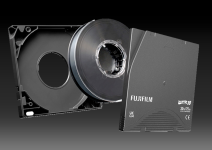
Fujifilm will increase its supply capacity for magnetic tape for data storage by five times. This is the first large-scale investment in increased production in about 20 years. Responding to the growing demand for artificial intelligence (AI) data centers. The AI boom will also spread to mature technologies, bringing benefits to Japanese companies.
Fujifilm will invest a total of 10 billion yen in its factory in Odawara City, Kanagawa Prefecture, by fiscal year 2028. Production will be increased mainly for advanced products with a maximum capacity of 100 tera (tera equals 1 trillion bytes).
.....
富士フイルム、磁気テープ20年ぶり大型増産 AIデータ安全に保存 - 日本経済新聞
October 28, 2026, 5:00
Fujifilm will increase its supply capacity for magnetic tape for data storage by five times. This is the first large-scale investment in increased production in about 20 years. Responding to the growing demand for artificial intelligence (AI) data centers. The AI boom will also spread to mature technologies, bringing benefits to Japanese companies.
Investing 10 billion yen to increase supply capacity fivefold
Fujifilm will invest a total of 10 billion yen in its factory in Odawara City, Kanagawa Prefecture, by fiscal year 2028. Production will be increased mainly for advanced products with a maximum capacity of 100 tera (tera equals 1 trillion bytes).
.....
富士フイルム、磁気テープ20年ぶり大型増産 AIデータ安全に保存 - 日本経済新聞
KLA reportedly weighs India manufacturing entry as Semicon 2.0 opens to equipment makers
Jingyue Hsiao, DIGITIMES, Taipei
Oct 30, 2026, 13:00
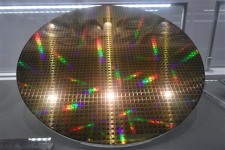
KLA Corporation, the US maker of semiconductor inspection and metrology equipment, is evaluating a manufacturing foray in India and is considering one or two applications under the country's Semicon 2.0 incentive scheme, The Economic Times reported.
KLA reportedly weighs India manufacturing entry as Semicon 2.0 opens to equipment makers
US semicon gear giant KLA eyeing India manufacturing
Global semiconductor equipment and process-control giant KLA Corporation is eyeing a manufacturing foray in India. The company, which currently has significant R&D operations in India, and is now evaluating opportunities to deepen its capabilities in the country, people aware of the developments told ET.KLA makes advanced inspection tools, metrology systems, process solutions and computational
analytics for manufacturing semiconductors .......
KLA Corporation: US semicon gear giant KLA eyeing India manufacturing - The Economic Times
Jingyue Hsiao, DIGITIMES, Taipei
Oct 30, 2026, 13:00
KLA Corporation, the US maker of semiconductor inspection and metrology equipment, is evaluating a manufacturing foray in India and is considering one or two applications under the country's Semicon 2.0 incentive scheme, The Economic Times reported.
KLA reportedly weighs India manufacturing entry as Semicon 2.0 opens to equipment makers
US semicon gear giant KLA eyeing India manufacturing
Synopsis
KLA makes advanced inspection tools, metrology systems, process solutions and computational analytics for manufacturing semiconductors and related technologies. The Milpitas, California-headquartered firm has operations spread across 18 regions and reported a revenue of $12.74 billion in CY2025.
KLA makes advanced inspection tools, metrology systems, process solutions and computational analytics for manufacturing semiconductors and related technologies. The Milpitas, California-headquartered firm has operations spread across 18 regions and reported a revenue of $12.74 billion in CY2025.
Global semiconductor equipment and process-control giant KLA Corporation is eyeing a manufacturing foray in India. The company, which currently has significant R&D operations in India, and is now evaluating opportunities to deepen its capabilities in the country, people aware of the developments told ET.KLA makes advanced inspection tools, metrology systems, process solutions and computational
analytics for manufacturing semiconductors .......
KLA Corporation: US semicon gear giant KLA eyeing India manufacturing - The Economic Times

Tata Sons infuses Rs 1,100 crore in iPhone, semiconductor biz Tata Electronics
The September investment follows a Rs 1,500-crore infusion in March, as the group expands its iPhone manufacturing business and builds semiconductor capabilities
By Swaraj Singh Dhanjal
October 30, 2026 / 15:33 IST
Tata Sons has infused Rs 1,100 crore into Tata Electronics, its Apple iPhone and semiconductor manufacturing business, company filings reviewed by Moneycontrol show, strengthening the group's push into electronics manufacturing.
The latest infusion took place in September and follows an investment of Rs 1,500 crore in March, the filings show. The fresh capital will fund the ongoing capex in semiconductor businesses.
The infusion comes amid a tussle between Noel Tata-led Tata Trusts and the Tata Sons board over N Chandrasekaran’s reappointment and the holding company’s listing.
The Apple iPhone manufacturing business, which sits inside Tata Electronics, features in the Trusts’ alternative to a listing. A September 28 proposal envisages merging iPhone manufacturing subsidiary Tata Electronics Systems Solutions and Tata Consulting Engineers into Tata Sons.
The Trusts argued that adding their operating revenues and assets would take Tata Sons outside the RBI’s definitions of an NBFC and a core investment company, allowing it to remain unlisted.
The fresh funding also comes as Tata Electronics combines a fast-growing smartphone manufacturing business with investments in semiconductor fabrication, assembly and testing.
Emails sent to Tata Sons and Tata Electronics had not elicited a response at the time of publication of this article.
Tata Electronics’ revenue increased 97 percent to Rs 1.31 lakh crore in FY26 from Rs 66,601 crore a year earlier, making it the fourth-largest group company by revenue within four years of its establishment.
The company reached break-even at the operating profit level, Tata Sons chairman N Chandrasekaran said in his FY26 address to shareholders. However, its net loss widened to Rs 1,611 crore from Rs 70 crore a year earlier.
Tata Sons invested Rs 3,000 crore directly in the company in FY26, taking the carrying value of its investment to Rs 9,961 crore at the end of that year, according to the company’s annual report.
Tata Electronics has expanded its manufacturing footprint through the purchase of Wistron’s Indian operations and a controlling interest in Pegatron Technology India.
Its semiconductor plans include a fabrication plant at Dholera in Gujarat, being developed with Taiwan’s Powerchip Semiconductor Manufacturing Corporation.
The project has an announced investment outlay of Rs 91,000 crore and planned capacity of 50,000 wafers a month. Its chips are intended for applications across automotive, computing, data storage, wireless communications and artificial intelligence markets.
The company has also announced a Rs 27,000- crore semiconductor assembly and testing facility in Assam’s Jagiroad. Assembly and testing involves packaging chips made at fabrication plants and checking them before they are used in finished products. The two projects together carry an announced investment outlay of Rs 1.18 lakh crore, spanning different stages of chip production.
Chandrasekaran has positioned the electronics business as a long-term investment in India’s manufacturing capabilities. In his shareholder address, he said the semiconductor push required sustained funding, international partnerships and skilled engineers, alongside the development of suppliers and research collaborations.
https://www.moneycontrol.com/news/b...ductor-biz-tata-electronics-14064508.html/amp
The September investment follows a Rs 1,500-crore infusion in March, as the group expands its iPhone manufacturing business and builds semiconductor capabilities
By Swaraj Singh Dhanjal
October 30, 2026 / 15:33 IST
Tata Sons has infused Rs 1,100 crore into Tata Electronics, its Apple iPhone and semiconductor manufacturing business, company filings reviewed by Moneycontrol show, strengthening the group's push into electronics manufacturing.
The latest infusion took place in September and follows an investment of Rs 1,500 crore in March, the filings show. The fresh capital will fund the ongoing capex in semiconductor businesses.
The infusion comes amid a tussle between Noel Tata-led Tata Trusts and the Tata Sons board over N Chandrasekaran’s reappointment and the holding company’s listing.
The Apple iPhone manufacturing business, which sits inside Tata Electronics, features in the Trusts’ alternative to a listing. A September 28 proposal envisages merging iPhone manufacturing subsidiary Tata Electronics Systems Solutions and Tata Consulting Engineers into Tata Sons.
The Trusts argued that adding their operating revenues and assets would take Tata Sons outside the RBI’s definitions of an NBFC and a core investment company, allowing it to remain unlisted.
The fresh funding also comes as Tata Electronics combines a fast-growing smartphone manufacturing business with investments in semiconductor fabrication, assembly and testing.
Emails sent to Tata Sons and Tata Electronics had not elicited a response at the time of publication of this article.
Tata Electronics’ revenue increased 97 percent to Rs 1.31 lakh crore in FY26 from Rs 66,601 crore a year earlier, making it the fourth-largest group company by revenue within four years of its establishment.
The company reached break-even at the operating profit level, Tata Sons chairman N Chandrasekaran said in his FY26 address to shareholders. However, its net loss widened to Rs 1,611 crore from Rs 70 crore a year earlier.
Tata Sons invested Rs 3,000 crore directly in the company in FY26, taking the carrying value of its investment to Rs 9,961 crore at the end of that year, according to the company’s annual report.
Tata Electronics has expanded its manufacturing footprint through the purchase of Wistron’s Indian operations and a controlling interest in Pegatron Technology India.
Its semiconductor plans include a fabrication plant at Dholera in Gujarat, being developed with Taiwan’s Powerchip Semiconductor Manufacturing Corporation.
The project has an announced investment outlay of Rs 91,000 crore and planned capacity of 50,000 wafers a month. Its chips are intended for applications across automotive, computing, data storage, wireless communications and artificial intelligence markets.
The company has also announced a Rs 27,000- crore semiconductor assembly and testing facility in Assam’s Jagiroad. Assembly and testing involves packaging chips made at fabrication plants and checking them before they are used in finished products. The two projects together carry an announced investment outlay of Rs 1.18 lakh crore, spanning different stages of chip production.
Chandrasekaran has positioned the electronics business as a long-term investment in India’s manufacturing capabilities. In his shareholder address, he said the semiconductor push required sustained funding, international partnerships and skilled engineers, alongside the development of suppliers and research collaborations.
https://www.moneycontrol.com/news/b...ductor-biz-tata-electronics-14064508.html/amp
India's chip design startups struggle with final commercial hurdle
Low order volumes and supply chain issues affect price competitiveness
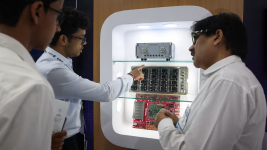
Due to capital constraints and a longer development cycle, India's chip design startups are struggling to produce semiconductors at the volume necessary to make them competitively priced in the market. © Reuters
ANANTA AGARWAL
October 26, 2026 10:50 JST
BENGALURU -- Propelled by government support, India's chip design startups are nearing commercial production, but steep fabrication costs due to low volumes and supply chain bottlenecks are complicating the path to market.
India's chip design startups struggle with final commercial hurdle
India's chip ambitions open door for Fujifilm, Tokyo Electron
Japanese companies see major opportunity amid massive push by New Delhi
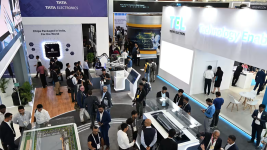
Semicon India opened in New Delhi on Sept. 17 with more than 600 domestic and foreign chip companies. (Photo by Takanori Okabe)
TAKANORI OKABE
September 19, 2026 01:03 JST
NEW DELHI -- India has begun an ambitious push to develop a domestic supply chain for semiconductor devices, rolling out massive subsidy programs to reduce its reliance on foreign imports, creating a prime opportunity for Japanese companies looking to enter the fast-growing market.
India's chip ambitions open door for Fujifilm, Tokyo Electron
Indian chemical firms turn to foreign partners to crack chip supply chains
With need to prove quality, lack of domestic customers pushes firms to seek tie-ups abroad
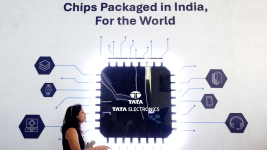
While some Indian chemical companies are betting on a Tata Electronics-built fab in the state of Gujarat to develop their customer base and prove their quality, other companies are looking to foreign joint ventures to speed up the process. © Reuters
ANANTA AGARWAL
October 19, 2026 15:00 JST
BENGALURU -- A slew of Indian chemical companies have announced their entry into the semiconductor industry on the back of the country's multibillion-dollar chip supply chain push. But meeting the exacting standards of chip fabrication plants requires purification technology and access to customers that Indian businesses don't have, pushing some to turn to foreign partnerships.
Indian chemical firms turn to foreign partners to crack chip supply chains
Low order volumes and supply chain issues affect price competitiveness
Due to capital constraints and a longer development cycle, India's chip design startups are struggling to produce semiconductors at the volume necessary to make them competitively priced in the market. © Reuters
ANANTA AGARWAL
October 26, 2026 10:50 JST
BENGALURU -- Propelled by government support, India's chip design startups are nearing commercial production, but steep fabrication costs due to low volumes and supply chain bottlenecks are complicating the path to market.
India's chip design startups struggle with final commercial hurdle
India's chip ambitions open door for Fujifilm, Tokyo Electron
Japanese companies see major opportunity amid massive push by New Delhi
Semicon India opened in New Delhi on Sept. 17 with more than 600 domestic and foreign chip companies. (Photo by Takanori Okabe)
TAKANORI OKABE
September 19, 2026 01:03 JST
NEW DELHI -- India has begun an ambitious push to develop a domestic supply chain for semiconductor devices, rolling out massive subsidy programs to reduce its reliance on foreign imports, creating a prime opportunity for Japanese companies looking to enter the fast-growing market.
India's chip ambitions open door for Fujifilm, Tokyo Electron
Indian chemical firms turn to foreign partners to crack chip supply chains
With need to prove quality, lack of domestic customers pushes firms to seek tie-ups abroad
While some Indian chemical companies are betting on a Tata Electronics-built fab in the state of Gujarat to develop their customer base and prove their quality, other companies are looking to foreign joint ventures to speed up the process. © Reuters
ANANTA AGARWAL
October 19, 2026 15:00 JST
BENGALURU -- A slew of Indian chemical companies have announced their entry into the semiconductor industry on the back of the country's multibillion-dollar chip supply chain push. But meeting the exacting standards of chip fabrication plants requires purification technology and access to customers that Indian businesses don't have, pushing some to turn to foreign partnerships.
Indian chemical firms turn to foreign partners to crack chip supply chains
Department of Atomic Energy
BARC, HWB and MIDHANI Sign Tripartite MoU for Recovery of Cobalt and Nickel from Plant Reverts
BARC, HWB and MIDHANI Sign Tripartite MoU for Recovery of Cobalt and Nickel from Plant Reverts
Posted On: 03 NOV 2026 4:55PM by PIB Mumbai
Mumbai, 3 November 2026
The Heavy Water Board (HWB), a constituent unit of the Department of Atomic Energy (DAE), has entered into a Tripartite Memorandum of Understanding (MoU) with the Bhabha Atomic Research Centre (BARC), Mumbai, under the DAE, and Mishra Dhatu Nigam Limited (MIDHANI), Hyderabad, under the Ministry of Defence, to collaborate on the recovery and production of cobalt and nickel from plant reverts.
The MoU aims to develop efficient and economically viable processes for recovering valuable cobalt and nickel from plant reverts, enabling their potential reuse in industrial and strategic applications. The collaboration will combine the technological expertise of HWB, the scientific and research capabilities of BARC, and the industrial experience of MIDHANI to develop suitable recovery processes and promote efficient utilisation of secondary resources.
Cobalt and nickel are critical metals with wide-ranging applications in advanced battery technologies, electric vehicles (EVs), stainless steel manufacturing, aerospace and defence applications, and high-performance superalloys. Their recovery from plant reverts offers significant potential for converting industrial residues into valuable resources, conserving natural resources and reducing dependence on primary mineral extraction and imports.
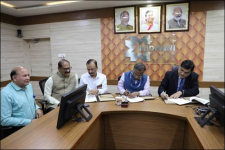
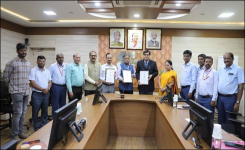
The MoU was signed on 27 October 2026 by Shri V. V. S. A. Prasad, Chairman and Chief Executive, Heavy Water Board; Dr. S. V. S. Narayana Murty, Chairman and Managing Director, MIDHANI; and Dr. Alok Awasthi, Associate Director, Materials Group, BARC. The signing ceremony was attended by Shri K. Madhubala, Director (Finance), MIDHANI, and Shri Sandeep Wadhwa, Executive Director, HWB, along with other officials from the participating organisations.
This collaborative initiative represents an important step towards developing indigenous technologies for the recovery of strategically important metals from secondary industrial resources. By bringing together expertise in research, technology development and industrial manufacturing, the partnership seeks to establish viable recovery routes and enhance domestic availability of critical metals.
The initiative aligns with the national priorities of Atmanirbhar Bharat, resource conservation, circular economy and strategic self-reliance. It is expected to contribute towards strengthening India's domestic supply chain for critical raw materials and supporting the growing requirements of the defence, advanced manufacturing, electric mobility and clean-energy sectors.
Through this partnership, HWB, BARC and MIDHANI reaffirm their commitment to leveraging indigenous scientific and technological capabilities for the sustainable utilisation of resources and the advancement of India's industrial and strategic interests.
https://www.pib.gov.in/PressReleaseDetail.aspx?PRID=2332094®=48&lang=2


12 ECMS Projects Approved Today
- Indoasia Copper Limited (Gujarat): Greenfield copper smelter/refinery and downstream copper foil manufacturing for Li-ion battery electrodes and PCB laminates [₹3,546 crore]
- TACC Limited (Madhya Pradesh): Anode material (graphite) production for batteries; expansion from 20,000 MTPA to 40,000 MTPA [₹2,438 crore]
- Vidyuta Materials Private Limited (Uttar Pradesh): Cathode Active Material (CAM) manufacturing plant, jointly with Lohum Cleantech, for lithium-ion and NMC batteries [₹399 crore]
- Enerfolie LLP (Gujarat): Capacitor-grade base dielectric BOPP (polypropylene) film manufacturing [₹236 crore]
- NeST ICELR Private Limited (Tamil Nadu): Multi-layer PCB manufacturing using technology transfer from sister company SFO Technologies [₹363 crore]
- Modern Automotives Limited (Punjab): Heat sink manufacturing with technology transfer from Japan's Yamanaka Engineering Co. Ltd. [₹75 crore]
- Voltix Semicon Private Limited (Maharashtra): Specialty ceramics, including next-generation glass ceramics for MLCC, HTCC and LTCC applications; R&D collaboration with CGCRI and CMET [₹65 crore]
- Wipro Pari Robotics (Maharashtra): Capital goods manufacturing [₹120 crore]
- Rockwell Automation (Tamil Nadu): Capital goods manufacturing [₹91 crore]
- TDConnex (Tamil Nadu): Capital goods manufacturing [₹103 crore]
- TDConnex (Tamil Nadu): Relay manufacturing [₹50 crore]
- Surface Modification Technologies Private Limited (Karnataka): Camera rim manufacturing, representing first domestic manufacturing of this component in India [₹17 crore]