
You are using an out of date browser. It may not display this or other websites correctly.
You should upgrade or use an alternative browser.
You should upgrade or use an alternative browser.



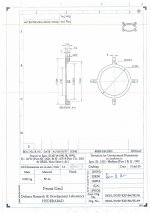
DRDL has put out a tender of fabrication of an experimental rocket motor. Here is the engineering drawing of the same :
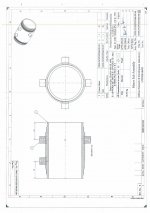
The drawing has the nozzle end up & the backplate down. The motor will be hold in place by 2 sets of vice like grips that will prevent sideways motion. The motor will remain free to move back & forth along the axis. There are two pressure & temp probes at the back to measure thrust output & heat at various stages of the grain. 5 similar sensors can be seen on 5 different parts of the rocket's body. At the nozzle end you have a pretty ordinary graphite nozzle. & the mid-body sensors will also have graphite insulation(called "mother graphite"). The graphite will be procured by DRDL and provided to whoever wins the tender for fabrication. The ignitor is electric & sits on the nozzle throat.
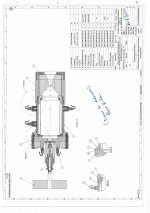
So far so good. The propellant used is a Nitrogen rich variant of the traditional Hydroxyl-terminated poly butadiene (HTPB) binder. The HTPB variant was locally developed & recently patented :
DRDO centre at UoH granted patent for rocket propellant fuel
Aluminum metal powder is the fuel & Ammonium perchlorate is the oxidizer. Its a pretty common propellant composition. DRDL was initially planning to outsource the fabrication of the propellant grain. But they now seem to have reversed their stance, they will fabricate the propellant themselves. This is the first time that new HTPB binder is being used, maybe that's why they are insistent on doing the fabrication themselves. The mechanical assemblies, nozzle etc. are to be outsourced.

Everything seems pretty normal. DRDO has a long history of making various kinds of solid fueled rockets. What is so the experimental about this ?
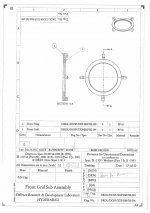
Notice in the 2nd pic there is a large central injector at the back end of the rocket assembly. That is something like an electronic fuel injection system. The device squirts in small quantities of fire retardant gel when the motor is firing. That will snuff out the fire, a bit like spraying water on a fire cracker. But unlike water the fire retardant undergoes sublimation and turns to vapour. Thus the motor should technically be ready to fire again.
This is a rudimentary method of trying to throttle solid fueled rocket motors. All vectoring motors used today are liquid fueled because liquid rockets can be throttled & can be started/stopped intermittently.
Liquid motors require complex plumbing. Their handling & maintenance is also relatively difficult. Solids have no such problems & are thus preferred in most military applications. But there is no effective way of throttling a solid rocket, thus manufacturers are forced to used liquid rockets in some applications.
If this experiment works it could allow us to incorporate active vectoring in a lot of our upcoming missiles. Of course active vectoring offers much faster maneuvering speeds. They could be very useful to have for very high speed missiles chasing high speed maneuvering targets.
All that is for later though, for now the experiments are solely aimed at snuffing out an ignited solid propellant grain & then checking if the half burnt propellant grain can still combust if another igniter is detonated.
Some of the sub-assemblies to be outsourced :
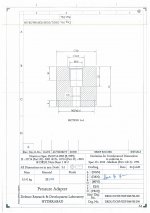
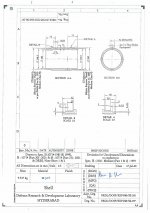
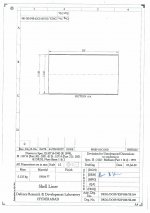
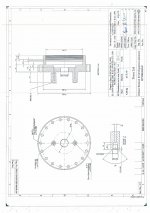
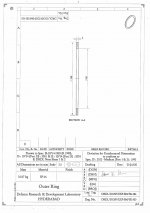
The drawing has the nozzle end up & the backplate down. The motor will be hold in place by 2 sets of vice like grips that will prevent sideways motion. The motor will remain free to move back & forth along the axis. There are two pressure & temp probes at the back to measure thrust output & heat at various stages of the grain. 5 similar sensors can be seen on 5 different parts of the rocket's body. At the nozzle end you have a pretty ordinary graphite nozzle. & the mid-body sensors will also have graphite insulation(called "mother graphite"). The graphite will be procured by DRDL and provided to whoever wins the tender for fabrication. The ignitor is electric & sits on the nozzle throat.
So far so good. The propellant used is a Nitrogen rich variant of the traditional Hydroxyl-terminated poly butadiene (HTPB) binder. The HTPB variant was locally developed & recently patented :
DRDO centre at UoH granted patent for rocket propellant fuel
Aluminum metal powder is the fuel & Ammonium perchlorate is the oxidizer. Its a pretty common propellant composition. DRDL was initially planning to outsource the fabrication of the propellant grain. But they now seem to have reversed their stance, they will fabricate the propellant themselves. This is the first time that new HTPB binder is being used, maybe that's why they are insistent on doing the fabrication themselves. The mechanical assemblies, nozzle etc. are to be outsourced.
Everything seems pretty normal. DRDO has a long history of making various kinds of solid fueled rockets. What is so the experimental about this ?
Notice in the 2nd pic there is a large central injector at the back end of the rocket assembly. That is something like an electronic fuel injection system. The device squirts in small quantities of fire retardant gel when the motor is firing. That will snuff out the fire, a bit like spraying water on a fire cracker. But unlike water the fire retardant undergoes sublimation and turns to vapour. Thus the motor should technically be ready to fire again.
This is a rudimentary method of trying to throttle solid fueled rocket motors. All vectoring motors used today are liquid fueled because liquid rockets can be throttled & can be started/stopped intermittently.
Liquid motors require complex plumbing. Their handling & maintenance is also relatively difficult. Solids have no such problems & are thus preferred in most military applications. But there is no effective way of throttling a solid rocket, thus manufacturers are forced to used liquid rockets in some applications.
If this experiment works it could allow us to incorporate active vectoring in a lot of our upcoming missiles. Of course active vectoring offers much faster maneuvering speeds. They could be very useful to have for very high speed missiles chasing high speed maneuvering targets.
All that is for later though, for now the experiments are solely aimed at snuffing out an ignited solid propellant grain & then checking if the half burnt propellant grain can still combust if another igniter is detonated.
Some of the sub-assemblies to be outsourced :
Last edited:
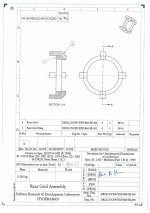
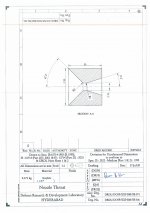

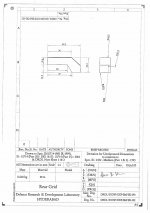
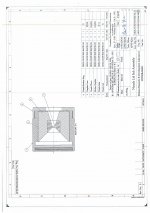
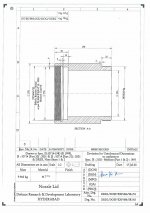
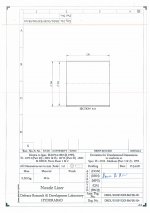
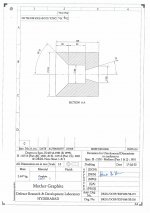
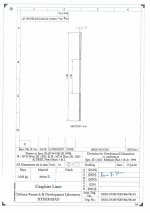
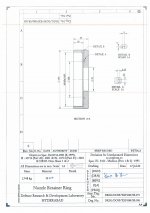
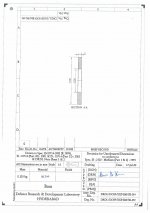
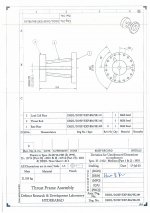
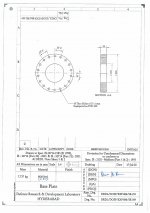
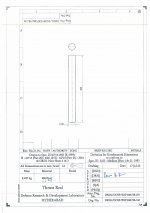
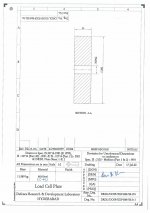
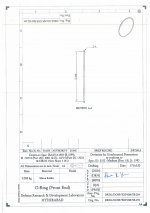
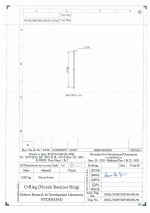
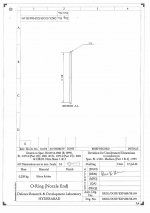


The rear rupture disc is also made of butadiene rubber. Is there a PSU in South India that deals with rubber manufacturing ? @Ashwin @Amal @randomradio et al.
None that I know of. Even GSLV Mk3 S200's flex seals were manufactured by a private company IIRC.
DRDO's sub-division then ? Some small lab maybe a new one ? Its hard to look for given all I got now is "govt. owned entity in south India". South India is not a small place.None that I know of. Even GSLV Mk3 S200's flex seals were manufactured by a private company IIRC.
DRDO's sub-division then ? Some small lab maybe a new one ?
Yes probably, Maybe not a large PSU but a lab. Just like how CMTI did some job production for the LCA programme.
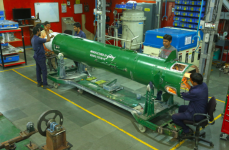

What use these cartridges will be?
I can't figure out the size.
However Pakistan was supposed to use a small cartridge on the nuclear warheads.
It is at the back and fires after reentry or just before.
And keeps firing for some time with varying thrust.
This induces variation on trajectory, mainly the speed of the warhead.
This system was proposed in 2012, and I don't know if deployed or not.
Last edited:
Its a tender calling pvt. companies to fabricate multiple units of all the parts listed above. It is an DRDO experiment with solid rockets. Read post #1265What use these cartridges will be?
All dimensions listed are in mm. Weight is also included. Pay attention to the footer of the photos.I can't figure out the size.
Completely different thing. The cartridge you mention is developed by varying the density of the propellant grain, not by throttling.However Pakistan was supposed to use a small cartridge on the nuclear warheads.
It is at the back and fires after reentry or just before.
And keeps firing for some time with varying thrust.
This induces variation on trajectory, mainly the speed of the warhead.
This system was proposed in 2012, and I don't know if deployed or not.
Dimension not clearly visible on cellphone. Is this for a Pinaka type rocket?Its a tender calling pvt. companies to fabricate multiple units of all the parts listed above. It is an DRDO experiment with solid rockets. Read post #1265
All dimensions listed are in mm. Weight is also included. Pay attention to the footer of the photos.
Completely different thing. The cartridge you mention is developed by varying the density of the propellant grain, not by throttling.
Assuming it works then most likely uses would be AAMs, SAMs. The long range versions of the same.So what's the type of rocket we're talking about here?
Assuming it works then most likely uses would be AAMs, SAMs. The long range versions of the same.
So it is a part of SFDR
No. SFDR achieves throttling by means of propellant grain geometry. The grain is designed in a way that if forms a nozzle. The change in shape of the nozzle throat causes the throttling. The SFDR, like other solid fuel rockets, once started won't stop until it runs out of fuel or oxidizer.So it is a part of SFDR
The experiment here can stop a solid rocket mid way & later restart it. The SFDR has better throttling characteristics without an "OFF" switch. And this one has an "OFF" switch with rudimentary throttling capability. In the future we can see both the tech in the same missile.

No. SFDR achieves throttling by means of propellant grain geometry. The grain is designed in a way that if forms a nozzle. The change in shape of the nozzle throat causes the throttling. The SFDR, like other solid fuel rockets, once started won't stop until it runs out of fuel or oxidizer.
The experiment here can stop a solid rocket mid way & later restart it. The SFDR has better throttling characteristics without an "OFF" switch. And this one has an "OFF" switch with rudimentary throttling capability. In the future we can see both the tech in the same missile.
So DRDO is going to test an entirely new missile or rocket after fabricating
And Assembling These parts and components
A new project which is yet unknown or unnamed
YesSo DRDO is going to test an entirely new missile or rocket after fabricating
And Assembling These parts and components
As far as I know, the difference in using the word "project" & "experiment" is the relative probability of the outcome. A "project" is one that DRDO expects to complete fully despite whatever technological challenges may come up. Tejas was a project & Nirbhay is a project.A new project which is yet unknown or unnamed
An "experiment" is something they are not completely certain about. For example the hypersonic HSTDV & many of the DEW under development are called "experiments" not "projects". They are trying to understand & eventually prove the tech before weaponising it. Ironically now the HSTDV is called a "project", maybe they consider the tech to be proven enough.
This rocket is classified as an "experiment". We are quite some distance away from seeing any "projects" based on this tech let alone actual military usage.