
Iam looking forward to Agnikul Cosmos. Their Agnibaan rocket liftoff mass is mere 14-Tons which is 1/3 of Skyroot Solid Fuel Rocket .It represents pinnacle technology almost equivalent to Rocket Lab Electron Rocket.NSIL has outsourced production of that to HAL

HAL wins ₹511-crore deal to build, own and commercialise SSLV launches
HAL wins bid for ISRO's SSLV technology transfer, to independently build and commercialize rockets, strengthening India's space capabilities.www.thehindu.com
I wonder with PSLV and SSLV outsourced to L&T and HAL, and LVM3 getting outsourced too, will ISRO maintain launch vehicle production capacity or shut them down completely like I presume NASA did?
Indian Space Industry : Updates & Discussions
- Thread starter Ashwin
- Start date
You are using an out of date browser. It may not display this or other websites correctly.
You should upgrade or use an alternative browser.
You should upgrade or use an alternative browser.




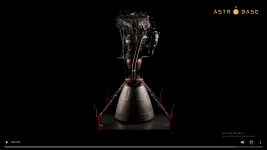
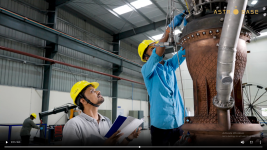
India's first FFSC:
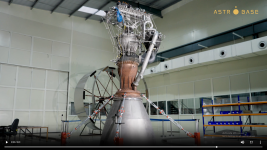
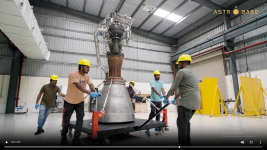
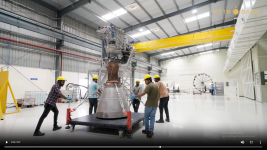
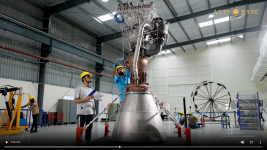
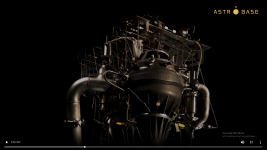
PHTA is almost entirely 3D printed:
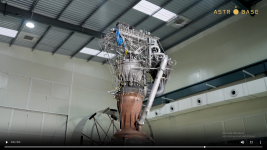
Integrated fuel & oxidizer turbo-pump like the Raptor:
Last edited:
India's first FFSC:
View attachment 53392
View attachment 53399
View attachment 53397
View attachment 53396
View attachment 53394
PHTA is almost entirely 3D printed:
View attachment 53398
View attachment 53395
Integrated fuel & oxidizer turbo-pump like the Raptor:
View attachment 53393
Best use of taxpayer's money in a while:
IN-SPACe Selects Astrobase Under Technology Adoption Fund for Indigenous 800 kN Rocket Engine Development
Jun 10, 2026
Astrobase has been selected under the Indian National Space Promotion and Authorization Centre's (IN-SPACe) Technology Adoption Fund (TAF) for the development of its indigenous 800 kN LOX–methane Full Flow Staged Combustion (FFSC) rocket engine.
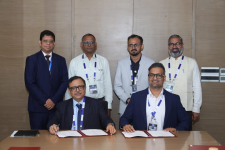
The agreement was signed by Neeraj Khandelwal, Co-Founder and CEO of Astrobase, during a ceremony hosted by Dr Pawan Goenka, Chairman, IN-SPACe, and attended by senior government and industry leaders, including Hon'ble Minister of Commerce & Industry Shri Piyush Goyal.
The support will accelerate development of a critical propulsion system that forms a cornerstone of Astrobase's long-term vision to build advanced space infrastructure in India. The programme reflects the company's belief that India must develop sovereign propulsion capabilities and critical manufacturing infrastructure in-country to become a provider of assured access to space, rather than a consumer of imported technologies.
The engine is currently undergoing hot-fire testing at Astrobase's propulsion test facility in Anantapur, Andhra Pradesh. Astrobase designs, manufactures, and tests its propulsion and vehicle systems entirely in India, operating a 46,000 sq. ft. assembly and integration facility in Bengaluru alongside its dedicated propulsion test infrastructure.
The selection follows a comprehensive year-long technical evaluation by IN-SPACe, assessing the programme's technological potential, strategic relevance, and long-term impact on India's growing space ecosystem. Astrobase was among a select group of companies chosen for support under the programme.
As India works towards building a $44 billion space economy by 2034, the development of advanced indigenous propulsion technologies represents an important step in strengthening the country's space infrastructure capabilities, reducing dependence on foreign technologies, and expanding India's participation in the global space value chain.
The selection reinforces Astrobase's commitment to building the technologies and infrastructure required to deliver reliable, sovereign, and scalable access to space from India.
IN-SPACe Selects Astrobase Under Technology Adoption Fund for Indigenous 800 kN Rocket Engine Development - Astrobase Space Technologies
I just noticed the mandrel at the back:
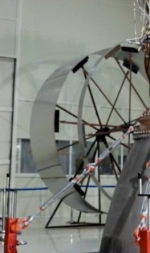
Mandels like thee are used as fixtures for manufacturing carbon fibre wound propellant tanks.
Mandels like thee are used as fixtures for manufacturing carbon fibre wound propellant tanks.
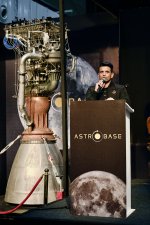
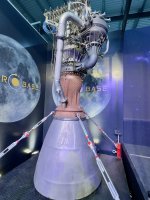
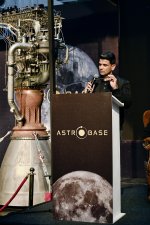
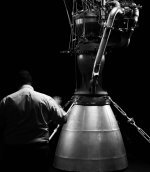
So India officially has an FFSC engine before Europe!
The CNES' ASTRE engine's subscale demonstrator hot test is 2 years away, assuming no delays.
The CNES' ASTRE engine's subscale demonstrator hot test is 2 years away, assuming no delays.

Like how? why is europe so behind? Theyre a massive economy, combined and individually as well for certain countries, with huge demand?So India officially has an FFSC engine before Europe!
The CNES' ASTRE engine's subscale demonstrator hot test is 2 years away, assuming no delays.
Ofc what astrobase has done is something I frankly thought was not possible when I heard of this company in early 2025 around jan but for continent with so much history in aerospace its strange to see them behind?
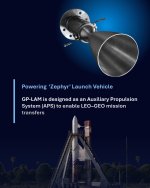
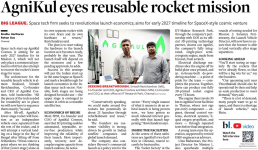
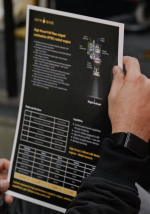
There is a leaflet apparently. Can someone find a better photo:

In the meantime, they will have the Araine 6 & a re-usable small to medium lifter powered by the "Prometheus". They can experiment & prove their landing alogos & refurbishment processes with this intermediate rocket. By the time the super-heavy lifter arrives these problems would have been worked out.
They have a clear development path.
Our NGLV's development path is a lot more convoluted & will likely bring a lot of delays along the way.
ISRO started the NGLV design with the SCE-200 engine as the core. That engine is likely not suitable for reuse. So ISRO started working on the LME-110, a GG cycle 1.1 MN class Methalox throttleable engine. Hot tests to begin around 2029. SCE-200 is now relegated to just the LVM3 core.
Then came additional ambitions: a LEO space station by 2035, human moon landing by 2040, a lunar space station etc. NGLV had to grow a lot to accommodate these goals.
When the design work started the NGLV was 73m tall, 5m in diameter, 608 tons of GLOM. The latest model is 105m tall, 6.5m in diameter, 1500 tons of GLOM. With 2 additional boosters the GLOM goes to 3100 tons. The rocket has grown from a heavy lifter to a super heavy lifter. Some sources indicate that the diameter could go up to 7m.
Obviously, the LME-110 won't be enough to power this massive rocket. That engine has become obsolete before its first hot test. A newer engine is proposed; LME-240. Not much is known about this engine, but from what I have gathered it will be a 2.4 MN class closed cycle Methalox engine, likely a FFSC. ISRO hopes to get it operational by early 2030s. NGLV is supposed to have its first flight by 2031. There is another engine called the LME-300, likely a upscaled derivative of the LME-240, that will be coming out by early 2040. This will also be a FFSC & will likely be the engine used for human moon landing.
Meanwhile the ADMIRE vehicle which was supposed to be the platform on which we prove out our landing algorithms is stuck behind the Gaganyaan program. It is supposed to begin testing after the Gaganyaan's 4 abort test flights. 1 of those have happened, 1 more scheduled by end of this year, 2 more next year. ADMIRE probably won't fly before 2028. From 2028 to 2031, just 3 years to perfect landing algorithms.
It is unclear if ISRO has started work on the LME-240. The fate of LME-110 is also unclear. It is unclear how much help the Astrobase guys have had from ISRO. I am not trying to diminish their achievements; I am saying that because almost all of India's liquid rocket engine expertise is with ISRO. Most Indian space startup are built by ex-ISRO folks.
I am hoping ISRO has played a major role in this. Because that would mean that they have started working on the LME-2400 & the Astrobase's EVEREST test data would be tremendously helpful for scaling up the design to 2.4 MN class. Otherwise, if ISRO hasn't started work on the LME-240 yet, then how will the certify a core stage engine in 5 years?
The ASTRE sub scale engine is going to be 750 kN to 1.5 MN class. The full-scale engine will be ~3 MN class. The full-scale engine will be used on a future super-heavy lift rocket.So India officially has an FFSC engine before Europe!
The CNES' ASTRE engine's subscale demonstrator hot test is 2 years away, assuming no delays.
In the meantime, they will have the Araine 6 & a re-usable small to medium lifter powered by the "Prometheus". They can experiment & prove their landing alogos & refurbishment processes with this intermediate rocket. By the time the super-heavy lifter arrives these problems would have been worked out.
They have a clear development path.
Our NGLV's development path is a lot more convoluted & will likely bring a lot of delays along the way.
ISRO started the NGLV design with the SCE-200 engine as the core. That engine is likely not suitable for reuse. So ISRO started working on the LME-110, a GG cycle 1.1 MN class Methalox throttleable engine. Hot tests to begin around 2029. SCE-200 is now relegated to just the LVM3 core.
Then came additional ambitions: a LEO space station by 2035, human moon landing by 2040, a lunar space station etc. NGLV had to grow a lot to accommodate these goals.
When the design work started the NGLV was 73m tall, 5m in diameter, 608 tons of GLOM. The latest model is 105m tall, 6.5m in diameter, 1500 tons of GLOM. With 2 additional boosters the GLOM goes to 3100 tons. The rocket has grown from a heavy lifter to a super heavy lifter. Some sources indicate that the diameter could go up to 7m.
Obviously, the LME-110 won't be enough to power this massive rocket. That engine has become obsolete before its first hot test. A newer engine is proposed; LME-240. Not much is known about this engine, but from what I have gathered it will be a 2.4 MN class closed cycle Methalox engine, likely a FFSC. ISRO hopes to get it operational by early 2030s. NGLV is supposed to have its first flight by 2031. There is another engine called the LME-300, likely a upscaled derivative of the LME-240, that will be coming out by early 2040. This will also be a FFSC & will likely be the engine used for human moon landing.
Meanwhile the ADMIRE vehicle which was supposed to be the platform on which we prove out our landing algorithms is stuck behind the Gaganyaan program. It is supposed to begin testing after the Gaganyaan's 4 abort test flights. 1 of those have happened, 1 more scheduled by end of this year, 2 more next year. ADMIRE probably won't fly before 2028. From 2028 to 2031, just 3 years to perfect landing algorithms.
It is unclear if ISRO has started work on the LME-240. The fate of LME-110 is also unclear. It is unclear how much help the Astrobase guys have had from ISRO. I am not trying to diminish their achievements; I am saying that because almost all of India's liquid rocket engine expertise is with ISRO. Most Indian space startup are built by ex-ISRO folks.
I am hoping ISRO has played a major role in this. Because that would mean that they have started working on the LME-2400 & the Astrobase's EVEREST test data would be tremendously helpful for scaling up the design to 2.4 MN class. Otherwise, if ISRO hasn't started work on the LME-240 yet, then how will the certify a core stage engine in 5 years?
Economic size isn't a guarantee of industrial might. We have to look no further than the Gulf to see that. Europe does a lot of things right. Let's avoid throwing shade at others until at least we make our own jet engines, passenger/transport aircraft & improve our space launch cadence.Like how? why is europe so behind? Theyre a massive economy, combined and individually as well for certain countries, with huge demand?
Ofc what astrobase has done is something I frankly thought was not possible when I heard of this company in early 2025 around jan but for continent with so much history in aerospace its strange to see them behind?
Im not throwing any shade, Im just shocked that a continent with so much aerospace expertise and industry hasn't done this yet.Economic size isn't a guarantee of industrial might. We have to look no further than the Gulf to see that. Europe does a lot of things right. Let's avoid throwing shade at others until at least we make our own jet engines, passenger/transport aircraft & improve our space launch cadence.
Yeah. I was shocked that the Rafale doesn't have a dedicated ARM. They can definitely make one. But they have offloaded that job to a combination of SPECTRA & SCALP/Hammer. Not a one-for-one replacement in terms of price or capability.Im not throwing any shade, Im just shocked that a continent with so much aerospace expertise and industry hasn't done this yet.
The policies of GoI that have led to this are to be commended. India has an ambitious and fast paced journey ahead and setting up the private launch industry now is a smart move. Will let ISRO focus on the science for things that private venture won't fund. And the taxes the private launch industry will eventually generate will fund research for the next disruptive tech...
Source?A newer engine is proposed; LME-240. Not much is known about this engine, but from what I have gathered it will be a 2.4 MN class closed cycle Methalox engine, likely a FFSC.

1 Founder of AstroBase was in LPSC for decades I heard.There is a leaflet apparently. Can someone find a better photo:
View attachment 53419
View attachment 53420
The ASTRE sub scale engine is going to be 750 kN to 1.5 MN class. The full-scale engine will be ~3 MN class. The full-scale engine will be used on a future super-heavy lift rocket.
In the meantime, they will have the Araine 6 & a re-usable small to medium lifter powered by the "Prometheus". They can experiment & prove their landing alogos & refurbishment processes with this intermediate rocket. By the time the super-heavy lifter arrives these problems would have been worked out.
They have a clear development path.
Our NGLV's development path is a lot more convoluted & will likely bring a lot of delays along the way.
ISRO started the NGLV design with the SCE-200 engine as the core. That engine is likely not suitable for reuse. So ISRO started working on the LME-110, a GG cycle 1.1 MN class Methalox throttleable engine. Hot tests to begin around 2029. SCE-200 is now relegated to just the LVM3 core.
Then came additional ambitions: a LEO space station by 2035, human moon landing by 2040, a lunar space station etc. NGLV had to grow a lot to accommodate these goals.
When the design work started the NGLV was 73m tall, 5m in diameter, 608 tons of GLOM. The latest model is 105m tall, 6.5m in diameter, 1500 tons of GLOM. With 2 additional boosters the GLOM goes to 3100 tons. The rocket has grown from a heavy lifter to a super heavy lifter. Some sources indicate that the diameter could go up to 7m.
Obviously, the LME-110 won't be enough to power this massive rocket. That engine has become obsolete before its first hot test. A newer engine is proposed; LME-240. Not much is known about this engine, but from what I have gathered it will be a 2.4 MN class closed cycle Methalox engine, likely a FFSC. ISRO hopes to get it operational by early 2030s. NGLV is supposed to have its first flight by 2031. There is another engine called the LME-300, likely a upscaled derivative of the LME-240, that will be coming out by early 2040. This will also be a FFSC & will likely be the engine used for human moon landing.
Meanwhile the ADMIRE vehicle which was supposed to be the platform on which we prove out our landing algorithms is stuck behind the Gaganyaan program. It is supposed to begin testing after the Gaganyaan's 4 abort test flights. 1 of those have happened, 1 more scheduled by end of this year, 2 more next year. ADMIRE probably won't fly before 2028. From 2028 to 2031, just 3 years to perfect landing algorithms.
It is unclear if ISRO has started work on the LME-240. The fate of LME-110 is also unclear. It is unclear how much help the Astrobase guys have had from ISRO. I am not trying to diminish their achievements; I am saying that because almost all of India's liquid rocket engine expertise is with ISRO. Most Indian space startup are built by ex-ISRO folks.
I am hoping ISRO has played a major role in this. Because that would mean that they have started working on the LME-2400 & the Astrobase's EVEREST test data would be tremendously helpful for scaling up the design to 2.4 MN class. Otherwise, if ISRO hasn't started work on the LME-240 yet, then how will the certify a core stage engine in 5 years?
Economic size isn't a guarantee of industrial might. We have to look no further than the Gulf to see that. Europe does a lot of things right. Let's avoid throwing shade at others until at least we make our own jet engines, passenger/transport aircraft & improve our space launch cadence.
Source?
Go through this thread: Next Generation Launch Vehicle (NGLV) / Project Soorya: News & Updates
Post no #22 #23 #24 #32 & #33.