Actually they did.
Cant find the original source.
They locally assemble it with VEM Technologies.
Can you provide insights into the strategic significance of the Camcopter S-100 unmanned aircraft system in enhancing the capabilities of the Indian Armed Forces?
In 2022 a Request for Information (RFI) was issued to facilitate the Indian Navy’s acquisition of forty Naval Shipborne Unmanned Air Systems (NSUAS). In the RFI, the Indian Ministry of Defence (MoD) and the Indian Navy stated that the NSUAS will be used extensively for surveillance missions, signals intelligence (SIGINT), target acquisition, reconnaissance, and maritime domain awareness around a naval task group. Secondary roles include anti-piracy measures, anti-terrorist activities, and search-and-rescue support.
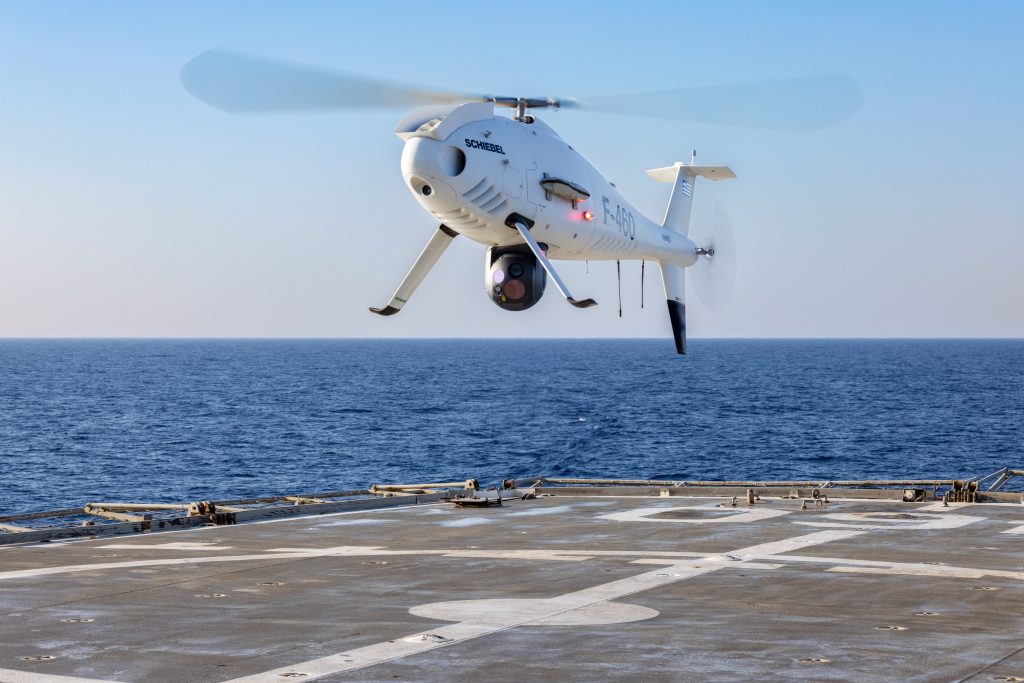
The CAMCOPTER® S-100 has been placed in active service by the Indian Navy, marking a noteworthy advancement in the modernisation of its naval capabilities. The system represents a significant step in naval innovation and supports the country’s aspiration to incorporate state-of-the-art technologies in the IOR where unmanned systems would be the order of the day. Taking cue from the Navy the other sister services have also commenced study towards utilisation of the S-100 in their concept of operations.
What specific operational requirements of the Indian Armed Forces does the Camcopter S-100 address, and how does it contribute to the overall defense preparedness?
The Indian Navy has been undertaking ISR in the IOR (Indian Ocean Region) with unmanned systems since the beginning of the 21st century using fixed wing UAVs operated from shore as well as ships by handing over control to ships at sea. The exploitation of the MALE UAVs has provided a vital and crucial experience to the Indian Navy and they are now looking to foray into shipborne tactical UAVs. These deck-based rotary UAVs provide more tactical leeway to the fleet and the warships in local ISR (Intelligence Surveillance & Reconnaissance) as well as closer air cover to fleet warships. Combat air patrol by the deck based rotary UAVs will become the new normal.
In what ways do you anticipate the Camcopter S-100 impacting the surveillance and reconnaissance capabilities of the Indian Armed Forces, especially in challenging terrains, high altitudes and border regions?
The S-100 is proven to operate effectively and efficiently in extreme environments. Customers routinely employ the S-100 capability in arctic conditions down to -40 degrees Celsius and deserts up to +55 degrees Celcius, as well as in climatic zones of extreme humidity. With its service ceiling of up to 12,000 feet and its endurance exceeding 6 hours with a full fuel load and 34 kg of payload, the UAS is the ideal asset for hard-to-reach areas and challenging terrains.
Could you shed light on the key features and advanced technologies incorporated into the Camcopter S-100 that set it apart from other unmanned aerial systems in the market?
The S-100 can be operated with either aviation gasoline or kerosene (S1 or the S2 engine option), making it ideally suited for the maritime environment. Its small footprint and the absence of launch or recovery equipment lets the S-100 be easily maneuvered, stowed and maintained in confined spaces or in ships’ hangars. Extensive use of carbon fibre composite materials, titanium, stainless steel and special coatings protect the system against corrosion. Operation is possible from any ship with a small helicopter landing deck or suitable clear space, even in challenging weather.
The S-100 can also successfully operate in environments where GPS is not available (or denied), with missions planned and controlled using a simple point-and-click user interface. Its carbon fibre and titanium fuselage provide capacity for a wide range of payload/endurance combinations up to a service ceiling of 5,500 m / 12,000 ft. The high-tech unmanned helicopter is supported by Schiebel’s excellent customer and training services.
How has the collaboration between Schiebel Systems India and VEM Technologies evolved in delivering a tailored solution to meet the specific needs of the Indian Armed Forces?
Schiebel Systems India and VEM Technologies had showcased the CAMCOPTER® S-100 Unmanned Aircraft System (UAS) featuring the script of the Indian Navy and the roundel of India on the airframe at Aero India 2023 in Bengaluru.
Subsequently, Schiebel India and local firm VEM Technologies have joined hands for the production of CAMCOPTER® S-100 in India wherein the complete assembly, integration and testing (licensed production) in now happening within the country at Hyderabad and in addition Schiebel India is also setting up an state of the art MRO facility to maintain these assets for the next 10-15 years as mandated by the Indian Navy.
With the increasing focus on indigenous defense manufacturing, how much of the Camcopter S-100 is manufactured locally, and what are the prospects for further localization in the future?
Schiebel has set up an office in India and partnered with VEM Technologies for the local production of the CAMCOPTER® S-100. This partnership is manufacturing the CAMCOPTER® S-100 along with its payload under the Buy (Indian) category with up to 60% indigenisation content. The endeavor would be to create necessary skills for integration and testing in India (licensed production), creation of a robust eco-system consisting of component manufacturer, dealers for off the shelf items and also setting up of the MRO with Indigenized tests stands and diagnostic testers towards fault detection and rectification in addition to overhauling and testing. The creation of facility and skills in India would be to sustain the platform for 15 years and above based on the technology obsolescence.
What training and support infrastructure are being provided to the Indian Armed Forces for the effective utilization of the Camcopter S-100, and how is technology transfer being managed in this collaboration?
Complete training to Indian Navy personnel was undertaken within the country so that the trained personnel would be available immediately for operational availability with the Navy. This activity was undertaken jointly by Schiebel and utilizing the training facilities of the Navy which provided crucial inputs to the Navy regarding future sustenance of skills and experience as the S-100 matures in the naval operations. The Navy has been trained to undertake all front line maintenance related activities and the OEM managing the overhauls and depot level maintenance. Under this condition, the programme ensures operational and maintenance skills within the Navy as well as creation of an eco-system in the industry to manage the S-100 for the next 10-15 years. Necessary training aids and data have been provided to Navy to sustain training activities for the future crew.
As a defense correspondent, I’m interested in understanding the broader implications of this unmanned aircraft system sale for India’s defense capabilities. How does it align with the country’s broader defense strategy and modernization goals?
The use of unmanned systems falls into three major categories namely Strategic level – where the MALE and HALEs are important, Tactical level – where VTOL unmanned systems come into picture and where the S-100 has been the market leader since the last 15 years for rotary based systems and Ground level – where the mini and micro unmanned systems are required. Availability of a tactical unmanned system for a surface combatant / naval warship is a huge capability bolster where the surface tactical picture gets enhanced for suitable decision making at ship / fleet level. This enhancement is in total agreement with the nation’s broader strategy to monitor & manage IOR where we are seeing growth of piracy and other non-linear actors. Rotary tactical unmanned system is a major capability booster and will enhance the ability of the ships deployed in the IOR, providing them with better maritime domain awareness and crucial capability for littoral operations.
What are the key technological advancements and improvements introduced in the new Camcopter S-300 compared to its predecessor, the S-100?
The CAMCOPTER® S-300 UAS – the bigger brother of the S-100 – is 4.8 meters long, 1.9 meter high and 0.9 meter wide. It can fly at a maximum speed of 220 km/h (cruising speed 100 km/h). The S-300 is able to carry up to 340 kg (including fuel) and its maximum take-off weight can reach 660 kg. It can fly up to 24 hours with a 50 kg payload (or 4 hours with 250 kg).
The ground component, including the control system for the S-300, will be the same as for the S-100 version. This in turn means, that by using a single control system, it will be possible to select the S-100 or S-300 platform according to the needs and tasks to be carried out. Ships or other platforms adapted for operation with the S-100 will be ready for immediate interoperability with the S-300 version, without any additional work on the communication and control systems.
Given the increasing importance of cybersecurity in military operations, what measures have been implemented in the Camcopter S-300 to ensure the system’s resilience against cyber threats?
In terms of anti-jamming, the experience with the OSCE Special Monitoring Mission in Ukraine between 2014 and 2022, which led Schiebel to implement techniques and procedures in order to keep the systems operational in spite of powerful jammers used by the Russian Army. The monitoring missions provided many opportunities for the anti-jamming system to be utilised, tuned, upgraded and modified in the process of creating a very robust and strong system capable of handling anti-jamming situations.
How do you see the growth of Schiebel India in next 2-3 years?
We see Schiebel growing along with the Navy in the maritime domain with Coast Guard too following close behind since they too have requirement for these kind of capability. In fact, we have a large no of Coast Guard customers around the world who are effectively exploiting this system for shore & sea based patrols and search & rescue at sea. S-100 is also suitable for various land-based operations and we are working potential customers for induction into Army and Air Force. Further, oil & gas has also shown huge potential towards utilization of this asset for ISR and logistics. Hence we feel that Schiebel is slated for substantial growth in the coming few years.




 IAI Eitan/Heron-TP checks all the boxes too. And Adani could always locally manufacture those here. IAI would love to sell those to Indian forces through Adani.