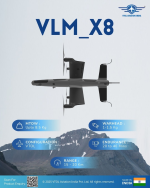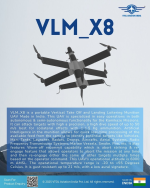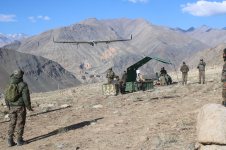

ideaForge newest UAV in the market ZOLT now comes armed with smart guided munition developed by Zeus Numerix.ZOLT has an endurance of 6 hours with 10 kg max payload and a range of over 50km.
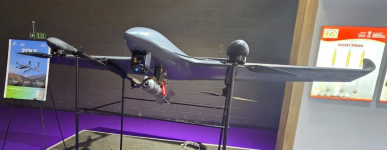
Range limited by LoS.


They need to focus especially on making this thing survivable in GNSS denied, heavy spoofing prevalent environments. Many companies in the US are trying visual based navigation, but of course this has its limitations like in desert environments.
3yrs? Why? How?
When you already have off the shelf technology, why it taking them 3yrs for completing the project, also at time when there are similar drones already available with better specs out thereWhat is it? A burger?
How does it matter that there are similar specs tech is out there?. We have meteor, does it make the development of Astra Mk3 easier?When you already have off the shelf technology, why it taking them 3yrs for completing the project, also at time when there are similar drones already available with better specs out there

3-4 years is standard minimum regardless of weapon system being developed.When you already have off the shelf technology, why it taking them 3yrs for completing the project, also at time when there are similar drones already available with better specs out there
How does it matter that there are similar specs tech is out there?. We have meteor, does it make the development of Astra Mk3 easier?
A development cycle always lasts a minimum of 3 to 4 years.
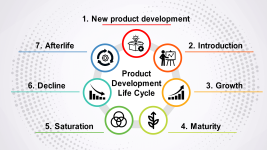
Even developing food takes years.3-4 years is standard minimum regardless of weapon system being developed.
From concept phase to design phase to prototyping, internal testing, user validation testing, certification.
If we are developing lets say a new combat knife for soldier expect it to take this minimum time.
3-4 years is standard minimum regardless of weapon system being developed.
From concept phase to design phase to prototyping, internal testing, user validation testing, certification.
If we are developing lets say a new combat knife for soldier expect it to take this minimum time.
The issue is that the majority of Indian engineers come from a software development point of view. The cycle is way faster in that industry.View attachment 47419
Any product that is developed from scratch (even if there are other comparable products present in the market) will undergo these stages. Hence, the timelines in years. These can be shrunk only if there are resources, will, and financing present (amongst a host of other factors). The first two stages each contain sub-stages and can be taxing.
Meteor is not our tech, nor do we produce it, also Astra mk3 has more range than the meteor,We have meteor, does it make the development of Astra Mk3 easier?
There is a field that is called PLM (Product Lifecycle Management). This chart comes from there. Folks interested can read more about it. The initial stages of development are time and resource consuming. You can take a weapon system that was retired and start tracing its stages. This generic data will allow you to develop a better understanding. Timelines are flexible and can change depending on a host of factors. However, 3-4 years is a good ballpark for now. Induction and growth phases can be dealt with separately. Weapon system development of a similar nature are a good place to start.View attachment 47419
Any product that is developed from scratch (even if there are other comparable products present in the market) will undergo these stages. Hence, the timelines in years. These can be shrunk only if there are resources, will, and financing present (amongst a host of other factors). The first two stages each contain sub-stages and can be taxing.