
India’s electric vehicle drive: Challenges and opportunities
- Thread starter RISING SUN
- Start date
You are using an out of date browser. It may not display this or other websites correctly.
You should upgrade or use an alternative browser.
You should upgrade or use an alternative browser.


Great to see another one of TDB's scale up aid. TDB‑DST has a mandate/fund to help scale home‑grown deep-tech firms that have clear commercialization pathways.
TDB‑DST is backing Indi Energy (Sodium-Ion Battery) for the indigenous production of adv anode materials, to help commercial-scale hard-carbon production for grid, backup & low-speed EV applications.
Indi Energy has built pilot-scale infra & is positioned as indigenous SIB player with bio-waste-derived hard-carbon proprietary anodes (BioBlack™), cathode & electrolyte IP, claiming reversible capacities around 300 mAh/g with established supply chains at pilot/early commercial stage.

The Technology Development Board (TDB), Department of Science & Technology (DST), Government of India, has extended financial assistance to Indigenous Energy Storage Technologies Private Limited, Roorkee, Uttarakhand for the project titled “Commercialization of Bio-waste / Agricultural Waste Derived Hard Carbon for Sodium-Ion Batteries.” The project aims to establish indigenous capabilities for the production of advanced anode materials, contributing to the development of cost-effective and sustainable energy storage technologies in the country.
The TDB-supported project focuses on the commercial-scale production of hard carbon derived from bio-waste and agricultural residues, to be used as a key anode material in sodium-ion batteries (SIBs). Sodium-ion technology is emerging as a viable alternative to conventional lithium-ion systems, particularly for applications such as grid-scale energy storage, UPS/inverter systems, solar street lighting, and low-speed electric mobility, including e-rickshaws, e-scooters, and e-cycles.
Read here: https://www.pib.gov.in/PressReleasePage.aspx?PRID=2248203®=3&lang=2


This is the biggest issue i saw when travelling long distance with an EV.
Mild hybrids represent a development path with genuine competitiveness;
full hybrids, extended-range EVs, and pure electric vehicles are all rubbish.
full hybrids, extended-range EVs, and pure electric vehicles are all rubbish.


L&T plans to manufacture rare-earth magnets in India to challenge China’s dominance
By Alisha Sachdev and P R Sanjai, Bloomberg
Last Updated: Aug 11, 2026, 01:15:00 PM IST
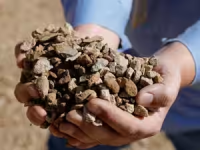
L&T is planning an India rare-earth magnet manufacturing foray as the government seeks to reduce the country’s dependence on China for the critical component. (Representative image)
Larsen & Toubro Ltd. plans to manufacture rare-earth magnets in India, said people familiar with the matter, as the engineering giant rides a government push to reduce a reliance on imports and loosen China’s stranglehold over the critical industrial component.
The conglomerate is preparing a bid for the government’s 72.8-billion-rupee ($764 million) incentive policy for such magnets, the people said, asking not to be identified because the deliberations are private. L&T will need to secure a technology partner with the necessary expertise for its foray in a sector known for high-precision engineering, they added.
The program has received 15 bids so far, the people said, including one from a consortium comprising Japan’s Proterial Ltd. and two Indian automakers.
L&T’s move would mark a diversification for India’s largest infrastructure company beyond its traditional lines of businesses such as construction, heavy engineering and industrial projects. The plan also dovetails with its proposed investment in motors for electric vehicles, which rely on rare-earth permanent magnets.
An L&T spokesperson did not immediately respond to a request for comment.
The company’s potential entry into rare-earth permanent magnets aligns with the government’s initiative to build a domestic supply chain after China, which controls 90% of the global output, restricted exports of the critical component in April last year. Besides electric vehicle motors, the magnets are used in wind turbines, industrial robots and a range of electronics.
India approved a seven-year program including 64.5 billion rupees in sales-linked incentives and 7.5 billion rupees in capital subsidies last year to boost magnet production. The country aims to establish domestic capacity of 6,000 metric tons annually, offering support to about five companies.
The government hopes the incentives will encourage both domestic companies and overseas magnet makers to set up local production, reducing dependence on Chinese suppliers, which have benefited from state support and the economies of scale.
L&T’s bid to manufacture rare-earth magnets will also support its own plan to build next-generation electric vehicle traction motors locally. The company has partnered with Israel-based EVR Motors for it, the engineering firm said in its earnings call last month.
Its EPS Mobility unit secured its maiden commercial order to supply 500,000 such motors to a two-wheeler manufacturer over three years, L&T said without naming the client.
L&T plans to manufacture rare-earth magnets in India to challenge China’s dominance
By Alisha Sachdev and P R Sanjai, Bloomberg
Last Updated: Aug 11, 2026, 01:15:00 PM IST
L&T is planning an India rare-earth magnet manufacturing foray as the government seeks to reduce the country’s dependence on China for the critical component. (Representative image)
Larsen & Toubro is planning to bid for India’s incentives to manufacture rare-earth magnets domestically, people familiar with the matter said. The move would mark a new business for the engineering giant as India seeks to reduce dependence on China, which controls about 90% of global rare-earth magnet production.
Larsen & Toubro Ltd. plans to manufacture rare-earth magnets in India, said people familiar with the matter, as the engineering giant rides a government push to reduce a reliance on imports and loosen China’s stranglehold over the critical industrial component.
The conglomerate is preparing a bid for the government’s 72.8-billion-rupee ($764 million) incentive policy for such magnets, the people said, asking not to be identified because the deliberations are private. L&T will need to secure a technology partner with the necessary expertise for its foray in a sector known for high-precision engineering, they added.
The program has received 15 bids so far, the people said, including one from a consortium comprising Japan’s Proterial Ltd. and two Indian automakers.
L&T’s move would mark a diversification for India’s largest infrastructure company beyond its traditional lines of businesses such as construction, heavy engineering and industrial projects. The plan also dovetails with its proposed investment in motors for electric vehicles, which rely on rare-earth permanent magnets.
An L&T spokesperson did not immediately respond to a request for comment.
The company’s potential entry into rare-earth permanent magnets aligns with the government’s initiative to build a domestic supply chain after China, which controls 90% of the global output, restricted exports of the critical component in April last year. Besides electric vehicle motors, the magnets are used in wind turbines, industrial robots and a range of electronics.
India approved a seven-year program including 64.5 billion rupees in sales-linked incentives and 7.5 billion rupees in capital subsidies last year to boost magnet production. The country aims to establish domestic capacity of 6,000 metric tons annually, offering support to about five companies.
The government hopes the incentives will encourage both domestic companies and overseas magnet makers to set up local production, reducing dependence on Chinese suppliers, which have benefited from state support and the economies of scale.
L&T’s bid to manufacture rare-earth magnets will also support its own plan to build next-generation electric vehicle traction motors locally. The company has partnered with Israel-based EVR Motors for it, the engineering firm said in its earnings call last month.
Its EPS Mobility unit secured its maiden commercial order to supply 500,000 such motors to a two-wheeler manufacturer over three years, L&T said without naming the client.
L&T plans to manufacture rare-earth magnets in India to challenge China’s dominance
Brick by brick the Indian battery industry is growing:
