

ISRO's engines : Designs , Components & Prototypes.
- Thread starter Gautam
- Start date
You are using an out of date browser. It may not display this or other websites correctly.
You should upgrade or use an alternative browser.
You should upgrade or use an alternative browser.


its a 800KN engine, they js said 80 tonne for the common man.80 ton thrust= 750~ KN

*~785 KN80 ton thrust= 750~ KN


Vyoamyug Aerospace just filed a foundational patent — and it changes how we think about rocket engines.
The invention: An Adaptive Methane-Based Rocket Engine with Helical Micro-Channel Regenerative Cooling and Real-Time Combustion Instability Suppression.
In simple terms — an engine that detects dangerous pressure and temperature instability inside the combustion chamber and corrects itself in under 50 milliseconds. Automatically. During flight.
Here is how it works:
01. Adaptive Multi-Port Swirl Injector
Methane and LOX are injected through independently actuated valves with swirl vanes at 25 to 45 degrees. The mixture ratio adjusts dynamically mid-combustion — something no fixed injector can do.
02. Helical Micro-Channel Regenerative Cooling
Spiral micro-channels of 1 to 3 mm drilled into the chamber walls carry cryogenic methane as coolant before it enters the engine. This eliminates a separate cooling system, reduces mass, and preheats the propellant — all at once.
03. Real-Time Stabilization Loop
Pressure and temperature sensors feed a control algorithm that actuates the injector valves in under 50 milliseconds — adjusting flow, swirl intensity, and mixture ratio simultaneously.
Why methane? High specific impulse. Reusability-ready. Mars-compatible. Our Yuga-1 and Yuga-RX platforms are built around this propellant from the ground up.
Space is not conquered by larger engines. It is conquered by systems intelligent enough to survive the conditions they create.
This is just the beginning.
Vyoamyug Aerospace — Space is For Everyone.

Vyoamyug Aerospace | LinkedIn
Indian Govt to fund startup aiming to build Methane-LOX rocket engine
Authored By Sidharth MP
Published: Jun 11, 2026, 21:29 IST | Updated: Jun 11, 2026, 21:29 IST
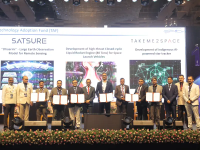
Indian Govt to fund startup aiming to build Methane-LOX rocket engine
Indian Government agency IN-SPACE announced that it has selected three Indian space startups: Astrobase Space Technologies, SatSure Analytics India and TM2SPACE Technologies, as the first set of entities that would receive funding under its Technology Adoption Fund (TAF) Scheme. The TAF is designed to support Indian industry in absorbing, adapting, and commercialising advanced space technologies, thereby bridging the gap between research and operational deployment.
Among the three firms, Bengaluru-based startup Astrobase Space Technologies is the one with the most ambitious goal, they aim to develop a high-thrust Closed-Cycle Liquid Rocket Engine (delivering 80-ton thrust) for space launch vehicles. The startup aims to develop an 80ton-class reusable Methane-Liquid Oxygen(Methane-LOX) rocket engine with high efficiency, which could potentially serve as a commercial propulsion solution for next-generation rockets.
For context, space agency ISRO's most powerful and mainstay operational rocket engine, the Indo-French Vikas engine also delivers about 80-tons of thrust. While the 1970-era Vikas engine is propelled by a toxic combination of Unsymmetric Dimethyl Hydrazine(UDMH) and Nitrogen Tetroxide, the engine being developed by Astrobase is meant to be propelled by relatively clean fuels Methane and Liquid oxygen. The Methane-LoX combination is what powers the SpaceX Raptor engine, which delivers over 280tons of thrust. Indian space agency ISRO is also working on a Methane-Lox engine producing 110-tons of thrust.
IN-SPACE would also be funding Bengaluru-based space analytics company SatSure Analytics India, which is developing Dhaarini, a Large Earth Observation Model (LOM) designed to serve as India's foundational AI platform for remote sensing applications. Trained on diverse satellite and aerial datasets, the model is meant to generate actionable insights across agriculture, infrastructure, and disaster management, enabling data-driven decision-making at a national scale.
Hyderabad-based TM2SPACE Technologies will receive Government funding to develop an indigenous AI-powered star tracker system for satellites, enabling the pointing accuracy required for high-resolution imaging and communication missions. The project will develop StarSense Lite for CubeSats and StarSense Pro for satellites above 50 kg, delivering high-precision attitude determination through advanced optics, electronics, and onboard algorithms.
While the quantum of funding and the timeline for technology development have not been revealed, IN-SPACE said that these three firms were chosen based on a multi-stage evaluation process conducted by an expert committee comprising members from ISRO, the Department for Promotion of Industry and Internal Trade (DPIIT), the Department of Science and Technology (DST), industry, academia. IN-SPACE said it will provide continued technical guidance, monitoring, and milestone-linked disbursement of funds to ensure successful implementation of the selected projects.
The selection of these projects under the Technology Adoption Fund (TAF) marks a pivotal step in our mission to transform Indian private entities into global space leaders. With this fund, our vision is to bridge the critical gap between early-stage development and commercial success. By offering this financial support, we are empowering the private sector to work on cutting-edge space technologies. These projects are not just innovative concepts; they are practical, market-ready solutions that will increase our footprint in the global space economy," said Dr. Pawan Goenka, Chairman, IN-SPACE.
Indian Govt to fund startup aiming to build Methane-LOX rocket engine
Authored By Sidharth MP
Published: Jun 11, 2026, 21:29 IST | Updated: Jun 11, 2026, 21:29 IST
Indian Govt to fund startup aiming to build Methane-LOX rocket engine
Indian Government agency IN-SPACE announced that it has selected three Indian space startups: Astrobase Space Technologies, SatSure Analytics India and TM2SPACE Technologies, as the first set of entities that would receive funding under its Technology Adoption Fund (TAF) Scheme. The TAF is designed to support Indian industry in absorbing, adapting, and commercialising advanced space technologies, thereby bridging the gap between research and operational deployment.
Among the three firms, Bengaluru-based startup Astrobase Space Technologies is the one with the most ambitious goal, they aim to develop a high-thrust Closed-Cycle Liquid Rocket Engine (delivering 80-ton thrust) for space launch vehicles. The startup aims to develop an 80ton-class reusable Methane-Liquid Oxygen(Methane-LOX) rocket engine with high efficiency, which could potentially serve as a commercial propulsion solution for next-generation rockets.
For context, space agency ISRO's most powerful and mainstay operational rocket engine, the Indo-French Vikas engine also delivers about 80-tons of thrust. While the 1970-era Vikas engine is propelled by a toxic combination of Unsymmetric Dimethyl Hydrazine(UDMH) and Nitrogen Tetroxide, the engine being developed by Astrobase is meant to be propelled by relatively clean fuels Methane and Liquid oxygen. The Methane-LoX combination is what powers the SpaceX Raptor engine, which delivers over 280tons of thrust. Indian space agency ISRO is also working on a Methane-Lox engine producing 110-tons of thrust.
IN-SPACE would also be funding Bengaluru-based space analytics company SatSure Analytics India, which is developing Dhaarini, a Large Earth Observation Model (LOM) designed to serve as India's foundational AI platform for remote sensing applications. Trained on diverse satellite and aerial datasets, the model is meant to generate actionable insights across agriculture, infrastructure, and disaster management, enabling data-driven decision-making at a national scale.
Hyderabad-based TM2SPACE Technologies will receive Government funding to develop an indigenous AI-powered star tracker system for satellites, enabling the pointing accuracy required for high-resolution imaging and communication missions. The project will develop StarSense Lite for CubeSats and StarSense Pro for satellites above 50 kg, delivering high-precision attitude determination through advanced optics, electronics, and onboard algorithms.
While the quantum of funding and the timeline for technology development have not been revealed, IN-SPACE said that these three firms were chosen based on a multi-stage evaluation process conducted by an expert committee comprising members from ISRO, the Department for Promotion of Industry and Internal Trade (DPIIT), the Department of Science and Technology (DST), industry, academia. IN-SPACE said it will provide continued technical guidance, monitoring, and milestone-linked disbursement of funds to ensure successful implementation of the selected projects.
The selection of these projects under the Technology Adoption Fund (TAF) marks a pivotal step in our mission to transform Indian private entities into global space leaders. With this fund, our vision is to bridge the critical gap between early-stage development and commercial success. By offering this financial support, we are empowering the private sector to work on cutting-edge space technologies. These projects are not just innovative concepts; they are practical, market-ready solutions that will increase our footprint in the global space economy," said Dr. Pawan Goenka, Chairman, IN-SPACE.
Indian Govt to fund startup aiming to build Methane-LOX rocket engine

They are moving really fast also got grant of 25 Crore under RDF just a few days back.
ISRO successfully conducted hot test of Semicryogenic Engine Power Head Test Article at higher thrust level
June 27, 2026
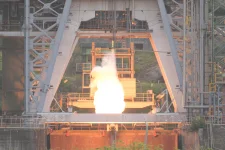
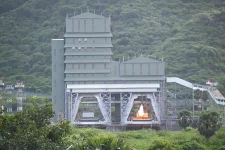
Indian Space Research Organisation (ISRO) demonstrated successful hot test of the Semi-Cryogenic Engine Power Head Test Article (PHTA) at a thrust level of 175 Tonne at the ISRO Propulsion Complex (IPRC), Mahendragiri , Tamil Nadu on 24th June 2026. The Power Head Test Article (PHTA) encompasses all engine systems except the thrust chamber. This is the 8th test in a series of hot tests using the PHTA. The objectives of this test included the study of build up after Pre-burner ignition and demonstration of steady state operation at higher thrust levels. The previous PHTA tests were carried out at 47% (94 Tonne) and 60% (120 Tonne) thrust levels. In this test, the PHTA was tested at 175 tonne thrust level (88%) for the first time and also demonstrated successful operation of main turbopumps delivering 400 and 500 bar outlet pressures.
The test proceeded as predicted and all the engine parameters were as expected. This test has provided sufficient confidence towards the demonstration of steady state performance of engine powerhead at 200 tonne (100%) thrust level and also achieved a major milestone in the indigenous development of Semicryogenic engine.
The Semi-Cryogenic Propulsion Stage (SC120), powered by the 2000 kN-class SE2000 engine, is being developed to replace the current L110 core stage of the LVM3 launch vehicle. This strategic upgrade is expected to substantially increase the payload capacity while enhancing operational efficiency. The semi-cryogenic system uses cleaner, non-toxic propellants-Liquid Oxygen (LOX) and purified Kerosene (isrosene) - offering improved performance over conventional propulsion stages. The integration of the Semicryogenic propulsion system, in tandem with an uprated cryogenic upper stage, signifies a major advancement in ISRO’s roadmap towards enhancing LVM3 payload capability.
ISRO successfully conducted hot test of Semicryogenic Engine Power Head Test Article at higher thrust level


What are they chances they test a fully integrated article before ISRO does SCE-200?
They are aiming for this year, and considering the progress they may achieve it, ISRO has recently tested the powerhead test article of the LME-110 engine, Astrobase tested it months ago.What are they chances they test a fully integrated article before ISRO does SCE-200?